Game Publishing reports and market data
Documents
Making Your First Game: Launching! - How to Market Your Game - Extra Credits
The primary objective for independent game developers is to bridge the gap between development and commercial viability through proactive marketing and strategic distribution.
- Marketing is a core professional responsibility essential for commercial viability, as failing to promote a game prevents players from accessing the experience and limits the developer's career sustainability.
- Developers must clearly articulate a unique value proposition, which functions both as a promotional asset and a framework for refining gameplay during the development process.
- Effective marketing requires minimal capital but significant effort in content creation, specifically through the production of professional, concise trailers and the maintenance of clean, credible websites.

Perfect World CEO on a strategy for global F2P success
Perfect World maintains a global growth strategy centered on the free-to-play model across PC, console, and mobile platforms.
- Perfect World operates a cross-platform strategy, developing and publishing free-to-play titles across PC, console, and mobile, with a current pipeline of approximately 20 mobile games.
- The company successfully launched three top-10 mobile games in China in 2014 and is expanding its portfolio to include more casual and strategic genres to capture non-traditional mobile gamers.
- Perfect World is diversifying its development footprint, with roughly one-third of its current mobile pipeline projects being developed by studios outside of China.
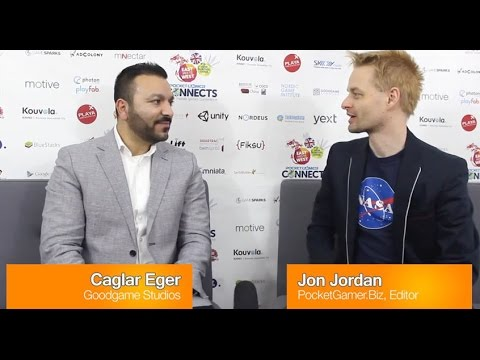
How Goodgame Studios bought Empire: Four Kingdoms to China
Goodgame Studios, a German developer, has pursued a strategic expansion into the Chinese mobile gaming market to leverage its global success in the free-to-play strategy genre.
- Goodgame Studios entered the Chinese market with a low-risk, iterative strategy for 'Empire: Four Kingdoms,' beginning with a localized iOS launch in October 2014 to test viability before committing to infrastructure changes.
- The studio identified the fragmented Chinese Android ecosystem as a primary challenge, noting that low-end device prevalence complicates monetization compared to the iOS segment.
- To scale distribution, the company is actively collaborating with local publishers and third-party Android app stores, specifically targeting platforms like 360, Xiaomi, and 91.
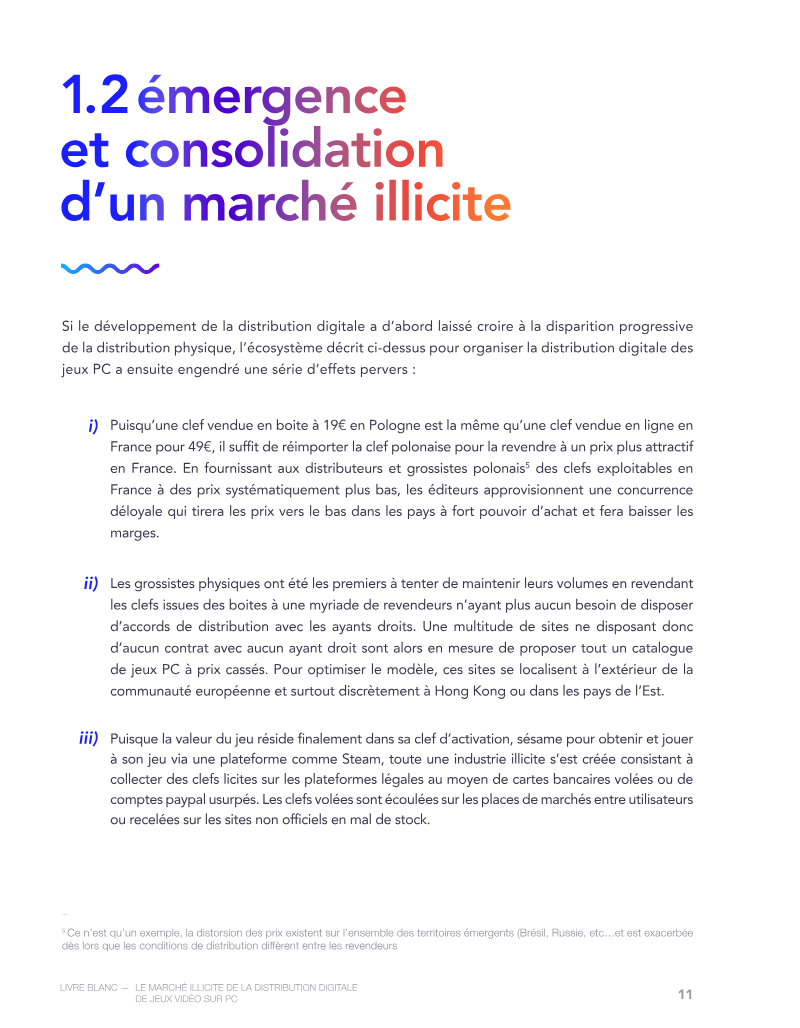


Le Marché Illicite de la Distribution Digitale de Jeux Vidéo sur PC: France
The illicit digital PC game market has evolved into a billion-euro industry that systematically undermines the official distribution ecosystem through the exploitation of regional price disparities and regulatory loopholes.
- The digital PC game market in France is significantly impacted by an illicit market, where game keys are resold at prices up to 60% lower than official retail prices, often before a game's release, leading consumers to perceive official prices as too high.
- This illicit market is fueled by geographical price differences (e.g., keys sold for €19 in Poland vs. €49 in France) and physical wholesalers reselling keys from boxed games to unofficial sites, with German wholesaler Gross Electronic GmbH identified as a major supplier to MMOGA.com from 2013-2015.
- Major illicit platforms like MMOGA (sold for €306M in 2015 with over €100M revenue) and G2A operate from offshore locations (e.g., Hong Kong, Eastern Europe) to avoid European VAT and consumer protection laws, despite often having significant European customer bases (e.g., over 60% French audience for some sites).
Global Games: Norway - The Challenges of Norwegian Game Companies - Extra Credits
The Norwegian game industry faces a unique set of challenges that distinguish it from emerging markets in Latin America.
- Norway's small population, comparable to the San Francisco metropolitan area, forces developers to rely exclusively on global markets rather than domestic consumption.
- The high cost of living in Norway necessitates higher sales volumes for game companies to remain solvent compared to developers in lower-cost regions.
- The local oil sector creates a competitive labor market that frequently siphons off high-level technical talent from the game industry.

What can we learn from Monument Valley's IAP?
The mobile gaming industry is currently navigating a significant shift in monetization expectations, highlighted by the controversy surrounding the expansion pack for the puzzle game Monument Valley.
- The developer of Monument Valley, ustwo, faced significant user backlash and one-star review bombing after releasing eight additional levels as a $2 in-app purchase for a game that originally cost $3.
- The controversy surrounding Monument Valley highlights a broader industry tension regarding whether post-launch content should be provided as free updates or paid downloadable content (DLC) in a market increasingly dominated by free-to-play models.
- Apple replaced the 'Free' button on App Store games with 'Get' in November 2014, a change prompted by ongoing pressure from European Union regulators regarding the transparency of free-to-play monetization.
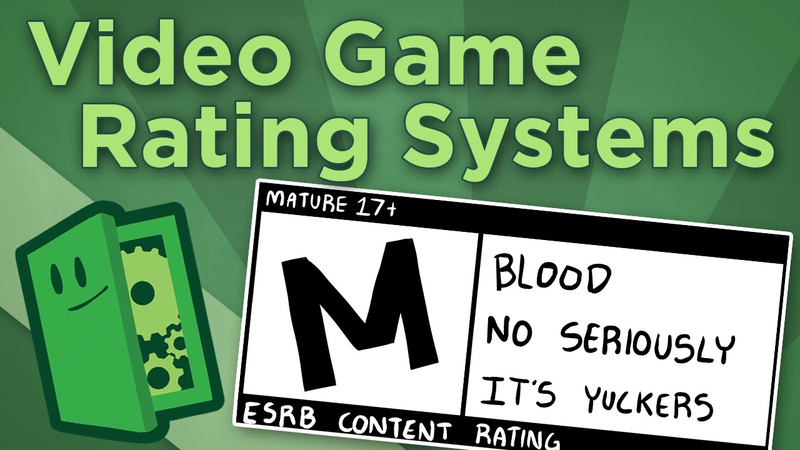
Video Game Rating Systems - A Better Approach to Content Ratings - Extra Credits
The current landscape of digital game distribution has rendered traditional, centralized rating systems like the ESRB increasingly obsolete.
- Traditional, centralized rating systems like the ESRB are becoming obsolete due to the high costs and manual review processes that create barriers for small-scale developers.
- A proposed decentralized, developer-led framework requires creators to complete a standardized content checklist regarding violence, nudity, and substance use before launch.
- Digital storefronts, including Steam, mobile app stores, and console platforms, would act as the enforcement mechanism by mandating these self-reported ratings as a prerequisite for distribution.

Korean winners Com2uS and Gamevil, and King's good/bad IPO timing
The mobile gaming industry experienced significant financial shifts in late 2014, highlighted by the quarterly performance of Korean publishers Com2uS and Gamevil, alongside the market challenges faced by King.
- Com2uS achieved significant growth in late 2014, doubling its quarterly revenue to $85 million with a 50% profit margin, driven by the success of 'Summoners War' and 'Ace Fishing'.
- King reported a 13% decline in quarterly sales despite generating $514 million in revenue, highlighting the difficulty of sustaining growth after a peak driven by a single franchise, 'Candy Crush Saga'.
- To address investor concerns regarding its reliance on a flagship title, King highlighted that its non-Candy Crush business generates $1 billion in annual revenue and initiated a dividend strategy to provide shareholder value.

Hitcents on how it defeated the pirates and built a business in China
Hitcents, a US-based creative agency and game developer, entered the Chinese market to address widespread piracy of its flagship title, Draw Stickman.
- The Chinese mobile gaming market is highly fragmented, featuring over 100 Android app stores categorized into carrier-specific, third-party, and hardware-based channels.
- Successful entry into China requires deep 'culturalization' beyond simple localization, including adjusting art styles, incorporating local themes, and redesigning tutorials to be significantly more prescriptive and directive than Western versions.
- Carrier billing is essential for monetization in China because it allows for transactions without internet access, with typical purchase sizes ranging from 1 to 30 RNB.
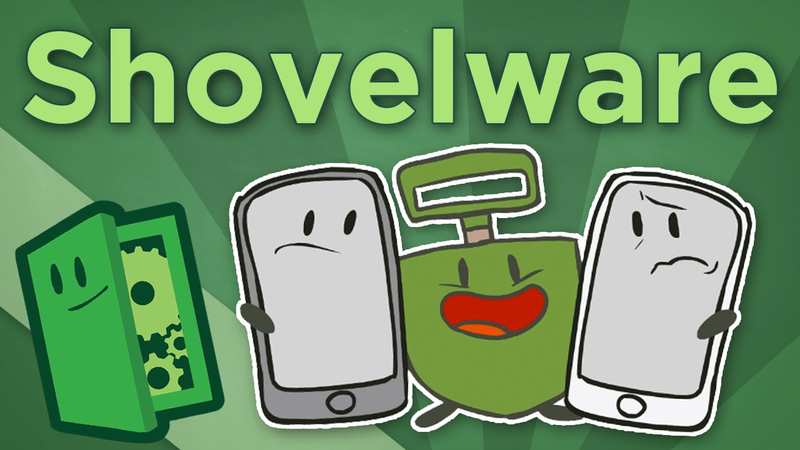
Shovelware - The Causes and Consequences of Bad Licensed Games - Extra Credits
Shovelware, defined as poorly executed licensed titles or shoddy ports, remains a persistent issue in the video game industry.
- Shovelware is a business model that prioritizes exploiting brand recognition over product quality, often forcing developers to meet inflexible release deadlines tied to movie or toy launches.
- The reliance on low-budget outsourcing and work-for-hire arrangements incentivizes developers to cut corners, resulting in poorly executed titles that lack meaningful gameplay.
- Publishers specifically target uninformed consumers, such as parents buying for children, which risks alienating new players and damaging the long-term reputation of the gaming medium.
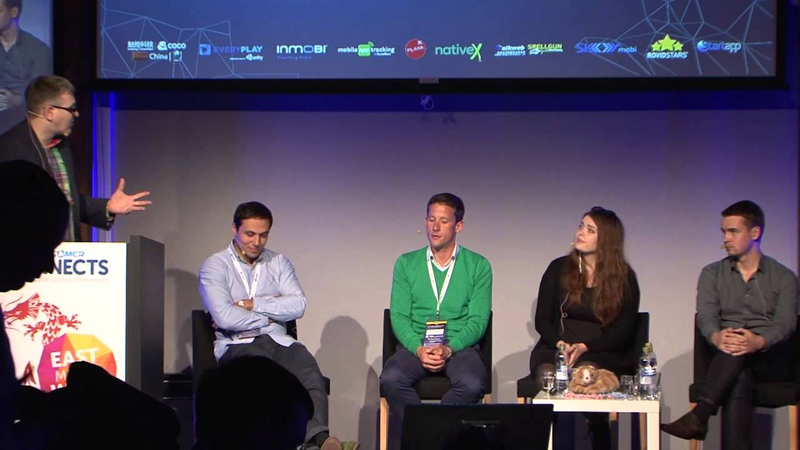
Mobile moguls on why consumer connections are key to brand success
The mobile gaming industry is undergoing a strategic shift from a primary focus on user acquisition to the development of long-term, globally recognized brands.
- Mobile gaming strategy is shifting from a primary focus on user acquisition toward building long-term, globally recognized entertainment franchises.
- Developers are prioritizing the creation of deep, authentic player connections through nuanced storytelling, consistent visual identities, and high-quality gameplay.
- Sustainable growth is increasingly achieved by focusing on fewer, high-quality titles rather than releasing numerous games in hopes of finding a hit.

Console devs are going mobile and mobile devs are going triple-A
The gaming industry is currently experiencing a significant convergence as triple-A console developers expand into mobile markets while mobile developers increasingly adopt high-end production values and leverage major entertainment intellectual property (IP).
- The gaming industry is undergoing a convergence where triple-A console developers are expanding into mobile markets while mobile developers are adopting high-end production values and major intellectual property.
- Mobile platforms have evolved into a mass-market medium with computing power now approaching the capabilities of previous-generation consoles, enabling more complex gaming experiences.
- Industry strategy is shifting toward 'midcore' and 'hardcore' titles that prioritize high visual fidelity, deep storytelling, and sophisticated monetization models over simple casual games.