1 free read left. Create a free account for unlimited reading + AI research.
Create free account
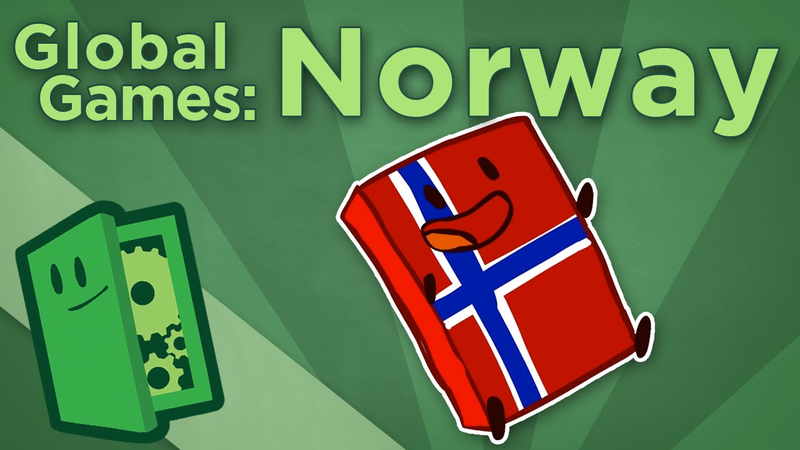
Global Games: Norway - The Challenges of Norwegian Game Companies - Extra Credits
Key insights
7 takeaways- 01Norway's small population, comparable to the San Francisco metropolitan area, forces developers to rely exclusively on global markets rather than domestic consumption.
- 02The local oil sector creates a competitive labor market that frequently siphons off high-level technical talent from the game industry.
- 03Local venture capital is hesitant to invest in gaming, preferring the more predictable financial returns offered by the real estate and energy sectors.
- 04The cultural influence of Jante Law, which discourages individual success and standing out, hinders the aggressive marketing and bold business tactics needed for international distribution.
- 05To mature, the industry requires a government-backed publishing entity to manage PR, business development, and distribution infrastructure.
- 06The high cost of living in Norway necessitates higher sales volumes for game companies to remain solvent compared to developers in lower-cost regions.
- 07Norwegian developers must shift their strategy to leverage digital distribution for innovation, avoiding direct competition with the massive marketing budgets of AAA studios.
Ask AI about this video
Transcript
Man, it has been a long time since we did one of these. The thing is, for us to really be able to deliver on a Global Games episode, James has to spend a fair bit of time in the country that he's talking about. And for the last year, he's been mired in Games for Good work and busy spending all of his travel money trying to make things happen on that front. So, he hasn't really gotten to embed himself in a game dev scene anywhere until recently. But, a few months back, he was asked to spend some time in Norway looking into how to grow the Norwegian games industry, which means we can now competently talk about games from a country that doesn't get much acknowledgement for the work done there. And it's even better because this turns out to be a very interesting case if you look at it side by side with our two previous segments on Brazil and Mexico, as Norway struggles with basically completely opposite challenges. So, let's dive in. First, let's talk about the fact that there's actually already games coming out of Norway. Among the Sleep, Teslagrad, The Secret World, Dreamfall Chapters, Fun Run, and the upcoming Owlboy all come from developers there. So, it's not like
Mexico or Brazil where the industry has to be built completely from the ground up. Rather, the problem is that while game development is happening in Norway, very few of these companies actually break even. And even the number of developers getting products out and generating any revenue at all is completely dwarfed by the number of companies that fall apart before they ever launch a title or get trapped in a cycle of doing for hire work for other industries. And you can't have a games industry unless you can pay people to work on games full-time. So, let's take a look at the essential questions. First, is the Norwegian market big enough to support a games industry? Frankly, the answer here is simply no. Norway has a total population roughly the size of the San Francisco metro area. In Latin America, we saw the opportunity to grow a games industry by catering to an underserved market, the local population. But, you can't support a games industry by developing for a nation that's smaller than the big cities in most of the major markets. This means that Norwegians are immediately going to have to compete on the world stage. Second, is the economy developed enough to support a games industry? Absolutely. Norway is one of
the Scandinavian wonder economies. They have one of the highest GDPs per capita in the world, miles ahead of the United States. There is no question, their economy is robust enough to support this type of high-tech industry and to have an internal population, small as it is, as a ready market. But, this economic strength comes with both some unique advantages and some unique disadvantages. As for the advantages, the Norwegian government works heavily to help promote new industries and to support Norwegian cultural activities. Additionally, they're always looking to get people interested in and to create new high-tech jobs outside of the already thriving oil sector. This means that many of the developers there are able to survive and to get better at their craft with the backing of the government, even if their first games aren't major commercial hits. This government backing should also help to underwrite high-risk endeavors, which otherwise might never get off the ground, like the creation of a specialized publisher to help work with developers in the region. Additionally, healthcare costs are almost completely covered by the government as well, meaning that it's a little easier for small indie companies, as employees can
take the risk to work on games while not worrying about what'll happen if they or someone in their family gets sick. But, all this economic power comes at a cost. While there's no universal minimum wage in Norway, the lowest-paid workers James could find were McDonald's employees, who are paid just north of $20 an hour. This means that the cost of living in Norway is incredibly high, which in turn means that even if you're running a lean, hand-to-mouth indie company, you're going to have to sell a lot more units to keep yourself alive than you would in places like Mexico or Brazil. Third, what about education in the area? Norway is one of the best educated countries in the world with low tuition costs and insanely high rates of people going for postgraduate degrees. This means that they certainly have a deep pool of people with technical skills necessary to create games. Additionally, English is taught very early on and is highly emphasized, so a large portion of the population are nearly native English speakers. This is important as if Norway is going to compete in the games market, it's going to have to do it on the world stage rather than just in Norway itself. And that means releasing games in
English and focusing on rather than simply localizing for the English language release. On the other hand, Norway has just begun building out game development courses as a subject of study. There are a few schools working on curricula to train game developers, but these schools are young yet and are still working out exactly how to approach the topic. Additionally, they don't have the wealth of industry veterans that places like the US or Korea do to help with these programs. All right, so that's the basics. Now, let's talk about some of the uniquely Norwegian issues facing the game industry. First, everyone is a developer. There's no one handling any of the infrastructure or support, which is so essential to forming an industry. There's no marketing or PR. There's not specialized legal departments, although the government actually provides free legal help to startups, which is great for cutting costs. And there's no distribution or specialized QA. In fact, many of the companies barely have anybody in place who does what we'd call management or business. Second, anybody with the skills to make games will make a much better paycheck and have a much better chance at not simply being met
with failure by simply working for the oil industry. This means that talent is often siphoned off and that companies sometimes get distracted from their core projects by contract work from oil companies. Third, right now venture capital in Norway doesn't understand the world of games. Oil and the real estate there make for easy, solid return investments in fields venture capitalists there already know. So, raising capital for games is a pretty hard sell. Fourth, Jante Lawven. I love the level of equality in Norway. I think it is amazing. But, sometimes even that has its downside. There's a concept there called Jante Lawven, which is basically the idea that you should repress the desire to stand out as your success might make others feel bad. That you should aim to keep pace with the pack rather than to be exceptional. Unfortunately, founding an industry requires that people be exceptional and there are times where you just have to be bold and say, "I'm going for it. I have got a great game here, and it deserves to be on the PlayStation, so I'm going to give Sony a call." This "Yante loven" attitude often keeps developers from making the most out of their games, keeps them from promoting
them as much as possible, and from going for big publisher or distribution deals. So, how do you change the Norwegian game scene from a scene to a full-on industry? Well, first off, nothing's going to happen without infrastructure. If I could name one thing that I think would really make this happen, it would be to have the government put some weight behind building a publisher in Norway, fully understanding that it's going to run in the red for a few years. Without a protective internal publisher that can give Norwegian games the marketing, management, PR, and distribution they currently lack, any progress will be severely hampered, and no external publisher is going to give them the special attention they need. Second, you need the development community to welcome working with people who are not games people. People in finance, capital, and on the government side of things can actually be amazing allies for this community, but only if the community embraces them and helps teach them why games are an incredible cultural and economic tool, rather than turning away from them because they haven't dedicated their lives to this medium in the same way we have. Third, game companies have to become more efficient about production, though a
publisher with external producers would probably solve this. And they have to start getting past the idea of "Yante loven." Companies in Norway aren't just competing with other companies in Norway, so Norwegian companies have to stop thinking of selling 20 to 30,000 units as a success, and start looking to move enough copies of their games that they have a little left to put in the bank while being able to pay everybody for a 40-hour work week at Norwegian prices. You've got to be able to keep the lights on long enough to make your next game. And finally, Norway has to continue to embrace its existing tradition of making games that are different. It'll be years, if not decades, before Norway can really compete with the US in the way that we make AAA games, but if you look at all the games we mentioned at the start of this, they're all a little bit different. The biggest advantage Norway has is that it is creating an industry after the rise of digital distribution where it doesn't have to compete for shelf space and thus can compete on innovation rather than just marketing budget. As they grow the industry there, if they can avoid the trap of trying to emulate the US market and instead figure out what a Norwegian game industry is on
its own, I think they have a good chance. I'll see you next week.
Summary
The Norwegian game industry faces a unique set of challenges that distinguish it from emerging markets in Latin America. While Norway possesses a robust, high-tech economy, a highly educated workforce, and significant government support, its small population—roughly equivalent to the San Francisco metropolitan area—precludes the possibility of sustaining a game industry through domestic consumption alone. Consequently, Norwegian developers must compete immediately on the global stage, a task complicated by a lack of specialized business, marketing, and distribution infrastructure.
Key obstacles include an exceptionally high cost of living, which necessitates higher sales volumes for companies to remain solvent, and a competitive labor market where the lucrative oil sector frequently siphons off technical talent. Furthermore, local venture capital remains hesitant to invest in games, preferring the predictable returns of real estate and energy. Culturally, the prevalence of Jante Law—a social norm that discourages standing out or seeking individual success—often hinders the aggressive marketing and bold business maneuvers required to secure international distribution deals.
To transition from a collection of independent developers to a mature industry, Norway must prioritize the creation of a dedicated, government-backed publishing entity to handle management, PR, and distribution. Additionally, the industry requires a shift in mindset to embrace professional business partnerships and move beyond modest sales targets. By leveraging digital distribution to focus on innovation rather than competing with the massive marketing budgets of AAA studios, Norway can capitalize on its unique creative voice. Success depends on the industry’s ability to integrate business expertise with its existing technical talent while overcoming cultural barriers to commercial ambition.















Comments