Game Publishing reports and market data
Documents
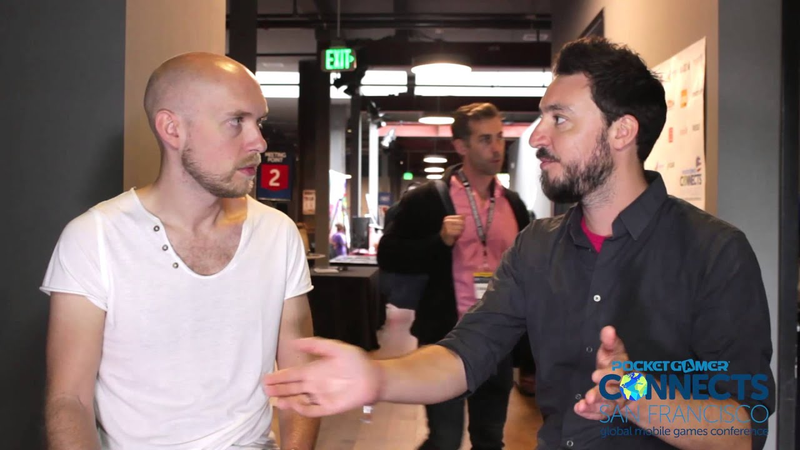
Double Fine's James Spafford on the power and pain of Kickstarter
Crowdfunding serves as a transformative, albeit challenging, financing model for independent game studios, offering greater creative control by bypassing traditional publishers.
- Crowdfunding offers independent studios a pathway to retain intellectual property and creative autonomy by bypassing traditional publisher financing.
- Double Fine’s experience with Broken Age demonstrates that consumer-funded projects face significant risks regarding community expectations and timeline management when development cycles exceed initial projections.
- Transparency is the primary tool for mitigating backer mistrust; studios must document failures, budgetary challenges, and technical hurdles to justify the use of funds.

Biz Daily: Why Chinese publishers are delisting from NASDAQ
A growing trend of Chinese gaming companies, including KongZhong, iDreamSky, Perfect World, and Shanda Games, are moving to delist from the NASDAQ to transition into privately held entities.
- Chinese gaming companies including KongZhong, iDreamSky, Perfect World, and Shanda Games are delisting from the NASDAQ to transition into privately held entities.
- The primary driver for these management buyouts (MBOs) is a perceived undervaluation of gaming stocks by Western investors, who have historically remained skeptical of the sector.
- Management teams are seeking to escape the burden of rigorous US quarterly reporting and transparency requirements to regain operational flexibility and avoid public market volatility.
White Paper on Video Game Development in Spain 2015: Executive Summary
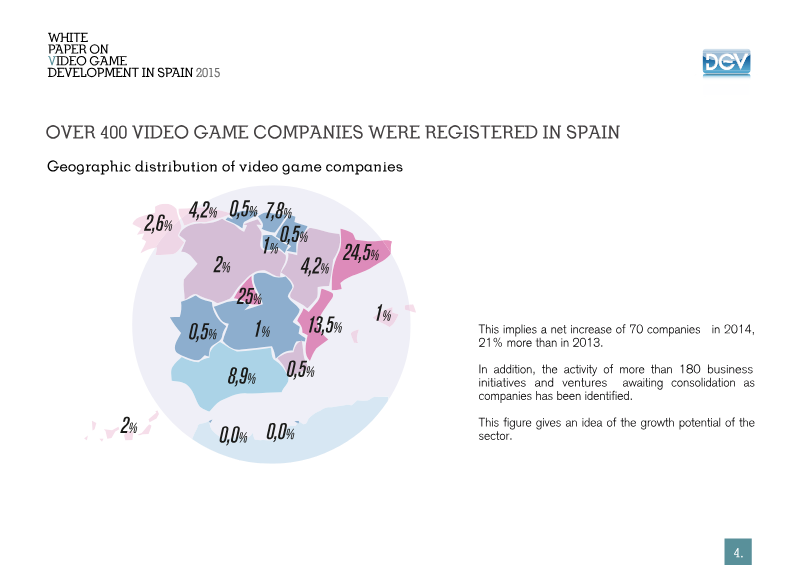
The 2015 White Paper on Video Game Development in Spain provides a comprehensive analysis of the national gaming industry, detailing its rapid expansion, economic impact, and structural characteristics.
- The Spanish video game industry generated 412.4 million euros in 2014, marking a 31% year-over-year increase with projections to reach one billion euros by 2018.
- Digital distribution dominates the sector, accounting for 90% of total turnover through direct downloads and free-to-play business models.
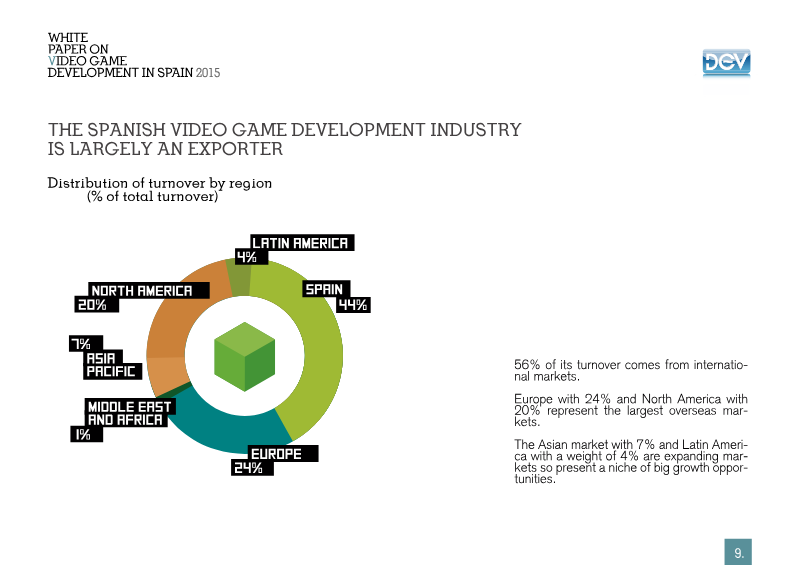
- The industry is highly internationalized, with 56% of total revenue derived from foreign markets, primarily in Europe and North America.

Biz Daily: Will Supercell ever release another game?
Supercell maintains a rigorous development philosophy characterized by the willingness to cancel projects that fail to meet exceptionally high internal performance standards.
- Supercell maintains a lean workforce of approximately 130 employees while generating over $1 billion in annual revenue.
- The company employs a rigorous 'kill-your-darlings' strategy, intentionally canceling underperforming projects during soft-launch phases to avoid the long-term operational costs of non-profitable games.
- Supercell’s portfolio, anchored by Clash of Clans, Boom Beach, and Hay Day, prioritizes high-performance metrics over the volume of new releases.
Rovio and ZeptoLab talk at PG Connects Bangalore 2015
The mobile gaming industry has reached a scale where top titles generate revenue surpassing traditional entertainment sectors like the Hollywood box office.
- To achieve long-term viability in a competitive market with hundreds of daily releases, developers must transition from simple mechanics to building enduring, character-driven franchises that prioritize brand recognition.
- High brand awareness is the primary strategy for driving organic downloads and reducing dependency on expensive user acquisition costs.
- Leading studios utilize a high-volume prototyping process, filtering hundreds of concepts through iterative soft launches to identify potential hits before global release.
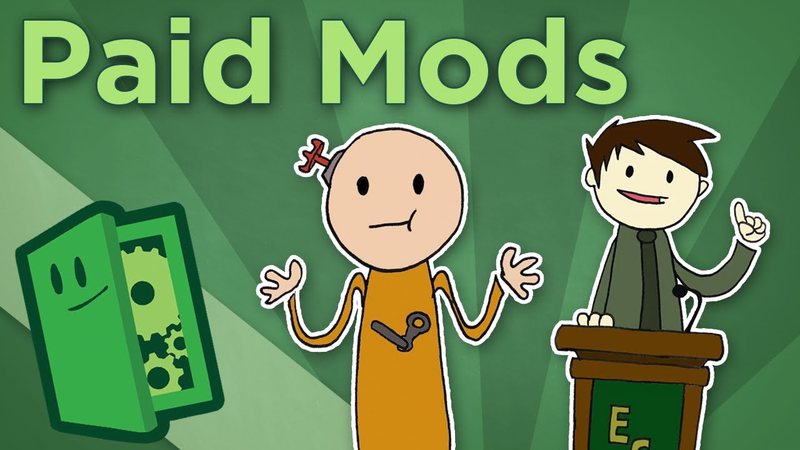
Paid Mods - Should Game Mods be Sold? - Extra Credits
The introduction of paid mod marketplaces, such as the initiative attempted by Valve on the Steam Workshop, represents a significant shift in the gaming industry’s ecosystem.
- Paid mod marketplaces, such as the initiative attempted by Valve on the Steam Workshop, introduce a model where creators receive a percentage of sales, such as 25%, to incentivize professional-grade work.
- The shift to paid content creates significant legal risk for developers, who may face litigation if modders include unlicensed or copyrighted material in products sold for profit.
- Monetization necessitates a transition from hobbyist output to professional-grade stability, shifting the burden of customer support and quality assurance onto the game developer.
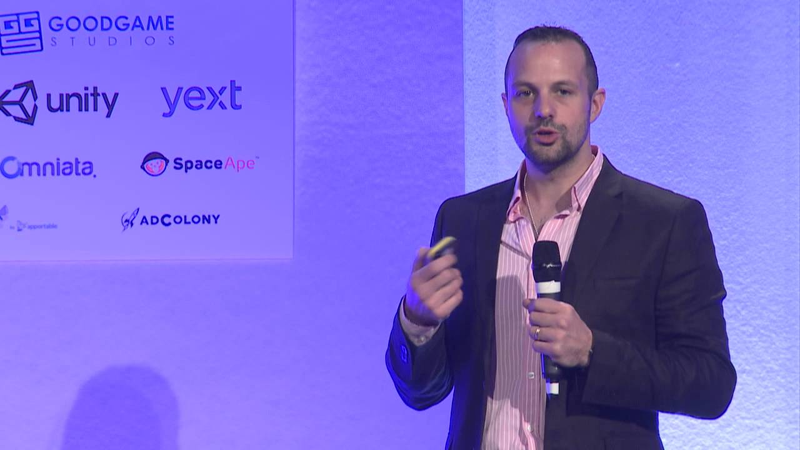
Top tips for great game PR
Securing effective media coverage for mobile game launches requires a strategic approach that prioritizes relationship building and professional preparation over mass-market solicitation.
- Cultivate long-term, non-transactional relationships with journalists to build trust and recognition well before a major game release.
- Provide media with early access to the game at least one week before the official launch to ensure sufficient time for review and coverage.
- Research and target specific journalists, platforms, and genres that align with the game's profile to avoid irrelevant pitches and maximize efficiency.
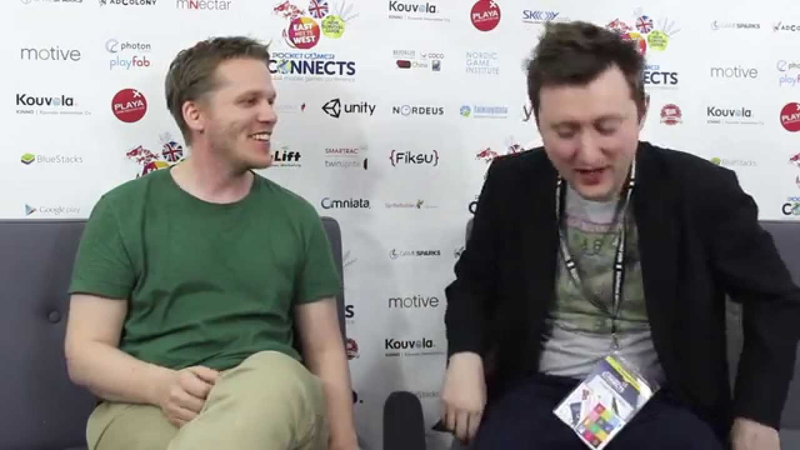
Very Big Indie Pitch 2015 winner - Joel Nystrom from Ludosity
The Swedish developer Ludosity, established in 2008, emphasizes the growing importance of physical, social, and unconventional gameplay in the current indie market.
- Ludosity, established in 2008, identifies a market shift toward physical and social gameplay, exemplified by their collaborative title 'Progress' which uses shared physical discomfort as a core mechanic.
- Success in the volatile mobile gaming market requires developers to maintain strict product focus and avoid the common pitfall of over-committing to excessive feature sets.
- The mobile industry is currently defined by a 'gold rush' mentality, characterized by high competition and the prevalence of low-effort app flipping and re-skinning.
Alistair Aitcheson on why you should be always pitching
The practice of pitching serves as a critical tool for indie developers, functioning not only as a promotional strategy but as a fundamental exercise in game design refinement.
- Pitching serves as a diagnostic tool that forces developers to identify and prioritize the most engaging mechanics by articulating the game's core value proposition to others.
- Developers should prioritize immediate accessibility and intuitive rules, allowing the game's core loop to demonstrate its own merit without requiring extensive explanation.
- Treating every interaction as a pitch helps developers bridge the gap between their intended design and the actual player experience.

Will Nintendo be successful making mobile games?
Nintendo’s March 2015 decision to enter the mobile gaming market through a partnership with DeNA marks a significant strategic shift for the company.
- In March 2015, Nintendo shifted its long-standing policy of exclusive hardware development to enter the mobile gaming market through a strategic partnership with DeNA.
- The move was prompted by the declining performance of the Wii U and 3DS consoles, which led to Nintendo’s first period of financial losses in decades.
- Nintendo aims to leverage its iconic intellectual property, such as Mario, Donkey Kong, and Pokémon, to reverse its financial trajectory on smart devices.
Fable Legends - Taking a Risk with AAA Quality Free-to-Play - Extra Credits
Fable Legends represents a significant industry experiment by attempting to bridge the gap between high-fidelity AAA production values and the free-to-play business model.
- Fable Legends attempts to bridge the gap between high-fidelity AAA production values and the free-to-play business model to address player dissatisfaction with low-quality, exploitative titles.
- The project utilizes cross-platform play between Xbox One and Windows 10 to build the large, diverse player base required to support its complex, asymmetric multiplayer design.
- High-fidelity AAA assets create significant financial and operational risks, as their long development cycles may struggle to meet the frequent content update demands of a free-to-play audience.

Behind the numbers at King, Gamevil and Com2uS
The financial performance of King, Gamevil, and Com2uS during the 2014 fiscal year highlights critical shifts in mobile gaming monetization, regional expansion, and portfolio management.
- King reported $2.4 billion in 2014 annual sales, but year-on-year Q4 bookings declined 7% as the Candy Crush Saga franchise entered a mature phase.
- King is successfully diversifying its revenue, with non-Candy Crush Saga bookings reaching $324 million in Q4 2014, a 23% increase quarter-on-quarter.
- While King’s total number of unique paying players is declining, the company is offsetting this by increasing the average revenue per player through refined monetization mechanics.