Game Publishing reports and market data
Documents

Do Game Developers Still Need Publishers in 2020?
The debate over whether independent game developers require publishers in the modern market centers on balancing creative autonomy against the need for financial stability and development support.
- The primary value of modern publishers has shifted from distribution and marketing to providing capital for full-time development and additional talent to accelerate production timelines.
- A developer's decision to partner should be based on their experience level, as newcomers risk predatory revenue-sharing agreements that offer little tangible support.
- Established developers with a proven track record and an existing audience possess the necessary leverage to negotiate contracts that protect creative control and scheduling flexibility.
Putting the Developer First: From Veterans to Indie Publisher PG Connects Digital #2
Skystone Games, founded by industry veterans Bill Wang and David Breivik, operates as a global, multi-platform publisher with a core mission to prioritize developer needs and long-term partnerships.
- Skystone Games, founded by industry veterans Bill Wang and David Breivik, operates on a 'developer-first' model that prioritizes long-term partnerships and transparency over traditional service-provider dynamics.
- The publisher targets a niche of high-quality, hardcore titles, intentionally avoiding the casual gaming market to maintain a specialized competitive position.
- To optimize development costs, the firm strategically partners with studios located in regions with lower costs of living, specifically Eastern Europe, Asia, and South America.
Keynote: Turning Games Green: How the Industry is Signing up to Play for the Planet PGCD #2
The Playing for the Planet Alliance, a United Nations-led initiative, represents a critical shift in the gaming industry’s approach to environmental responsibility.
- The Playing for the Planet Alliance, a UN-led initiative, unites 24 major gaming companies reaching over one billion monthly active users to drive industry-wide decarbonization.
- Studios are required to move beyond passive awareness by measuring their total carbon footprint, which must include the energy consumption of player devices.
- Operational sustainability efforts focus on optimizing delivery methods, transitioning to carbon-neutral models, reducing corporate travel, and utilizing sustainable cloud partnerships.
Superstar Session: Lessons Learned When Including Third Party Content in Your Videogame PGCD #2
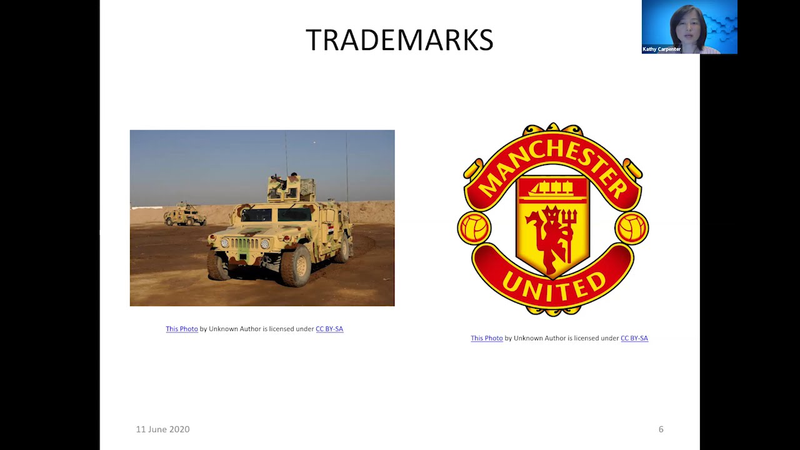
The session provides an expert overview of the legal complexities involved in integrating third-party intellectual property into video games.
- Developers must secure formal written contracts for all third-party intellectual property, as verbal agreements provide no legal protection and leave studios vulnerable to litigation, injunctions, and revenue loss.
- Copyright protection generally lasts for the creator’s life plus 70 years, though specific jurisdictions like France may extend this duration based on factors such as military service.
- Fair use is a narrow legal defense in the United States that is rarely applicable to commercial video game assets, meaning developers cannot rely on it to avoid licensing requirements.
Superstar Session: MicroProse Then & Now PG Connects Digital #2
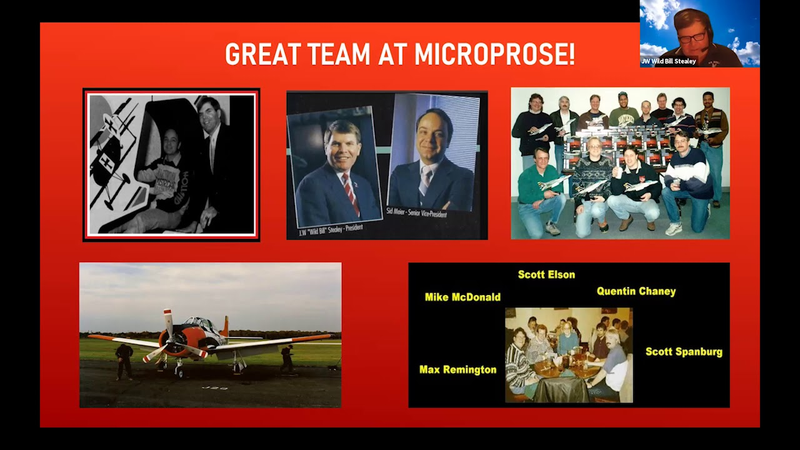
MicroProse is undergoing a strategic revitalization aimed at reclaiming its historical status as a leader in military and strategy simulations.
- MicroProse is undergoing a strategic revitalization to reclaim its market position as a leader in military and strategy simulations by blending its legacy design philosophy with modern technology.
- The studio is modernizing its classic intellectual properties while simultaneously building a pipeline of new titles, including Sea Power, Second Front, and Task Force Admiral.
- Development efforts prioritize deep immersion through the integration of sophisticated physics engines and dynamic artificial intelligence.
Licencing & Business Development at Paradox PG Connects Digital #2
The licensing and business development strategy at Paradox Interactive focuses on expanding the company’s core video game brands into diverse media segments, including tabletop role-playing games (TTRPGs), comics, fiction, board games, and card games.
- Paradox Interactive utilizes a transmedia licensing strategy to extend core video game brands like World of Darkness, Cities: Skylines, and Europa Universalis into tabletop games, comics, fiction, and card games.
- The World of Darkness franchise operates as a shared meta-plot where narrative developments in video games are synchronized across physical products and novels to create a cohesive brand ecosystem.
- Licensing serves as a strategic bridge that allows Paradox to explore niche categories and new technologies, such as virtual reality, without diverting internal resources from core grand strategy and management game development.
Are You SEGA’s Next Big Hit? PG Connects Digital #2
Sega Searchlight, the incubation arm of Sega Europe, focuses on identifying and partnering with talented development studios to create original intellectual property.
- Sega Searchlight acts as an incubation arm for Sega Europe, specifically targeting independent studios to develop original intellectual property with the long-term goal of potential full acquisition.
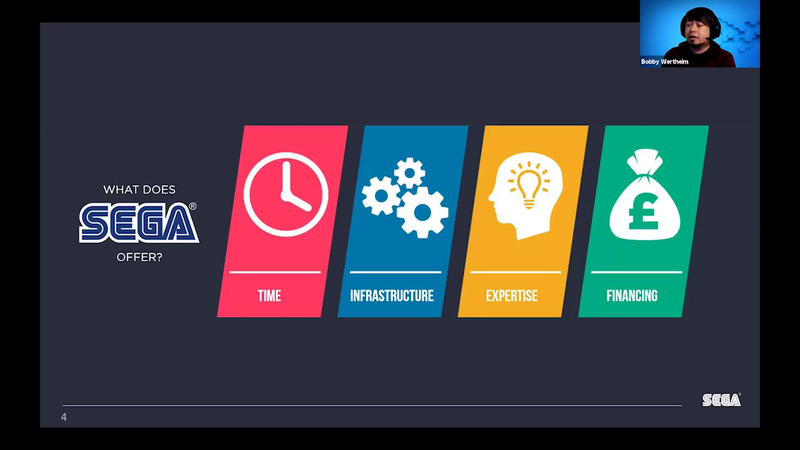
- The partnership model provides full project financing while allowing developers to retain creative ownership of their intellectual property and maintain their unique studio culture.
- Partner studios receive access to Sega’s corporate infrastructure, including human resources, market research, technical support, and global marketing expertise.

Working with Independent Developers: Lessons Learned Over the Years PG Connects Digital #2
The independent game development landscape is characterized by a high barrier to commercial viability, where only approximately one percent of projects successfully recoup their initial investments.
- Only approximately one percent of independent game projects successfully recoup their initial investments, highlighting the extreme difficulty of achieving commercial viability.
- Success requires a shift away from legacy marketing tactics like traditional media and physical trade shows toward direct community engagement and platform-specific visibility.
- Developers must prioritize rigorous project planning, specifically through the creation of comprehensive game design documents, to avoid failure caused by unrealistic expectations.
What does Live Ops mean Anyway? PG Connects Digital #2
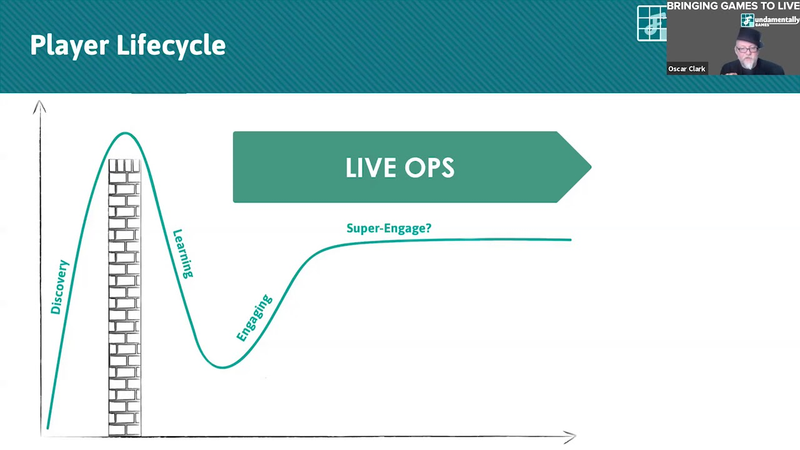
Live operations, or Live Ops, is defined as the strategic process of maximizing player engagement and retention by continuously delivering value, content, and community-driven experiences.
- Live Ops is the strategic process of prioritizing player retention over user acquisition to ensure long-term game viability and revenue growth.
- Effective Live Ops requires a shift to a service-oriented model, necessitating robust backend infrastructure built during the initial concept phase to support agile updates and bug fixes.
- Developers should implement a predictable pipeline of content, including daily challenges and seasonal events, to build player trust and manage expectations.

Anime IP in Games | Crunchyroll's Plans for Gaming
The anime-based gaming market presents a significant opportunity for expansion in Western territories, though it faces distinct challenges regarding audience expectations and localization strategies.
- Western expansion for anime-based games requires moving beyond brand recognition to provide deep game mechanics, robust end-game content, and a high cadence of live operations.
- Japanese publishers frequently struggle in Western markets by treating these regions as an afterthought rather than tailoring localization and strategic focus to local expectations.
- Role-playing games (RPGs) are the most effective genre for the Western anime audience, as they better leverage narrative depth and character-driven experiences compared to casual genres.

The Evolution of Dynasty Games PG Connects Digital #2
Toplitz Productions is redefining the simulation genre by integrating deep narrative and life-management mechanics into traditional functional gameplay.
- Toplitz Productions is evolving the simulation genre by blending traditional functional tasks like farming and logging with deep narrative, social interaction, and decision-tree mechanics.
- The 'Dynasty' series, specifically 'Medieval Dynasty' built on the Unreal 4 engine, serves as the primary example of combining open-world sandbox structures with survival and village-building progression.
- The studio utilizes an incremental development philosophy, breaking complex projects into manageable layers to refine foundational mechanics based on direct community feedback.
Social Media Influencers and Non-Traditional Marketing: Legal Pitfalls and Loopholes
The Federal Trade Commission mandates that any material connection between marketers and influencers must be transparently disclosed to consumers to prevent deceptive advertising.
- The Federal Trade Commission requires transparent disclosure of all material connections between marketers and influencers, including cash, cryptocurrency, free games, and in-game assets.
- Companies bear ultimate legal responsibility for the conduct of their influencers, even when marketing campaigns are managed by third-party agencies.
- Disclosures must be immediately visible and cannot be buried within excessive hashtags; live streams require both audible and text-based notifications at the start and throughout the session.