Game Publishing reports and market data
Documents
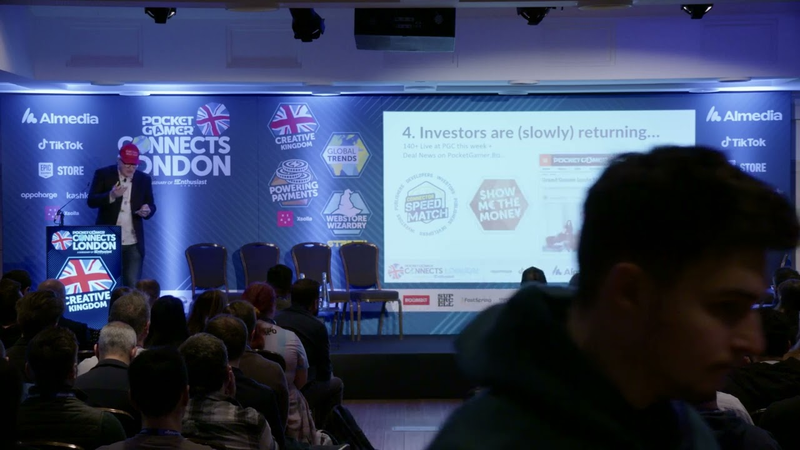
Welcome To PG Connects London 2025 - Chris James
The Pocket Gamer Connects London 2025 conference, hosted by Steel Media CEO Chris James, serves as a strategic industry gathering aimed at analyzing the current state of the global games market and identifying growth opportunities for the year ahead.
- The global games industry generated between $188 billion and $200 billion in revenue last year, maintaining its position as the world's largest entertainment sector.
- Approximately 40,000 industry jobs were lost globally over the past 18 months, though recruitment activity remains ongoing for those seeking new roles.
- The distribution landscape is shifting away from the Apple and Google duopoly, with new app stores and direct-to-consumer portals emerging from companies like Aptoide, Huawei, Samsung, and Epic Games.

How to train consumers to use webstores | David Stelzer from Xsolla #PGConnects
The gaming industry is experiencing a significant shift toward direct-to-consumer monetization through web stores, a trend driven by the need for greater revenue retention and enhanced user data collection.
- Direct-to-consumer web stores allow developers to bypass mobile app store commissions, resulting in an average income increase of approximately 30%.
- The industry is shifting toward web stores to improve revenue retention and gain direct access to user data for better A/B testing and personalized marketing.
- Developers incentivize users to move transactions off-platform by offering exclusive campaigns, superior value, and better pricing on web storefronts.

Publishing 101: What Game to Build, Why, and Which Publisher is Right for You by John Wright
Mobile game publishing serves as a critical strategic lever for developers navigating a challenging financial landscape characterized by a five-year low in venture capital funding.
- Publishers prioritize a 'hunting' strategy over 'farming,' with hunting yielding a 1-in-20 to 1-in-50 success rate compared to the 1-in-300 to 1-in-500 success rate of portal-based farming submissions.
- Developers should adopt a 'plus one' strategy by iterating on existing successful game mechanics rather than pursuing high-risk, true innovation, which has a high failure rate due to unpredictable market reception.
- Lean development teams should focus exclusively on core product engineering and MVP development, leveraging publishers to provide the necessary capital, marketing expertise, and expensive third-party technology stacks.

So.... my game is in Steam Next Fest RIGHT NOW. Here's how it's goin
Steam Next Fest serves as a pivotal mechanism for independent game developers to generate significant pre-launch momentum, primarily through the strategic deployment of high-quality demos.
- Launching a demo 1–2 weeks before Steam Next Fest allows for a longer window to gather feedback and build momentum, potentially yielding over 20,000 wishlists prior to the event start.
- Effective trailer structure follows a 'big action, story/motive, return to action' formula to maintain viewer engagement without causing fatigue.
- Influencer outreach should be targeted by genre (e.g., mascot horror or Bioshock-style games) and utilize 'ladder climbing,' where smaller successful videos are used as social proof to secure coverage from larger creators.

You're Losing Money Without THIS Monetisation Method
The primary thesis of this analysis is that implementing a direct-to-consumer (D2C) web shop strategy is an essential requirement for mobile game publishers in 2025 to maximize revenue and gain deeper insights into player behavior.
- Publishers integrating direct-to-consumer (D2C) web shops into their marketing funnels are reporting revenue increases of 30% or more.
- Implementing a D2C web shop strategy is considered an essential requirement for mobile game publishers in 2025 to maximize earnings and bypass app store fee structures.
- Server-to-server integrations between platforms like Xsolla and AppsFlyer are being used to bridge data gaps caused by the deprecation of IDFA, allowing for accurate user acquisition and spending attribution.
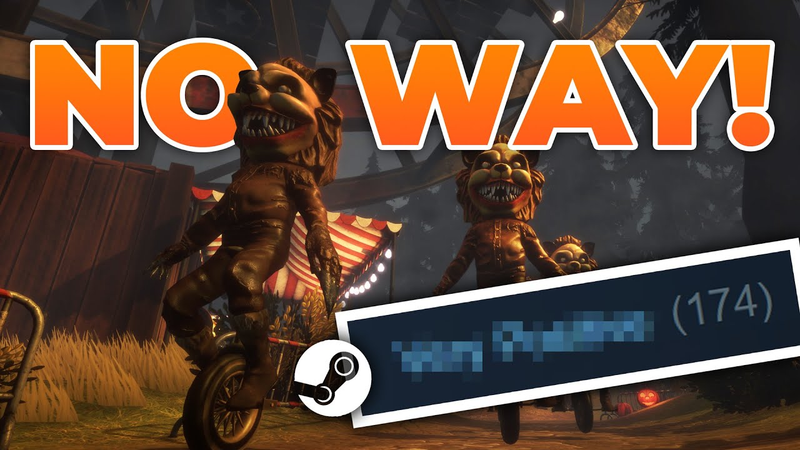
Here's How My Demo Launch Went On Steam!
The launch of the Twisted Tower demo on Steam serves as a case study for the challenges and strategic importance of releasing early-access content.
- The 'Twisted Tower' demo achieved a 92% positive review rating from 180 Steam reviews, successfully reaching the number four spot on Steam's 'Free Trending' tab.
- Launching a standalone demo page on Steam exposes the developer to immediate public reviews, which can significantly impact the game's overall reception and perceived credibility during the launch window.
- Technical issues, such as frame-rate dependent mouse smoothing and lack of ultrawide monitor support, triggered immediate negative feedback that required rapid post-launch patching.
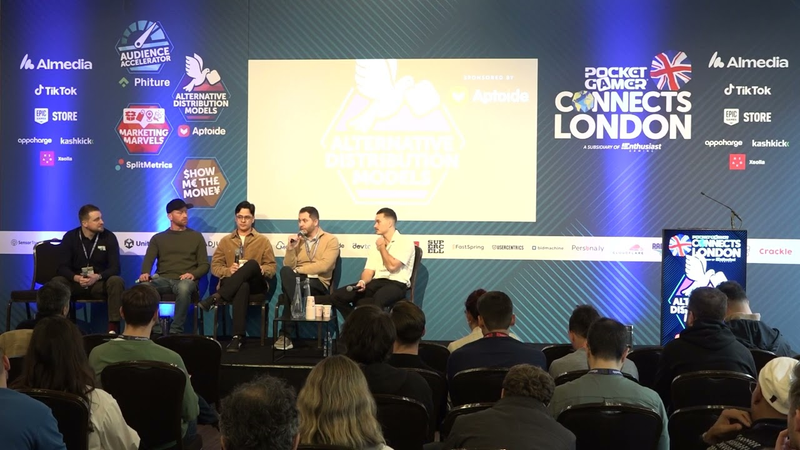
Panel: A New Era – How Alternative App Stores Are Opening Up New Opportunities For Game Makers.
The mobile gaming landscape is undergoing a structural transformation as alternative app stores evolve from niche, Asia-centric platforms into a viable global strategy for developers.
- Alternative app stores have transitioned from niche, Asia-centric platforms into a viable global strategy for mobile game developers seeking to bypass the Apple and Google duopoly.
- These platforms improve developer profitability by offering higher in-app purchase margins and greater economic flexibility compared to traditional storefronts.
- Alternative stores currently represent the third-largest segment by user volume in the mobile gaming market, indicating a significant shift toward a fragmented, multi-platform ecosystem.

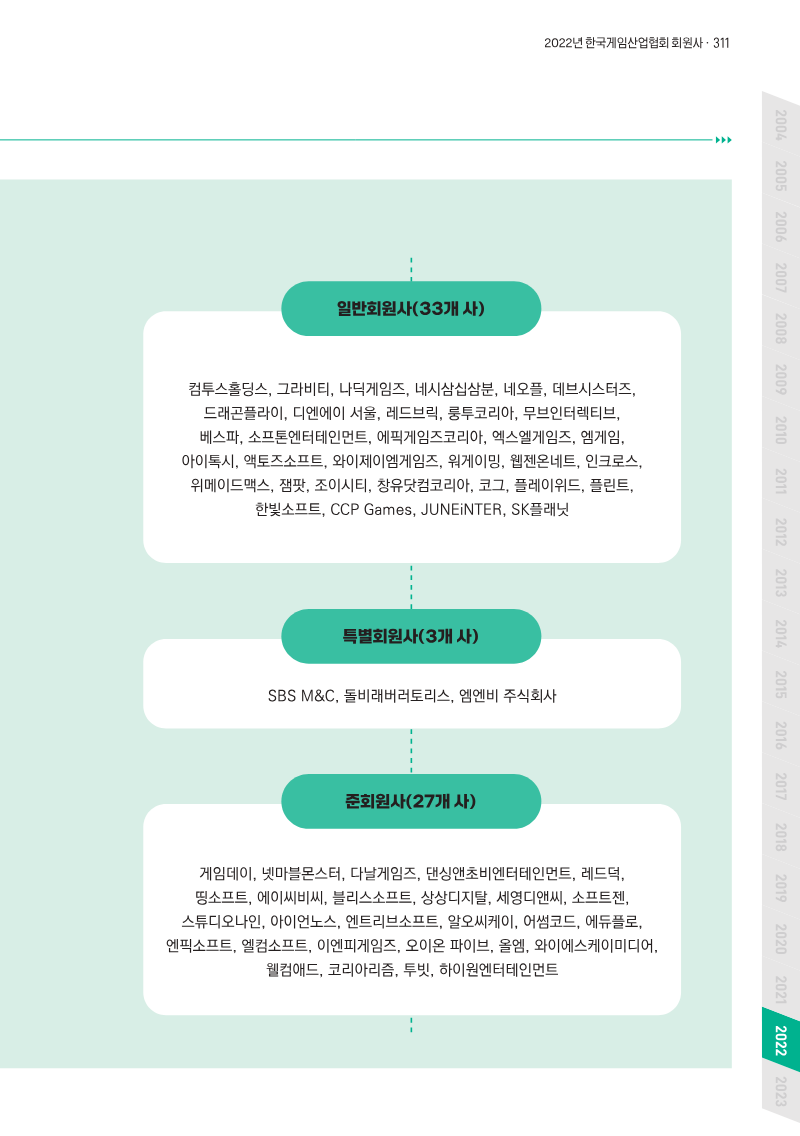

20 Years of the Korean Game Industry
The South Korean game industry has undergone a transformative evolution over the past two decades, growing approximately fivefold to reach a market valuation of 20 trillion KRW by 2023.
- The South Korean game industry grew fivefold over the last two decades, reaching a total market valuation of 20 trillion KRW by 2023.
- Mobile gaming became the industry's primary growth engine in 2017, officially surpassing PC-online revenue.
- The sector successfully pivoted from a niche PC-online focus to a multi-platform ecosystem, recently diversifying into console and subculture genres with international hits like 'P의 거짓' (Lies of P) and 'Dave the Diver'.
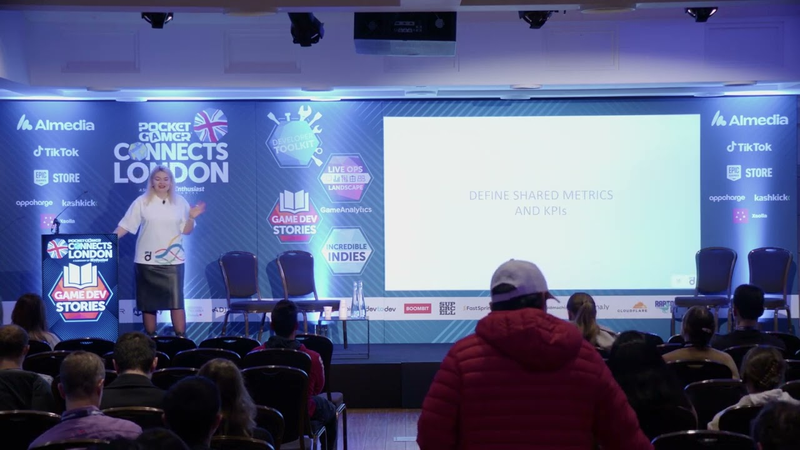
Session: Breaking Silos – Data Democracy To Maximise Teams Effort - Alla Tytarenko, devtodev.
Data silos represent a significant operational challenge in the gaming industry, often resulting in inconsistent metrics, duplicated efforts, and delayed decision-making.
- Data silos in gaming organizations cause operational inefficiencies by creating inconsistent metrics, duplicated efforts, and delayed decision-making.
- Establishing a single source of truth requires defining shared KPIs and documenting them in a centralized, accessible location to ensure all departments use identical metrics for performance indicators like retention and lifetime value.
- Organizations should conduct a comprehensive inventory of their existing tool stack to identify and eliminate redundancies, overlaps, and technical inefficiencies.

Fireside Chat: Paradigm Shifts – The Evolving Mobile Market And 3P Marketplaces.
The mobile gaming industry is undergoing a fundamental transition as developers increasingly prioritize direct-to-consumer distribution models to circumvent traditional platform constraints.
- Developers are actively shifting toward direct-to-consumer distribution models to bypass the industry-standard 30% commission fees imposed by incumbent mobile storefronts.
- Adopting alternative revenue-sharing models, such as the 88/12 split, is becoming a primary strategy for studios to improve financial sustainability amid rising production costs and market saturation.
- The industry is developing engine-agnostic, unified toolsets to reduce the technical complexity of multi-platform publishing and decrease reliance on legacy mobile ecosystems.
Session: Securing The Gaming Ecosystem From Development To Distribution - Jonathan Carvalho.
The gaming industry faces an increasingly complex security landscape, characterized by high-profile intellectual property leaks, sophisticated social engineering, and the proliferation of automated threats.
- Studios must transition from perimeter-based security to a zero-trust architecture to restrict developer and third-party access to only the specific applications required for their roles.
- The gaming industry is increasingly vulnerable to source code leaks and internal environment breaches caused by compromised VPNs, unsecured remote access, and shadow APIs lacking visibility.
- Organizations should leverage global edge networks to gain visibility into traffic patterns, identify unauthorized API endpoints, and automate protections against layer-7 and network-layer DDoS attacks.

Session: Unlocking The iOS Platform For User Growth – Key Updates On DMA, DMCC & Emerging....
The mobile application landscape is undergoing a significant shift as regulatory interventions and court decisions challenge the long-standing duopoly of Apple and Google.
- Customer acquisition costs (CAC) on iOS have risen by 60% since 2021, driven primarily by Apple's App Tracking Transparency (ATT) policy, increased market competition, and ad platform consolidation.
- The European Union's Digital Markets Act (DMA) now allows developers in Europe to utilize alternative app stores (such as Aptoide, Epic, and AltStore) and alternative billing systems to reduce platform fees from 30% to approximately 10–20%.
- Apple imposes a 'Core Technology Fee' (CTF) of €0.50 per user per year for apps distributed outside the official App Store, a policy currently under formal investigation by the European Commission for potentially creating excessive friction.