Game Engines reports and market data
Documents
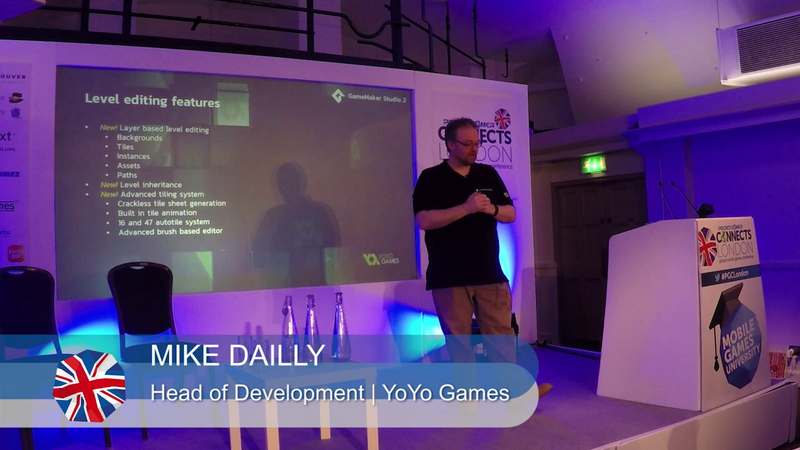
Fast, cross-platform development with GameMaker Studio 2
GameMaker Studio 2 serves as a comprehensive, cross-platform development environment optimized specifically for 2D game creation.
- GameMaker Studio 2 is a specialized 2D development environment designed to accelerate production cycles through a unified, streamlined workflow.
- The platform supports a broad range of export targets including Windows, Mac, Linux, iOS, Android, HTML5, UWP, Xbox One, and PlayStation 4.
- Development efficiency is improved through advanced level-editing tools, including level inheritance for global setting management and a tiling engine featuring auto-tiling and animated tiles.
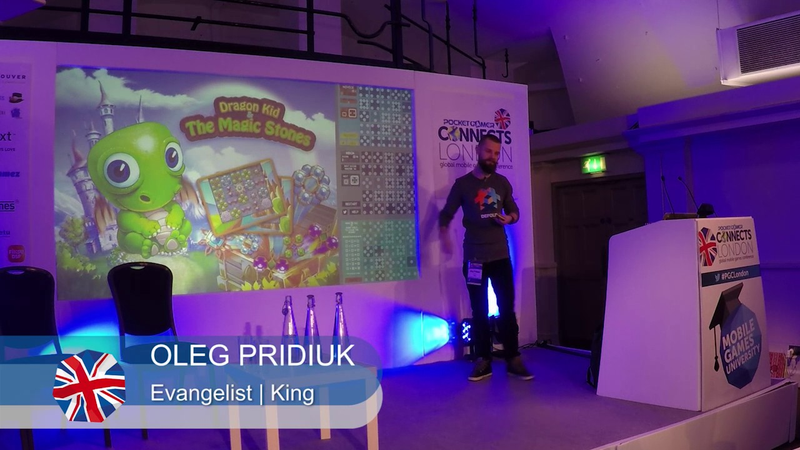
Why indie devs use King's Defold game engine
King’s Defold game engine serves as a specialized development solution designed to address the challenges of multi-platform game deployment, particularly for developers targeting mobile and HTML5 markets.
- Defold is a specialized game engine originally built by King to optimize multi-platform deployment, specifically targeting high-performance mobile and HTML5 markets.
- The engine achieved significant early traction with over 30 independent titles released within the first year of its public launch.
- The platform supports complex game development by allowing users to integrate C++ extensions, replace core components like physics engines, and utilize a runtime extension system.
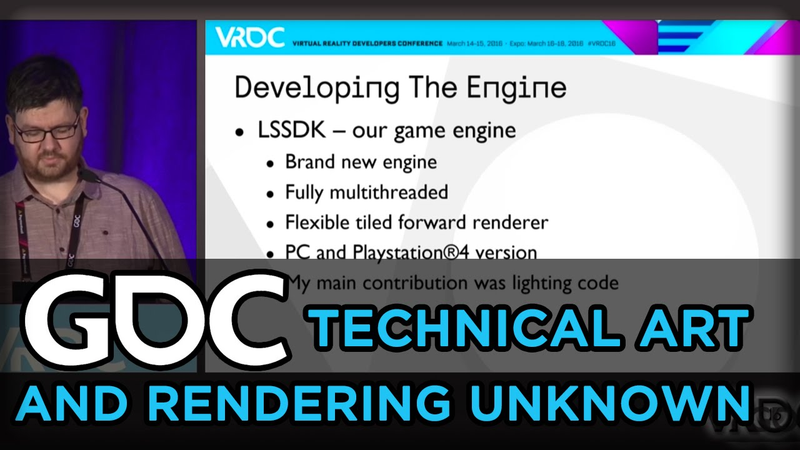
Fast and Flexible: Technical Art and Rendering For The Unknown
This 2016 presentation outlines the technical strategies employed by Sony London Studio to navigate the uncertainties of early virtual reality development on the PlayStation 4.
- Sony London Studio achieved a 25% reduction in GPU frame time by implementing a resolution gradient technique that masks peripheral pixels to maintain the 60 FPS requirement for VR.
- The studio utilized a tiled forward renderer in their LSS DK engine to avoid the constraints of G-buffers, allowing for rapid experimentation with varied shading models and stylized lighting.
- Real-time, voxel-based Light Fields were adopted to replace traditional light maps, providing superior ambient lighting and depth while accelerating the artistic iteration process.

Texturing Uncharted 4: A Matter of Substance (presented by Allegorithmic)
The production of Uncharted 4 marked a pivotal shift in high-end game development by integrating a node-based, procedural texturing pipeline to manage the creation of approximately 3,000 assets.
- Naughty Dog integrated a node-based, procedural texturing pipeline using Substance Designer and Substance Painter to manage the production of approximately 3,000 assets for Uncharted 4.
- The team utilized a modular library of simple, reusable nodes rather than monolithic tools, allowing 80 percent of the game’s assets to be produced within the Substance suite.
- Standardizing the material pipeline enabled seamless collaboration between internal staff and external outsourcing partners while maintaining a consistent artistic vision.
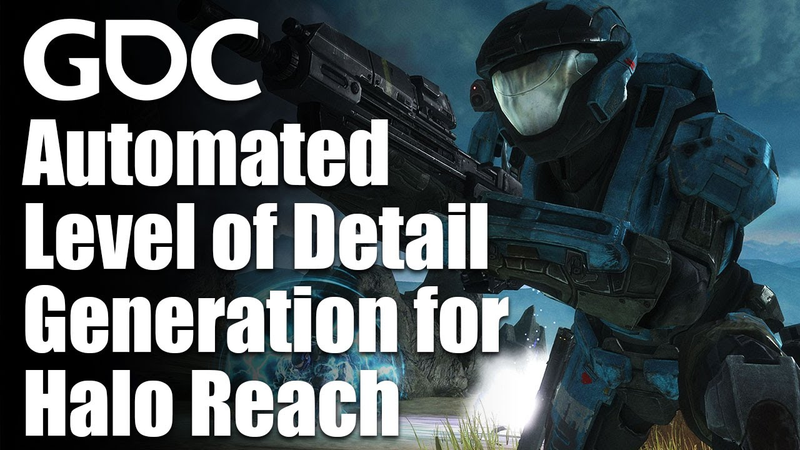
Automated Level of Detail Generation for Halo Reach
The automated Level of Detail (LOD) generation system developed for Halo: Reach addressed the studio’s need for a scalable, high-performance rendering solution as the game’s visual fidelity requirements increased.
- The automated LOD system for Halo: Reach achieved significant performance gains, rendering character impostors 10 to 20 times faster and static environment objects 50 to 100 times faster than original models.
- The pipeline utilizes voxelization via six-axis orthogonal projection to clean up geometry, effectively automating 90 to 95 percent of asset simplification tasks.
- To optimize distant character animation, the system maps original vertex weights to a single dominant bone, drastically reducing computational overhead.

Frostbite: Implementing a Scripting Solution for Your Editor
The Frostbite engine addresses the complexities of large-scale game production by implementing a custom scripting solution built on IronPython and .NET.
- Frostbite implemented a custom scripting framework using IronPython and .NET to automate repetitive tasks and optimize asset management for large-scale titles like Need for Speed: The Run and Dragon Age: Inquisition.
- The architecture utilizes a REPL-based interface that exposes engine editor functionality, such as asset selection and property manipulation, directly to technical artists and designers.
- By using a thin wrapper around .NET assemblies, the system enables the execution of complex batch operations across thousands of assets, significantly reducing iteration times.
Multithreading the Entire Destiny Engine
The Destiny engine architecture achieves high-performance, cross-platform scalability by transitioning from traditional synchronization primitives to a sophisticated, job-based multithreading model.
- The Destiny engine utilizes a fiber-based, job-driven architecture to replace traditional synchronization primitives, enabling high-performance scalability across diverse hardware generations including PS3 and Xbox 360.
- Workloads are organized into discrete job sequences with explicit dependency management to prioritize simulation tasks and minimize latency.
- System integrity is maintained through a strict execution environment that uses resource handles, producer-consumer models, and whitelisting to prevent data races and unsafe memory access.
Tech Toolbox for Game Programmers
Custom tool development serves as a critical strategy for game programmers seeking to optimize development pipelines and maintain creative autonomy.
- Prioritizing bespoke, lightweight utilities over third-party software allows teams to achieve 80 percent of required functionality with only 20 percent of the typical development effort.
- Embedding runtime debugging tools like the C++ library Dear ImGui directly into the game allows non-programming staff to inspect game states, democratizing technical access and improving team communication.
- Custom tools such as node-based dialogue editors and ID-based synchronization systems serve as living documentation, providing a more accurate and accessible shared vocabulary than traditional written guides.

The Reality of Making Hololens Games
Developing for the HoloLens relies on a streamlined integration between the Unity 3D engine and the HoloLens Toolkit, which provides essential prefabs for interface design, gesture recognition, and spatial mapping.
- The HoloLens market is currently restricted to specialized enterprise sectors like logistics and construction, as hardware limitations and a narrow field of view prevent mass-market consumer viability.
- Development relies on the integration of the Unity 3D engine with the HoloLens Toolkit, which provides pre-built modules for gesture recognition, voice commands, and spatial mapping to minimize custom coding.
- Spatial mapping technology allows virtual objects to interact with the physical environment by generating a 3D mesh that supports physics-based collisions and depth-buffer occlusion.
Using Level Design Tools Expressively
Level design in narrative-driven, first-person games relies heavily on the expressive use of fundamental scripting tools to create immersive, human-like interactions.
- Level designers can create immersive, human-like character behavior by repurposing standard scripting tools like triggers, delays, and counters rather than building complex, over-engineered systems.
- Simulating naturalistic character behavior is achieved by using delays to mimic human cognitive pauses, effectively bridging the gap between rigid machine logic and organic interaction.
- Implementing hysteresis—triggering events based on thresholds rather than binary switches—prevents mechanical dithering and technical bugs during erratic player movement or AI spawning.
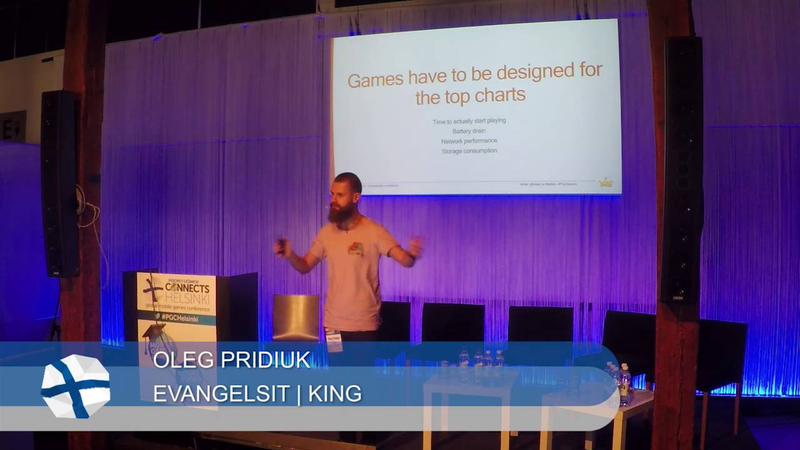
The tech and tools Candy Crush Saga maker King uses to make and release games
King utilizes a specialized technological infrastructure to maintain its position in the competitive free-to-play mobile gaming market.
- King prioritizes technical performance—specifically startup times, battery consumption, and network reliability—to ensure its games remain playable on low-end hardware, including devices running Android 2.3.
- The company utilizes a hybrid engine strategy, using Unity for rapid prototyping while relying on proprietary engines like Defold and Fiction Factory for final production to meet strict performance standards.
- King views technical efficiency as a prerequisite for marketing success, noting that poor runtime performance can effectively nullify investments in user acquisition.
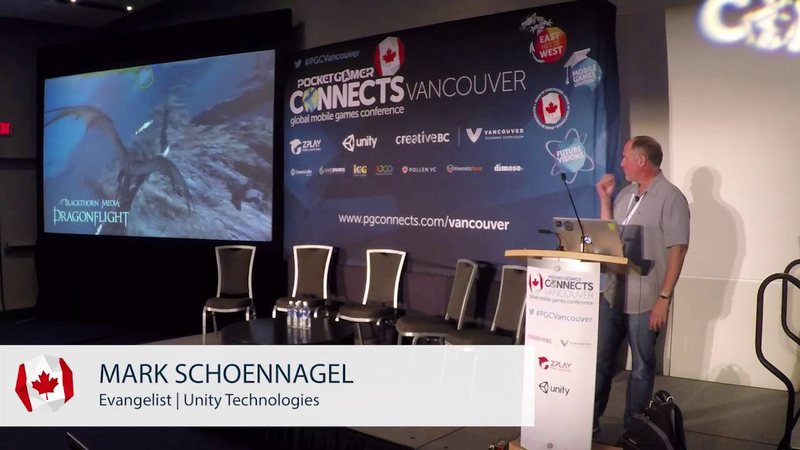
How to integrate Unity Analytics, ads & in-app purchases into your game with Unity Services
Unity provides a comprehensive suite of integrated services designed to streamline the monetization and optimization of games across various platforms and genres.
- Unity Services centralizes advertising, in-app purchases, and analytics within the editor to eliminate the need for managing individual backend communications with multiple app stores.
- The platform supports diverse monetization models, including consumables, non-consumables, and subscriptions, through standardized classes that abstract store-specific technical requirements.
- Developers can track granular player behavior, such as coin collection and engagement metrics, using custom dashboards and heat maps to inform game balance and retention strategies.