1 free read left. Create a free account for unlimited reading + AI research.
Create free account
The tech and tools Candy Crush Saga maker King uses to make and release games
Key insights
6 takeaways- 01King prioritizes technical performance—specifically startup times, battery consumption, and network reliability—to ensure its games remain playable on low-end hardware, including devices running Android 2.3.
- 02King maintains a shared backend technology stack across its portfolio to standardize social features, analytics, and state synchronization, which facilitates scalability.
- 03The company utilizes a hybrid engine strategy, using Unity for rapid prototyping while relying on proprietary engines like Defold and Fiction Factory for final production to meet strict performance standards.
- 04The proprietary Defold engine is specifically optimized for 2D, cross-platform performance, supporting both web-based play and low-end mobile devices.
- 05While King’s internal engine roadmap is driven by the specific requirements of its own franchises, the company provides the Defold engine as a free resource for the broader developer community.
- 06King views technical efficiency as a prerequisite for marketing success, noting that poor runtime performance can effectively nullify investments in user acquisition.
Ask AI about this video
Transcript
Hello. Thanks for coming. I was just sitting in the corner watching people coming over. I was like, yes, that's for my talk. And yeah. So, um I have 20 minutes and lots of stuff to tell. So, I'll be talking fast. Um and for this talk, I wanted to make a small, well, experiment, if if you if you call it like that. I'll cover like the juiciest, the complex technology part right on the start of my talk. For those who know busy running infomating and all that, who has like like 3 minutes, you're going to be here.
And then I'm going to explain what how and all that. So, um the short thing. The short thing is within King, we use three game engines, Unity, Fiction Factory, and Defold. So, um Fiction Factory is the one that we used to build Candy Crush Saga and like some of the other titles. Defold is the new one that we're building some of the new IPs and um Blossom Blast Saga. That's the first published Saga franchise game with Defold. And Unity. Do you know any Unity game that King has published? You don't. And that's the proper answer because there is we don't because we don't. We do develop games with Unity. We never publish them because
and that's what my talk is about, pretty much. Uh not like why we don't use Unity, but like the internal processes. Don't get me wrong. And now we'll start the actual talk. So, this is me and why would you listen to me? Well, first, I'm kind of I've been around for a while. Unity Technologies since that was a small startup in a hut in Fredericksburg outside of Copenhagen, like it was 20 six years after went into a game development company, spent year and a half-ish there. Games production following, like I've been there and like lots of technology guys. And now at King, I'm within a King technology department. Um joined mostly for the job like King evangelist. Can you invent cooler job title?
Um right. And um I don't just travel and talk about technology. I I I also care about some um complex things such as game engine round tables. I've done a few. Um assembling the big guys from the top game engines and having them discuss discuss about the industry challenges and like befriending Unity and then real and Lumberyard and yeah, the fold. It's it's kind of fun. Um game dev streaming, I think that's the next big thing as in when all those people on Twitch going to watch not people playing the game, but people making games. How to make that in an exciting and engaging way? That's complex problem. Um working with different people of solving that. Offline game jams, that's also cool. I I'm strong believer in game jams. I think that's the way to move the
industry forward. And I feel that there are lots of places where offline game jams could be very cool. And like how to make that, I'm working on that. If you care as well, do talk to me. Now, after we after we eventually met met each other. So, this very simple slide explains why um why do we need to care to talk about technology? Like why I made this presentation here today. Hm, it's interesting that here I have different slides. Well, yeah, okay. Anyways, let's No, no, yeah, it's fine. It's fine. It's fine. It's fine. It's um Right. So, right. Um
What was I? Right. So, what do we need like to to to ship a game? Well, well, first like the game engine provides like the tools to use. They then you make an APK or whatever executable file, you upload it. That used to be before. Now, when we care when we talk about like making games, in most cases we actually talk about mobile games since like that's what Indies can do these days. Also, we're talking about free-to-play games since you don't have much other options on mobiles. And um Hm. Somehow I messed my slides. But yeah, it's it's it's even more fun. With that. Um So, my talk today with all the mess messed up slides and a bit of dancing because of that is what the processes that we have inside to actually develop and ship
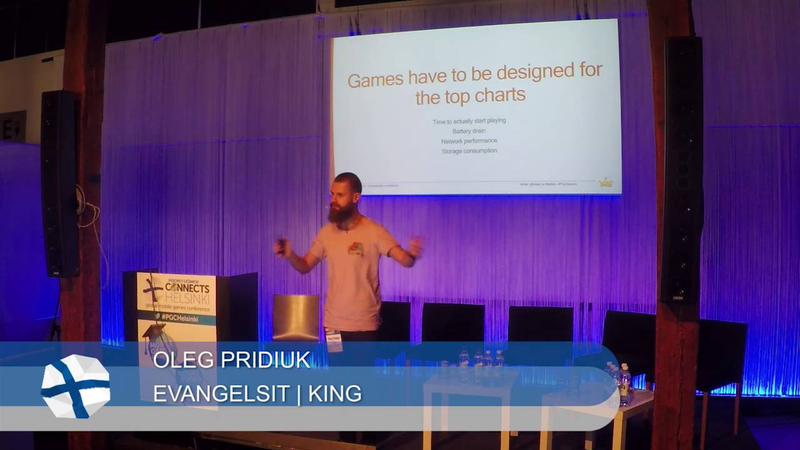
free-to-play mobile titles that are dedicated for casual audience and casual audience is a very different audience in it's people who still use for example Android Gingerbread devices. Do we have people old enough to know what is Android Gingerbread? Anybody? Yeah, I see few people nodding. So, that's Android 2.3. I think it's about 2% of of gaming audience and good luck finding game engines that support that. So, but we care about these people. We care about startup times and that's what this slide is about. That um in order for all the marketing efforts for all this traffic efforts for all these you know partnerships efforts to actually make sense for the game, the game has to load fast and like fast as in seconds. The importance for that is um
what is called meaningful completed games sections. Meaningful and completed as in the time frame when a player wants to play a casual kind of title is very limited and like the player normally knows I have like five maybe six minutes. I want to start playing the game and finish it. If if if I'm not convinced that I can do it, I'll you know check the Twitter, I check Facebook, check emails, whatsoever. That's what I'm saying like meaning meaningful and completed. That's why the startup time should be within like not for the only for the game but for the game session. Should be within seconds and we benchmark that. Also the battery drain. Like if you think players play games upon commute, right? So when in the morning when they go to the office they have full battery they're fine playing any other game. In
the evening when they coming back from the office home, what's their battery status is? 30%? 20%? Hmm? Maybe. So obviously if a game drains battery, a player would be hesitant to to launch that. And the least I mean, like the less frequently the player launches your game like the player forgets about your game. The player gets used to a different game. And your game gets like lower and lower in the priorities. So that's what we care about. That's what we do tests. Network performance. I speak to you spoke to lots of people here and at different events and like, "Yeah, we're doing mobile game, we need lots of like analytics and yeah, our game requires persistent um connection to the server." Right, but like what about the trains, airplanes, tunnels, um you know, rural areas, developing markets where the internet's is are not that good in mobiles. Do you
cater to these players? We do and we care about that. Then storage consumption. I'm not talking about the initial download size because everybody talks about that. I'm talking about the updates. So when we're talking about free-to-play game on mobiles, we do the updates, bi-weekly updates, bi-monthly updates. This is the data. You It's not only about the features, it's about the content. Where do you store all that content? It's adds up and adds up and adds up to the game, right? So each month you ship 20, 50, maybe 100 max of additional content and it gets stored somewhere on some user's device. For example, a Christmas update pack, right? In a few weeks when most people or like like even player has consumed the Christmas pack content, what happens with the content? Does it stay on the device and and just, you know, and and and and takes the time takes the
space? Um especially in developed markets. Uh like with storage on the devices, like they still have 16, maybe sometimes 8 gig devices, and they use this apps that determine the storage offending apps and games, and um your game would be deleted. So, we actually do um performance tests uh for obviously also test like CPU CPU consumption, uh operating system memory consumption, and all other obvious um tests with within King portfolio, right? Um and also for the new new developed games like for the released games and for the developing games in development. And um but those four things uh I put here on the slides since uh it's not often that you hear about that.
And would you care about that? And that's why it's here. Cool. Now, back to the slide. Um when we're talking about mobile games, the it's like the way it works is it's we have a portfolio and uh such things as social features, business analytics, like various um um admin page for prices for you know in-game items and goods. Um states save file synchronization. This is all on the networking backend. And this is the so-called shared technology within our portfolio and like that's the only way you can keep the games portfolio pretty much. And that's why all these casual games today need this um
online backend thing. Otherwise, you cannot scale. But like this is common stack and this is aside from the games. The games just have to use it. The The technology stack that um that I want to focus today is actually the runtime technology, not the backend technology. So for the runtime, again, uh we use default and Fiction Factory as um so-called shipping engines. We still do lots and lots of development with Unity. I mean, Unity is a great tool. No one pretty much can beat it, I guess, in the in terms of speed of prototyping, speed of development again. But then when the game get gets greenlit, then we have to run the tests. Like, you know, how fast would the game start up? How fast would the levels load? How fast like something happens? Uh how how then how
what technology do you need to download updates? Um And again, for free-to-play games, you need you need to do this very very often. How fast can you create the levels? How deep can you integrate that with the for example, our network backend? And lots and lots of other questions. And um that's when it comes to well, our teams have to use eventually Fiction Factory, which is an internal lots of ugly SDKs kind of thing or default. Um I've put it here as a kind of takeaway thing since that's what you can take away from the session. Default like not only the inside that you know if you want to make a great game you have to make great a great game but also this piece of technology that we use inside. Um That's good for for all our like performance considerations and
requirements. The like the technology that allows us to release games for all these global markets to cater to people with very different devices with very different habits. So that's the technology that actually is internal and is driven by internal teams but actually it is available for free to everybody to use like if you earn two two millions tomorrow with that like we're happy about you. We we wouldn't take a cut. So feel free to earn that money. Um the cool thing is that it's developed by King for King. It's just free. It's also the bad thing. The good thing is that well whenever a big platform comes to us saying you know what like on the 7th of September we're releasing a new thing and why don't you support this in some of your cool coolest games? And this games
team would come to us saying you know what like engine people we need this cool thing implemented. So this allows this engine to support the cool things of the big platforms on day zero. So that's a cool thing about the engine. The less cool thing about the engine is that the road map is actually mostly driven by our internal needs. Meaning that for example Steam, do you know any King games on Steam? No? No? Yeah, correct. Correct, you don't. That's because we don't release on Steam, but some of the indies who want to who actually use Defold like they care about Steam and they come to us say "No what? Like what about Defold for Steam?" And then we're saying "You know what? Like you have to care about this yourself." Or we might help you a bit, but so there's a good sides and bad sides. Uh like a short pitch just of
The picture is totally irrelevant. I mean it's it's it's just a cool picture. The short pitch about the engine is it's exactly the engine made by kind of games that King does, right? So fast, performant, um 2D games, designed for multi-platform. The These games work on like properly work on HTML5 even on the mobile web browser. So like this is the technology that we care about and this is how we develop the engine. And the scripting language is Lua. Rendering loop is open as in if you can write in OpenGL, feel free to. Shaders are in GLSL. So like if E The engine assumes you have at least a single very technical person on the team. All the others can be less technical and and and you should be know what you're
doing like as a team. Then you would have a perfect um experience with Defold. Right? So that's exactly how we function at King. Uh very important slide. I'm not converting you to like I'm not stopping like you know what drop whatever you're switch to to our thing switch to our technology is not I'm just saying like this is how we do. If you feel we do we do it right and it kind of correlates to your bio rhythms feel free to try out this technology is free it's like no money's and short takeaway while we still have three minutes is the games have to be designed for the top grossing charts. Remember me saying you know the startup times battery storage consumption and other benchmarks. So in order for all this marketing initiatives to actually be efficient
the game should technology technologically work. um well So if runtime performance is poor well I mean it might spoil all this marketing efforts. um Part of our internal technology and tools is shared as default game engine. It's free so feel free to use it. It's awesome for 2D cross platform games and designed to perform well on low end devices and the web. And now I have a question. I have this nice video about King office. Or we do the Q&A. If no one raises the hand we're going to watch the video. So overall since we built the last office King has kept growing. We've added so much great talent to the company and I think as we grow we need to create more space.
So instead of kind of carrying the baggage of the past we wanted to have an environment whereby you know you get a clean slate in your head and you can then work forward without any kind of restraints. When people come down here the first time, everybody's like, "Oh my god, you have a forest." I think the forest is amazing. Um I think the forest is mind-blowing. You come in and it's like you're being hugged by the the actual studio, which is an incredible feeling. Well, the mental space around here is really, really cozy and calm. For me, as a producer, I need space where I can uh think, where I can explore. Having this calm area, it sort of oohs its energy. There are a lot of spaces in general where you can go. It's not only the forest. We have the meeting rooms. We have small different areas where you can actually go. There's a lot of places for people to meet for more intimate conversations or
kind of brainstorming sessions that are really really useful and and and fruitful if if looking for new ideas. Just wanted to share like something that all the projections on the ground are actually interactive. So, when you walk on them, it'll like make some kind of sound as if you're you're walking through water or you're walking on ice. The purpose of the forest at K36 was to create an area where nothing is basically required of you. You don't have to produce. You can just sit and just be yourself. And in those moments of pause, I think is when the greatest creative things happen. I I think it's an interesting office because we're in the middle of town. It's really a busy area of Stockholm. And at the same time, when you come into the office, it's very it's a calm, great environment to work and concentrate in. So, I think you get that blend of a a great place to be and a great place to work. Great place to be and great place to work. I I just wanted to show the environment where the teams reside and the engine team does reside. It's kind
of a cool collaboration thing. And well, that's This is how we consume the time for the Q&A session. But I'm available here and feel free to catch me. Thank you very much.
Summary
King utilizes a specialized technological infrastructure to maintain its position in the competitive free-to-play mobile gaming market. The company’s primary objective is to ensure that its casual titles remain accessible and performant across a vast range of hardware, including older devices such as those running Android 2.3. To achieve this, the development process prioritizes rigorous benchmarking of startup times, battery consumption, network reliability in poor connectivity environments, and efficient storage management for frequent content updates.
The company employs a hybrid approach to game engines, utilizing Unity for prototyping while relying on internal tools like Fiction Factory and the proprietary Defold engine for final production and release. While Unity is recognized for its rapid development capabilities, King’s internal engines are specifically engineered to meet the company’s strict performance requirements for global, casual-audience titles. Defold, which is now available to third-party developers, is optimized for 2D, cross-platform performance, supporting web-based play and low-end mobile devices.
The development philosophy emphasizes that technical performance is inextricably linked to marketing success; poor runtime efficiency can negate significant investments in user acquisition. By maintaining a shared backend technology stack for social features, analytics, and state synchronization, the company ensures scalability across its portfolio. Although the roadmap for its internal engines is primarily driven by the specific needs of King’s own franchises, the company offers its Defold engine as a free resource for the broader developer community, providing a toolset designed for high-performance, multi-platform 2D game development.