Game Engines reports and market data
Documents
The Witcher 3: Optimizing Content Pipelines for Open-World Games
Managing content optimization in large-scale open-world games requires robust, scalable systems to address the accumulation of inefficient assets, such as high-polygon models, missing level-of-detail (LOD) meshes, and misplaced entities.
- Managing 500,000 placed entities in an open-world environment requires a custom, database-driven pipeline to identify and resolve technical errors like excessive vertex counts and improper asset placement.
- Developers can effectively track and resolve performance bottlenecks by querying engine properties—such as mesh size, material usage, and light radius—directly from the game build into an SQL database.
- Visualizing technical debt by mapping errors onto 4K images of the game world allows artists and designers to teleport directly to specific coordinates, significantly increasing workflow efficiency compared to traditional spreadsheet-based tracking.
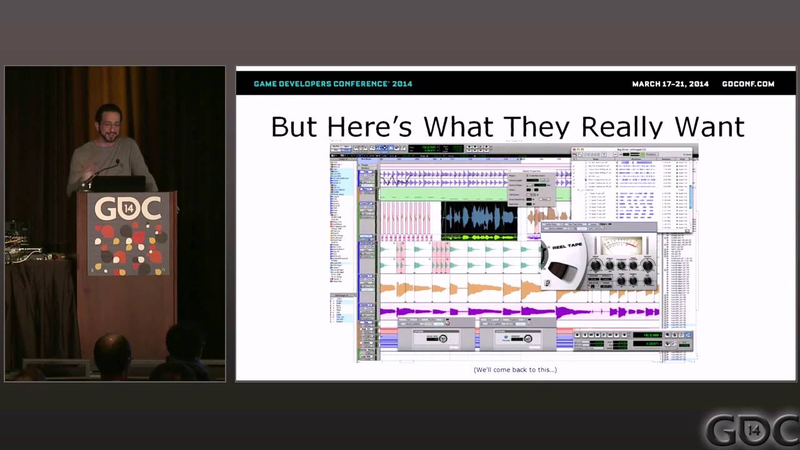
Lessons Learned from a Decade of Audio Programming
Drawing on over a decade of experience in game audio programming, this analysis outlines the core principles of building effective audio engines and fostering productive collaborations with sound designers.
- The primary challenge in audio engineering is managing mix complexity and providing high-level creative tools, rather than the computationally inexpensive task of sound playback.
- Audio programmers should prioritize memory management and mix quality over CPU overhead, as playback is inherently vectorizable and efficient.
- To maintain audio clarity and prevent clutter, developers should implement technical constraints such as virtualization, volume ducking, and the 'rule of two and a half' for spatialization.

Keeping Level Designers in the Zone Through Level Editor Design
Level editor user experience serves as a foundational pillar for game development, directly influencing both the quality of the final product and the efficiency of the production cycle.
- Prioritizing intuitive level editor UX is a strategic investment that prevents the accumulation of thousands of unnecessary manual actions, directly reducing production costs and technical friction.
- Designers maintain a state of flow and avoid cognitive fatigue when editors minimize menu-diving and streamline complex workflows, allowing for more frequent creative iteration.
- Visual-based interfaces, such as drag-and-drop asset importing and icon-based browsing, significantly outperform text-based systems by eliminating issues related to naming inconsistencies and language barriers.

Why is Amazon getting into the game engine business?
Amazon Web Services has entered the game development market with the launch of Lumberyard, a free, open-source game engine.
- Amazon launched Lumberyard, a free, open-source game engine based on CryEngine, to integrate game development directly into its existing cloud and streaming infrastructure.
- The engine’s primary value proposition is its native integration with Amazon GameLift, which simplifies backend management for multiplayer session-based games.
- Lumberyard features deep Twitch integration, allowing developers to build mechanics that enable streamers to invite viewers directly into live gameplay sessions.

Zemeho's Kimmo Kuusipalo explains music streaming plug-in Valinta
Valinta functions as a specialized Unity plug-in designed to integrate customizable music streaming directly into mobile game environments.
- Valinta is a free Unity plug-in that enables developers to integrate interactive, user-driven music streaming from a library of indie artists into mobile games.
- The tool allows players to select specific genres and tracks, shifting game audio from static soundtracks to personalized, interactive experiences.
- The mobile game Pale Harder, available on the Google Play store, serves as the primary live proof of concept for the plug-in's functionality.

With 1.1 million monthly users, Unity has democratised game development
Unity Technologies has successfully transitioned from a traditional middleware provider into a comprehensive ecosystem designed to democratize game development.
- Unity supports 1.1 million monthly active users, establishing itself as a primary engine for indie and entry-level developers.
- The company replaced traditional upfront licensing fees and royalties with a diversified revenue model based on an asset marketplace, mobile advertising, and analytics services.
- Unity maintains a consistent development cycle consisting of weekly bug fixes and quarterly major feature updates to ensure engine reliability and performance.

Unity on the importance of going against the grain
Unity, represented by founder David Helgason and EVP Jussi Laakkonen, emphasizes a mission-driven approach to game development, prioritizing the democratization of technology over traditional licensing models.
- Unity transitioned to a free-tier engine model to democratize technology, shifting its primary revenue streams toward the asset store and integrated advertising services.
- The mobile gaming market is increasingly stratified, with large-scale titles dominating the landscape and creating significant discovery challenges for independent developers.
- Success for small teams in the current market relies on niche-focused strategies and the ability to iterate rapidly with minimal capital investment.
GuiltyGearXrd's Art Style : The X Factor Between 2D and 3D
The transition of the Guilty Gear franchise from traditional 2D sprites to a 3D framework represents a significant technical and aesthetic milestone in fighting game development.
- The Guilty Gear Xrd development team achieved a 2D aesthetic in 3D by rejecting standard rendering conventions like normal maps and global lighting, which they identified as causes of a generic digital appearance.
- The workflow prioritizes manual artist intervention over automated rendering, utilizing Unreal Engine 3 and Softimage to treat each frame as a hand-posed keyframe.
- Visual consistency is maintained by manipulating vertex-based data—specifically vertex colors, surface normals, and lighting vectors—rather than relying on resolution-dependent textures.

Zynga's CEO rebound, Amazon's CryEngine move and Apple Watch gaming
This analysis covers three significant developments in the gaming industry during the second week of April 2015: Amazon’s strategic investment in Crytek, the sudden leadership transition at Zynga, and the initial market reception of the Apple Watch.
- Mark Pincus has returned as CEO of Zynga following the departure of Don Mattrick, who failed to improve the company's stagnant share price and quarterly losses despite a $500 million acquisition of Natural Motion.
- Amazon has secured a licensing deal for Crytek’s CryEngine, with estimated investments between $50 million and $70 million, signaling a strategic effort to strengthen its internal gaming infrastructure.
- Amazon’s investment in Crytek follows its $940 million acquisition of Twitch, reinforcing the company's aggressive, capital-intensive expansion into the gaming sector.

Some trends from GDC 2015
The 2015 Game Developers Conference (GDC) in San Francisco served as a primary venue for major engine providers to refine their market strategies and for industry leaders to re-evaluate player engagement terminology.
- Epic Games transitioned Unreal Engine 4 to a free-to-access model, shifting its monetization to a 5% royalty fee on live product revenue.
- Unity Technologies introduced a tiered pricing structure, offering a free Personal Edition alongside a professional subscription service priced at $75 per seat per month.
- Major engine providers are aggressively targeting mobile developers by lowering barriers to entry and increasing the accessibility of high-performance development tools.

Why Tag Games is getting into the tools business
Tag Games has transitioned from a mobile game developer into the tools business with the launch of ChilliWorks, a comprehensive technology suite designed for mobile and tablet game development.
- Tag Games has launched ChilliWorks, a technology suite for mobile and tablet development, marking the company's strategic transition from a game developer to a tools provider.
- The company open-sourced its core game engine, ChilliSource, under an MIT license to provide developers with full autonomy to modify and adapt the technology for their specific needs.
- Tag Games aims to democratize the development process by removing engine licensing costs, allowing smaller studios to access technical capabilities previously reserved for larger organizations.

Unity, the Riccitiello riddle, and mobile gaming's $40B future
The mobile gaming industry is experiencing rapid, sustained expansion, with market projections indicating a significant shift in the global gaming landscape.
- Mobile gaming is projected to reach $41 billion in revenue by 2017, positioning it to surpass both the console and PC sectors as the largest segment of the global games market.
- Newzoo increased its 2014 mobile gaming revenue forecast from $21.7 billion to $25 billion, reflecting faster-than-anticipated industry expansion.
- Growth is fueled by steady performance in mature markets like North America and Western Europe, alongside rapid expansion in China, which is experiencing growth rates of 85 to 90 percent.