Game Engines reports and market data
Documents

Maximizing Animation and Cinematic Content Workflows for 'Just Cause 4'
The production of Just Cause 4 required the creation of over 7,200 unique animations and 65 minutes of cinematic footage, a massive undertaking managed by a lean technical team.
- Avalanche Studios developed a centralized batch-processing tool driven by JSON configuration files to automate animation exports and transfers between Maya and MotionBuilder, significantly reducing the need for manual DCC interaction.
- To manage the complexity of a AAA open-world title with limited technical animation staff, the team implemented a 'driver root control' system that functions as a high-performance locator, allowing animators to bake and transfer animation across rigs with immediate space-matching functionality.
- The studio optimized locomotion workflows by implementing a distance-threshold script that automatically identifies and tags foot-plant positions by analyzing frame-to-frame world-space movement, effectively filtering out non-planted data.
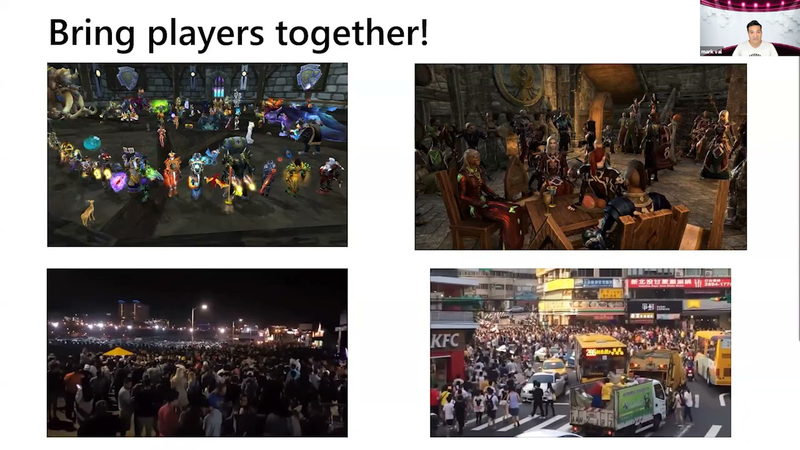
Superstar Session: The Secret Sauce of Multiplayer Games
Multiplayer game development requires a fundamental shift in strategy, prioritizing network architecture and social infrastructure from the earliest stages of production.
- Multiplayer networking must be integrated into the initial production phase, as retrofitting network architecture into completed single-player titles is technically inefficient and prohibitively expensive.
- Developers should implement server-authoritative architectures to mitigate cheating and ensure competitive integrity, which is a foundational requirement for long-term player retention.
- Matchmaking systems must prioritize a balance between player skill, network latency, and queue speed to maintain engagement and minimize user frustration.

How To Make A 2D Platformer In Unity (THE FASTEST WAY!)
Accelerating 2D platformer development in Unity relies on leveraging pre-built frameworks and modular architectural patterns to minimize redundant coding.
- Accelerate development by utilizing pre-built frameworks for physics, movement, and animation to bypass the time-intensive initial setup phase.
- Implement a singleton-based architecture to provide global access to core components like the player and game manager, reducing complex dependency chains.
- Integrate PSB files and layered Photoshop workflows to enable dynamic graphic updates that automatically propagate throughout the project.

Unity Animation Rigging Tutorial (Super Easy In Just 10 Minutes!)
This tutorial outlines a streamlined workflow for creating 2D skeletal animations in Unity using assets prepared in Adobe Photoshop.
- Unity’s 2D Animation package enables the transformation of static images into fully articulated, bone-driven characters using a streamlined skeletal rigging workflow.
- Assets must be prepared in Adobe Photoshop by segmenting single-layer images into individual limbs and body parts, filling gaps to ensure visual continuity during movement.
- Saving segmented assets as Large Document Format (PSB) files is required to preserve the necessary layer structure when importing into the Unity engine.
Zen of Streaming: Building and Loading 'Ghost of Tsushima'
The development of Ghost of Tsushima required a fundamental architectural shift to support an open-world environment twenty times larger than previous projects.
- Sucker Punch implemented a fixed-budget asset assembly system that packs small assets into aggregate files, allowing artists to manage memory and disk constraints effectively while minimizing duplication.
- The engine utilizes a seven-level quad tree to manage streaming, guaranteeing 200 meters of sightlines by loading a 3x3 grid of tiles at the finest detail level.
- To optimize pathfinding at scale, the team automated the generation of navigation meshes on a 20-centimeter grid, using vertical ray casting to coalesce terrain connectivity data.

Disintegrating Meshes with Particles in 'God of War'
The particle-based mesh disintegration technique developed for God of War (2018) provides a visually cohesive method for removing defeated enemies and environmental objects from the screen without relying on traditional, immersion-breaking techniques like alpha fading or sinking models into the floor.
- To manage corpse removal without frame rate degradation, Sony Santa Monica developed a pixel-based disintegration technique that converts mesh fragments into particles the frame before they are hidden by alpha reference testing.
- The system utilizes a depth pre-pass to ensure only one fragment shader runs per pixel, preventing redundant particle emission from overlapping triangles.
- Pixel coordinates of disappearing fragments are stored in an append buffer, which is then processed via dispatch indirect to convert screen-space data into world-space particles using G-buffer attributes like depth, normals, and lighting.
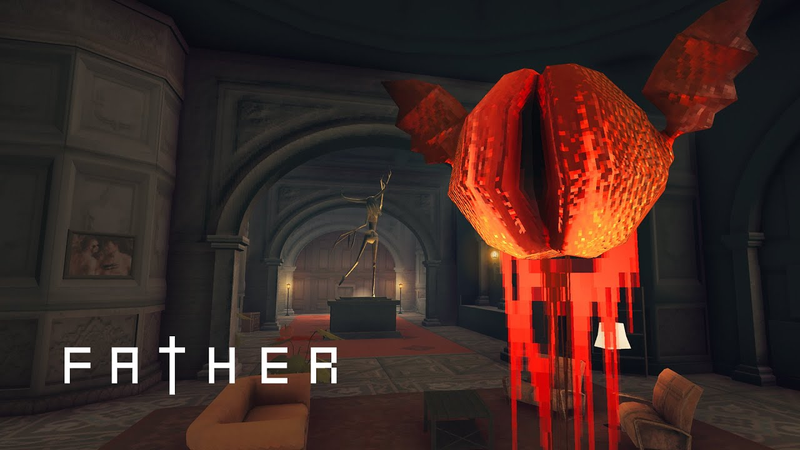
How I Made A Flying Enemy In Unity FAST - Devlog
This development log outlines the iterative process of creating a unique, low-poly flying enemy for an indie horror game.
- Prioritize rapid iteration and creative execution over technical perfection to maintain a fast production cycle in solo indie development.
- Utilize unconventional techniques, such as 'faking' complex tasks and repurposing existing assets, to overcome technical limitations and accelerate the workflow.
- Implement randomization in audio pitch and volume to ensure enemy behavior feels organic and avoids repetitive patterns.
Wakes, Explosions and Lighting: Interactive Water Simulation in Atlas
The development of the ocean simulation for the massively multiplayer online game Atlas centers on balancing high-fidelity visual realism with the rigorous performance constraints required for a seamless, multi-server environment.
- To simulate vast ocean surfaces for Atlas, Grapeshot Games replaced the standard Phillips spectrum with JONSWAP and JONSWAP-variant spectra to avoid unrealistic wave heights in non-oceanic environments.
- The team optimized FFT-based ocean simulation by using larger waves to distort smaller frequency bands, effectively masking tiling repeats without sacrificing performance.
- Buoyancy for rigid bodies is calculated by taking discrete displacement samples along a boat's hull and using an iterative Newton's approximation method to determine height at specific world locations.

(Super)Humans of New York: Managing the Many Faces in Marvel's Spider-Man
The production of Marvel’s Spider-Man required a sophisticated, scalable pipeline to manage approximately 150 unique facial rigs.
- Insomniac Games managed approximately 150 facial rigs for Marvel's Spider-Man by establishing a five-tier quality system, ranging from high-fidelity digital doubles of specific actors to procedurally derived background characters.
- To handle the high volume of assets, the team developed a custom batch-processing tool in Maya 2016 that automated repetitive tasks like controller setup, texture repathing, and naming convention alignment to match internal engine requirements.
- The team implemented a robust 'extra meshes' export system that allowed artists to save and re-import custom assets like hair, jewelry, and beards without manually re-weighting or re-integrating geometry during iterative rig deliveries.
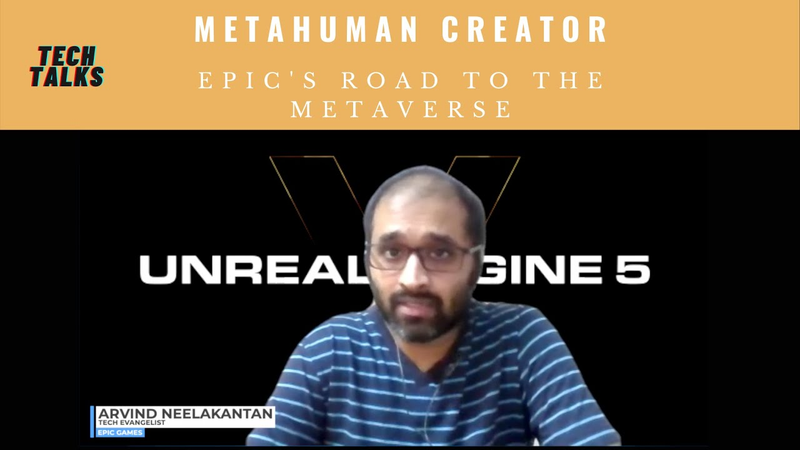
MetaHuman Creator | Epic's Road to the Metaverse ft. Arvind Neelakanan (Epic Tech Evangelist)
MetaHuman Creator serves as a transformative cloud-based solution designed to accelerate the production of high-fidelity, rigged digital characters.
- MetaHuman Creator is a cloud-based platform that reduces the production time for high-fidelity, rigged digital characters from months to hours by automating facial rigging and skin rendering.
- The platform is designed to augment professional artists rather than replace them, keeping creative oversight central to the final production quality.
- The system features a flexible Level of Detail (LOD) architecture, allowing developers to scale visual fidelity to meet performance requirements across different hardware environments.

Marvel's Spider-Man: Procedural Lighting Tools
The development of Marvel’s Spider-Man relied on sophisticated procedural workflows to manage the immense scale of a digital Manhattan while maintaining high visual fidelity.
- Insomniac Games utilized procedural workflows to manage the open-world environment of Marvel's Spider-Man, which is divided into 726 individual tile regions defined by JSON zone files.
- To optimize lighting, the team procedurally placed street lamps based on sidewalk normals and fixed curb distances, while using signed distance functions to ensure light probes were positioned outside of building volumes.
- The studio implemented an 'imposter' system to replace high-resolution building geometry with single-mesh models and texture atlases, significantly reducing memory overhead by storing albedo at full resolution and spec/gloss/emission at half resolution.

Wind Simulation in God of War
Achieving a dynamic and immersive environment in God of War required the implementation of a sophisticated three-tiered wind system.
- Santa Monica Studios implemented a 3D GPU fluid simulation for God of War (2018) to create a dynamic, living world where wind affects particles, hair, fur, cloth, and vegetation.
- The wind simulation utilizes a uniform 3D volume grid, optimized for a strict GPU time budget by separating diffusion and advection passes per axis to reduce register pressure and improve asynchronous scheduling.
- To handle contention during multi-threaded GPU writes, the team used a 16.16 fixed-point format with atomic integer additions, saving approximately 130 microseconds in high-contention scenarios.