Game Development reports and market data
Documents
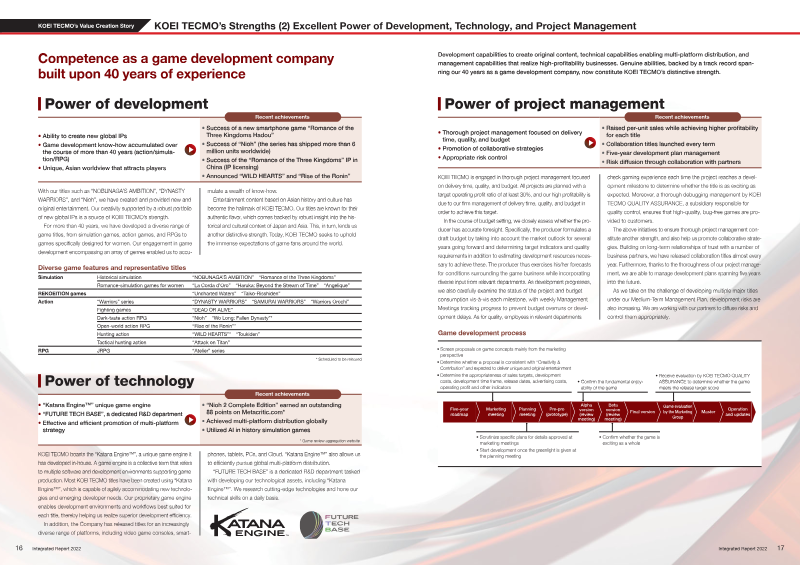
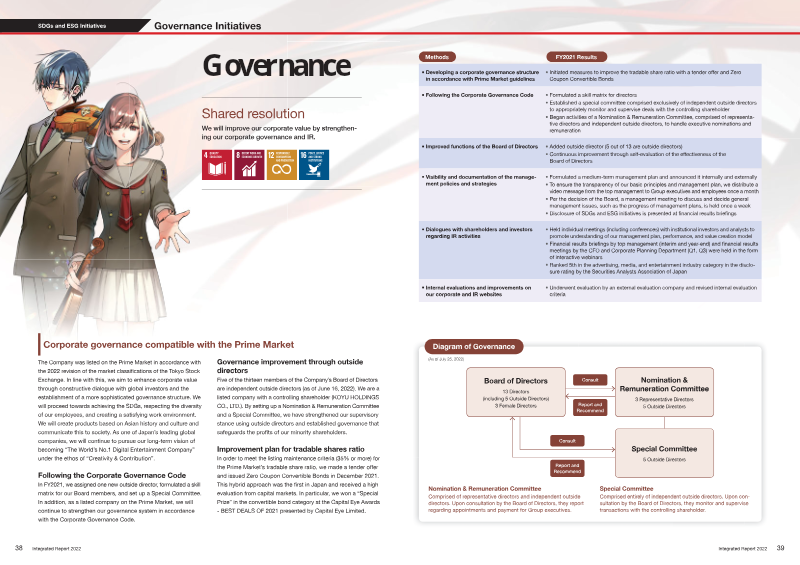

Koei Tecmo Holdings Integrated Report 2022
Koei Tecmo Holdings maintains a consistent trajectory of financial expansion, marked by twelve consecutive years of profit growth.
- Koei Tecmo has achieved twelve consecutive years of profit growth and is targeting 100 billion yen in net sales and 40 billion yen in operating profit by fiscal year 2024.
- Overseas sales accounted for nearly 50% of total revenue in fiscal year 2021, driven by a strategy of global expansion for Asian-themed historical intellectual properties.
- The company maintains a robust financial position with total assets exceeding 219 billion yen and a consistent shareholder distribution ratio of 50%.


Koei Tecmo Holdings Integrated Report 2023
Koei Tecmo Holdings aims to establish itself as the world’s leading digital entertainment company by synthesizing creative innovation with disciplined financial management.
- Koei Tecmo achieved record-high sales of 78.4 billion yen in fiscal year 2022, more than doubling the 37.6 billion yen reported in 2013.
- The company maintains a 50% total distribution ratio for shareholders, supported by a conservative financial policy of expensing all development costs as they occur to avoid future impairment losses.
- Operational stability is bolstered by an industry-leading 4.6% employee turnover rate, attributed to competitive compensation and comprehensive training programs.

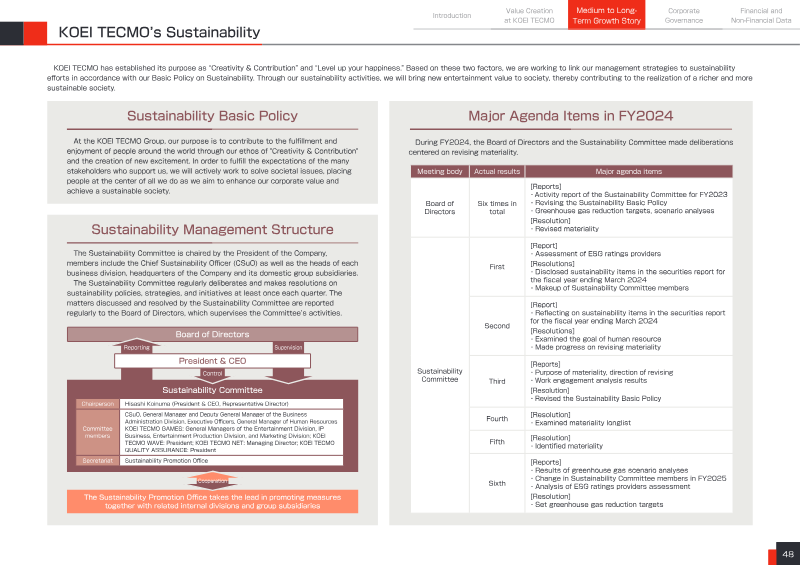

Koei Tecmo Holdings Integrated Report 2025
Koei Tecmo Holdings is executing a comprehensive strategic transformation aimed at establishing the firm as a top-10 global digital entertainment company by operating profit within the next decade.
- Koei Tecmo aims to become a top-10 global digital entertainment company by operating profit within a decade, targeting a cumulative operating profit of 100 billion yen under its 4th Medium-Term Management Plan (FY2025–2027).
- The company is undergoing a major organizational expansion, planning to nearly double its workforce from approximately 2,600 to 5,000 employees.
- Koei Tecmo has maintained an operating profit ratio exceeding 30% for eight consecutive years and holds net assets of 189.42 billion yen as of FY2024.


Big Games Industry Employment Survey 2025: Salaries, Compensation Trends and State of the Games Sector in Europe
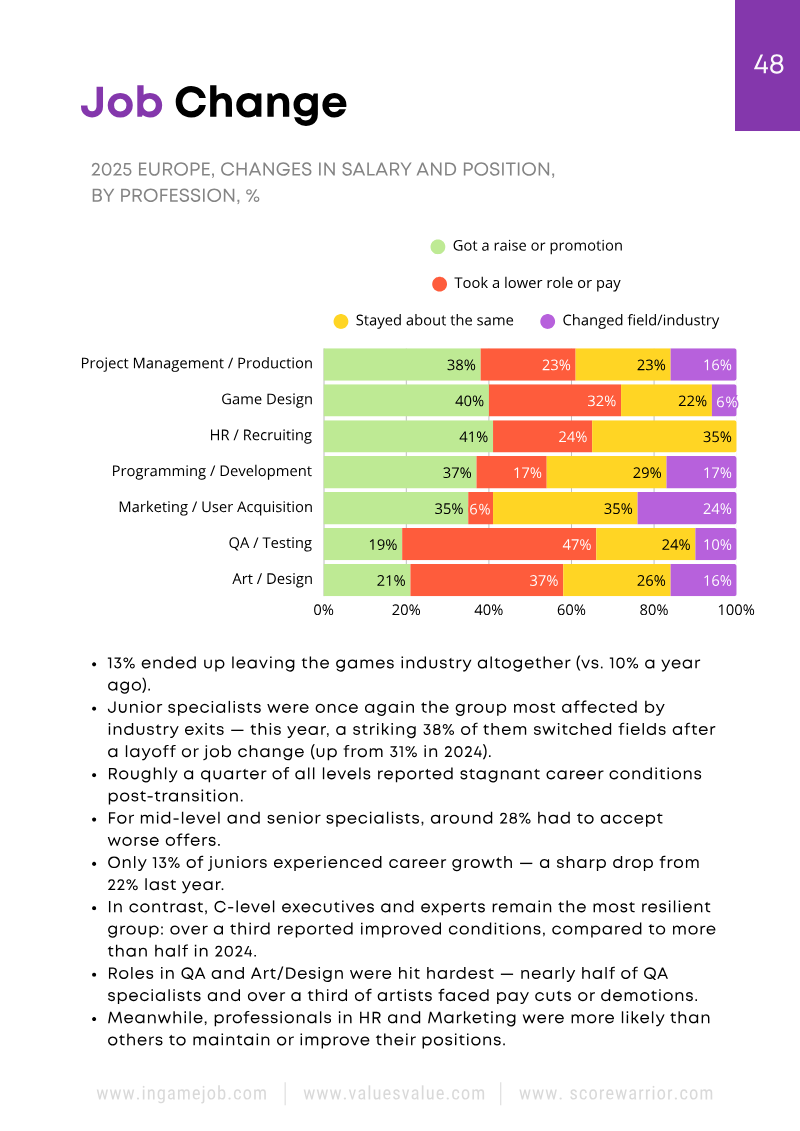
The European games industry is currently navigating a period of profound instability and systemic decline, characterized by a 26 percent layoff rate and widespread professional disillusionment.
- The European games industry is experiencing a 26 percent layoff rate, contributing to widespread professional disillusionment and a shift toward security-focused career priorities.
- Burnout now affects over 60 percent of the workforce, driven by a combination of excessive overtime, ineffective management, and the erosion of hybrid work models.
- While 87 percent of employees identify salary as their primary motivator, compensation growth has largely stagnated across the sector.

2020 European Video Games Industry: Insights Report
The European video games industry demonstrated remarkable resilience and economic vitality throughout 2020, serving as a critical pillar of the digital economy despite the operational disruptions caused by the global pandemic.
- The European video games industry generated a total turnover of €16.6 billion in 2020, supported by 74,000 employees across 4,600 studios.
- Sweden has emerged as a major growth engine, with industry turnover nearly doubling from €1.87 billion in 2018 to €3.31 billion in 2020.
- The industry is underpinned by a strong educational pipeline consisting of over 400 institutions that provide specialized game development and vocational training.
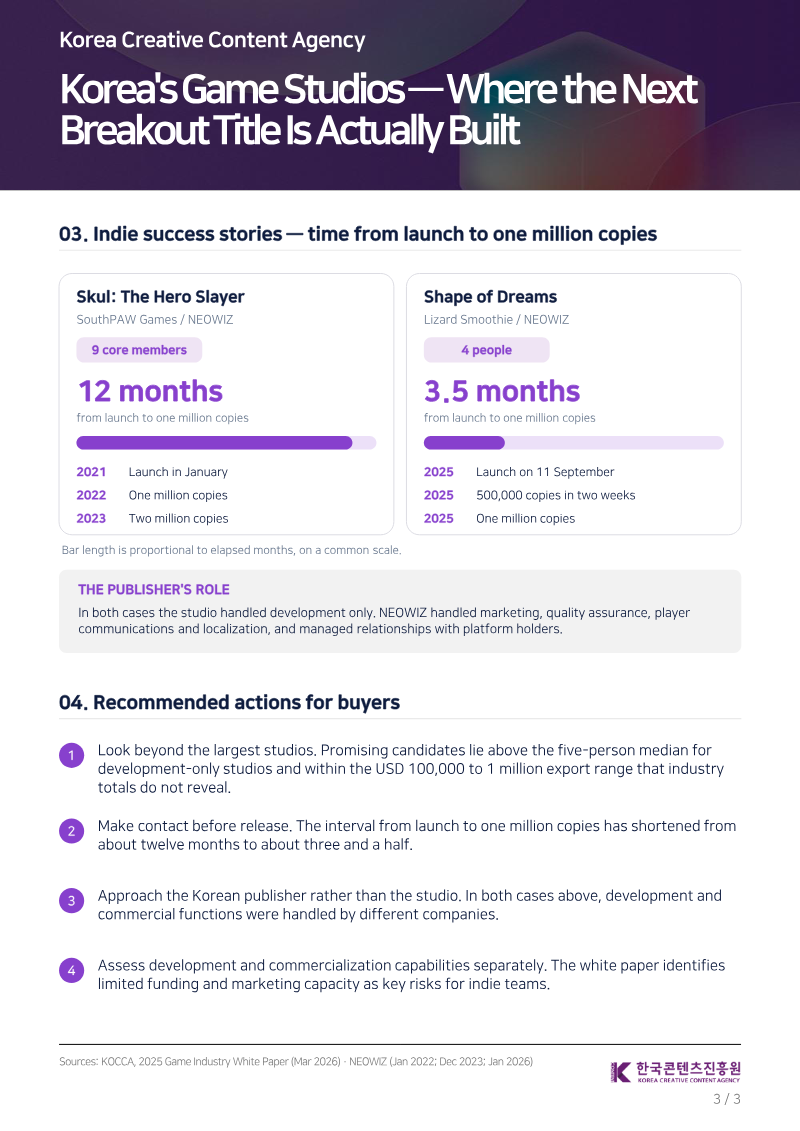

Korea's Game Studios: Where the Next Breakout Title Is Actually Built
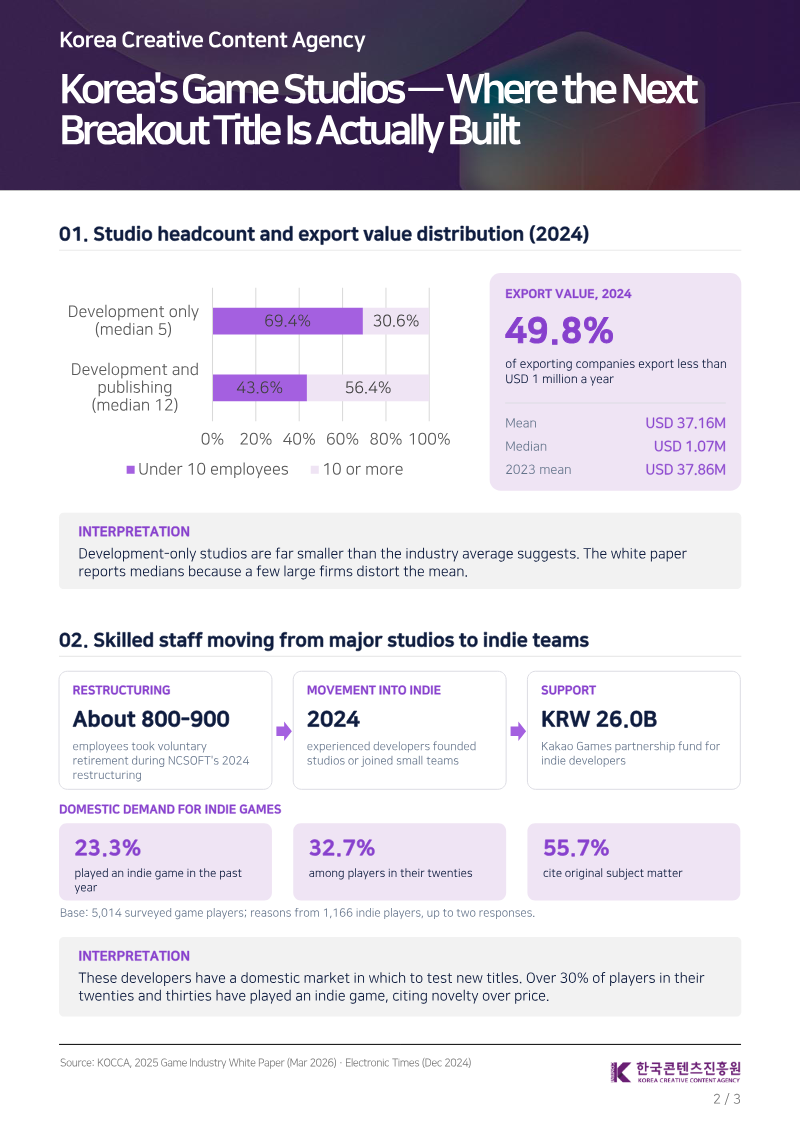
Korea's game industry growth is concentrated in a few large titles, but the typical studio looks very different from the industry average.
- The South Korean gaming industry is shifting from a concentration of large-scale publishers to a decentralized ecosystem dominated by studios with fewer than ten employees.
- A significant migration of experienced talent from major publishers to smaller indie teams accelerated in late 2023, directly improving the quality and marketability of independent projects.
- Small, agile studios are now identified as the primary engine for innovation and the most likely source of the next generation of globally competitive Korean titles.
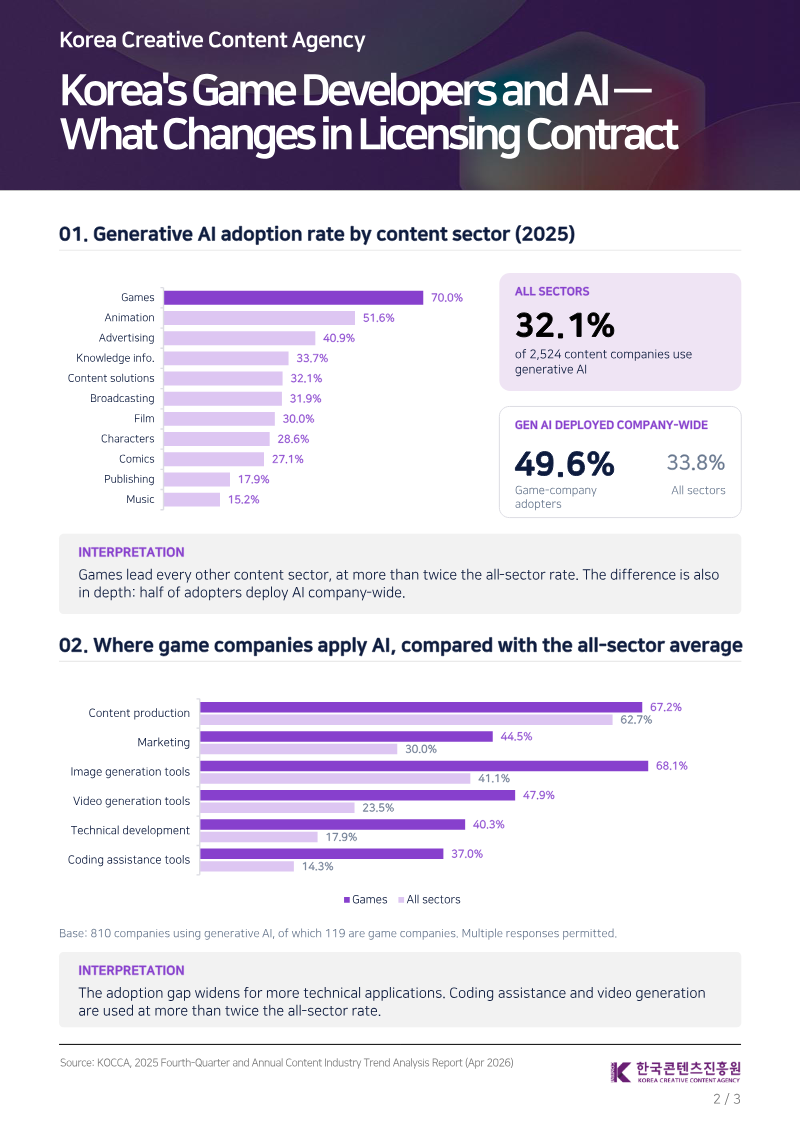
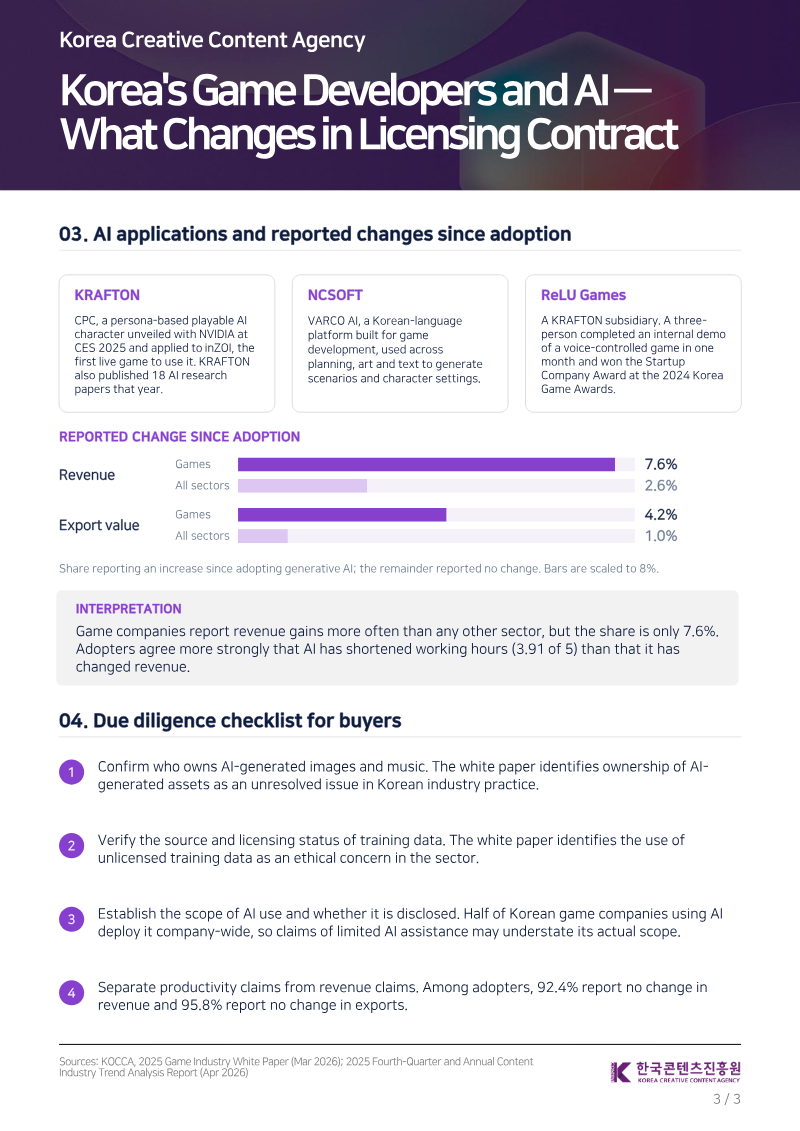

Korea's Game Developers and AI: What Changes in Licensing Contracts
Generative AI has become a standard part of Korean game development, and this analysis examines what that means for buyers licensing Korean titles.
- As of 2025, 70% of South Korean game companies have integrated generative AI into their development workflows, making the gaming sector the leader in AI adoption among all Korean content industries.
- Half of all Korean game companies have moved beyond departmental experimentation to full company-wide deployment of AI, marking a permanent shift in production methodologies.
- The widespread use of AI-generated assets has created significant legal complexities regarding copyright ownership and potential intellectual property infringement.
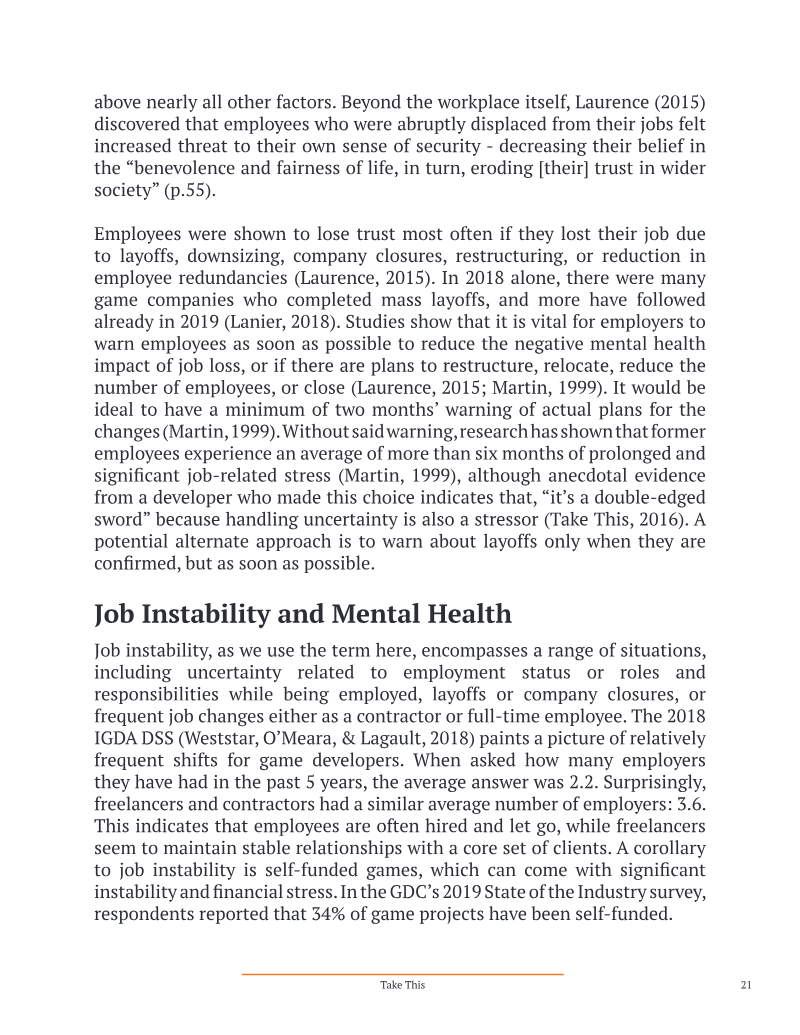

State of the Industry 2019: Mental Health in the Game Industry
The 2019 assessment of the global game industry identifies systemic organizational failures as the primary drivers of a pervasive mental health crisis among developers.
- Systemic organizational failures, specifically the normalization of chronic overwork known as crunch, are the primary drivers of a pervasive mental health crisis and burnout among game developers.
- Job instability caused by frequent layoffs and a lack of professional security creates a high-stress environment that threatens the long-term sustainability of the industry workforce.
- Exclusionary workplace cultures—characterized by harassment and microaggressions toward women, LGBTQ+ individuals, people of color, and neurodivergent employees—stifle team creativity and degrade the quality of game content.

State of the Industry Report 1999
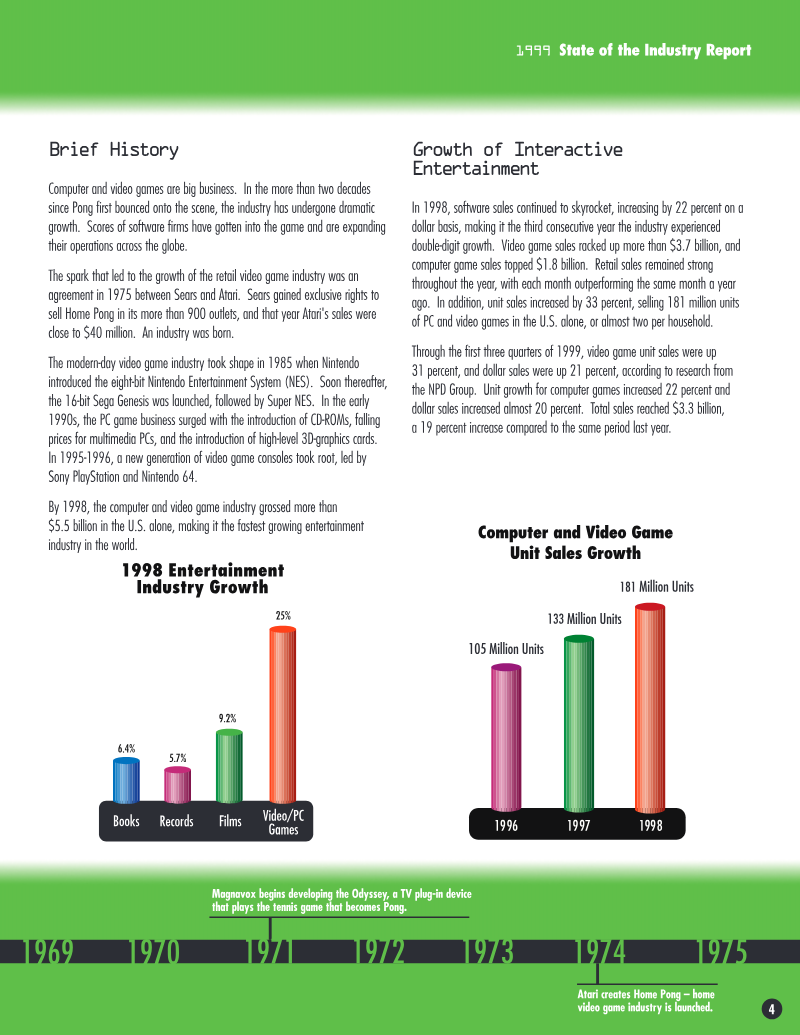
The 1999 State of the Industry Report provides a comprehensive overview of the interactive entertainment sector, documenting its rapid evolution into a dominant force in the global home entertainment market.
- The U.S. interactive entertainment industry reached $5.5 billion in sales by 1998, marking three consecutive years of double-digit growth and positioning software revenue to rival motion picture box office receipts by the end of 1999.
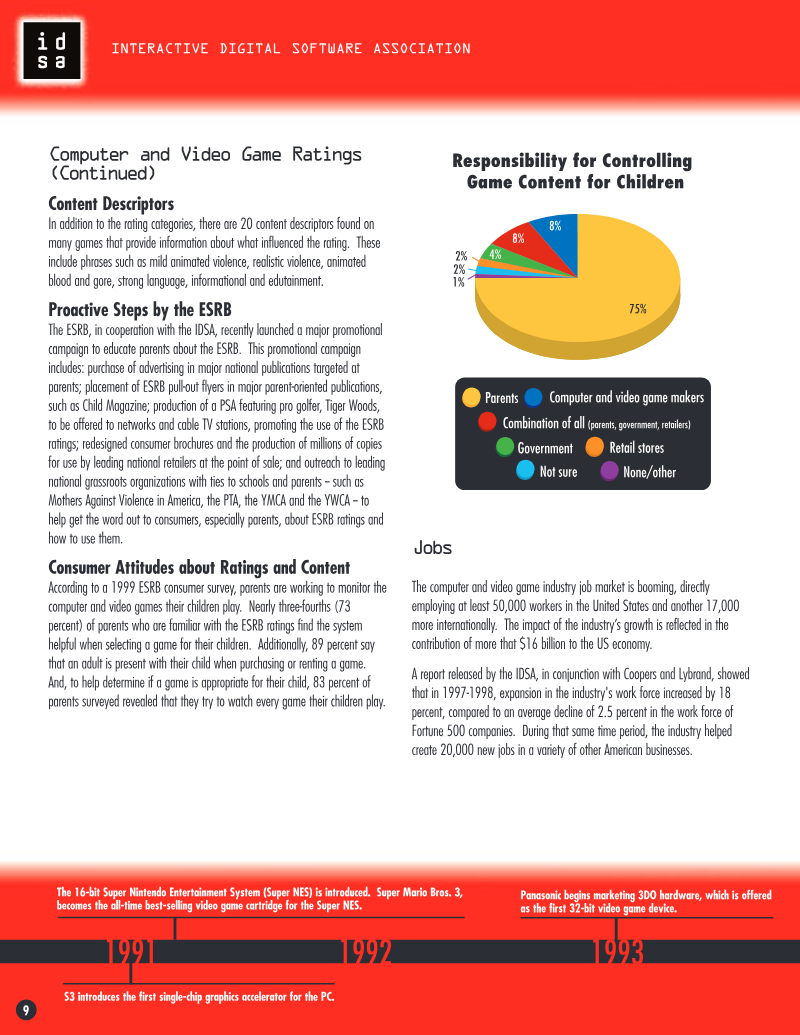
- The industry is a significant economic driver, directly employing 50,000 workers in the U.S. and contributing over $16 billion to the national economy.
- Gaming has shifted to a mainstream adult demographic, with individuals aged 18 or older now comprising 69 percent of PC players and 54 percent of console players.

Video Games in the 21st Century: The 2026 Economic Impact Report
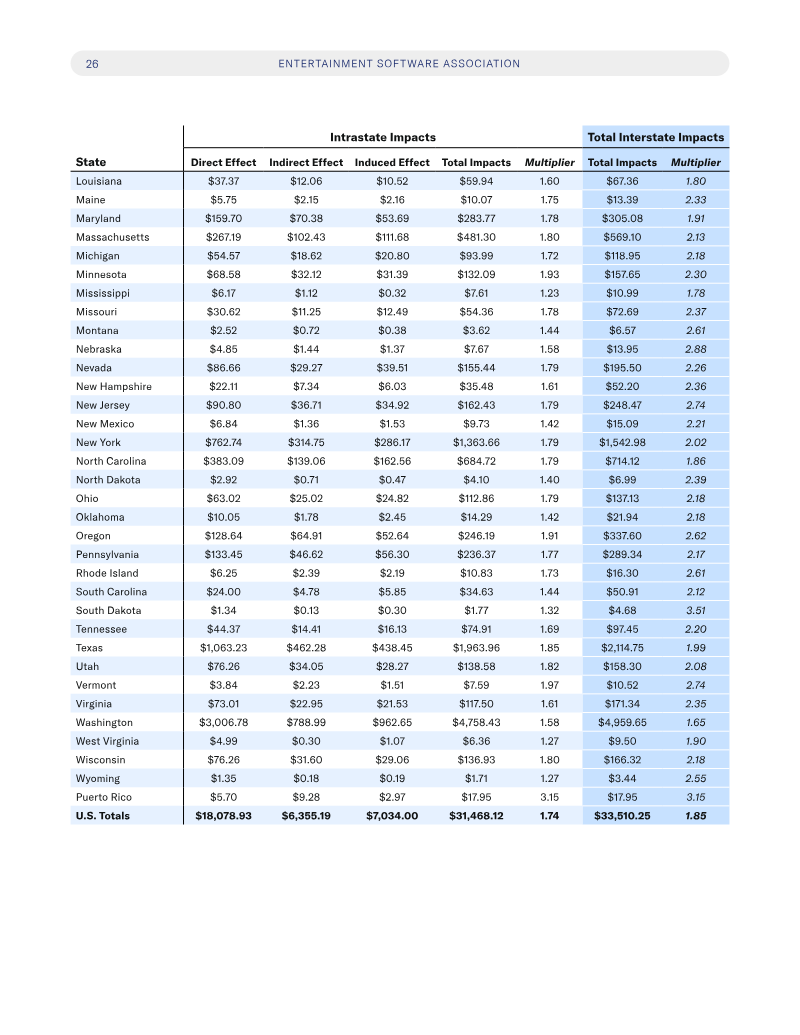
The United States video game industry serves as a robust engine for national economic growth, generating a total economic impact of $95.8 billion and contributing $65.5 billion to the national GDP as of 2025.
- The U.S. video game industry generated a total economic impact of $95.8 billion and contributed $65.5 billion to the national GDP in 2025.
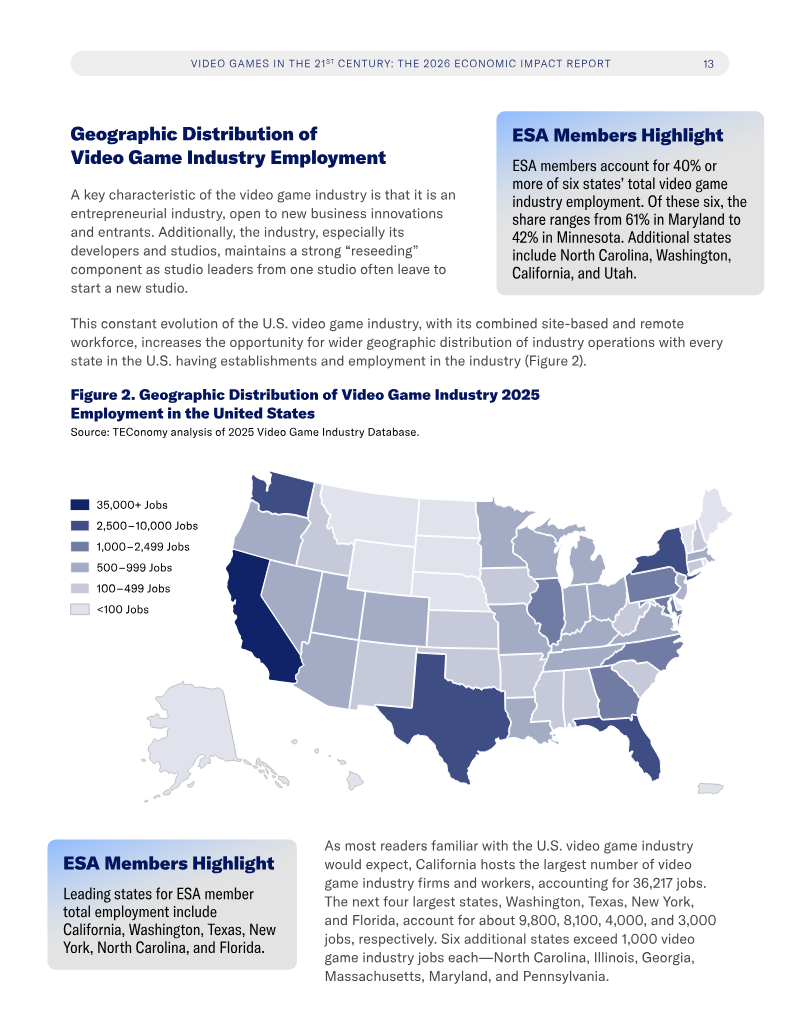
- The sector supports over 250,000 jobs nationwide, with each direct position sustaining approximately two additional roles in the broader economy.
- The industry contributes over $12 billion in combined federal, state, and local tax revenues annually.


New York City Digital Games Industry: 2021 Economic Impact Study
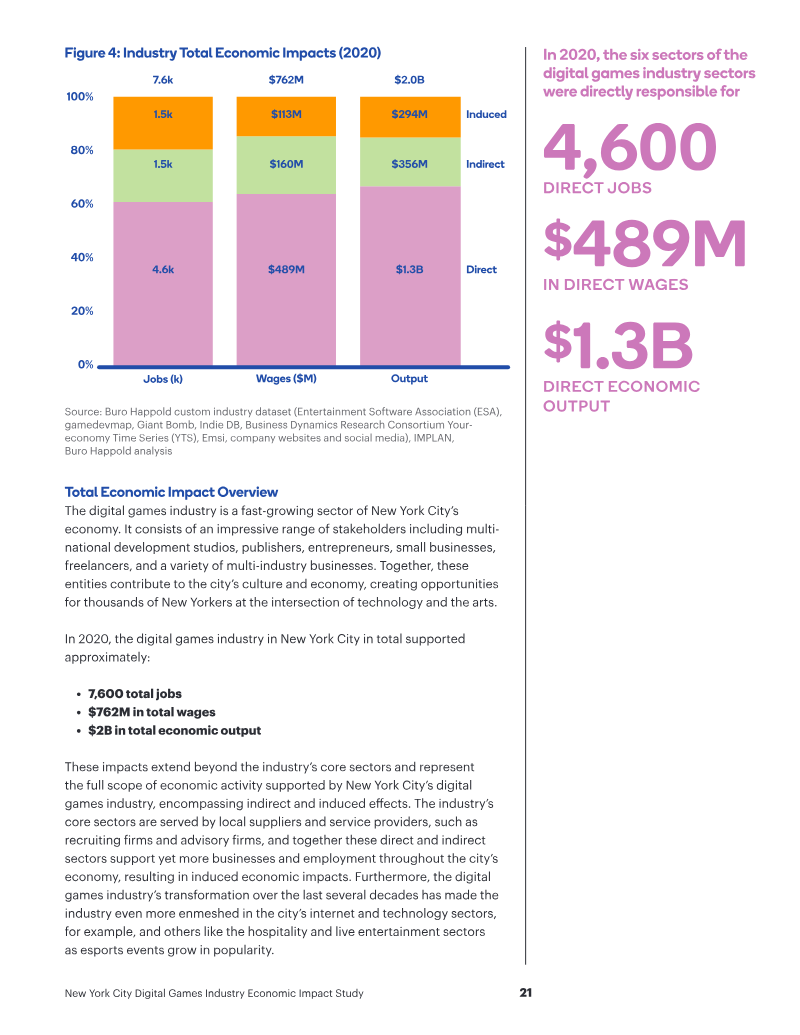
New York City’s digital games industry has emerged as a significant economic engine, generating $2 billion in total output and supporting 7,600 jobs as of 2020.
- New York City’s digital games industry generated $2 billion in total economic output and supported 7,600 direct jobs as of 2020.
- The sector has tripled in size since 2008 and is supported by an ecosystem of over 200 development and publishing studios.
- Venture capital investment in the industry reached $774 million in 2020, representing a 105% year-over-year increase.

European Video Games Industry Insights Report: 2019
The European video games industry generated approximately €12 billion in combined developer and publisher revenue during 2019, reflecting a robust and expanding economic landscape.
- The European video games industry generated approximately €12 billion in combined developer and publisher revenue during 2019.
- France, Sweden, and Finland served as the primary revenue drivers, while Eastern European markets represent significant untapped growth potential.
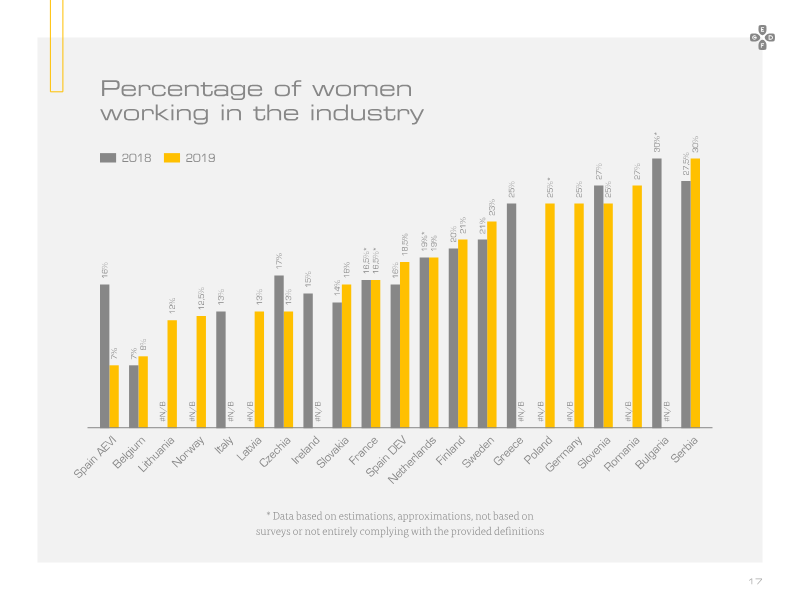
- Gender diversity remains a systemic challenge, with no European nation reporting a female workforce participation rate exceeding 30 percent.