Game Development reports and market data
Documents
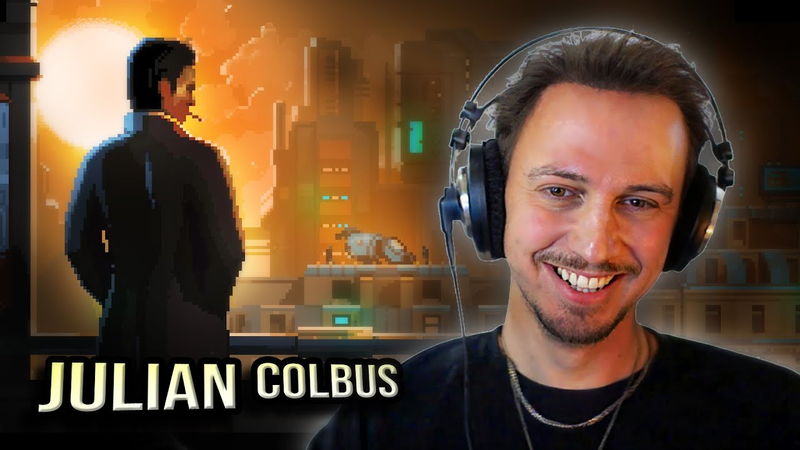
Their Second Game Did Worse, Now What?
The commercial underperformance of a studio’s second title often stems from the common trap of scaling production complexity at the expense of a clear, marketable core concept.
- Commercial success in indie development is more achievable by keeping budgets low—such as aiming for a 100,000 euro return on a 50,000 euro budget—rather than relying on the high-risk, high-cost model of large-scale sequels.
- Indie developers should avoid the assumption that a successful first game guarantees a sequel's success, as the player base for a title with 1,000 to 2,000 reviews is often not large enough to justify a sequel strategy.
- Detective game design should prioritize player engagement by integrating story into gameplay mechanics, such as requiring players to pass tests based on information gathered during dialogue to avoid the 'click-through' apathy common in RPGs.

Interview with Embark CEO on how Arc Raiders is defying the industry odds
The gaming industry is currently navigating a period of significant contraction, characterized by a post-pandemic correction where studios that over-hired during the sector's boom now face the realities of diminished venture capital and intense market saturation.
- Embark Studios is targeting a 100x increase in content creation efficiency by utilizing proprietary tools, procedural generation, and AI to automate repetitive development tasks.
- The studio shifted the development of Arc Raiders from an AI-centric concept to an engagement-focused design after internal testing indicated the original model lacked core player enjoyment.
- Following the rapid player attrition seen after the launch of The Finals, Embark stabilized its user base and achieved profitability by prioritizing methodical data analysis and consistent content updates over aggressive growth.

Ex-Take-Two CEO on Wetherl Big Game Companies Will Survive AI?
The gaming industry stands at a pivotal inflection point where the integration of artificial intelligence promises to fundamentally reshape content creation and operational efficiency.
- AI integration is shifting the industry from simple efficiency gains to the creation of new entertainment categories, such as intelligent NPCs and personalized, dynamic gaming experiences.
- Massive infrastructure investments by hyperscalers are lowering barriers to entry, allowing agile, AI-enabled startups to produce content that rivals the scope and quality of traditional AAA titles.
- Incumbent gaming companies face an existential threat from smaller, efficient startups, necessitating a transition toward AI-driven production models to maintain long-term survival.

If You Want To Make Games, Don't Make This Mistake
The primary driver of negative reception on platforms like Steam is a fundamental misalignment between player expectations and the actual gameplay experience.
- Negative reception on platforms like Steam is primarily driven by a misalignment between marketing materials and the actual gameplay experience.
- Developers must ensure that trailers and store pages accurately represent the game's genre and core content to avoid player dissatisfaction.
- Pricing functions as a critical signal of perceived value, requiring developers to ensure the final product quality and technical optimization match the price point.
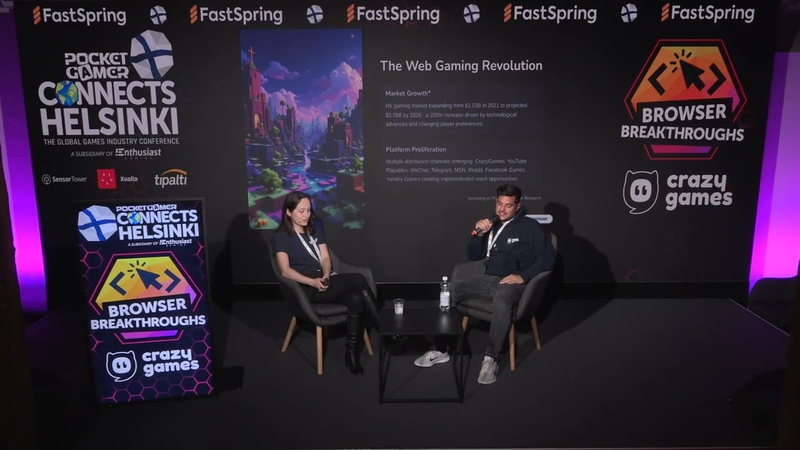
Session: 2025 & Beyond: How Web Will Redefine Gaming - Rabia Dincer & Rafael Morgan from Crazy Games
The web gaming industry is undergoing a significant transformation, driven by technological advancements that are positioning the browser as a primary hub for high-quality, accessible gaming experiences.
- Web gaming is shifting from simple casual titles to sophisticated, midcore experiences, enabled by WebGPU technology that provides console-like graphical fidelity directly in the browser.
- The primary competitive advantage of web gaming is friction-free accessibility, which eliminates downloads and walled-garden app stores to allow for instant global reach.
- Major game engines including Unity and Godot are increasingly prioritizing web-native features, allowing developers to maintain a single build that functions across diverse devices and operating systems.
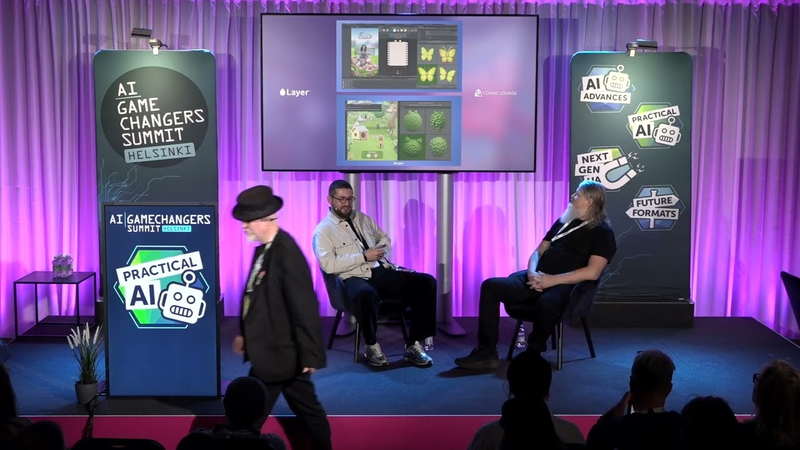
Session: Studio Speaks: The Reality of AI Adoption in Games - Ilya Kuznetsov & Tomi Huttula.
The integration of artificial intelligence into game development serves primarily as a tool to augment human expertise rather than replace it.
- Cosmic Lounge utilizes an internal 'puzzle engine' built on Unity that stores game logic in data formats, allowing designers to rapidly prototype and test new mechanics without manual coding.
- AI is used to scale content production for puzzle games, which can require over 20,000 levels, by automating asset generation while maintaining consistent art styles through custom-trained models (LoRAs).
- AI does not possess creative 'taste' or an understanding of game logic, meaning human experts remain essential for defining artistic vision and ensuring gameplay mechanics function correctly.
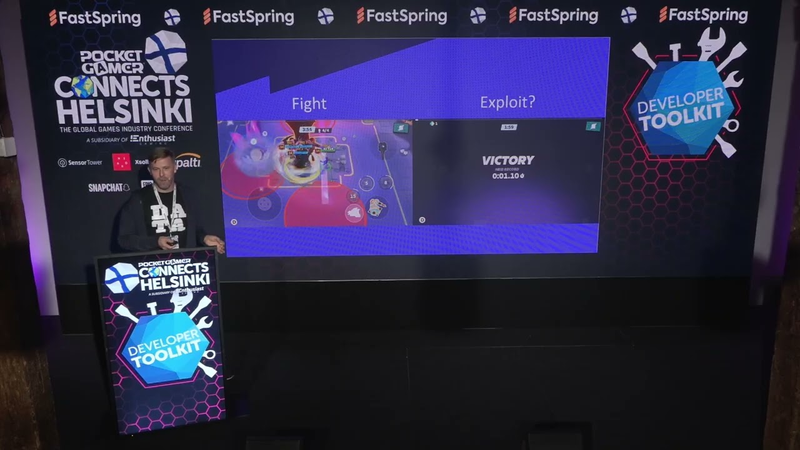
Session: Balancing Player Experience Without Players At Supercell: Case mo.co - Markus Ojala.
Supercell employs reinforcement learning (RL) to balance game mechanics for its multiplayer title, mo.co, specifically addressing the challenge of tuning game balance before a live player base exists.
- Supercell utilized reinforcement learning (RL) to balance the game mo.co during development, allowing designers to test items and gear combinations before the game had a live player base.
- The development team used a headless client integrated with C++ and Python to run approximately 1,000 parallel game simulations on a single GPU, enabling rapid iteration on balance changes every one to two weeks.
- Reinforcement learning agents were trained using Proximal Policy Optimization (PPO), where bots received incremental rewards for actions like staying alive, hitting monsters, and completing dungeons to learn optimal gameplay strategies.

Panel: How To Ship A Top-Tier Game Without A Top-Tier Budget: Practical Tips For Cost-Effective.....
Achieving high-quality game production with limited capital requires a disciplined, lean operational strategy that prioritizes agility and long-term efficiency over traditional large-scale development models.
- Prioritize 'buy' over 'build' for core infrastructure, as small teams lack the resources to maintain custom tech stacks, which are only cost-effective for massive companies like Supercell that require specific competitive advantages like millisecond-level load time optimizations.
- Avoid over-funding in early stages; raising the minimum necessary capital forces a disciplined, lean mindset and prevents the common pitfall of hiring too many people before achieving product-market fit.
- When selecting third-party services, prioritize providers that offer access to source code or clear exit strategies to avoid vendor lock-in, as seen when the sudden shutdown of analytics platforms like Omniata forced studios to rebuild their entire tech stack.
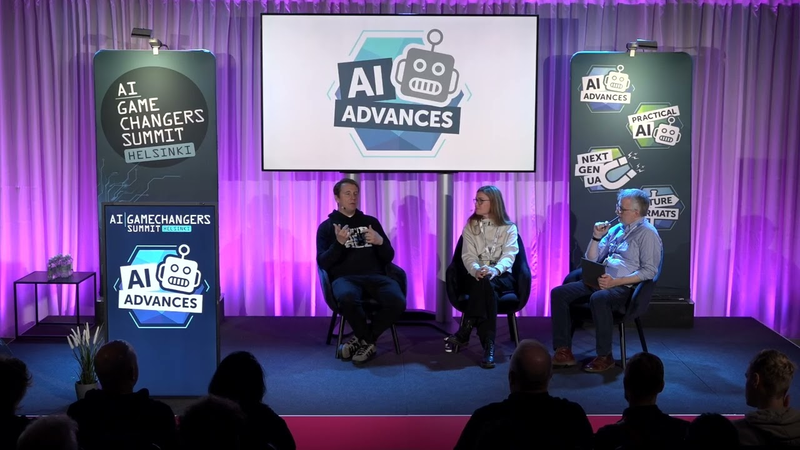
Panel: Beyond The Algorithm - Will AI Redefine Player Experiences?
Artificial intelligence is fundamentally shifting the game development paradigm from static, hardcoded systems toward dynamic, AI-native experiences.
- The primary barrier to AI integration in mobile free-to-play games is the high cost of inference when using large foundation models, which can threaten the viability of existing business models.
- Developers should prioritize smaller, domain-specific, or distilled models over massive general-purpose models to optimize resource usage and reduce inference costs.
- Future AI architecture in gaming will likely rely on a 'mixture of experts' approach, where specialized models are fine-tuned for specific tasks rather than relying on a single, generalized foundation model.
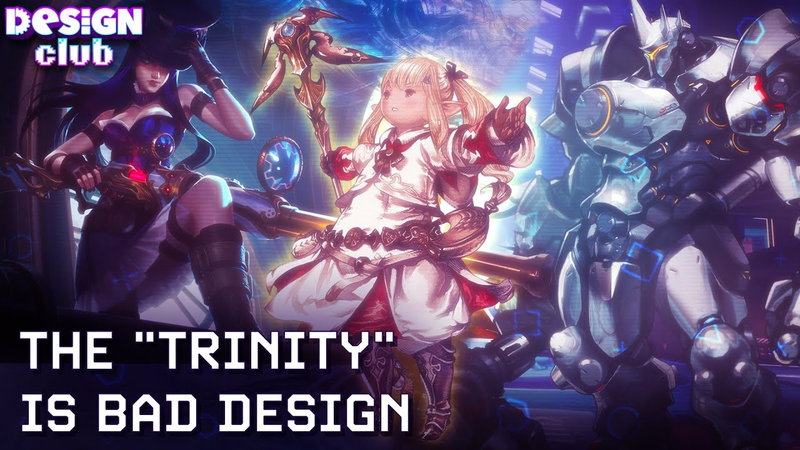
The Archetype Trap | Design Club
The traditional Holy Trinity of tank, healer, and damage dealer (DPS) serves as a pervasive, yet increasingly contentious, framework in modern game design.
- The 'Holy Trinity' of Tank, Healer, and DPS is a design shorthand used to simplify party management and matchmaking in large-scale games like Final Fantasy 14 and Warhammer Online, rather than a fundamental requirement of game design.
- Strict adherence to archetypes can lead to poor gameplay if developers prioritize these roles over the actual needs and mechanics of the game they are building.
- Game archetypes are often fluid; for example, modern tanking roles frequently incorporate crowd control to manage player-controlled opponents, whereas traditional aggro tables are primarily designed for NPCs.
Game Dev Teams Are Broken. Here's the Structure That Actually Works.
Modern game development frequently suffers from structural friction, where traditional craft-based silos impede progress and dilute creative intent.
- Studios should reorganize into autonomous, cross-functional teams of five to fifteen members to reduce communication overhead and accelerate iteration.
- Teams should be structured around specific product outcomes, such as combat mechanics or meta-systems, rather than traditional craft-based silos or task lists.
- Guilds must be established to facilitate cross-team knowledge sharing and maintain quality control while individual units operate with autonomy.

GDC warns companies not to skip 2026, and the US games market is up
The United States video game market is demonstrating unexpected resilience, marked by five consecutive months of growth and a 2% year-to-date increase in spending for 2025.
- The U.S. video game market has seen five consecutive months of growth and a 2% year-to-date increase in spending for 2025, driven by higher price points rather than increased unit sales.
- Market success is increasingly concentrated in established mega-franchises, with the console sector remaining heavily dependent on flagship series like Call of Duty to hit annual targets.
- The PlayStation 5 has surpassed the total U.S. installed base of the PlayStation 3, despite a broader trend of struggling hardware sales across the industry.