VideoThe Game Business
GDC warns companies not to skip 2026, and the US games market is up
23 Oct 202552 min video
Hello and welcome to the game business show. This week we speak to GDC's Mark Delora about the future of the convention. Borderlands 4 inspired record sales for the US games market and we get a glimpse of Microsoft's future highway strategy for the launch of the ROG Xbox ally. And to help me navigate all of this, returning to our show for technically a third time is none other than Sakana's games boss, Matt Piscatella. Matt, welcome. How you getting on?
I'm doing well. Uh, Christopher, thanks for having me back. This is fun. I'm going to be uh more steady this time. Last time I showed up, it was like I was on three espressos, but instead of using coffee, I used meth. Uh, bounce around. This time, calm, cool, collected, still looking right at you. So, it's going to be a good time.
It wasn't that jittery. I You're just very You're You're like that on stage as well. You're very moving and very um expressive,
kinetic. I bounce around, you know, typical video game person that can't sit
still, I guess.
Well, let's talk about because your numbers have just come out, which they're quite positive lately. Matt, I'm feeling optimistic. Should I be feeling optimistic?
Yeah, it's the fifth consecutive month of growth we've seen year in the US market. Just to kind of give the high level, spending was up 10% in September compared to last year. uh we're now up 2% for the 2025 year. So, you know, we came into the year anticipating down sales. We were expecting down mid single digits because of looks at everything. Uh and we're actually being a bit more resilient uh than I thought we'd be. Now, there's all kinds of reasons for that, and it's not quite as simple as things are up because people want to buy more things. Really, it's a story around higher pricing. It's a story around the more affluent consumer taking on a
bigger percentage of these types of purchases. And it's about, you know, the games that came out, particularly in September. We had a number of hit releases. then on a comp basis till last September we had more of them which certainly helped and this year we have switch two and last year we didn't. So there's a lot of reasons why, but yeah, um, we're in a better market position in terms of consumer spending in the US for the video game space than I think well certainly that I thought we would be, but I think the consensus was that it would be a a tougher year and it's turning out to be a little bit better than that. But, you know, this is the first three quarters and as you know, the story is always told in the fourth quarter.
Yeah, it can all turn on the last quarter as you say. Well, Borderlands 4 seems to have done very well because I wasn't sure about it because there was quite a lot of noise around the PC version not being uh maybe being a bit buggy and Randy Pitchard was Pitchford was being Randy Pitchford and being combative with gamers. So, I wondered if maybe it didn't quite deliver, but it
looks like it has um at least in the US.
Yeah. Biggest Borderlands launch ever roughly 30% ahead on a dollar sales basis.
Yeah. uh of just the full game sales excluding add-on content compared to Borderlands 3. Um we'll have to see the legs. I mean, what we're seeing in games now is that initial launch uh being for some games a bigger part of the story than it had been in the past. Again, we have that more affluent, higher income spender really taking on more of the burden of sales. So perhaps, you know, this is just a bigger launch and the tail will drop off or perhaps the tail will will stay strong. I know it's discounted right now in the US across
several digital storefronts. We'll see how how it goes. But yeah, big release for Borderlands 4. Um, one of several
Yeah.
really uh strong new releases, especially compared to what we saw last year. And it really helped boost overall
spending on the console side, which to be honest has been struggling this year. um because of all kinds of reasons, the extended tale of PS5 and Xbox Series and fewer new releases than we'd seen in prior years, but uh for September at least,
a lot of hits, a lot of big new releases, and a lot of things to feel pretty good about. And
that's and that's without Hollow Night, right? It's not in the uh
Yeah, that's so it could maybe could have been better.
Well, it's uh all that data is included in our total spend reporting. It's just not included on the individual title charts because of the rules around the digital panel as you well are well know about
from the European side which has the same rules that we do.
Yeah. Well, the EA Sports FC26 um it's really I've been trying to report on that and it's really hard cuz they've staggered the launch. They did the ultimate edition and then they did the standard edition afterwards which is naturally skewed to everything. So it becomes it becomes almost in but even even 3 4 weeks in you're sort of trying
to work out hang on is it 3 weeks in or is it four weeks in when when does this it's it's very difficult to track that. Um yeah so I don't really know it doesn't look like it's done quite so well but then it it's as I say it's have to wait till the end of the year I think before I make my call on that.
Yeah last year's release of EAFC was the record setter for the US market with the biggest launch of all time. This year's is down just slightly from that. So, it's still among the biggest EFC launches. But yeah, talk about staggered launches in the US. The Madden release.
Oh, dude, man.
You know, was part of the EA Sports MVP bundle with the release of college football in the month before it launched. So, you know, what is launch week for Madden? Is it the week the games can actually be played or is it the week six weeks prior where it first started being sold? So yeah, it's um but hey, that's what they have to do to optimize the the return on these games. And consumers sure reacted positively to that bundle. So, you know, good on them,
I guess, for trying to work that system and make the best uh the best result they can get.
Ghost of Yoai sneaks into your chart for the even though sort of end of the beginning of October really, but um in Europe, it seemed to it's difficult for the way the European data I've got access to. Um, Matt, I've got the latest numbers and then I've got some historical things scattered around my inbox, but it's like the the like for like isn't quite right. The the country number list isn't quite the same. So, I'm sort of roughly estimating that it seems to have done roughly what Ghost of Tsushima did back in 2020. Um, and that's Europe. Um, but has it is it positive your side? I mean, it's it's early days, I guess. So week one to week one, you know, throwing out the months, just comparing the first week of Ssushima to the first week of Yote, they're basically the flat. Um,
oh, same. Okay.
So the same in Sushima, of course, July 2020, you know, I don't know, there were some things happening there that really boosted the gaming market
and that PS4 installed base was, you know, significantly higher or
meaningfully higher, I guess I should phrase it, uh, than the PS5 is now. So, you know, on a like for-like basis, I look at that and go, "Hey, that's a great result." Um, of course, week one is week one. You know, we have to look, you know, a larger sample of time to see where it really sits, but uh
it was fine. I mean, pretty darn good. It It did what it should do. So, I mean, in that respect, pretty good.
Yeah. Again, it's there's so many weird comparisons this month. So comparing it to Ghost of Sushima or Sush I may have been pronouncing that wrong this whole time.
It's Got
Game of Thrones. It came in a very unique time in the in in the market. And it's same things with Mario Galaxy and Mario Galaxy 2 because globally almost 10 million people bought that 3D Allstars collection. So 10 million people have access to Super Mario Galaxy. So did they instead buy Galaxy 2, which is only available standalone as a digital product? um the numbers didn't
look great for me for Galaxy. We got to consider the fact that probably everyone that would be interested in that probably already has it on the Switch in the form of the um the 3D Allariz collection. I don't and Nintendo don't share their digital data. So, we'll never know. Um so, until they release their financials, I guess um at the beginning of November. Um but there's a lot of that trying to try and work out what's what's good and what's not. And it's it's hard to tell.
It's a lot of art these days to the science. you're trying to make the best comps you can. Um because what you want to get to is like understanding where the winds are blowing, not necessarily, you know, trying to do a financial calculation for a P&L, right? What, you know, so what we do is more like, hey, what does this all mean? Uh yeah, and you have to be a little creative when how you do that, right? because things aren't
it's not back in the day of 2005 when you had a physical game launching at retail and you could compare it to a physical game and you had perfect data
just doesn't exist anymore so you know do the best you can
I'm interested you talked about Borderlands having a big launch I looked at games lower down the chart so Sonic Racing I don't know what it was for you but over here I I looked at it and I thought I didn't think the numbers were that great I know Sonic tends to pick up around you know Christmas and Black Friday and stuff tends to be quite a big title around that period of time but I played that Sonic game at Summer Game Fest. I thought it was brilliant at racing. Sonic uh Crossroads. I just thought it was just an excellent game. And um Cross World, sorry. Um but I wasn't for me. I I I'm thinking I'll wait for that to go down in price. And I'm not not And that's become more of a thing now. Not because I can't afford it necessarily. It's more because I've got so much stuff to play that I'm like, it looked good. I'm I'm It's a 60% chance I'll play it. and 60% chance I'll play at $60 or $70. I'm like, "No, that's too much, right?" You know, I I need I need that I need that number to go down, one of those numbers to either the percentage to go up or the number or the price to go down. And I don't know, it's
difficult to you this is what you've been doing with this um all these consumer service to work out what it is that uh uh that motivates them. I don't know. I've not seen any data necessarily to suggest that I mean, you get it on Steam, but to suggest that um people are are buying games later or at least certain kinds of games. Same with Silent Hill F. I don't know if that that same thing for me. It looked good, sounded good, but maybe maybe maybe come the end of November when it's in the sales. Um, but that's just me. I don't I don't have any backup data for that, but um something that I've been wondering.
I mean, some of the things that, you know, my my hypothesis looking at this market is that we're getting to a point where we're really consolidating the winners and everyone else. And the winners continue to win bigger. And as more and more games come out, there's more and more noise. And that leads more and more people to kind of shrink back into the games and franchises they know just because there's so much like what do I do? And the hot thing one day is
the hot is not the hot thing the next day, you know. Um, and that's the case, you know, whether you're looking at new games to buy or the big behemoths like Fortnite, Minecraft, and Roblox that just, you know, never leave when you're talking about the engagement charts. And so, like, you get a Borderlands 4, you get a ghost, you're like, okay, people know those and so they're more comfortable getting into them. But the games that aren't at these mega franchise level, it's it's much diceier, right? and review scores don't carry as much as they weight as they used to. I would even argue that influencers don't carry quite as much weight as they used to just because there's all of this noise and you know even looking at Silent Hill F like you mentioned right Silent Hill F pretty strongly received but still did not sell what the Silent Hill 2 remake sold in its launch period. Um, in fact, it was a little bit behind. Well, more than a little bit behind S P S P S P S P S P S P S P S P S P S P Silent Hill 2 remake and you go, "Okay, well, what's
what's going on there?" And again, it's that idea of the comfort, right? Like, I know that game. I know that I know that game. I know that franchise. I feel comfortable getting into that. Everything else, I don't know. I'm just going to wait because there's just Yeah, you're you're the choices are overwhelming, right? And you know, you look at the conversation right now about how we need to make more games faster and cheaper. It is just it's just going to make these problems so much worse. But I guess that's a problem for another day. Yeah. I guess the other solution is is what we're seeing, which is this sort of cull in the industry, which is um another problem. But subscriptions are going up. I guess that's the solution for some people. when you've was it I don't know feels like the hundth consecutive month now we've had subscription growth
well this year it's been the case like I mean you know I I we've been posting about this for a long time we've been tracking this for a long time subscription spending coming out of the 2020 2021 period was flat for years like it there was no growth there and then we
had that little bit of a bump with Call of Duty last holiday that went away within 13 weeks like the subscription bump from Call of Duty did not last and and we were right back down to that baseline we were prior to Call of Duty entering subscription. But then starting early this year in the US, right around the time the tariff conversations started happening, they're correlated. I don't know if it's causal, but they're correlated. We started seeing the spending in subscription services start to grow. And it's it's across it's across basically all of the services whether it's the console services or even uh things like PC subscriptions for particular games. Like we're just seeing more people in the US leaning into that. Now my my theory I don't know if it's true but my hypothesis is that people are looking for value for their gaming dollar. Um they want to believe they'll have the time to play the games and and these services offer choice. Um, it
doesn't hurt that Nintendo Switch 2 has has more heavily leaned into the Nintendo Switch online subscription service than uh Switch had prior. But there's something going on here. And I don't know specifically what it is, but my my guess, my take is that we have people that are outside of that high end of the affluence scale looking for value for their gaming dollar and they're investing more in subscription services to try to get there. Um, but you know, there's a lot of chur in there. There's a lot of, you know, a lot of dirt in the detail about how all that works. But, you know, in the US at least, subscription has been one of the better performing segments all year.
Yeah. Not so much for the PlayStation or Xbox consoles though. Um, uh, switch to sort of masking some some chunky declines there. I think they really could have done with a GTA launch um possibly to bring people in. Yeah, they could have. I mean, uh they could have done with that last year to
be honest, but you know, that's just how it works. So, you know, all of our cards are going to be on that for next year's uh growth trajectory. So, we we'll see how that goes. I mean, by that point, you know, how many people are going to be around looking to buy a new this gen console when a theoretical PS6 is coming a year later? You know, we'll have to see.
I just I don't I I know I've seen the reports. I just don't really believe that we're ready for the consoles to be honest. Like it doesn't we've not even had a Naughty Dog game. I did a joke tweet that said I wonder if PS6 arrives in 2027 if we' had a Naughty Dog game by then. Um and it's uh it just it feels it still feels like we've had this sort of weird couple of years of quite quiet from the from the big consoles. Xbox been quite noisy but noisy is the right word for that. I mean, um,
yeah,
good on them for trying like they they always try to be like 10 or 15 years ahead of where consumers are. And, uh, you know, they were eventually pretty
right on the digital thing back in, uh, back in the Xbox One release days, but, it took 15 years for people to get there or 10 years or whatever. Um, yeah, we we'll see what they do. I mean, and what what even is nextG? like how it's it's it's backwards compat. It's probably hybrid. It's probably an evolution, not a revolution. And maybe it doesn't matter at all, you know.
Well, it's I did a if you there's an interview on the game business which I did with team Asobi who were like talking about what innovation in consoles might look like. But, you know, there was there's questions there, right? You know, even when you have something like the Dual Sense, which is a wonderful control, and game playing like Astrobot genuinely feels like something you couldn't have done on a PS4, but if you start playing with those sort of levels of deep innovation, you know, it's tactile and how you touch and how you feel, that makes multiplatform really difficult, and that seems to be where everyone's going. And so that's where I'm I'm I believe in the living
room experience, and I believe that, you know, that's different from the bedroom experience. That's different from the mobile experience. But with so many people now used to having their own screens in front of them and not necessarily that communal thing. I don't I mean I I I'm old. I like the old way of doing things. But I don't and and there is there is lots of people like me. But then there's another phenomena which people have been talking about on the show lately which is this idea of we're getting to an age where people are kids are moving out. People who are gamers in the 90s their kids are starting to leave home or or getting old enough so they people are we seeing a returning gaming group of the older demographics. There's a lot of um fun to talk about. Well, let's let's talk about October's started quite strongly. We've got Battlefield done huge numbers um uh in the in Europe and the launch of that is on I mean okay Game Pass has skewed this a lot but in terms of premium sales Battlefield 6 has done as well as Black Ops 6 did in term um Pokémon um obviously it's quite early to say UK numbers were quite a bit down
but I mean Legends Archus was such a big launch and I wouldn't base anything on the UK when it comes to Nintendo um mainly because oddly PlayStation number one market in Europe, UK. Xbox number one market in Europe, UK. Nintendo, it's France, and then it's Germany, and then it's the UK. The Switch One hasn't even out sold the Wii in the UK. It's it's not
it it's it's not that it's not still sold millions of consoles. It's just not it's just not quite as big as it is in other markets. But what I was interested with Pokémon was 51% of um of in the UK physical sales of Pokemon um Legends ZA was on the Switch 2. So, more people bought the Switch 2 version than the Switch One version, which I don't know what I was expecting.
Something about the more dedicated enthusiast uh
Yeah.
picking it up and even playing console at the moment there. I don't know.
Yeah. Yeah. Or maybe if you're planning on getting a Switch 2 in the next couple of months, do you hold off getting a Switch One game as well? I don't
no idea.
Yeah, those things always get kind of weird when you start really drilling down into those behavioral type things. Yeah.
Yeah. Battlefield's had a super strong launch in the US as well. Like we're we're not announcing sales numbers yet, but from an engagement basis, I mean, what I've been impressed by is its strength on the PC platforms where it's uh in terms of the user numbers, it's it's doing incredibly well, among the best we've ever seen. M
um on the PC side for a for a premium game, a premium game meaning a game you have to pay for, not free to play, um it's doing exceptionally well, but what I've been surprised by as well is that on the console side, it's top 15, top 10. It's not seeing in the US at least, like that PC audience is really where Battlefield's really hit. And on the console side, it's done well, but it's probably done a little bit less than I thought it would in terms of just the player base. I don't know. Small sample,
very short time. We'll see how it goes. But yeah, I've been uh really impressed by the PC performance in particular.
That's interesting. How are you feeling about the year now then? You do you think we're going to end strongly?
Well, yeah. I keep looking at my total spend forecast thinking I should change it. Um there are reasons to be optimistic for potential growth year which I just never would have thought possible at the beginning of the year. It's being really driven though by something uh that I was not expecting and that is just how much prices have increased. So overall like unit demand for video game stuff isn't really growing that much. It's really the higher prices across everything that's caused those numbers to go up as they have.
So, uh, that wasn't what I was anticipating. I wasn't anticipating the scale of the price increases we've been seeing.
So, that's kind of throwing off all the math when it comes to the forecast. So, yeah, I'm looking at it. There's a lot of reasons to be optimistic, but
ultimately in the US market at least, Call of Duty is really going to tell the tale. If Call of Duty misses or say Battlefield did actually eat some of Call of Duty's lunch, then, you know, we don't get to growth. But if Call of Duty maintains its performance year on year or grows uh because of what they're doing with the Game Pass situation, you know, people say that Game Pass hurts sales. Well, you know, if it take it off, then it should help, right? We'll see. If that happens, then we should be pretty comfortable with a growth assumption. But yeah, it's like um in the US, everything Q4 kind of revolves around Call of Duty and everything else distant second.
Yeah. Yeah. Well, it's Call of Duty is always massive over this side of the waters as well, but it's it clearly is a degree or two higher in the US.
It's such a huge part of the overall market here. It's uh kind of ridiculous.
There was another big release in October. We'll change the subject a little bit. It's the uh the ROG Xbox Ally and the ROG Xbox Ally X. Um I've
got one. Well, look, I've got got one that look. It's all uh it's got fancy lights on it. Not quite uh the whole recommend.
Did you get it to Oh, it did boot.
It didn't error you out. All right, cool, man. You're ahead of the game.
Um, I've been playing. It's actually quite I mean, okay, I did do a whole It's a PC.
Yeah,
it feels very nice. I have to say I've played Steam Decks and things like that and it feels very nice to play. There's a few, as you say, you pointed out some bigger issues other people have had online. I've had some minor ones where I couldn't get a a keyboard to load or or certain bits like that. Um, but um, and I knew what this was before because I went hands- on with it at at Summer Game Fest. I went hands on with it again at Gamescom. So, I knew what this is when it and it it came to me. But one thing I I will say, it is a PC with an Xbox launcher. A lot of people are arguing, should this be called an Xbox handheld? And actually, for me, I don't think it should. Um, my go-to game on I don't know if you have a go-to game on consoles, but you just go, I'm going to quickly have a blast on this. You know, it used to be like for me it was Wave Race on the N64 or Tony Hawks on the
Gamecube or Crazy Taxi on the Dreamcast, whatever. Um, I'm going back quite far with those. But on the on the Xbox, for the last 10 years, I always boot up Rare Replay and I like go for a little bit of Perfect Dark or Banjo. These aren't games are the best examples of Xbox games. They're just something that I know so well I can have a quick blast of it. I feel very comfortable playing it. And I thought when I got this, I thought I'm going to give I'm just going to boot up one of my, you know, get my sea legs in, you know, play a bit of that, maybe do grab by the ghoulies. It's Halloween. Um, but uh, of course those games aren't on it because they're Xbox games. They're not PC games. For me, that meant this. I mean, I already knew what it was anyway, but I I thought this, oh, this is definitely a PC.
You know, if they're available, you can play them on the cloud.
Yeah, I can.
Everyone loves playing on the cloud. There are no challenges with playing on the cloud.
Well, there is this, you know, the Xbox campaign. I think it's a good campaign. It's generated a lot of conversation. This is an Xbox uh campaign. I was trying to think what is what is an Xbox?
Is it who built the hardware? And to some people, it is. But you could argue a device that has the Xbox service on it, has the Xbox games on it, and uses the Xbox controller, is that not also an Xbox? Uh what even is a platform anymore?
Anymore? Yeah. I mean, when Sega discontinued the Dreamcast, if Sega have said, you know, we've got Jetet Radio and crazy taxi on the new Xbox. So, uh, this is an this is a Dreamcast, I probably laugh at them. It's good way of spinning the but it's a lot more complicated than that. Um, um, these days these but these these PC handheld devices, they're they're quite small, right, Matt? Is that
Steam Deck is absolutely dominant in the space and they only sell direct to consumer. From a retail perspective in the US, we're talking low singledigit percentage share of video game hardware. Um, you're talking, you know, tens of thousands, not hundreds of thousands, uh, in the US so far. And the Asus ROG has been the best seller so far. Um, not
the Xbox version of it, but the the ASUS line. uh so far. Um we're going to get our first look at the Xbox ROG Ally X Rag Xbox. Yeah, we're look first look at this system uh later this week in the data, but they've been outside of Steam Deck uh pretty small and and this is targeting the very hyperenthusiast, price insensitive uh super gamer type, right? but the marketing is positioned as this is an Xbox handheld. So, there's a there's a disconnect for me there um in terms of the way they're positioning it from a marketing perspective and how they're pricing it and what the product actually is. And I think in some ways it's actually a disservice to the consumer to to pitch this thing this way and given what it currently offers and what it currently delivers. Now, someday that full screen experience might be effortless. it might be completely
um impossible to even have an issue trying to log into it. But like you said, right now these are Windows 11 handhelds that run a front end. And by nature, those things are pretty tough for a from a portable gaming perspective, unless you really know what you're doing and really want to spend the time to get it going. Right. Right. So, uh we'll see. But so far, yeah, it's it's been a very small, very niche, but developing market.
Yeah. Well, I was talking to GFK about the UK launch. They said the UK launch of this is quite impressive. But from their point of view based on these sort of products, but they said, well, kind of that's not surprising. This will be a heavily pre-ordered sort of device and they are expecting a very sharp drop off in the uh in the in in the weeks afterwards. Yeah, I I think for me, I think if you're an I think if you're marketing this to Xbox people, which they are, I I I think they're going to get a bit of a shock when they ask you to sign up to Windows Hello when you when you log in and uh and and ask you to create pins.
And I I it's this interestingly uh sort of viewing this as a console, even though I shouldn't have done cuz I knew what it was. Sort of coming into it thinking it was like an Xbox and then realizing it was a gaming PC made me realize actually that how
gaming PCs have come a long way. They were a lot more accessible and easy to use than they were um than they were, you know, 10, 15 years ago, whatever. But um
they're still not quite as they're not as intuitive or as pick up and play as as a console. And that's definitely the case here. But this it feels nice. I have to say it feels very good. Even if I can't play grab by the ghoulies on it.
It's going to be interesting what they do, right? What folks like Sarah Bon are talking about right now about the next generation Xbox being a a what is she called? A premium curated experience. um with, you know, with all the conversation they're having about basically pushing the full screen experience across all other kinds of device types,
you kind of see what they what they believe the market is going to go to, but you know, ultimately it's a very competitive marketplace and you know, a lot of people just want to sit down and play a game.
Yeah. And and a lot of this stuff makes that more difficult in a lot of ways. They say they want to make people they'll allow people to play whatever they want wherever they are. Great. But you actually have to facilitate that with the product you're delivering and and they're not there yet. Maybe they get there.
It does feel like a little bit of a cake and eat it approach, which hey, if you can have your cake and eat it, why not? But is which is, you know, we're going to keep making hardware by probably partnering with other people. Um, basically building a bunch of PCs for you to play on. Um,
OEM Gaming, make sure you sign into your Microsoft Teams account.
Oh no.
Maybe co-pilot can play the game for me. I don't know.
Oh no. Ah, this um
um is there anything else from the um market data US stats that has come out that you think it's worth calling out or highlighting? Uh I think you know one of the other things keep looking at that's that's becoming more and more interesting is the parallels between the mobile market and the console market these days where you know our friends over at sensor tower we partner with them um they contribute the mobile spending data to our total reporting and they give us some insights every month about what's going on over there. Um, it's the same kind of thing where the big behemoths just kind of stick around the top of the mobile charts as well, just like they are on the console side, although they're different games. And every once in a while, you get a couple new ones of those that show up for a few months, then go away. You know, we were back in 2013, I'm sure you remember, everyone was talking about how, you know, the app store is going to kill the console and all that, and that never happened. and it just kind of expanded the market. Or how consoles were going to kill PCs back in the mid 2000s, that
never happened. It just expanded the market. So, it's just interesting to see these markets kind of over time
share such similarities in terms of how people kind of interact with the games. And I think if you look at the console space and you take some parallels from the mobile side where mobile had the massive increase in games being released on that platform for years and what ended up happening is a consolidation to the biggest games and the biggest genres. And I think if you look to the future of console, especially with this drive to expand the reach and put more games on more platforms, I think we could see the same thing on the console side, just this further consolidation into the biggest franchises, the biggest games, and you might see a couple sneak in here or there. Other than that, it's going to be the same games for for stinking years. And we've already kind of seen that with Fortnite, Minecraft, and Roblox. I think it's going to get worse before it gets better in terms of um the market consolidation piece and
that I think about that a lot and that gives me a lot of concern. But it's that's been an interesting parallel. It's not specifically for this month, but kind of an overall trend
um in just how these markets are behaving somewhat similarly when it comes to how consumers are interacting with them. I don't know. It's it it's the stuff that keeps me up at night, although there's plenty of things that should be doing that instead. Well, yeah, it is. Um, well, worth the I still like think people like to try new things and experience new things, but then you also see it in the cinema, right? You know what's coming out there, but then there's other avenues, Netflix and stuff, a little more innovation.
Yeah. If you look at like at the streaming services, like the office is always the the biggest show. You can have all these new shows, but what they find is that everyone just defaults to their favorites. It's kind of a thing, right? Like people just looking for that comfort food. And I think they do it in gaming as well, right?
I don't know.
Let's let's switch from that happy note to the game developer capital, GDC
Festival of Gaming as it's now called. Uh the organizers of the event have um shared some more details um about what to expect from the show next March. They are embracing the whole city of San Francisco. It's going to focus on networking primarily with even more events including a citywide GDC affiliate program. They're rebranding the Expo Hall. what's called the festival hall. They're sort of doing that a little bit differently. There's going to be some talks happening down there and places to hang out. They're shaking up the content um with more talks for people who aren't just developers. They're also including a lot of stuff for executives. Uh GDC also talked about having things like debates and fireside chats and bringing back the keynote. Where's that gone? They said they've also lowered the price. So, the main festival pass is going to be 45% cheaper than before. That all sounds interesting, but there's still some big challenges for GDC. uh GDC is still taking place in San Francisco which is a city that has come under some criticism for attendees uh not least because of how much it costs but also because of uh its uh concerns about safety. Um there
are many international attendees who are concerned about some of the stories in the US at the moment about and they seem reluctant to travel to the market and big companies have been pulling out Epic Unity weren't there last year on the show floor. Um to chat about these issues, I had a call with Mark Delora, a video games veteran. He's been around for years, Mark. And he's currently GDC's executive director of innovation and growth. And here is a snippet of our interview covering some of those key issues. From an audience point of view, you know, GDC kind of was unofficially already a bit of a festival, right? I probably spent almost probably more time outside of GDC that is within GDC attending various events that people were putting on around San Francisco. So, from an audience point of view, from someone attending, how is this going to feel different to what perhaps they've had in previous years?
Yeah, it's a good question. I I was thinking about the the fact that we called the Indie Games Festival the Indie Games Festival in like 1999. I'm like, oh, I guess it has been a
festival for a while.
But what's going to be different this year is that we're embracing the city a little more and we're jettisoning I want to say the old ways of doing things. effect quite right. We're embracing new ways of doing things. So for example, um we used to be super rigorous. The advisory board used to be super rigorous about uh the talks are panels or they're lectures or they might be micro talks. Maybe there's a few roundts that's it. And this year we're like okay what other interesting things are there in the world? Why aren't we doing fireside chats? What happened to the keynotes? Remember when Miiamoto keynoted and I keynoted? Like well let's bring back some keynotes. So, we're all kind of the keynotes. Um, what about debates? We've never really done a debate
that I know of. Not a deliberate debate, I should say. I've had lots of debates.
Yeah.
Um, so like how do we do that? And so, just in that area of like types of talks, like, okay, let's try new things. You talk about the show floor, expo floor, we're calling it festival hall now. We're going to have it, you know, it used to be a grid pretty much, right?
Why is that? Why are we doing a grid? What? It's just habit, right? like why don't we split it up into more functional areas. So if you're looking for things to do with education or things to do with independent games, we'll have little neighborhoods where you go there and that's what's there and you can explore that and meet people who are looking for similar things there. We'll have a lounge there. We might have some little micro talks there.
Um but so that's like okay great. And then you know in terms of changes and trying to think about ways we can embrace the city a little bit more too. So we've always just like we come in, we sort of parachute in, we take over north and south and west, right, for a week and then everybody leaves like can can we do more than that? Can we do different things? You know, there are people at the W, there's people at the St. Regis, there's people at Intercontinental, the Epic had the events at the Yerba Buena like right next door for a long time. So we've reached out to all these places. We're like, okay, figuring out how do we embrace those areas and encourage different kinds of things to happen there than we've seen before. So, for
example, we're going to do a bunch of executive related programming and do it in the Yerba Buena. I mean, it's right there. We're looking at having suites. We're going to set up suites for executives. If they want to have meetings like NDA meetings behind Cole's doors, we've set up a group of suites over at the W, you know, you could get through us. Um, it's just we're just trying new stuff out. Obviously, I'm from the UK and when everybody talks about GDC from the UK, particularly at the moment, there is some concerns about traveling to the US right now. Um, is there anything you're doing or is there anything you can do to sort of try and alleviate that or address that in some way?
Yeah. Yeah. I think I think that the primary thing is we're starting a little earlier,
right? And that's not a direct response to that, but if we start earlier, it gives people more time to get their visas and things sorted out. Obviously, we're talking a lot to administration officials, city officials, you know, just trying to see if there are things that we can do. And of course, there
aren't a lot of things that we can directly do. There's a lot of things we can indirectly do. So, we're trying to do those things. And, you know, we definitely understand the concerns. I have the same concerns when I travel.
Yeah.
So, I get it. Plus, we want this to be a global celebration. And so, we're trying to invite in people from places maybe that we haven't heard from before. and some of those people think that, you know, maybe it's a risk to come. So, we're going to do the best that we can to get them to come.
Obviously, I appreciate there might be loads of background, but why stick with San Francisco? Did you did you look elsewhere? Were there any considerations around that?
Yeah, you know, I think I think every year the advisory board meets every year um kind of September time frame. It's all all game developers and every year at least for the fast past four or five years, we we have this conversation about San Francisco because yeah, everybody brings it up. It's it's absolutely something we talk about. Um I mean for for the US the the easy answer is it's the center of the game industry. Like wouldn't you want to be there? Um
and don't more game developers have the opportunity to come because we're there.
Um yes. And San Francisco's expensive.
Yeah,
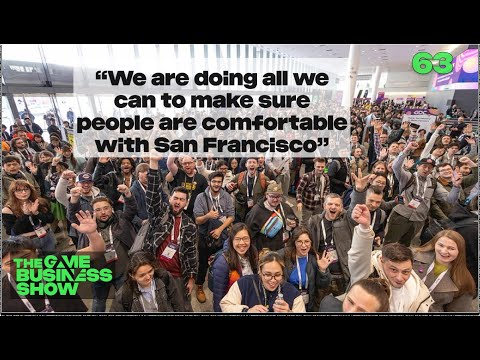
hotels are expensive. Yeah, it's it's it's a pricey place to be. Uh people are a little concerned about the city's safety, which has definitely improved in recent years. What we do, we're embracing San Francisco as a hub for game development right in the US. And then working to to try to solve problems like, okay, how do we make it easier? How can we reduce costs by, you know, reducing the past costs? Great. Hopefully that that will help bring more people. Can we improve safety? Yes. Great. Okay. We're going to partner up with the city and the police force. We'll have a safety hotline. You can call if you need somebody to walk you to a hotel, report something, you know, we'll set that up. So, we're trying to do all the things that we can to make sure people are comfortable with San Francisco.
There's certainly a lot of direct events going on in that, you know, what Epic are doing and Unity are doing, that kind
of stuff. Sometimes they seem to be pulling some companies, we've had it this year, a little bit of Epic pulling away from GDC to or the past it was E3, right? Um and um and going to going and to do their own things. I mean, I've got my views on it, Mark, but how do you feel about that sort of, if it is a trend, that sort of those things happening?
I think it was noticeable last year. I was, as an attendee, I was disappointed not to not see, you know, Unity and Unreal on the show floor or
Sony. So, I worked for Sony and I started the Sony booth, you know, 25 years ago. To not see Sony on the show floor, it's just it's just disappointing.
Um, but I I really feel like um you've got so many developers there. you you need to have a front door,
right? And that this is the important thing. I think that these companies, of course, they're going to have their own events. Um they have their own communities. They need to foster that. They can all talk about things that are more NDA at their own events. They may may not want to do at a public show, but
you're not going to find the independent game developer who doesn't already know somebody at your shop if you're not there with your door open.
Yeah.
Um that's always my opinion on it. Yeah.
You're speaking to the converted already, which is really important to do, but if you want to speak to people who don't know you and that's I think that's where those Yeah.
Yeah. Yeah. Yeah. Exactly. I mean, isn't that the purpose of conferences? You're like meeting new people. Great. So, you you've decided you don't want to meet new people, I guess. And I don't understand that,
right?
You know, there's more to it than that, of course, right? There's costs and and etc, etc. But um but I think that the developers get the vibe, right? If you're not there, if you appear not to be there, do you are they sure that you care about them? You know, if you don't show up?
Yeah.
This is what I don't understand. So, I guess I would say this cuz cuz that's why I got Sony involved with GDC, you know, in 20 2010 or whatever,
right? It's like we need to be there. We
need to be there for the developers. It's important.
Yeah. Matt, uh there's Mark there chatting about well some of the things he's quite he's been quite open about the agreed that there were challenges. Would you recommend people travel to San Francisco next year? And
I I mean if I was coming internationally, I would certainly give it some very serious thought um given the current environment. uh it's uh and and do that cost benefit type analysis because um you know it's uh for the most part it's fine sometimes it isn't and you know it's uh it's tough it I don't know I'd have to give it a lot of thought even going up uh traveling up from San Diego to San Francisco seems like a lot of work but um coming internationally I can I can only imagine some of those concerns
well the thing with GDC they're calling it the festival of game and I did put this um you First question I put in was the fact that GDC already was a festival to us to people who went, right? You know, sure there weren't all official
branded GDC events. The city is full of events that week. Um I think I probably spent most of my time outside at events connect and sitting next to GDC than events in GDC. Um, so it has been a festival and they did sort of try and convince me that there was going to be some differences there at GDC this year, but um I don't know if we'll notice it in quite the way that it that it will mean for them. I think it's reassuring that Informer who run DDC are sort of giving them the ability to take some risks. That's always a challenge when an event gets so big and it generates so much money and you know full well you need to sort of scale it right back, make it cheaper and do all these sort of things which might impact the growth of the event. you have to hope the caring company allows them to do that. It does sound like they're allowing them to do that. Um but um uh uh yeah, I don't know if it's going to be quite as a noticeably different thing as as perhaps it will be for those internally there. One of the things obviously they talk about happening in California and the video game industry and indeed the US um in it the video game industry in the US
and in California is having a horrible time. Something like 70% of the layoffs um that are going on in the video game industry are happening in the US. some 50% in California alone. Um, so although it has is the hub for video games for a long time, it's a hub that's under a lot of pressure. Basically, I see a lot of I I you know, GDC is a big event, I don't think it's about to topple over, but it's got a lot of challenges that's having to face. And a lot of them are not really anything to do with GDC at all. It's to do with the market. It's to do with the political landscape. It's to do with the city. Um, and some of the stuff, you know, you can you can tell from that interview with Mark, they don't really know how to They thought there's some things they can do, but ultimately it's out of their hands. This isn't their this isn't the problem. I had it I worked um um on MCV magazine. It was a retail magazine. It made all of its money from people book from publishers buying um adverts to try and get retailers to stock their products. And then digital started to happen. And what could m what could we do to to prevent that? It was just that was just an existential threat that was just we didn't think we could really do. And
when I was at GI games business for a long time most of its money from investment events and job advertising and then people stopped investing, people stopped hiring and it was it became well there's nothing we could have done about that really. And it's the same with GDC. People go to GDC looking for jobs. They go to GDC looking for money. There aren't that many jobs. There aren't that much money. the country's um pro proving to be uh unattractive to some people internationally and um um uh is it worth the money to go even at a 45% discount on the ticket price? I think it's a lot of challenges. Um I'm glad I'm not having to work that out.
Yeah. And you know from my perspective coming at it from the business side, you know, I see them trying to expand more on the B2B part of it. uh trying to make it more of a um try to bring more of a business focus to it. I've been to GDC several times. I generally don't get a lot done there because it's a developer show, right? These are
Yeah.
developers talking to developers about systems and engineering and and how to do what they do, the how to create the magic they make. Uh which
doesn't leave a lot of room for the the business slugs, right? Because, you know, we're we're doing a different thing. And
you know the business side, we used to have destination PlayStation back in the day which would get together all the businessy business types. Uh then we had you know E3 of course and now there's really no face-to-face thing uh for the business side. I mean Summer Games is trying to do some things around that. Uh we'll see how successful they are this year.
We're going to be great Matt. We're going to do a great thing this year.
Yeah, I'm looking forward to that. Uh but you know we're it just started last year, right? So we'll have to see how that develops. But GDC has this built-in history already. So trying to bring more of the business side there would make a lot of sense. I know
like businessy folks are are excited about that potential and and maybe that'll help. But yeah, there's
given the state of the market, you're just trying to find any path forward. And um what's funny is like the the constant kind of rebranding. This is a more significant one in terms of the messaging than they've had in the past, but like this isn't the first time they've kind of been like, "Oh, it's all different now." Um but this time it's like the most significant way of that, right?
Yeah. They're looking at everything basically and some of it's tweaks and some of it's overhauling it. And I actually, you know, I actually think a more seamless experience would be nice actually seeing all the other events that are going on and be able to connect it together. from a media point of view. GDC is really hard to navigate because there's so much stuff going on. So yeah, I some people obviously won't want to be included in the GDC list of events, but we'll see. Um we'll see. Well, I I I'll be out there. Um obviously it's biggest with this event in the Gideeria Games and um and I'll I I'm an international attendee. I'll be there. Um uh Matt, I'm I'm running out of time, but before I go, I wanted to do up a little tease for next week's episode. So, off our next
full show on Tuesday, um we are running an interview with former EA boss and current leader of Embark, Patrick Sodland. Uh the Embark team are releasing a big new extraction shooter next week called Arc Raiders. The game finds itself coming out between Battlefield, which is a franchise Patrick and the Embark team are very intimate with, seeing as they made most of them, and Call of Duty. Uh so, it's sandwiched between those two games. And here's what he said about going toe-to-toe with those big names. You did mention there that, you know, you can't compete with EA, you can't compete with Activision, yet you are coming out in between Battlefield and Call of Duty.
No. Insanity.
Um, but you're holding your own so far. So, it's h it's it doesn't feel like a Titanfall 2 situation which sort of got squeezed. I mean, that was a lot the shorter time
spent. I hope not. I mean, listen, I know that people may look at that and say, "What the hell are they doing?" We have spent a lot of time looking at this from multiple aspects and angles and you know for right or wrong we've decided that we believe that the game um
can launch there. We look at this long term. This is the start of a long-term journey.
Uh it needs to start somewhere. Um and uh we just hope that that we can get enough players interested and attracted to to the game. Now, Art Raiders is doing very well. It's in the top five Steam games for wish list. It's technical tests have attracted huge numbers. I think the server slam just did like almost 200,000 players or something came in for that. So, it's shaping up well. Um, and in the interview, I talked to Patrick about that. The things they've learned from their last game, which was the finals, which came out in 2023. Had a massive launch and then fell away quite quickly. Still going though. We chatted about Battlefield 6 as well. We discussed how they've managed to get cut through with a new IP and frankly horrifically competitive genre. We talked about the state of the industry. All sorts. It's a chunky interview. Um, and he's a very smart man. So, do check that out on Tuesday. Um, uh, Matt, I I assume you're going to be tuning in to Are you Are you following Art Raiders? It's done really well in terms of like pre-release buzz, which surprises me.
Yeah, pretty good pretty good engagement for the beta weekend. We'll have to see what happens once it it comes full. Um, Extraction Shooters is a tough genre. It's a very limited audience. Uh, we'll have to see if they can break through and try to expand that. Um,
a lot of extraction shooters come out for the size of that audience, but hey, all you need is one to break through and
uh grow that audience, right? So, we'll see if they can do that.
It's a premium game. The finals was free to play. We talk all about that. I'm not going to spoil it. Check out the interview. Uh, we will be back uh before then, though. Of course, if you're listening or watching this on Thursday, I appreciate you might be listening on Friday. Um, do check out the game business on Friday because we'll do our weekly European GSD charts. Also on Friday, um, uh, we are live in London talking to video game legend Peter Moore. We're recording that, so if you're not able to join us in person, uh, you still be able to enjoy it when we put it out on the internets. And for paying subscribers on Monday, we'll have the latest edition of the game Business Micro. So, loads of stuff coming up. Um, Matt, thank you for joining us. It's always a pleasure having you on and talking numbers. I do get worried when
we start talking cuz I think we could probably do a 2, three hour episode just going down all the different rabbit holes, particularly in the future, looking at the past. Yeah, it's what we kind of live for though, right? Weird obsessed uh video game data dorks like us. We could uh we could have one hell of a party. That would be exciting to the eight of us and maybe nobody else. But we'd have a good time.
We would definitely have a good time. There we are. We're just talking about what do you think of the performance of Trickstyle on the Dreamcast?
Oh my god. PS3 in September 2008. You should have seen it.
No. Yeah,
that was a good That was a good September. No, sorry. Well, thank you for joining PS5. The PS5 installed base in the US just beat the PS3s this month.
So, wow. That's I didn't even bring that up before. Look at that. Go PS5.
Wow. That puts it as number puts it in at the It's no longer bottom. Uh the Well, at least you can't PS. Um so, anyway, thank thank you Matt. We
went over one there. Um thank you for joining us, Matt. Um uh it's always a pleasure having you on and everyone at home. Thank you for joining us and we will see you next time.
Auto-generated captions from YouTube — names and numbers may be misheard.
The United States video game market is demonstrating unexpected resilience, marked by five consecutive months of growth and a 2% year-to-date increase in spending for 2025. This upward trend is primarily fueled by rising price points and the dominance of established mega-franchises rather than an expansion in unit volume. While premium PC titles are performing well, the console sector remains heavily reliant on the consistent performance of flagship series like Call of Duty to meet annual targets. Furthermore, the PlayStation 5 has achieved a significant milestone by surpassing the total U.S. installed base of the PlayStation 3, even as hardware sales generally struggle.
Market consolidation is a defining characteristic of the current landscape, with consumer attention increasingly concentrated on a narrow selection of high-profile titles. This trend mirrors shifts in mobile gaming and streaming, where value-driven subscription models and established intellectual property dictate success. Meanwhile, niche segments such as PC-based handhelds continue to face adoption hurdles, as their Windows-based interfaces fail to replicate the intuitive, pick-up-and-play experience that defines traditional console gaming.
In response to a broader industry downturn characterized by widespread layoffs and reduced investment, the Game Developers Conference is undergoing a strategic transformation. By rebranding as a "Festival of Gaming" and implementing a 45% reduction in ticket prices, the event aims to address existential challenges related to high operational costs, safety concerns in San Francisco, and international travel hesitancy. Industry experts emphasize that the sector lacks a centralized, professional hub for face-to-face networking, prompting a push to integrate more executive-focused programming. As companies navigate this competitive environment, the successful launch of new titles like Arc Raiders remains critical to maintaining momentum in an increasingly crowded marketplace.

The Game Business · 2026

The Game Business · 2026

The Game Business · 2026

The Game Business · 2026

The Game Business · 2026

The Game Business · 2026

The Game Business · 2026

The Game Business · 2026

The Game Business · 2026

The Game Business · 2026

The Game Business · 2026

The Game Business · 2026

The Game Business · 2026

Deconstructor of Fun · 2026

The Game Business · 2026

The Game Business · 2026

The Game Business · 2026
Newzoo · 2026

The Game Business · 2026

The Game Business · 2026

The Game Business · 2026
The Game Business · 2026
Deconstructor of Fun · 2026
The Game Business · 2026
Comments