Game Development reports and market data
Documents
Animation Bootcamp: An Indie Approach to Procedural Animation
Procedural animation offers a highly efficient alternative to traditional keyframe-heavy workflows for indie developers working with limited resources.
- Procedural animation replaces labor-intensive keyframe workflows by using mathematical curves, spring-damper systems, and physics-based constraints to generate fluid character movement.
- Indie developers can achieve complex movement using as few as thirteen keyframes by utilizing cubic interpolation to maintain spatial and velocity continuity across transitions.
- Gameplay responsiveness is prioritized by mapping controller inputs directly to character acceleration, treating visual animations as a secondary, non-interfering layer.
Why I Spent 4 Hours Designing A Stupid Tree
The creation of high-quality environmental assets for indie games relies heavily on the strategic use of modular design and procedural animation techniques.
- High-quality environmental assets are achieved by deconstructing complex natural forms into simple, repeating geometric shapes that mimic subconscious patterns in nature.
- The animation pipeline utilizes a skeletal rigging system in Spine 2D, where parent-child bone relationships enable fluid movement and natural wind sway.
- Simulating natural weight and motion requires staggered rotations and specific frame delays applied to individual asset components.
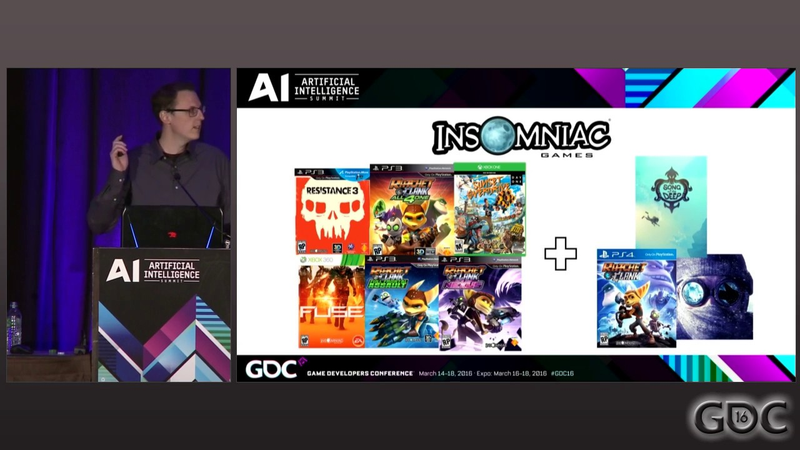
Mind Your Step: Avoiding 3 Common Pitfalls in AI Development
Effective artificial intelligence in gaming relies on prioritizing bespoke, interaction-focused mechanics over generic, reusable code.
- Prioritize bespoke, interaction-focused AI behaviors over generic, reusable code to ensure gameplay moments remain contextually nuanced and memorable.
- Align AI character roles with specific archetypes—such as the Teacher, VIP, or Soldier—to manage player expectations and prevent frustration or disengagement.
- Avoid over-automating support tasks like ammunition replenishment or infinite revives, as these systems can diminish the player's sense of accomplishment.
Gears of War 4, Project Triton: Pre-Computed Environmental Wave Acoustics
Project Triton serves as a sophisticated acoustic modeling framework designed to automate the simulation of complex wave phenomena, including diffraction, reflection, and reverberation, within the high-fidelity environment of Gears of War 4.
- Project Triton automates acoustic simulation for complex wave phenomena like diffraction and reflection, replacing labor-intensive manual reverb volume placement with an offline baking process similar to light mapping.
- The system extracts critical perceptual parameters—initial energy, reflected energy, decay rates, and occlusion—and compresses them into a 100 to 110 MB footprint per map to fit within a 500 MB total RAM budget.
- Development teams should prioritize aesthetic interpretation over strict physical accuracy, as evidenced by the shift from a complex 12-reverb matrix to a more manageable and debuggable six-bus system.
Where it all starts: Episode 1
The modern game development landscape is undergoing a fundamental shift, moving away from traditional, high-cost academic degrees toward specialized, accessible online learning.
- The game industry is shifting away from traditional academic degrees toward specialized, accessible online learning due to a misalignment between formal education and practical technical requirements.
- Career sustainability is threatened by high burnout rates, frequent layoffs, and a systemic industry preference for hiring junior talent over retaining experienced staff.
- The 'magic management math' approach—attempting to increase productivity by simply adding more personnel to AAA projects—is failing, leading to rigid, repetitive roles and stunted professional growth.
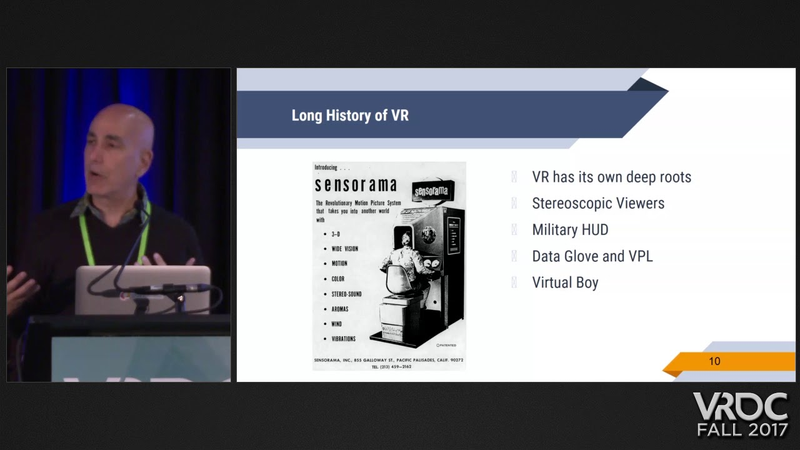
A Game Designer's Overview of the Neuroscience of VR
Neuroscience serves as an essential framework for virtual reality development, providing a biological foundation for creating immersive, comfortable, and emotionally resonant experiences.
- To prevent motion sickness caused by sensory mismatch, developers must maintain frame rates between 90 and 120 frames per second and keep motion-to-photon latency under 20 milliseconds.
- Mitigate sensory conflict by utilizing constant movement speeds, avoiding sudden acceleration, and implementing peripheral vision tunneling to leverage the biological differences between foveal and peripheral vision.
- Designers should prioritize high-quality, minimal sensory cues over complex simulations, as current hardware cannot yet perfectly replicate human vision.
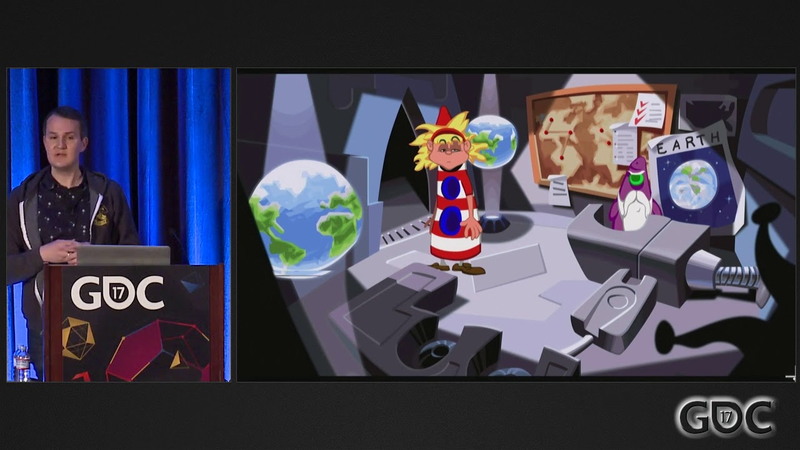
Remastering Day of the Tentacle and Grim Fandango
The remastering of classic titles like Day of the Tentacle and Grim Fandango demonstrates a successful strategy for revitalizing legacy software by balancing technical modernization with strict adherence to original artistic intent.
- The remastering strategy of balancing technical modernization with original artistic intent for Day of the Tentacle and Grim Fandango generated over five million units in collective sales.
- Developers maintained core gameplay logic by utilizing original source code and scripts within a sandbox environment, allowing players to toggle between classic and updated assets in real-time.
- Technical modernization for Day of the Tentacle involved using Flash to manage thousands of animation sprites and bytecode patching to adapt hardcoded logic for widescreen aspect ratios.
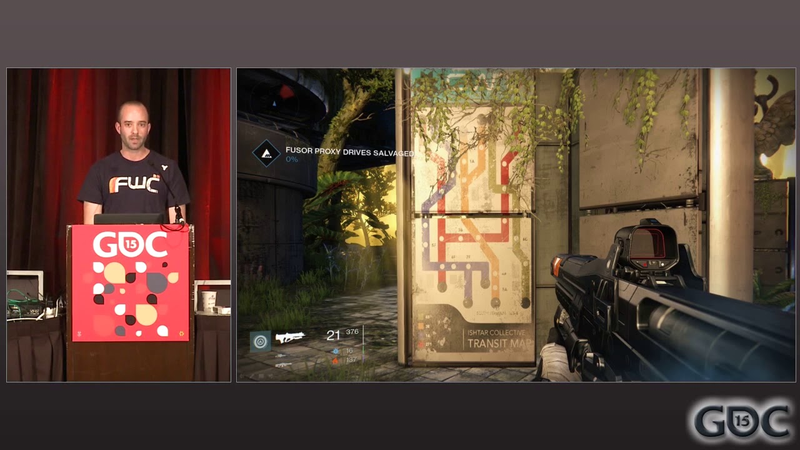
Localizing Bungie's Destiny for the World
The global expansion of the Destiny franchise relies on a strategic commitment to cultural inclusivity and technical scalability, moving away from traditional industry practices that treat localization as a late-stage afterthought.
- Bungie transitioned from treating localization as a late-stage task to establishing an internal department that integrates linguistic experts directly into the early design process.
- To minimize the need for region-specific art assets, the team utilized iconography and fictionalized signage instead of English text, ensuring a consistent visual experience across seven platforms.
- The studio employs a hybrid operational model that combines internal editors with external in-country translators to maintain the rapid release cycles required for a live service environment.
360 Approach for Open World Mission Design in Far Cry and Assassin's Creed
Modern open-world mission design requires a fundamental shift from the linear, scripted progression characteristic of earlier titles like Prince of Persia toward a systemic, radial framework.
- The '360 approach' replaces linear, scripted mission paths with concentric zones of engagement, allowing developers to accommodate unpredictable player exploration in open-world environments.
- Designers should utilize rigorous 2D top-down planning to map out thematic zones and gameplay pillars before beginning engine-based development.
- Gameplay ingredients—such as enemies, environmental cues, and interactive objects—must be distributed spatially to guide players toward objectives while maintaining their sense of agency.

3 Ways Your Crappy Game Can Make Millionz $$$$
The commercial success of an indie video game is often determined less by the inherent quality of the product and more by the effectiveness of its marketing and business strategy.
- Commercial success in the indie game market is driven primarily by marketing and business strategy rather than the inherent quality of the product.
- Developers must create a compelling hook by distilling the game's unique value into a single, concise sentence or feature that differentiates it from competitors.
- Treating game development as an entrepreneurial venture requires shifting focus from technical production to resource management and concrete, actionable business planning.
Embracing Animation Complexity in EA UFC 2 Through Procedural Techniques
The development of EA UFC 2 centered on overcoming the responsiveness limitations of its predecessor by implementing a dynamic grappling system that allows for independent player agency during ground exchanges.
- EA Canada increased the number of two-player ground animations in the UFC series from 602 in the first title to over 1,957 in EA UFC 2 by implementing procedural animation techniques.
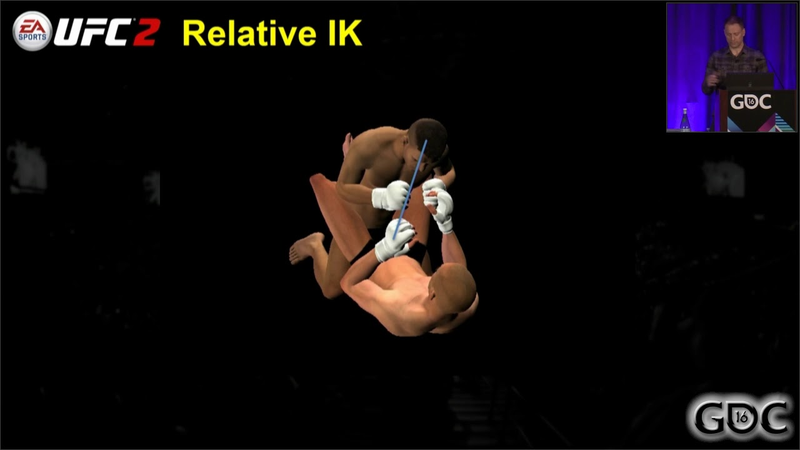
- The development team utilized a relative Inverse Kinematics (IK) system to ensure contact points remained accurate across fighters of varying body scales, preventing animation clipping and misalignment.
- Procedural layering allowed the team to generate complex grappling transitions and strikes by building upon a central state machine, significantly reducing the need for manual, frame-by-frame animation cleanup.
Realizing Responsive High Fidelity Character Movement in Just Cause 3
Achieving high-fidelity character movement in Just Cause 3 requires a sophisticated hybrid architecture that prioritizes player responsiveness without sacrificing the visual integrity of authored animations.
- Avalanche Studios achieved responsive character movement in Just Cause 3 by decoupling animation-driven motion from player input, allowing for real-time adjustments to rotation and speed without relying solely on pre-authored animation data.
- To maintain responsiveness during start animations, the team extracted rotation data from the animation and applied a fixed adjustment to the character's facing direction to match the player's target input in real-time.
- The developers used authored angular acceleration curves to smooth character orientation changes, ensuring consistent movement responsiveness across different gameplay scenarios like transitioning from a parachute landing to a run.