1 free read left. Create a free account for unlimited reading + AI research.
Create free account
Why I Spent 4 Hours Designing A Stupid Tree
Key insights
6 takeaways- 01High-quality environmental assets are achieved by deconstructing complex natural forms into simple, repeating geometric shapes that mimic subconscious patterns in nature.
- 02Once assets are exported from Photoshop and rigged in Spine 2D, they can be reused throughout a Unity 3D project to enhance overall visual depth and aesthetic cohesion.
- 03Meticulous design of minor environmental elements is a strategic investment that elevates the professional quality of independent game development.
- 04The animation pipeline utilizes a skeletal rigging system in Spine 2D, where parent-child bone relationships enable fluid movement and natural wind sway.
- 05Simulating natural weight and motion requires staggered rotations and specific frame delays applied to individual asset components.
- 06Creating a single high-fidelity animated asset takes approximately four hours of labor.
Ask AI about this video
Transcript
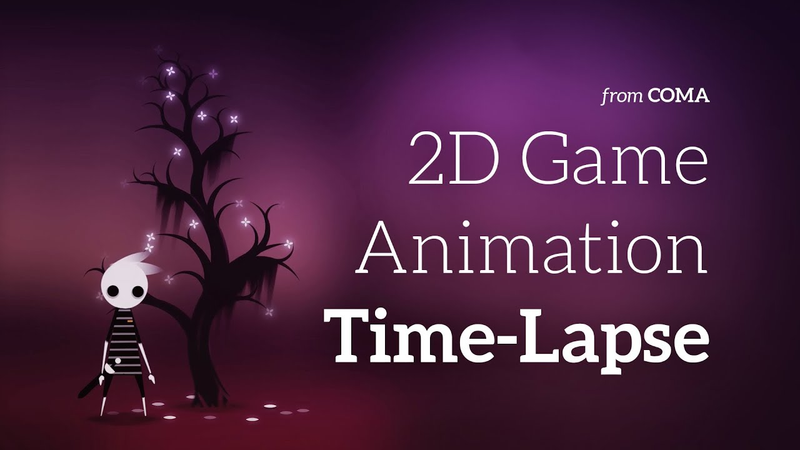
hey guys my name is Thomas brush I'm the creator of a game called once upon a coma working on that right now for Steam and I recently released a game called pinstripe and that was released in April this year so if you want to see some more of my work you can check that out in steam in the link below so really I just wanted to show you a time-lapse of me working on a tree basically all of my environment elements I built out in Photoshop in layers and then import it into something called spine 2d animate it and then bring it into unity so as you can see it's all built from one single object and that's just a half-circle sort of crescent moon shape and that's really the way that nature I've noticed kind of works everything has a pattern everything sort of has a similar or almost identical looking pieces I mean even the flowers here are a pattern of some kind and it's funny once you put it all together it looks really beautiful and I
think that's part of what makes nature beautiful is the pattern that you see in nature and it's sort of a subconscious level so I'm about to export all these layers that I've put together using something called Photoshop layers to PNG and that's a plug-in used in Photoshop and as you can see I could bring those layers into spine 2d and that's what we're in right now you can import a JSON file that finds your layers and brings them in as pngs and so we're in spine 2d right now and spine 2d is an incredible tool for bringing your images to life so I'm just laying out the bones of the tree right now and these bones are all sort of parented together basically that helps like if I move the base of the tree the top of the tree will move and if I move
the middle of the tree the top of the tree will move so this is a really lengthy process and I don't usually go this detailed but I really wanted to show you guys how cool and how sort of detailed you can make certain nature elements inside of spine once I'm done with this animation I'll export it and I can bring it into unity 3d and actually bring it into the scene and use it multiple times really brings the same to life so as you can see here I'm starting to animate the branches so the way that I typically animate a sway movement and you'll see that Pete sort of sways as well and I've already animated him and you'll see it at the end of this video I'll sway all of the branches to the left so I'll rotate every single branch and move it counterclockwise just a little bit by like 10 degrees then 30 frames later I'll move it to the right about 30 degrees and then I'll loop it and this is the
final result and as you can see I delay certain branches to make it look weighty so anyway that's the that's the animation for the tree this took about four hours today a little too long I think but I think it paid off visually again if you want a wish list once upon a coma you can find it on Steam in the link below and if you want to check out some of my other work please feel free to check out pinstripe which was released earlier this year on Steam thanks guys
Summary
The creation of high-quality environmental assets for indie games relies heavily on the strategic use of modular design and procedural animation techniques. By deconstructing complex natural forms into simple, repeating geometric shapes, developers can achieve a high level of visual fidelity that mimics the subconscious patterns found in nature. This approach emphasizes that even minor environmental elements contribute significantly to the overall aesthetic cohesion and immersion of a game world.
The technical workflow involves a multi-stage pipeline, beginning with the construction of layered assets in Photoshop. These individual components are exported as PNG files and imported into Spine 2D, a specialized animation tool. Within this environment, a skeletal rigging system is established, where parent-child relationships between bones allow for fluid, interconnected movement. By animating branches with staggered rotations and specific frame delays, developers can simulate natural weight and wind sway, transforming static images into dynamic, living objects.
While this level of detail is time-intensive—requiring approximately four hours for a single asset—the investment pays off through the reusability of the final animation within the Unity 3D engine. Once imported, these assets can be placed throughout a scene to enhance the visual depth of the game environment. This methodology highlights the balance between artistic labor and technical efficiency, demonstrating how meticulous attention to small-scale environmental design elevates the professional quality of independent game development.
























Comments