Game Development reports and market data
Documents
Playing the Middle: Balancing Trust, Creativity, and Business in the Science of User Experience
The integration of user experience research into game development necessitates a delicate equilibrium between quantitative metrics and creative intuition.
- User experience research should function as a diagnostic tool for identifying systemic friction rather than a prescriptive mandate that dictates creative direction.
- Development teams must prioritize identifying the root causes of player issues over reacting to superficial feedback to protect the game's core creative vision.
- Leadership should foster radical transparency by sharing both positive and negative research findings immediately to mitigate confirmation bias and facilitate collective problem-solving.
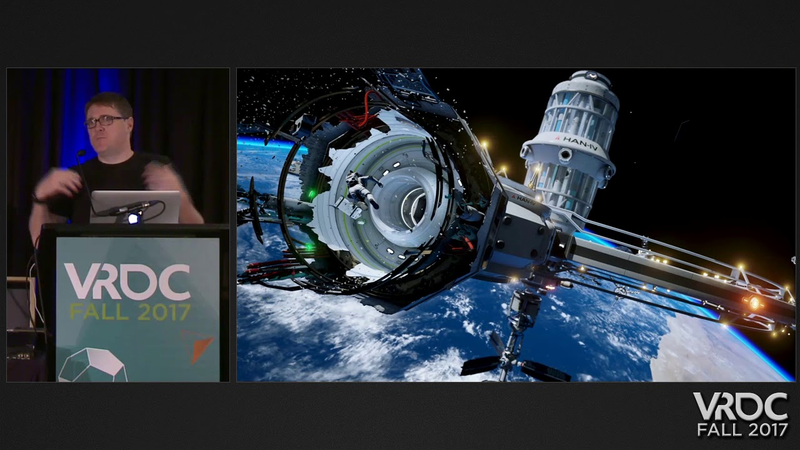
Use Your Illusion: Creating Immersive Virtual Reality Worlds
The creation of immersive virtual reality experiences relies on a delicate balance between intuitive interaction design and the careful management of user focus.
- To minimize disorientation and sensory overload, developers should constrain primary user action within a 210-degree field of view.
- Sense of presence is best established by prioritizing high-fidelity detail for objects within the player's immediate reach.
- Immersion is more effectively achieved through consistent internal logic, diegetic user interfaces, and a unified interaction grammar rather than relying solely on photorealism.
The Banner Saga Audio
Creative success in game audio relies on the composer’s willingness to make bold, intentional choices that prioritize artistic identity over industry-standard conventions.
- The core of successful game composition is 'owning your choices' by committing fully to creative decisions, regardless of how novel or unconventional they may seem.
- When scoring games, composers should prioritize an overarching musical structure to prevent the game's non-linear mechanics from causing the soundtrack to feel like a collection of disconnected musical universes.
- Musical choices should be derived organically from the game's specific mechanics and narrative themes rather than relying on direct, on-the-nose cultural or genre-based corollaries.
Invent a Game, Reinvent Yourself
The game development industry faces a critical mental health crisis driven by perfectionism, the pursuit of external validation, and the normalization of chronic overwork.
- The game industry faces a mental health crisis fueled by chronic overwork and a culture of perfectionism, which often leads to burnout and impaired cognitive performance.
- Mental health struggles in developers frequently manifest as irritability or social withdrawal rather than sadness, causing these issues to go unrecognized until they severely impact productivity.
- The 'AAA' framework—Audit, Accept, and Act—provides a structured approach for developers to categorize and manage coping strategies, including appraisal, problem, emotion, or occupation-focused methods.
30 Things I Hate About Your Game Pitch
Securing a publishing deal requires developers to prove both the commercial viability of their creative vision and the technical competence of their team.
- A functional, high-quality prototype is the most critical tool for teams without an established track record to mitigate perceived risk and demonstrate technical competence.
- Successful pitches must prioritize the core gameplay loop and a unique project hook rather than relying on extensive lore or generic mechanics.
- Developers must conduct thorough research to ensure their game concept aligns with a publisher’s specific portfolio, genre focus, and platform preferences.

Juggling Chainsaws: Original IP vs. Work for Hire
The primary challenge for independent mobile game developers is achieving financial sustainability in a volatile market where revenue from original intellectual property (IP) is often unpredictable.
- Independent mobile studios should adopt a hybrid business model that balances unpredictable original IP development with the stable, predictable income of work-for-hire (WFH) contracting.
- Relying exclusively on original IP carries high financial risk, as demonstrated by a case study where a 6,400-hour development project resulted in a return of only $1.56 per hour per developer.
- Accurate studio budgeting must account for total internal labor costs, including payroll taxes, benefits, and overhead, rather than focusing solely on external expenses.
How Game Developers Define Success
Professional success within the game development industry lacks a singular, universal framework, functioning instead as a subjective and evolving metric that shifts based on individual career stages and project environments.
- Success in game development is a subjective, evolving metric defined by a continuous negotiation between personal creative fulfillment and the collaborative, commercial realities of production.
- Qualitative research involving 55 game designers reveals that developers consistently balance three primary tensions: financial stability, creative agency, and the pursuit of industry-wide innovation.
- Organizational context dictates the definition of success, with independent developers prioritizing personal creative expression while AAA-environment developers focus on pragmatic, business-oriented outcomes.
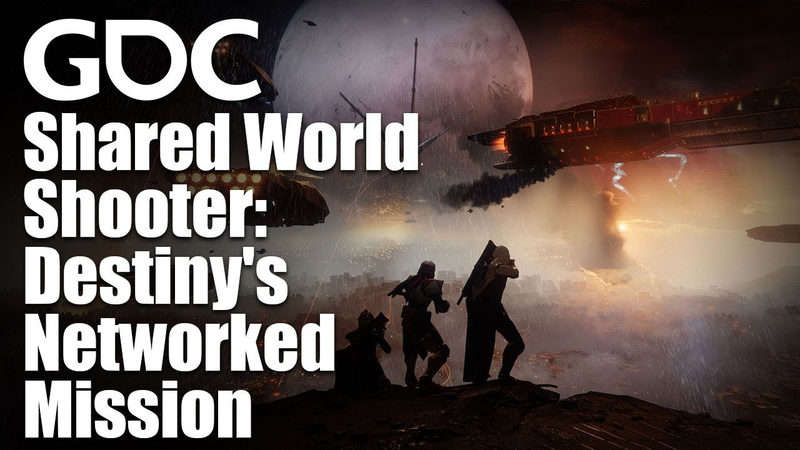
Shared World Shooter: Destiny's Networked Mission Architecture
The architecture underpinning Destiny represents a strategic evolution in shared-world shooter design, prioritizing a seamless, always-online experience that balances the responsiveness of a single-player shooter with the social connectivity of a massive multiplayer environment.
- Bungie implemented a hybrid networking architecture for Destiny that combined cloud-hosted 'activity hosts' with peer-to-peer networking to support over 10,000 players per server with only a few hundred data center machines.
- Activity hosts run a stripped-down, authoritative simulation of mission scripts in the cloud, ensuring game state consistency and security while offloading high-latency physics tasks to player consoles.
- To manage state during frequent peer-to-peer host migrations—which occurred on average every 160 seconds in public bubbles—the system uses 'sensors' to reconcile only the minimal, essential game state between the physics host and the cloud.
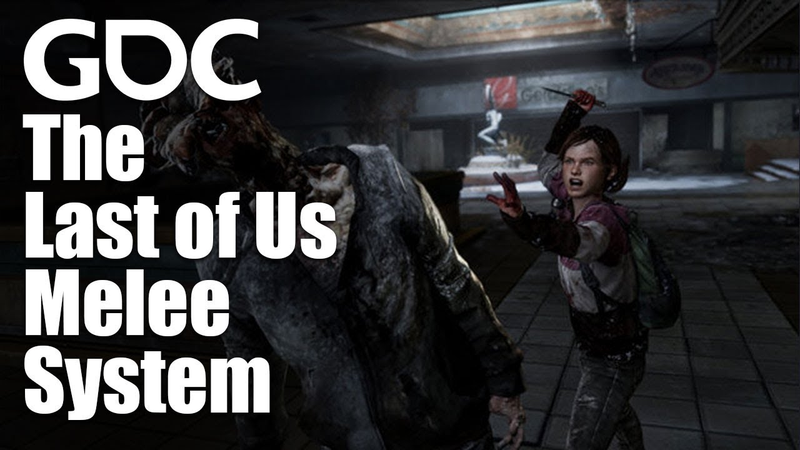
Unsynced: The Last of Us Melee System
The melee system in The Last of Us was engineered to deliver a brutal, visceral combat experience that reinforces the game’s high-stakes survival narrative.
- The melee system was optimized to function within a strict four-megabyte memory footprint while maintaining high-fidelity performance.
- Designers managed nearly 1,000 individual combat moves using a text-based Lisp scripting architecture, which allowed for rapid iteration without constant programmer intervention.
- The combat system replaced rigid, synced animations with an independent, joint-based reaction system to enable dynamic movement on uneven terrain and sophisticated flinching mechanics.
Advanced Entrepreneurship: Avoiding Total Studio Disaster
Independent game studios achieve long-term sustainability by reconciling creative vision with rigorous business acumen.
- Achieve long-term studio sustainability by treating business development with the same intentionality and structured methodology as game design.
- Replace reactive, hope-based strategies with lean startup frameworks that utilize market research and audience analysis to validate project viability.
- Implement a scaffolding strategy where each game project serves as a foundation for future technological and intellectual growth rather than a standalone effort.
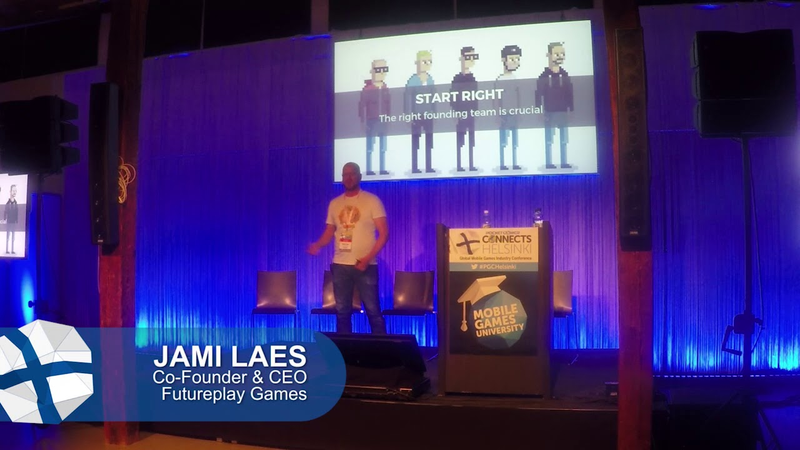
How to build a games company
Building a successful games company requires a strategic focus on team composition, market timing, and a culture of radical autonomy.
- Founding teams should be assembled like a family, prioritizing a cohesive group with complementary skill sets in technology, design, art, and business to ensure early-stage self-sufficiency.
- Success depends on identifying and capitalizing on market shifts that are currently underway but not yet fully realized by the broader industry.
- Operational efficiency is best achieved through the 'Total Zen' framework, which replaces rigid hierarchies and bureaucratic processes with a culture of radical autonomy, trust, and accountability.
Kalen Chock on Being Successful as a Freelance Artist - Episode 2 | Game Dev Unchained Archive
Professional success in the game industry is fundamentally rooted in authentic interpersonal connections and genuine passion rather than transactional networking.
- Prioritize building organic, long-term friendships over transactional networking, as genuine interpersonal connections are more effective for securing stable career opportunities than cold-messaging.
- Diversify income streams to mitigate the inherent instability of freelance work and prevent over-reliance on a single client, which protects against career-ending points of failure.
- View pro bono projects as a strategic 'professional scrimmage' for beginners to build portfolios, while ensuring such work is a calculated investment in personal growth rather than a permanent practice.