Transcript
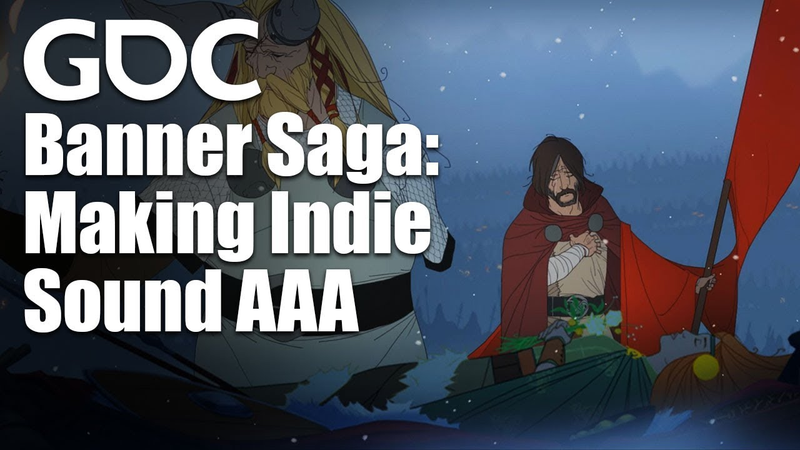
[Music] can you hear me okay I tend to talk too loudly so I'm gonna try to gauge this in real-time yes I am going to talk about the Banner Saga but I'm basically gonna use it as a sort of stand-in to discuss this this sort of subtitle they should probably be reversed own your choices out of curiosity who here was that the gamesound Khan okay good most of you were not that's what I was hoping because I am gonna I'm gonna dovetail a little bit with comments that I made there at that of course I guess I should say who was at my talk it came sound Khan because those are those don't necessarily correlate the the fundamental takeaway then as today was all about owning your choices so much of what we do as composers is
about making decisions I'm a big fan of the notion that basically all technique musically whether you're talking compositionally or production or anything like that that's all very learning and so the thing that separates me from you and you from each other and everybody and not in a better or worse sort of way but just what literally makes us not the same person are the choices that we make and generally speaking the I don't know if want to call the system or just kind of the environment the competition or whatever it is makes it sort of daunting and scary to to actually make those choices so that is I think my assessment of what it is that we actually do I'm a big fan of that picture by the way there's usually only semi relation of the images to what I'm talking about in this case it's fairly on topic but I
figured you know someone cosplaying Metal Gear Solid I have to put that in my talk somewhere weirdly enough I don't I think I typed like mystery or something into google image and it took us right into our own backyard is very happy about that so in other words the ideas I want to talk about philosophy what is the composer's actual role and because I don't believe it's actually writing music we are storytellers much like llevaba tan and storytelling is about interconnectivity storytelling it works when you connect with the person you are telling a story to and at the end of the day that's all music composing is about it's about meaningfully creating these connections and tapping into some core truth which I would spell with a capital T something that feels universal something that feels very powerful even if it doesn't genre all these things don't matter when you're talking about that it's just the idea that I have connected with you in a
very sort of primal way but in a way that's sort of a whole other talk and so today the whole notion of owning your choices is really more about how we go about doing that how does one make those choices or another way to put it is how does how does one sort of create how does one create how does one synthesize creative ideas and I don't think that we do I think creativity is an act of discovery that's a very lame and on-the-nose image for that by the way but point is the greatest ideas musically in an all creative acts what what makes them great is that they have that very magical quality that we call inevitability and I think another way to put it is that where we need to be
seeing what we do as not so much making ideas but getting out of their way and letting them kind of be created as they want to be created on their own which is a bit antithetical to the notion of owning your choices and I understand that you will embrace my mixed metaphors but the idea is you know if you are getting out of its way it's because what's happening is embracing archetypes we all know and understand it's about understanding basic psychology and understanding what the listeners takeaway is going to be what aspects of the music are they actually going to latch on to and I think that the way that we do that is simple and this was kind of my big point at the gamesound contact was to say that creative courage is basically the only thing that separates people from the presuming technique to be a level playing field that if you feel that you have less technique say an orchestration that's very improvable that's learn
about so assuming all people are equal on the front of technique what often is being the separating point between those who are the most successful in those aren't is the act of creative courage and that's what owning your ideas is all about is actually finding something and no matter how weird a novel it might seem owning it and fully committing to it a way that I like to think of it is that every decision we make especially when it comes to composing but every decision we make period whether I sit here and I keep fiddling with this deciding at what point I'm actually going to drink some of it that is no different than a compositional decision in that every decision we make separates reality in that moment from all others based on other decisions we might have made so if I you know decide to just randomly walk off the stage and leave and everyone sits here in silence saying like what kind of weird performance art did we just come here to and do we get our money back I would have separated my reality and all of yours into a slightly different one than if I actually give my talk and every compositional decision
I'm barren might I understand that it's on these tiny little microscopic levels where you know writing that C sharp and this octave versus that octave is not necessarily going to change the future of history but it is a different reality then if you had chosen the other one and the people that I think run into trouble and whose music ends up being creatively somehow never quite there are the ones that are so paralyzed with fear by having to commit to that choice that they try to straddle multiple realities and it ends up being basically bland and generic and and it has no commitment has no creative courage and I understand that if you take this idea down the rabbit hole it becomes very terrifying very quickly but that ultimately is what separates people so I'm gonna use that to talk about this game that I just finished that had a really wonderful time to work on we're the grinder full-time working on rather called the Banner Saga I am in no way trying to proclaim that I made good
choices or that the music is great or that you'll like it or anything like that but I do feel proud that I did commit to those choices and that's why I like to use it as an example so hopefully there might be some things that interest you about the actual process itself but the idea behind presenting this score in addition to the fact that it's just brand new is is that I do actually feel really good about the commitment to the choices made so I want to give you a bit of a rundown I see I have at least one of my photographs two gentlemen here are you the only one here right now well this is John Watson one of the three sort of core members of what we call stoic he's very worthy of your applause as you can see they had a very successful Kickstarter there's no time left though I'm sorry to say so you have to put your wallets back in your pocket but 20,000 42 people beat you to it so
that's okay actually did anyone hear back the game yeah alright awesome I didn't even I didn't even occur to me to ask but that's and that's really cool out of curiosity why did you I know you why don't you tell me well I couldn't I couldn't agree I couldn't agree more basically you know the visual style of this game is extremely engaging and striking and unforgettable the instant you see it and that was which that little screen grab only gives you the tiniest sense of but just a quick overview on the game itself for me the most important takeaway is actually the right half of the frame there which is Alex Thomas John Watson and Arnie Jorgensen and for me the takeaway there I know this is slightly on a tangent from the point of my talk but when working with people for me who
I'm working with is always by far the most important thing it doesn't matter what kind of game they're making it doesn't matter what genre it is or what genre inevitably the music will then be in if I feel like these are people that I want in my life then I'll go off the edge of a cliff for them and I feel like I do my best riding in that situation anyway and of course one would if you actually care about the people so at some point I just made the career decision of that's actually gonna be that's gonna be how I make all my career decisions is what what do you mean to me as a human and cuz you know it's it's not like you are gonna date every person you meet or marry every person you meet and we don't see that as a problem we're like no no you you know you you choose people because of what they mean to you and and they choose you for the same reason and and when you're collaborating with someone especially on a thing like this a Kickstarter totally independent game where there is no lifeline from a publisher or somebody to give you money when you're over budget and over schedule and all those things
you're in it with people you're not in it with an entity and it's really important so that's a side note but that gives you a sense of why I immediately jumped on board it was the same response that you had I saw what they were making they called me out of the blue and they said they were halfway through their Kickstarter and said you know we're interested in working with you take a look and see what you think and what got me was learning their story of you know quitting their jobs to make their dream game and completely just diving off into unsafe waters its responded to me because that's commitment to creative ideas that's owning your choices and that's having a huge amount of of courage and I really really respond to that so here's a little bit of a look at the game but the the first question always have to ask is what is this about in a fundamental sense not what is the story or the narrative or who the character is what are their names I love all of that but the key the key thing is to say what is the actual emotional idea that matters and in this case what I really responded to was that it was this wonderful combination of sort of
desolate lonesomeness with kind of proud warriors regal courage and and it was it was a wonderful blend of this of that kind of wistful look at the world ending which you know is normally treated with a frantic hysteria of like how do we save the world and this game said no no no you can't and even then try to you're just gonna try the weather to the storm and you're sort of powerful Viking inspired characters Viking mythology inspired characters and and you're basically taking it in stride and I thought that's a hell of a thing and it reminded me a way of Battlestar Galactica's emotional landscape which I really loved as well and so I wanted to play for you from my giant speaker there I always end up screwing this up I I this was the very essentially the first thing I wrote which was a theme trying to capture everything I'm saying
[Music] it's a turn-based strategy game that is very much and kind of adventurous quality to its narrative but like I said the question is always what is this actually about though and it's about something very but proud that's what I was trying [Music] sees nothing so this was what like I said this was one of the very very first things that I wrote in the immediate aftermath of their of their Kickstarter ending the next thing of course before figuring out you know this is all just me laying the groundwork before I start making these choices that I'm then gonna have to really firmly commit to the next
thing of course to think about a big way it's a game what are the games mechanics how do you actually play the game and not in a sense of what does the genre imply for example this is a turn-based strategy game and and they're very deliberately kind of paying homage or drawing inspiration from two games like Final Fantasy Tactics but to me looking at things like that is not really about musical inspiration it's about knowing what the interaction is like with the game itself which is something that for those of us those of you are like a bus better who work in film as well that's a question that never comes up because you have basically one way to interact with a film which is to sit and watch it happen and you know sometimes you're in a theater and you really engage with it and sometimes you're like doing dishes and kind of occasionally looking over your shoulder and and then like the toilet paper commercial comes on and you you know that's when you like go get your drink or whatever and it's like but but bottom line is the fundamental reality the relationship is the same with games the way in which you interact
with it varies tremendously from one game to the next and that's obviously what mechanics are all about knowing that because it informs the emotional experience that you're going to have is really important to me so this game has turned you know has it has a few different kind of modes within it but the big kind of cornerstone of it is this turn-based strategy which you can see is very much kind of almost like a chessboard you know superimposed onto these gorgeous paintings basically and all using traditional 2d animation and and and you know the art it's a shame our knees not here because it would be awesome to make him listen to me gushing about what he did with this game because it's really amazing the point is the turn-based mechanics have a very specific kind of emotional feel all their own just as mechanics if for example it's not a very fast paced game by design they were looking for something that felt very kind of mature
and methodical like playing chess and so to me that said a lot and if I had just looked at the mechanics in a sense of what the genre means you know XCOM is also a turn-based strategy game but that's the exact opposite way I would describe X Comics Tom was all about trying to make you feel like my personal opinion on X on the newest you know XCOM was that it was it was almost trying to be turn-based while pretending it wasn't because it was so energetic and and this was owning it sort of really it's chess like quality in a way that I really responded to where we're sitting there and contemplating your move for ten minutes might be what you do and as it turns out it's a son of a to figure out how to score this especially when games like XCOM are the big comparisons happening at the moment which is like if you do this you'll just like vaporize because there's so much sound and energy coming out of you out of those speakers and whatever so [Music]
understanding you know first what's the core underlying idea emotionally in terms of what's this game actually trying to achieve in a narrative sense or an emotional sense and then how is it how is it going about pursuing those so I have a video hopefully that's muted yeah there's music in the video I didn't want you to hear that you're not ready but I wanted you to just see what I mean this is just a random capture off of YouTube from someone's playthrough I believe or might have been one of the tutorials I can't remember but it's it's you know you can get a sense of how it moves and there's a lot of implications that come from that and there's ways to approach this that might make it feel slower that might make it feel faster and which are neither of which are necessarily better or worse than the other this is just sort of a decision you have to make but I can tell you that
I was afraid of it of the score making it boring because I think on its own it's not but it is definitely very introspective and methodical and if the score kind of gets too excited by that fact we might make something that's just that's you know has an audience of a quarter the size of this room and and I and you know so that's where again me as an investment in the developers of the game I care about them as people which means that I don't just want to write music that I think works but I want to make sure that I do my part to contribute to their game doing well I don't want to screw them as like family men and parents and humans and so doing justice to the game stems from just a belief and investing in them personally and you know that ends up weighing in so the other challenge by the way that you can probably guess just from looking at this and this is a very simple battle to eggs are from is that they could be like five minutes long or they can be an hour long and that can be tricky so here's
kind of a crash course in the evolution that the music went through this was the first thing I wrote which is the worst thing ever I didn't realize it was the worst thing ever at the time of course [Music] that's why I'm warning to my friends in the back on the console this first part is okay because it's you know it's sort of tense but it's not these are mock-ups by the way so apologies it kicks in to a lot of it because actually [Music] you know what's right
[Music] funny enough slow-paced turn-based strategy this really doesn't work because it reminds you how super excited to like launch into their slow pace but I'm but truly that was no more so I thought okay what if I went the hard opposite and so actually we tried that initial test of the theme but what if we put that in and so I basically did some elaboration on that and went the is far the opposite way to go that is possible see it's just sort
of generally orchestral which is another question I'll get to in a little bit but sort of deciding what your what your instrumentation and that should be what I just started presuming something kind of vaguely orchestral but I think it's a false assumption that we should just default to that between which we often do but in this case I definitely did and and so I was trying something that's very kind of you know gentle and quickly decided to hate that too and part of it was that even though I like that it's not really about battle these characters as I'd really dug into the heart of the game the idea that came up through conversation with the developers at stoical studio was these are warriors who fight because they have to not because they want to they are extremely badass at it they are big Vikings and Giants and mythical creatures but they
don't actually have a blood lust and that was very intriguing to me to try to really capture in the music that they fight with a sense of reluctance and that first piece kind of embraced that a little too it didn't interpret that the right way I should say so here's something a little further down my button ban I wrote the score for two years that's like lots and lots of trial which I'm a big fan of by the way get on as early as you possibly can so you can actually explore ideas and make something that's not just top-shelf you know law technique and no actual sort of so here was something where I thought okay it's a lot sparser and there's a definite tension to it that's that was absent in the previous version but it's still nowhere near the energy level and this was fine honestly this just felt very on special but I did kind of like the the sense of angst that it was
landing on so the next idea I was exploring the game the actual sort of moment-by-moment mechanics within a battle and there's a moment at the end when either you or your opponent has one guy left and it launches what they call pillage mode and it's kind of like bells and whistles go off into Vegas casino that's like it's almost over and so I as experiment tried some music kick in for that moment mode which was this and it had kind of a lumbering quality to it and that instantly seemed to feel pretty close and there was a big takeaway that I got from this also you know this this game play actually canceled energy more activity but I realized and I don't like to be overly sort of musically technically situations like this but there's a very low harmonic to build up a lot of activity and it
doesn't feel distracting and annoying and horrible the way that we've been consuming all seem to suddenly Louise energy apply that back to because remember this was written specifically for the end of maybe an hour-long match and so I thought what if I take that same mentality and apply it to earlier moments and so this was what I came up with after that which is there's movement but you can hear it's very kind of musically stable and that seemed to be the sweet spot which I would never have tried this first but you get the idea very slow progressions so that of
course is only half the struggle how it's actually going to be implemented is a really big part of it and that in this case it was much trickier because I didn't just want to like make a five minute piece that loops or something like that because that's that's it's too easy and it also misses the point of and misses the opportunity to tell a story within the game within the within an individual match where especially if you're playing online against somebody else there's a really direct attempt being made to outwit and defeat the other person and to just have some peace that sort of loops through that is missing the opportunity to sculpt the emotional experience that you the player are going through which is true of all games and so but the question was how do we implement this well we had one huge thing going for us which was really awesome and I have that screenshot up there to show because the person has has clicked something on the UI that shows
you the stats of all the units and one thing that I really loved about this from a turn-based strategy standpoint is there's no random roles really this is a hundred percent stat driven it's very simple you know the blue number is what we called like armor basically and the red number is strength and so you know like the guy that in the top there that has eight armor could be dealt four damage by the guy down to the right that has 12 strength so it's very just simple and arithmetic which means there's a lot of data on the hood to potentially create hooks to attach score variables to to drive the implementation of the music so there was a there was a real opportunity to get very very granular with the music and chase in a very specific moment to moment it's incredibly accurate way what's happening in the game so we created a a sort of formula for a thing to call vitality which is basically just weighting the individual stats there's also a third number you can see in the
little star above there two main ones that we call willpower and we basically came up with a way to weight the individual value of those three and then stack the two teams up against each other and whichever team is losing that that vitality number fastest the system basically says is losing and we can track that all in real time because this it's very easy it's very simple and so the initial idea was oh this is great I can really make something really intensely branching and with a lot of layers and do and almost instantly discovered that is a god-awful idea because if I sit there and I'm playing like this and the music is you know like these bassoon and after 10 minutes of careful consideration I make one mouse click and then the music because the stats changed suddenly I'm like Jesus what did I do and so on on mechanics of this nature something that synchronous
was actually hugely distracting which is interesting because I'm always exploring ways to how to make the music more adaptive more adaptive and in it and and here that actually was a big problem so this is essentially what we ended up with where it sits this is just you know a sort of a DP screengrab but this is conceptually the way it works is that we have sort of sections based that that it the system is list is essentially listening for a percent drop in that vitality amount and as soon as you hit it it allows whenever the loop reaches its end to then proceed to the next one so I basically write like a 10 minute or 12 minute piece more or less and then accordion it into individual sections and the way it's implemented means that if I you know attack my opponent and therefore have done the damage necessary to kind of take it to the next segment in this scheme it will only actually advance once the music
reaches that on its own organically anyway which will be at some point after I've that has happened you know it's it's as soon as one second if they happen to have done it at the end of the loop or it could be the full duration if they haven't have done at the beginning but either way they weren't actually really notice because it proceeds into the next phrase and idea of music which is already a natural consequence of what you were hearing as it was and so that the emotional arc of all of these in total is actually very gradual so you don't really feel these stark changes but it's able to track and then you can see it splits so that you have kind of the winning if your team is that is losing that vitality amount less quickly than the other then you are winning and so it takes you on like the upper path and and it takes you under the lower path if you're losing and then occasionally if it's really a long game you know we put caps on the number of loops so that the music just had like you can see there's a little insert ending they have a couple examples of in
there where it might just end and then wait to come back so that there's just kind of a nice rhythm and it just feels very organic to the gameplay so all of this doesn't address what's the palate what should it actually sound like what choices do I make in terms of instrumentation and orchestration and like I said the beginning I kind of hinted at this qualms because I think assuming it should be orchestral is actually bad that's you know if we do that everything will sound the same and so I had kind of started that way I was playing around with some electronics I was really excited about this particular kind of distortion and every time I put it in all the guys on the other end would say oh I think all right speaker is broken and then they realize no that's just a sound he's using and I got a very polite yeah I don't ever use that again but otherwise it was fairly orchestral I did notice that I was not really using this much though and that was interesting to
me especially I think that might have been just reactionary that having just come off journey which is like string bonanza and so I thought you know I just happen to notice that it was very centered around the brass so then thought occurred to me what if I just committed to that I've never done that before and I remembered an experience that I had at Carnegie Hall about ten years ago on the left is Jerry Junkin who's basically the most famous wind ensemble conductor in the world and he's the best and he commissioned a piece that when I heard the premiere of at Carnegie Hall it completely changed my life which is John colleano's third symphony called circus maximus which sounds like this and this is a loud for you on the console and the final note of this piece as demonstrated by this photo of a performance of it is a percussionist firing a shotgun it's a fully surround Pete like what you're hearing right now is sixteen trumpets and a circle around the audience and then production back behind you and it's it's it was the
largest Wind Ensemble commissioned in history at the time it may still be and they're like up on these balconies discriminating toward certain bandanas none of the band on stage [Music] whoever I was walking into Carnegie Hall before hearing this beast was not new lefty that bit I've never been hit it was like a sledgehammer face yeah I decided not to spend the rest of my talk just letting it play out but it's worth seeking out and so I thought what if I did a wind ensemble score and then my brain went to the next sort of ludicrous conclusion of what if I called this guy and got his wind ensemble to play it and amazingly when I just cold
called him out of the blue he said that sounds super cool let's totally do this it helped by the way that this game was being developed in Austin Texas and he happened to live there and so there was a sort of hometown pride thing I think that played into that as well so even after arriving and saying okay I'm just gonna commit to Wind Ensemble I've never done that before you know especially coming off of such a strong sort of string music based background that was a little bit daunting and so but there was also something missing inherently from that because as you can see here at the core of this game as well as everything else I've said is a father-daughter story and I needed something very intimate something with a lot of heart a lot of soul to capture this notion of a father-daughter story with I mean you can really see it beautifully in just this one image that there's a big story happening but there's kind of an intimate gateway to it and that was important to figure out how do I tap into that I have no idea why this shows up that way isn't that super awesome it's super straight around the time that
I was grappling with this this showed up on YouTube hey this showed up on YouTube [Music] so when I saw this never mind the fact that I was completely mine with my music most inspiring thing I've ever seen by the sheets all herself [Music] I saw this and I thought [Music] so that okay on my one string instrument that will be my little soul that's the
thing that I pick this like 60-piece wind ensemble of 10 French horns and five trombones and just seven percussion big group I'll hit that against the one violin of course we do not record them simultaneously so we did not have the acoustical issue faced with that she actually lives in Detroit and recorded all of it from there and it but it gave me something to help really separate all of this apart and so you can hear a couple of different ways that that manifests in the score [Music] I just wanted her to play with I said you probably have a nice one that you've invested all this money in but you probably also had one you played as a
kid that took a crappy practice one I want that one I want one that sounds rustic and worn in and I also want you to give a little bit of a tweak before you play it going up with something very it's rustic and naturalistic sir as a result and then what I also thought you know this is going to be very important for keeping especially in the narrative the combat can be grounded in that father-daughter story as well [Music] for as peculiar effect of making a big group not sort of intimate seems like like sort of combat with
purpose obviously I'm really committing to this notion of her as an over dog because you're hearing her veil [Music] not sound like she's on the stage with the rest of the girlfriends there's a very live sound and that's by design it's like 1 against [Music] thank you taste that so uh on that last slide you'll notice there's a whole shitload of crazy-looking dudes that's one of these guys which was the last sort of major consideration to take into account of here like what can I do to kind of force myself self down some kind
of interesting path again everything here is all these choices that I'm feeling compelled to commit to hard and fast are organically stemming from the game I'm not just arbitrarily making them and so the the sort of the enemy the sort of lurking specter that's hounding you in this game within the narrative is these big sort of biomechanical guys they call the dredge and I thought you know they bring a very otherworldly an alien on the Giger sense although kind of vibe to the game and I wanted to have that represented someway in the score now I say that hesitantly because I don't actually really like or advocate for these very sort of direct on-the-nose corollaries musically where it's you know like an obvious one to be I'm scoring a feeling that takes place in China the music should sound Chinese I'm like but why we already figured out the whole China part on account of the movie taking place there so what is that actually like if there's something inherently emotionally about Chinese music that is going to bring that thing
that you need that's great but then that's that also means you can do in a romantic comedy and that's the perfect thing for there and and that's that's the way I tend to think is to say okay there is another worldly vibe can I help bring it in the music in a way that actually feels complimentary and isn't just layering redundancy and so I started to think about that and that led me to a couple of friends of mine Rand engraves a composer and biking Jesus and randon in addition to being a great composer he's a really talented and acclaimed didgeridoo Asst did reduced and Viking Jesus is he does like video game metal video game covers and I met him on a video games live performance and so I thought didgeridoo seems somehow perfect and this is where my intellectual justifications for things
just completely vanishes and I'm like I don't know it just I just I just think it needs it and also not so much metal guitar but prepared electric guitar and I thought he would particularly enjoy that because one of the ideas I had was I said do you own a guitar that you never use and he said well no not really I said you have a friend who would and he said I could get a hold of one but why I said I'd really love to sample the sound of it being sawed in half like an electric guitar that's miked and ready to go and and you're recording the amps takeaway from that experience it's like putting your ear to the window as you listen to someone be murdered it's like I don't want the sound of what's going on in the room I want to hear what it sounds like on the outside of the room and he was like sure and so that's here's what kind of all that added together also what was cool is the Dallas Wind Symphony which is Jerry's ensemble and we recorded in their concert hall in Dallas which was awesome and terrifying do all that without put dreads
[Music] [Music] [Music] there's still something else missing and a big component of the Kickstarter campaign had been these things they call the god stones and which is a brilliant move on Stoics part where basically as a way to offer a very cool tear to really high paying backers they said throughout the game your Caravan is gonna go wandering by these giant sort of almost like gravestones to the now dead gods that's part of the kind of mythology of the game is that this sort of
polytheistic world sort of like ancient Greece or obviously like sort of the the the Viking lore the gods had all killed themselves and this giant sort of war and everyone left on earth survived and basically were left alone and realized oh life I guess just goes on so there's these so that kind of forms the emotional framework of like we're all that there is there's no one coming for us there is no one going to help us because they're facing this new sort of doomsday scenario and there is no sort of higher power to whom to turn which is very important for the emotion of the game and so they said we want to have reminders though that that is the case by putting these these these tributes and so they said if you give us whatever it was like a thousand bucks send us your photo and we'll make you a god stone and you can name it you can come up with its backstory and we'll fit it we'll make it work and it was brilliant and who'd have guessed that there were all these like bearded people who have a lot of money and because they all like all these Vikings came out of nowhere basically and so the game has
has almost no like spoken dialogue in it it has very interstitial vo and I always felt like there needs to be something special and unique that happens that's proximate to these and so I pitched this idea I said what if your Caravan kind of bursts into song and there's almost like musical it's almost like source music threaded into the game's score what if we tried something like that so that led me to start thinking about well I need singers shortly before the game's kick started this video an option please tell me all of you have seen this everyone has seen this no one does anything all of you while you're watching it now so you've all seen this here somewhere yes okay she is among us Skyrim done in a way and
this showed up on YouTube shortly a few months before the Kickstarter part of part of the motivation behind reaching out to someone who had put something on YouTube was that the whole game was born through the online world and I liked the idea of kind of committing to that as well as yeah you know the idea that that people who have earned their livelihood and built their reputations as musicians on the internet would participate in the game that was also launched from the internet and that to me just felt like a sort of spiritual alignment that I really liked and so as soon as this notion of what if I wrote sort of folk songs for these for these gods stones and and I got these these amazing
singers who who I had not I didn't know them I just knew their YouTube videos so maluca was the first and then shortly thereafter I met this fine fellow from The Hobbit the Misty Mountains and this is Peter Hollens is his name and he likewise he puts like Taylor and he puts content on YouTube and who did the vo for the game he just sounds like so I said please tell me he's not actually a singer spoiler spoiler britches and so I
had my I had basically a trio of singers and we add it all up here's kind of the aesthetic [Music] caste [Music] then how Peter and Yohan together speaks Icelandic so then here's all three of
them plus smiley as well [Music] [Music] I can say what it is [Music] [Music]
[Music] [Music] sort of inadvertently referred to as The Lion King part so by the time I got to the end of this and I started playing it for people they were like wow this music is really um weird and this doesn't really sound like what we were expecting and and I didn't even really notice it had been almost two years of work I've just sort of finding things and seeing what felt right and by the time I end I I just realized that had been sort of
committing to all these choices along the way and in the aggregate a million of these kind of odd choices but what firmly believed in culminated in something that was that seems to be a bit different and again I make no claims of if it's good music or anything like that that's not up to me to decide that's up to you guys and to whomever else but I did feel confident that I I did not waffle on these decisions as we went which is just again the reminder of how we actually go about doing this this is in my gamesound con talk I mentioned a guy who who the economist referred to as the feasting vicar in a wonderful obituary I read his name is Robert K Pond and he was a sort of minister slash food critic and he wrote very eloquently about food as sort of like a way of life and it was very tied into his Christian beliefs and he was incredibly I never heard of this guy and then I just read his obituary and I found him to be a wealth of inspiration for how to be a
composer with integrity because he basically said perfection should never be your goal because it's not even possible it's there's no point in trying so the whole idea is to basically just commit to the choices that you make believe in them fully and know that some are gonna fail some are gonna fail spectacularly but if you're gonna fail fail like the Hindenburg don't fail in some way that doesn't even matter and this was what he fully believed so much so that he would intentionally eat and make things that he knew were terrible because he wanted to experience something that tastes truly shitty and then we make something that's really special suddenly he really appreciates that all the more and I thought that was really actually quite beautiful and so it can be summarized there's a Samuel Beckett quote from from worst word ho where he says ever tried ever failed no matter fail again and fail better because you have to remember we are our choices we
that is what makes us one composer versus another composer if you see this as sort of your first instinct is that very first box or whatever I guess it's a diamond with the way of oriented this on the left every single person in this room and every other composer ever in history can think of that which means that if we all start there and we stop there the art dies immediately and it's all of our collective faults not to mention the fact that it's extremely hard to have a career where everyone is the same you know at that point one entrepreneurial person says oh well what if I just make a music library and then everyone can just buy that because it doesn't matter who you hire anymore and that person who will refer to as Hz can profit enormously and I say it with love no actually but there is truth to that if you create something that becomes so
de-facto norm and then everyone does the same then whoever basically figures out the best way to package it is going to do the best it's not-it's not about the music anymore which means the only way to penetrate to the right side is to just make a series of choices to it from which there's no coming back and some of them are going to work better than others but you end up somewhere that's a spot that only you occupy there's a Steve Martin quote where he says be so good that no one can ignore you and I actually don't think that that really applies you know in our world where technique is so learn about and where sample libraries and the ability to hire orchestrators and all that means that that from a skill level everybody is capable of being the same we've kind of Harrison Bergeron music I actually think that's wonderful in this particular instance so that what separates us is you so I would say be so you that there's just no one else that you're the person that does that thing you're the only person that would make those choices and it's not about being better or being worse it's about the fact that you're the only one that would do them and there's going to be people that respond to that never mind
liking working with you and all of the wonderful love DW details so in other words our choices is what we sell that's what we charge for it's not actually music in some other sense thus it's always very important to just own those know that those are all that matter and in what few minutes I have left I would be happy to take questions and I will I think you should probably run up to the mic for the sake of the recording but I will also restate them and I've failed if no one has a question all right beautiful Austin you got a lot of brave decisions as far as you know having the violinist bring in her oldest violin against the whole stage the didgeridoo a lot of cool ideas and I love how they came together are you doing the the mixing are you making those decisions or do you have someone that you work with on a very intimate relationship to make sure that those ideas come through the way you intended so everyone here that I assume yeah so I
on this particular score because we recorded the Wind Ensemble in kind of an unusual way I essentially mixed it myself normally I don't like to I don't consider myself a mixer you know I'm kind of an idealist who thinks of my job is putting dots on paper but you know in this world in this economy sometimes you have to be able to you know hire so-and-so you can't hire X and so but in this case we actually had the budget and I did hire my mixer but what he did was actually more like mastering because and the biggest reason why I was actually not so much the weird combinations of like solo tracked shitty violin played beautifully and didgeridoo and things like that but because we hired this mad scientist of a recording engineer named Keith Johnson who's a Grammy winning engineer who's worked like a hundred times with that win ensemble and he's like this maniac who we when we record into Pro Tools we're not getting stems of of you
know we're not getting basically the feed off of every mic we're getting these sub mixes that he makes that we can't open up he has this weird custom box that looks like something from the Apollo program that he made and he's sitting there and we were recording and he sets all the levels he won't let anyone touch his gear so setup takes like two days because he's like 85 years old and putting up all the mic trees himself and won't let anyone touch his stuff and so he he sets it all up he and he has this literally like there's no faders there's no de it's it's literally like knobs and it's it's the sight you could put in on this podium and I'm looking at that I'm like he's like 50 mics going into this thing and and and and he's got priests and they records everything like 192k he does these really high-resolution digital recordings and and and like I said he's a Grammy winner for surround sound mixes and so but it's funny because they said you know normally rule of thumb is you set your levels you fool around with things and then you set it and you only
change things as problems or eyes or as you try to achieve a certain kind of effect and I'm watching him and every single take he's he's doing this not it's like moving all of his things around and they're like they warned me ahead of time this you're gonna have a heart attack when you see them working because you're thinking because we don't have stab Merman we don't have the individual mics in Pro Tools so they said you're gonna freak out but what he is what it is he has a photographic memory and has memorized the conductor's score and he's changing balances like one bar before they're about to happen and I was like that's and then we record it and sure enough like I'm sick because you know the like Jerry's conducting and I'm sitting there in the booth and I look and I see there's like a giant thing about too common or watching like reach over and make an adjustment and then BAM and the orchestra and I was like my god so for that reason because there was still six months of work on my end after the recordings of the the big orchestra and I was still writing a lot of those folk songs and things like that there's still a lot of implementation that had to be done so I needed to be able to work on those mixes immediately
and so I basically we ended up we had four stereo mixes that were basically like for subjective perspectives of the orchestra that he created as sub mixes so it's not really a traditional mix so I basically had to do it myself which was fun but but you know you're talking about owning your choices there's no backing out of that yeah great presentation by the way thank you I hope it's helpful I hope so I think I'm glad you hope stuff that is in no way comforting to me but thank you a lot of notes so when scoring games as opposed to films you still try to approach creating an overarching structure or do you think it's different no absolutely in fact I think it's even more important in games because the natural structure of games tends to splinter apart the music so much that it's very easy for each cue to kind of be it's almost individual little musical universe and I feel that that's not I mean you know for if you're familiar with journey journey is like kind of manic-depressive obsessive about this
idea of a single structure and but truthfully everything I do is you know I tend to have you know one theme that is written to carefully be able to map the trajectory of the whole game which means that I can't really start writing until I know what all the main story beats are gonna be what all the main berry my time talking about narrative games although non-narrative games this would potentially apply to as well if there's any kind of sense of like difficulty like even what Tetris for example but but anyway yes overall sense of structure hugely important and and hopefully you know if you play the game you can you can feel that you can sense that just an intuitive sense that the tension is rising that the that the overall sense of stakes and scope are increasing in tandem with the game itself and the way you do that is by controlling your parameters is by saying you know what am i choosing not to use now that I'll then use later as a way to add more you know and so
definitely thank you thank you when you talk about owning your choices I'm curious as to know like how do your meetings go when you get revision requests or do you not even entertain revisions of course no no no yeah absolutely okay you will like it please don't let the checks stop coming oh of course no for me those are not antithetical concepts in fact they are very mutually supportive concepts because someone will throw out an idea bearing in mind that owning your choices is all about going down some path that you've really never been down before and it's about creating something that you feel like I didn't know I knew how to do this when someone offers you a suggestion you know like if I'm writing a piece for win ensemble and the note I get is make it more orange no idea what the hell that means but it does make me think and rewrite and revise in a way that I wouldn't have on my own and so then I end up going down and even more of an interesting path so
yeah to me I actually think writing is in the rewriting I love throwing things out because then I feel like because I just always assumed that my first instinct is terrible what I like to tell people is what most people don't realize is I am a god-awful composer I really am terrible but you just haven't heard 99% of what I wrote because I'm fairly good at curating so and and the notes are a helpful way to actually be able to do that all right let's lightning-round through the last two of you guys all right fight to the death between the two of you it's on you thank you for your presentation and my question is usually at which point that do you bring live instrument and live musician because I have heard that you have somebody recorded right up you came up with an amazing melody of journey yeah no it's true journey I recorded on day one the
teen aglow the cellist and Amy Tatum the bass flute player were recorded on day one before there was even concept or a remotely playable prototype for journey as well and it you know if you're tracking a soloist I mean these are friends of mine if I just call them and I say well you come over and read this their will and or I'll give them 50 bucks to just sit in front of a microphone even if I end up throwing it out but I would much rather the developer hear something that sounds the way it's supposed to sound and feels the way it's supposed to be especially when you're talking about like in the case of journey there's jealous and then there's tina guo she does not I don't know what she does but it's sorcery which means that if if if I cannot be sending them mock-ups and you'll have a stroke if you're like oh I get used to the mock-up and then you hear her no brain should have to make that leap you got to start with her it's the safest thing and so obviously you can't do that with a full orchestra so mock-ups are pretty key there so in that case I tend to try to wait until the last possible second so I can keep changing the music over and
over and over again but for soloists early and often you know it don't break them don't break the bank but but they'll you know they'll work with you because it's just a one-on-one thing all right thank you nice look man thank you yes
Auto-generated captions from YouTube — names and numbers may be misheard.
Key insights
6 takeaways · ~2 min read- 01The core of successful game composition is 'owning your choices' by committing fully to creative decisions, regardless of how novel or unconventional they may seem.
- 02When scoring games, composers should prioritize an overarching musical structure to prevent the game's non-linear mechanics from causing the soundtrack to feel like a collection of disconnected musical universes.
- 03Musical choices should be derived organically from the game's specific mechanics and narrative themes rather than relying on direct, on-the-nose cultural or genre-based corollaries.
- 04In turn-based strategy games, music should feature slow, stable progressions that allow for gradual emotional shifts, ensuring that loops do not become distracting or energy-draining during long play sessions.
- 05Collaborative success in independent development often depends on choosing partners based on personal connection and shared values, as these relationships sustain the project through the financial and scheduling pressures of a Kickstarter-funded environment.
- 06For The Banner Saga, the score was designed to reflect the game's intimate father-daughter narrative by incorporating unique elements like vocal performances and specific wind ensemble arrangements that diverged from traditional orchestral norms.
Ask AI about this video
Cite this video
Citation
Generating citation…



















Comments