Invent a Game, Reinvent Yourself
3 Nov 201759 min video
Transcript
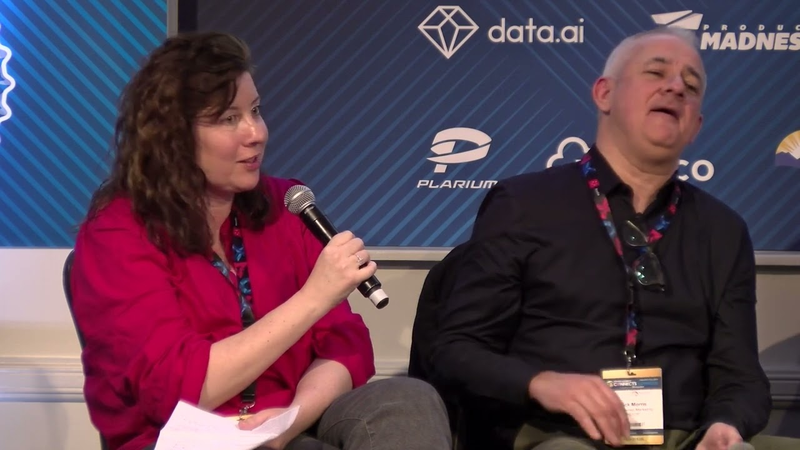
[Music] hello everybody how's everyone doing good GC so far it's only day three cool so thank you for everyone for coming along this session is invent a game reinvent yourself and Jen and I both appreciate that you've all come here today cool so just a quick introduction my name is Joshua Boggs I made the director of studio called Love Shack we made a video game called friend I'm also a member of Jen's wonderful check point and I'll let her introduce herself and it's my clip-on microphone working well enough great cuz I can't stand here because then you can't see I'm vertically challenged so I'm dr. Jennifer hazel but even though I graduated from medical school like six years ago that still sounds
really weird Jen is fine and unlike Josh I don't have any kind of accolades or qualifications in the gaming industry but my biggest achievement is that nearly got the platinum trophy for uncharted for nearly what I am good at is is watching so I'm a medical doctor that now specializes in psychiatry and what we do is we watch we we watch people we see how they they think how they behave and you know we try to help them in some way and being close to it to Josh being close to my other my friends and colleagues in the games industry I watched and I realized that there was this obvious link between games and mental health and it wasn't like it was going in one direction or another sometimes they would be beneficial sometimes in work but there was something something there that was just out of reach like I just couldn't quite visualize it you know much like the speedrun trophy for uncharted 4 it
was like right there so I thought you know what no one else is doing this I'm gonna be that bridge so I found a checkpoint checkpoints a nonprofit organization that runs out of Australia which is where we live and it acts at the intersection of videogames and mental health in all of the forms that that takes so we provide game therapy to vulnerable people or that have mental illness who are otherwise disadvantaged we do well-being workshops for members of the gaming community we do well-being rooms at conventions we do research and a whole bunch of other stuff so that's us and that's why we're here today obviously this talk does come with a trigger warning I think it's to mention that whenever anybody's talking about mental health in any form that if anything that we touch on during this talk does you can hit you or distress you in some way and you feel like you need to step out please do so obviously this is here to be helpful and if at any
point it's not helpful anymore you know we're not going to like chase your own we're not going to take it personally please just do what you need to do to keep yourself safe and with that I'll hand back over to Josh okay so this talks just split it into two parts the first parts I did a talk last year about my personal experiences and like my psychological I guess undiagnosed depression and alcohol use throughout the development of framed that part's going to be like fairly brief this is uh merely like a case study really the second part is why you're all here and it's dr. Jennifer hazel will be delivering practical advice for everyone how to look after their own mental health so what they're we'll just get into it so I had this discussion right sharing stories is important not only do
we all do it as our jobs but sharing stories can help reduce stigma it's really important for people in the industry and industry leaders to stand up and say you know it's okay to talk about this because then others an industry will will also feel open and everyone it's mental health will in theory get better the other thing is that the games industry is still uniquely young given health for how we've we've come this person counts that you know the prize is that we can still make changes to make our environment better the cons is that we still have things like crunch which as developers can trigger I guess vulnerabilities in mental health and lastly you know we all know this games are a powerful meaning for communicating and it would be a mess if the developers
themselves who are representing mental health weren't looking after their own see yeah like I said last year I gave a talk called the unsatisfied mind a lot of people approached and said they got a lot from it and that was good but you know I personally and I think others too we're also hoping for like more concrete actions you know what to do next like where do you go when you find yourself feeling similarly so we decided to you know write this talk yeah it's much more analytical like I said before I'm a merely a case study here so you may find parallels you may not but Jim's advice is a far more applicable in general sorry there were a few contributing factors that kind of led to my like down with depression one was obviously the
game itself framed there were expectations of others you know once we released it or sorry once we announced it everyone was you know super excited about it and you know there's certain expectations that come with that but uh more than there it was the expectations of you know myself I've a personality that is very perfectionist I guess you could say and that just mainly served to add more pressure on the rest of team they obviously too would have been going through their own hardships and I think you know one of the other major contributing factors and I think as a society pretty much right like mental health awareness isn't really known very much like like you know recognizing the signs so there's no way that they they
could have noticed you know the signs I was exhibiting and I definitely didn't notice any of their signs either it was pretty bad um but yeah that's what we're doing this talk if only there was some sort of I know charity or service that was promoting mental health and games I'd anyway so for this last part I don't like talking about myself this is already kind of annoying but we're gonna get very qualified doctor to give a more objective overview maybe of my personality and strengths and weaknesses so I'll hand it back over to Jen she tried so hard to get Josh to write this bit himself it just didn't happen so from a mental health point of view it's always really important to look at a person as an individual that has a longitudinal existence so obviously someone is born they live they have experiences and that's what leads to the
way that they perceive the world the way that they adapt to their environment so and we've discussed this so none of this is going to be new to Josh as I say it and don't look terrified it's fine so so Josh's parents divorced when he was very young and he carried a lot of guilt around for that and it was something that he never learned to kind of express when he was much younger just as the eldest sibling and so whilst the family was going through this difficult time he felt the burden of responsibility over his younger siblings he wanted to look after them to make them for safe and yet simultaneously because he didn't want to burden his parents any further through the distress they were already having he didn't feel able to offload his emotions onto them and that was when he started learning to internalize things and around the same time I think financially things were quite difficult for the family and Josh learned very young the importance of
work and working to survive Josh has been employed in some way or another since he was 12 so he's now 30 so there's longer working and not working so it's a work became not only the driving force behind everything but a coping mechanism so once you take that away it's very difficult to know what's left on the other hand those things are exceptional skills that drive to look after others that drive to keep everything inside enabled him to handle stress exceptionally well it also enables him to kind of use his creativity in an objective way and simultaneously it was an exceptionally hard worker and of course everyone here will agree that to be successful in this industry you have to work really hard all the time which has its pros and has its cons so what happened next Josh will tell you a little bit about and hopefully that analysis should give you some understanding of why these
things occurred that's when I was supposed to stand up okay so there were yeah I'm sure many people would probably relate to the pressure that comes with development I think like the motivations behind why success is important kind of delve more closely to like it's like meat like respect from your your colleagues but that's left unchecked can turn very quickly into basically just a constant seeking of you know external validation so you know that there sort of I think the award culture around a lot of things and the penis to see where they're like it happens in film and stuff as well drives you know that sort of personally
depressive downward spiral and the other one was clearly as as Jen was saying about my personality this sort of projection of myself onto what I was doing like it took a long time to separate the two and be like this is my work and I love it but you know I need to not put on like my value as a person in it and that that's that's really hard like I think everyone struggles that because you know you have to really care about what you're making to make it good right so as things you know were getting worse during development you know I turned to my I guess maladaptive coping strategies so things like work if things ever get rough just do work just distracts you it's productive and yeah that's that's
pretty much what I used to do a lot I probably still do it a bit and that basically just led to laying out the disruption of other relationships you know friends family stuff I there so you know when you when you're never there that there's always going to be that that's schism and that basically led to alcohol abuse and the the thing was I guess alcohol abuse I think it's indicative of a more base what's the word yeah like like a need because basically what happens is there's alcohol use or you know gambling or risky sex or you know actual hard drugs it's all that like that was the second behavior I'm gives you like a head of dopamine and then you start
becoming addicted to that so yeah and then towards the end of it then you know I kind of got some help and realize well I didn't realize it was diagnosed with actual clinical depression so that was very it was it was very important because it was important to acknowledge that there was a problem and being able to label it was incredibly valuable so yes acknowledging it the other thing I guess since I'm gonna wait I guess like as a as the story that Jen was telling it's very difficult for me and I think it may also be true of other men as well to accept help from other people it's just like the last thing I'll ever do it's like I ask for help I'll just keep doing it myself and but but you know learning to let that go and and
yeah you know get the help of others and very close friends the other really important thing as I mentioned before because you know to be diagnosed with depression you have to do at least some form of therapy was I finally went and got therapy and there's many different arms of therapy you know there's like CBT DBT ECT was the form that I personally found quite useful for me I'll let you know Jen discuss that during her part of the talk and the last part was just actually taking a long break from work being able to like sit with yourself and not distract distract myself was incredibly important to get back to the values of why I make games you know why I got in the industry as opposed to the things I became addicted to you and right here that you just this
first there's only five points here right so it sounds fairly not trivial but small but you know this was a long process over 12 18 months that's almost as long as it took to make the game so yeah I just want to make that very clear and that's that's me that's how I'm now doing a lot better this is obviously anecdotal and I'm merely basically a test case for watching is about to talk about and there was one more point can't remember it that's all right so to introduce the wonderful Jen and she will provide implementable lovely advice you know start with a really quick story because this talk can get pretty intense it can get really heavy and can we give Josh a round of applause
for doing that again two years in a row okay people often ask me how I got into mental health I trained in Britain as you could probably tell and I moved to Australia to start working in the emergency room medicine is very different in Australia I didn't realize quite how different until this story I'm about to tell you I was always interested in mental health whenever a patient that needed mental health care came into the department the other doctors would give them to me because I found out the most rewarding so one day we had a young lady and I think she was about 18 and she presented what the triage note from the nurse said hallucination and I say okay cool let's see how I can help this young lady so she comes into my examining room and you know I say well how can I help you sleep well there's a spider in my key and I was like yeah sure sure there is you
don't see that in England that's not a thing I thought maybe she was having a hallucination a somatic hallucination she was feeling something that wasn't there but of course you know I wanted to have a look give it a go I'm just gonna get really close to Josh so when you look in someone's ear this is how close you get and there's a magnifying glass so obviously I had a look and there's the like this monster of a spider with huge red fangs and being the pillar of dignity and professionalism I am I screamed through the otoscope on the floor and ran out of the room and that was the day I decided that I would do mental health so no do not call me that's not the time this is called the triple a model and something that I pioneered for
checkpoint specifically to try and help game developers and other members of the technological community it's a model that is filled with education and practical points of intervention and everything that's in there is evidence-based the reason that I say I've designed it for game devs is because it's brief it's memorable and it focuses on the three key parts of well-being which is your psychological health your physical health and your social health it's not actual medical advice so you know this isn't a prescription it's designed to provide the audience with autonomy so you see this talk you think I can some kind of see a bit of that in me or that tip that technique looks like I might find it useful you go away you have a read you know you google the terms everything that's in this talk has quite detailed notes that will be available on the vault along with links to the studies that we refer to and some helpful
websites that you might find of benefit and the model describes a three-step process or dit accept and act so to order what we are doing is taking a step back and without judgment or malice just seeing what's there what's in there inside what's there outside and just having a look and then we move on and we accept that and we go you know what whatever it is there I'm gonna be kind to myself that's fine that's okay that's what's happening right now and just let it be and then we move on and we act so we introduce some very superficial basic techniques that you can implement today that you can go away and learn how to help yourself to optimize your well-being at any given time and the beauty of this model is that you can use it however often you want if you're a very stoic person that only ever gets
once a month and please teach me how if you are that person you could use it once a month or you can use it once a week or you can use it every five minutes that's the beauty of it so the first step is to Aude it and this starts hard and gets easier every time you do it it's based on a psychological technique called mindfulness which I'm sure a lot of you have heard of and a good quote is that mindfulness concerns a clear awareness of one's inner and outer worlds including their thoughts emotions sensations actions and surroundings as they exist at any given moment so what we've extrapolated from that is when we order our current situation we look externally and then we look internally at what's ongoing and chronic and happening all the time for us and what's kind of passing by what's transient there is no way I can do a
talk about mental health and game development if I don't mention crunch unfortunately it's not something that I can do anything about I wish I could come in here and wave a magic wand and help you guys not ever have to crunch again but I can't what I can do is give you tools for your psychological toolbox to help you recognize the signs that is happening and to help you to know what to do about it if it is happening because I cut like we can't make it go away right I I work with an organization in Australia called the sane and they do a program called the mindful of employers program which helps all organizations to create mental health plans for their employees and I was sitting down with them saying how can we do this for gamedev and I said cuz gamedev they do a lot of crunch and there's this lovely lady she bursts out laughing she said crunch I haven't heard that word in 10 years because no one else does it anymore in the industries
that they deal with so why don't they do it because it doesn't work it works for about two weeks and then after that you reduce your productivity you reduce the financial benefit and you actually burn out your own which has a knock-on effect so everybody knows that crunch is linked to burnout that's kind of reasonably basic stuff but what is burnout it's a time that we kind of use flippantly it's a biological process that we've done studies fMRI and SPECT studies that show that in people who are on the spectrum have been burned out there is reduced functional connectivity between the amygdala and their prefrontal cortex so that's the the lizard brain the instinct feelings part and the part that makes you act or run basically it reduces how well and how quickly you can respond to emotional stresses which means that you feel emotions less or you're able to regulate them less leading to emotional
exhaustion depersonalization and feeling like you're just not good enough of course that's going to have an effect on the individual they might come to work less and when they are at work then they're not there cognitively and then everybody else in the team has to pick up the slack which is not that one person's fault and it's not their fault but what happens is there's this kind of exponential burning out is there everybody around them gets burned out too and then it gets worse and worse carries on to the organization itself and the ultimate effects is that there's decreased output and decreased profit and everybody is sad it actually costs the US economy between 150 and 300 billion dollars a year depending on estimates so this is a real thing that has real consequences for not only the people but the companies that run the
people that run the companies sorry stress is the next thing that that leads into because stress kind of is what causes burnout I guess and I've got a very fluctuating relationship with stress sometimes I think it's great sometimes I hate it and I guess what I want to teach you guys is that stress again unavoidable I can't take it away but it doesn't have to be damaging it doesn't have to be destructive in fact you can use it and you can make it work for you again it's a physiological response it's something that happens in your body that you've got no control over whatsoever impulses are released from the amygdala again the lizard brain the hippocampus which can cut controls memory and the prefrontal cortex that travels down to the adrenal glands which are just about the kidneys and they release cortisol and adrenaline
are I think you guys call it epinephrine which is what your body needs if you're standing in front of a saber-toothed tiger to know whether you need to run for your life or fight for your life so your gut stops working your muscles get oxygenated they get charged your senses get heightened your heart rate increases your respiratory rate increases so everything is on this kind of alert for life or death but we don't really see saber-tooth Tigers so much anymore which means that this physiological response is mostly inappropriate and because the stress that we're dealing with is the stress of our occupations which you have to do for at least 40 hours a week for most of us this is something that becomes chronic and prolonged but it's not all bad it can be beneficial so I saw this talk by Kelly McGonigal who's Jane McGonigal's sister what an amazing
family about how your attitude to stress actually modifies the outcomes of stress so if you look at stress and you're like hey that means I'm going to work hard you've got a positive reappraisal of that process actually any of the negative health outcomes are negated people who think stress is terrible and then they can't deal with it they die younger and when people think stress is good same as the rest of the population this was a study based on tens of thousands of people like this is real stuff blew my mind when I learned that I thought stress was the worst thing in the world and so how do you think differently about stress think about how you think are you a pessimist or an optimist do you think very rigidly is it difficult to kind of adapt and change your mind are you an all-or-nothing thinker which means is something's either never happening or always happening and there's there's no
in-between part think about those different ways that you assess each situation because those people who have kind of like negative thought processes towards stress it actually reduces your threshold for being stressed and it makes you feel that physiology much more acutely so I've written Europe's Dodson curve you probably all know this is also called the stress curve but that's the proper medical name and and this is the curve which means that the more stress increases the more productive you are until a point and then it goes away and you start getting less productive because you're too stressed out this is pretty basic stuff but what I wanted not tell you what I want to remind you I guess if that curve can exist anywhere on that x-axis so you can go all the way to the left and be someone like me they get super stressed out super quickly but
also get super effective super quickly and I you know once you learn to recognize that you can deal with it or you might be the other way that you can handle a whole lot but you don't really work that hard until the pressures really on and how could you maybe bring that down so the long-term effects of unchecked stress include emotional cognitive physical and behavioral effects and again this is something that you guys almost certainly know but maybe there'll be a couple of things in here that are new so the emotional effects of stress include anxiety and depression but also anger apathy just feeling I don't care anymore a copia and just not being able to deal with basic things in life it's like the straw that broke the camel's back right you can actually have problems with your memory your cognition with your judgment is suddenly making poor decisions you don't know why and amazingly can have physical effects on the body in ways that we perhaps wouldn't anticipate so you can
actually get skin conditions like eczema ladies can get endometriosis you can have all sorts of sleep problems and frequent illness and of course the behavioural effects that we we kind of touched on before include substance use and also social social withdrawal so when we look internally it's important to look at our coping styles how do you cope what is coping what does that mean coping in a kind of very bland clinical sense is the way that we alleviate pain and distress it's the way that we adapt to the challenges that life throws at us and they can be good or bad or both and that might change depending on what day it is or what the situation is there's way too many coping strategies to actually stand here and tell you about
Freud described at least 20 he did like talking a lot but yes that there are a lot but a really good kind of basic model is is this first bullet point here which is whether it's a praise or problem emotion or occupation focus so it kind of takes all of these different defense mechanisms and pops them into neat little categories appraisal focused coping is how you look at the situation so perhaps there's a stressful event and then you go well you know what could be worse every cloud has a silver lining that sort of thing problem-focused is I guess the way I sold things and it can be good and bad so for example when I move to Australia I get bills from the UK still and I don't like bills I'm that sort of person that goes right on this or out like now I can't because it's like twelve hours ago there so I just have to sit them
this piece of paper and just wait for 12 hours until I can do something about it so I had to learn that kind of well yeah problem-solving good coping mechanism but not if you can't solve that problem immediately I'm probably going to need to learn something else to alleviate that distress until I can deal with it emotion focused again can be good can be bad some people they seek support from their friends and family other people might do self-harming behaviors to alleviate that emotion and occupation focused against something that we talked about Josh you can use work as a coping mechanism and that is a very positive thing to do in most cases it's a really really good way of getting your mind off stuff and hopefully you like what you do so it's going to cheer you up in a way but what if you're doing it so much that you've just neglected everything else that's when that positive coping mechanism becomes maladaptive so have a think have a think about the way that you cope what tools do you use maybe you know have a
look at the slides in the vault where we've got a list of all the different ones or do some research itself you just pop into Google and find out what do you use and is it helpful unhelpful and how could you perhaps you know optimizer it's very important when we talk about mental health to approach actual clinical diagnosis I only touch on depression and anxiety because I wish I had a whole day but I don't I've got 45 minutes so these two depression and anxiety are the most common if we you know imagine that the room is is the demographic of the world if you split you guys down the middle 50% of you will have a mental health issue at some point in your life a quarter of you it would be this year so I mean we're talking about something that's endemic like this happens all the time and it would be probably one of these two and you might not even recognize it anxiety is exceptionally common
exceptionally treatable presents in a whole bunch of different ways ways that you might not even realize so everybody knows about kind of generalized anxiety disorder social disorder panic sorter which usually present with these sorts of symptoms so lots of worrying ruminating crunching over the same thing in your head you can get irritable have that kind of we call it in medicine a feel if feeling of impending doom which sounds very dramatic but it's kind of like you know that that feeling in your tummy that something is about to go wrong there can be physical symptoms that are very often mistaken for an actual medical problem and psychosomatic is a word that means you know a physical symptom in response to a psychological stressor the symptoms real it's not imaginary like the pain is real the tummy problems are real they don't have a biological cause as such they have a cause that started in the mind and it sought to do it that stress response I was talking about earlier you know when
you've got all these signals in these hormones racing around your body all the time there's gonna be a physical response the thing about anxiety is everybody gets anxious everybody but when is it a problem someone could have a diagnosis of anxiety disorder when that feeling is intrusive pervasive and leads to avoidance so when it's coming in when you don't want it and that's happening a lot and then your behavior is responding to that so the classic example is a panic attack or a panic disorder due to an open space you start worrying about it and then you start avoiding open spaces where as you know for example I was very anxious about coming on stage but I still did it so is that an anxiety disorder probably not and it's important to consider the other types of anxiety that aren't as commonly discussed like PTSD and OCD they are types of anxiety
disorder the treatment is largely the same or in similar veins so these are things also to think about that you might not consider that to be an anxiety disorder but perhaps if you were to kind of look it up and maybe going like get the help you would realize that this so treatable and there's so many people that are experiencing it and you're not alone at all and of course depression I don't think that I would be controversial at all by saying that the game developing community is largely made up of men that's not a bad thing or a good thing it just is what it is and men don't talk about their feelings as much and they don't share with their friends as much and when they get depression sometimes it presents differently to how you see it on the telly or how you see in women men don't get so much the kind of like
crying and emotional symptoms men get withdrawn and they might get irritable they might feel very guilty hope hopeless or despairing and keep all of that in sight so I think it's really important in the game development community that we really do advocate for men's mental health because it is so important and so under addressed and you guys are in as important as us so you know everybody should have a chance to have the ultimate well-being this diagram on the left I unfortunately couldn't critics I couldn't find who did it but it's such a beautiful representation of the public perception of depression versus what people actually experience it's not just being sad this like all this other stuff as well as being sad and again why Kang's aiya t is so treatable it's so treatable
and all that needs is that kind of reaching out process so if you feel like this is you or someone you know take that first step okay so we're going to move on to the acceptance part of our talk which involves us taking what we've learned and removing any judgment or feeling about it just this is what it is is there so what you have to kind of learn to forgive yourself and let it go as Elsa might say look at it with a peaceful curiosity it's really hard but really powerful once you learn how to do this it takes a lot of practice so we've got a mindfulness exercise that takes about three minutes if you're not into it it's only three minutes long I hope this is going to work because we couldn't get the microphone to work so I might just like do you want to hold it down so this
is an exercise from an app called stop breathe and think we're not affiliated with them at all but I wish that we were cuz they're awesome I'm not connected to the Internet mindful breathing close your eyes and rest your hands on your knees bring your attention to the touch of your body on your seat feel the weight of your body on your chair or cushion make sure that your back is straight and that you're comfortable take a few deep breaths while you're breathing deeply relax your
shoulders your stomach muscles the muscles in your face your hands and your legs let go of all the tightness in your body now bring your attention back to your breath notice what it feels like as it enters through your nose goes down through your throat filling your lung and back out through your nose notice your stomach and chest rise and fall each time you breathe in and each time you breathe out and just allow your breathing to be natural and relaxed now
bring your attention to the feeling of your breath in your nose feel your breath as it comes in and goes out just focus on this sensation paying attention to each time you breathe in and each time you breathe out as you inhale maybe your breath feels cool and as you exhale maybe it feels a little warmer when your mind wanders or if you become distracted just notice what's going on in your head and then gently bring your attention back to your breath going in and out focus on the feeling of your breath and
allow thoughts and feelings to come and go in the background now gently bring your attention back to the touch of your body on your seat and open your eyes I've got a confession that's just an excuse for me to kind of chill out for a little bit now mindfulness is like really really really important as a skill because if you're able to kind of take that step back ground yourself practice that deep breathing it actually physiologically removes a lot of the pent-up stress and energy that's going on it also helps your mind to reframe a lot of the stuff that's going on taking a break from those
ruminations and kind of helping yourself to reground re-center my oh it did work oh well so we move on to act the third part of our model we had to think about what's going on around us what's going on inside and outside and now we're going to take the opportunity to learn some evidence-based and effective techniques that are taken from existing validated psychological therapies to do what you can about what you found within there and that's what I want to emphasize do what you can you know you're not going to learn everything straight away you're not going to be a master at CBT after one 60-minute lecture you're not going to be able to control what's around you but you can do what you can and that's okay that's great because you did what you could again we're gonna look externally and
then internally discuss how you can engage your studio and a few like on them for hacks to get you to maybe think of the world a little bit differently and I'm seeing everybody yawn maybe I should put the mindfulness at the end so I'd like to talk about if you have the ability or if you are someone who could talk to the person who has the ability how one would engage their studio engagement is defined as the employees emotional commitment to the organization and its goals and not only does it make people feel great and want to work really hard it also we have studies that show it in Korea is profit and output for the company it's essentially the opposite of crunch and it's not just wrapping your team up in cotton wool or mollycoddling this is real steps that can be taken to increase team cohesion and productivity so here
are my suggestions for how to create an engaging studio have a curfew and stick to it if you're the person that sets that curfew make sure you go home at that time and don't let anyone else hang around if they want to go home and they want to work at home you can't control that but if you can your studio should have a curfew encourage autonomy let people go off and do their own pursuits if they're interested in something that's great let them explore that and give them feedback you know let them explain to you what they're exploring if someone feels like they're able to have their own interesting that they're valued by the company they're more likely to include that inspiration in their own work manager resources I heard a tip from an anonymous developer once that however long you think something will take it will take twice as long so as you know make sure that you've got all your giving your team enough and
ensure that the team remains the same as much as you can if that means that you need to kind of validate them more if you need to give them a greater incentive a team's productivity improves if they're the same people if there's a big employee turnover as happens with crunch and burnout you remove that check in now if you don't take away anything from this talk please listen to this next 35 seconds and take this are you okay no are you okay ask it twice whenever I see a patient or a friend or my family or anyone and I say hey you okay everybody just goes yep and it's it's just automatic it just rolls out it doesn't mean anything doesn't mean they're okay so you say yeah but are you are you okay the second time I guaranteed go out of this room
like after this ask anyone the second time the answer will be different it might be oh you know what yeah I'm okay I hadn't really thought about it but yeah I am or it might be nothing not good this is like such a long kong convention ask twice it makes such a difference and people feel heard and validated and listened to and you feel like a great person and it's just it's a really good tip so that that's my my one take home message have an open-door policy where you ask people if they're okay twice if someone comes in and they say you know I really want to chat about something you might not have the time for them but if I would recommend one thing it would be never to say no always to say yes definitely not right now because I've got this other thing but I will make time for you at this allotted slot and then try and stick to it they feel validated they know that you're busy anyway but then they know that they're
cared about have a mental health procedure and develop a referral system this is a really odd thing but I don't know about you guys whenever I move to a new hospital and this happens every six months I have to learn how to pick up heavy stuff and operate a fire extinguisher every time I never remember if there was a fire we'd all be screwed I have to learn it why do these procedures not exist for mental health have a mental health policy keep people safe and if you don't know how to develop one then there's a charity that can help you with that hit us up we can help now this move on to something a bit trickier and I mean you might think they're engaging your studio is the hardest thing in the world but you know it's psychological differences are pretty tough to make thought challenging comes from a branch of psychological therapy called CBT
which is cognitive behavioral therapy it's highly effective and it can be self taught as well as led by a it's not for everyone and it's very good if you're the sort of person who ruminates or if you have a kind of mild depression or mild anxiety it's not so great for people who obsess so people who have like obsessive-compulsive traits and people who are we call them Alexis thymic who struggle to be able to describe their feelings so if you see something in this that kind of speaks to you go and have a read about it the key concepts in thought challenging is this really weird idea that your thoughts might not be true and that's a really odd thing to think because the way that we've led ourselves through the world that our entire life everything we perceive and everything that we know to be true is led by our thoughts so if I
just sit around and tell you how you know that they're not they're not true they're lying you're black sorry like how am I supposed to perceive the world if I don't know what's real and what's not but your thoughts aren't always true in fact we have a word for it we call them amps they're automatic negative thoughts and it's that little voice in your head that goes you're not good enough you are not gonna do this on time or you know you're worthless it's that lie that you tell yourself that you don't even consider to be alike because it was a thought that you had so it must be true right it leads to a feeling usually a very distressing one which might lead to a behavior that's misplaced and inappropriate so I've got you know an example here you might see two people in the corridor talking about you and you get an automatic negative thought they're talking about me and it's mean and that makes you feel really
unwanted and sad and rejected and then you might avoid those colleagues or you might drink alcohol you might even be rude to them and then lose a potential friendship like potential professional relationship because you had this thought that wasn't true and you didn't even know it you thought you were protecting yourself the beauty of this is that because it's a cycle it means there's actually different points of intervention which means we can stop this process and on one of the ways we do that is thought challenging otherwise the circle becomes kind of there's a vicious cycle that's self reinforcing so I've got a couple examples of how you might do this and it's a three-step process one you recognize the unhelpful thought for what it is and a good way to do this is to keep a thought diary if you have a situation that didn't go the way that you wanted it or you felt rough what was
I thinking just before that happened and then how did it make me feel once you've considered what the unhelpful thought was and the feeling that came of it you just replace that thought you go now I'm not gonna have that one because it wasn't true I'm gonna have this better one for example it's all about balancing no one likes me you feel lonely bringing out what yes um II would not don't like me no one likes everybody that's just a fact but other people like me and that's pretty cool I've got some great friends it's all about that balance and and kind of firm I call them having flavours there are different flavors of ants and I never really considered that there's flavor savants they can be catastrophizing so a catastrophizing one is the worst possible outcome is going to happen here so just before we came in I was like Josh what if no one turns up
at least one person will turn up and if no one turns up we don't have to do it okay I'm alright with that some ants are mind-reading so I might think that I see someone and like that previous example I know that they're talking about me or I know what they're thinking he must think that I'm not very good for example some ants predict the future which is similar to catastrophizing some ants they personalize they make something about them so you might see again to two people interacting you're assume that's something to do with you but it might not be or it might be something good to do with you and a really powerful one is that there should must come always never statements these kind of very black-and-white it's evil one or the other and there's no in-between this is one of the easiest points of intervention actually because if you think oh this always happens or is never gonna occur or I must do this then you
just changed that one word and you've done this you go oh I can that would be good or it would be ideal if that did happen you just change that one word and you've just done some for challenging the next technique is called thought diffusion and this comes from act acceptance commitment therapy this is the one that Josh did and it's based on the idea that our thoughts are linked in an intrinsic way so I've given you the idea here don't think of an elephant because of course you will and not just thinking of an elephant you'll probably think of what it looks like it's got big ears it's got the tusks and stuff you might think of Dumbo you might think of the noise that it makes that the trumpet thing all of these ideas are linked together in your head and that's a very obviously simplistic example but if you
extrapolate that it means that thoughts like the ones we were having before could be linked in your head and that could cause things to happen that you didn't really want to happen of course so what we look at in thought defusion getx there's cognitive fusion they're fused together and now it's defused they make they invented a word for it not all thoughts are workable and if you could just learn to let it go then you can just move on so it's not as practical intervention basters CBT but you can just let it go and there's like a hundred techniques you could sing the thought in the tune of happy birthday you could repeat it over and over again until it makes no sense you know when you do that when it's like milk milk milk milk now you can do that with phrases you can visualize it going into a cloud and floating off into the distance these are just some of the ways that you can use this technique to get
rid of those thoughts the feelings that they give you and just get on with the day and the last one I have and I'm going to rush through except I only got five minutes sorry guys is we talked a bit about adaptive and maladaptive coping mechanisms here are some positive ones anything can be used too much but this is kind of like a bunch that we can take positive reinterpretation is a bit like CBT and again I saw a really good TED talk by Carol Dweck where she mentioned the power of yet where there were these students and as a test result instead of it saying fail it said not yet it completely reappraise --is that entire situation and gives them a long long jetty to that experience it's not just yes or no it's not yet again using humor every cloud has a silver lining they're similar things relaxation I just taught you how to do that social support is really interesting because one of the things I didn't tell you about stress
earlier is it releases oxytocin oxytocin is the hugging hormone and it means that when you get stressed you want a hug people when you hug people you get more oxytocin and oxytocin mends the the damage that stress caused so hugging people fixes the damaged vessels the strained heart hugging men's broken hearts essentially it's it's a real biological thing and that's why we seek support with you know we're very social creatures and it's built into our evolution restraint I gave you an example earlier about like my my bills that I get from the UK I've now had to learn that I need to wait 12 hours before I call them otherwise they'll be very mad so I've learned techniques to put aside what I need to do now or I think I need to do now and do it later so I don't make things worse and problem solving can include planning and it can be proactive or retrospective and it also includes suppression of competing activities and what this means is if
you've got something that you're supposed to be doing and there's something else that's slightly less important do that one later so that's worth three step model we audited we accepted and then we learned how to act and I hope that you can take that away and find some benefit in it if you've been affected by anything that we've talked about today here are the emergency numbers for everywhere I could think of obviously my geography is not as good as it could be but there's a few there and here is a very not exhaustive list of some of the wonderful mental health organizations that are out there a few of which are partners with checkpoint we don't have time for questions but we'll be in the what's it called the wrap-up area please complete the survey I'd really love to come back and do this again that would be really awesome yeah of course that one yeah so
it will be really great to do the survey I have business cards here come and take all of them please if you'd be interested and we're running a Kickstarter later this year so if you would be interested in helping us out at all by sharing and spreading the word be so appreciative because we're nonprofit so everything helps thank you so much for coming you guys are wonderful [Applause]
Auto-generated captions from YouTube — names and numbers may be misheard.
Key insights
Distilling the key insights…
Ask AI about this video
Cite this video
Citation
Generating citation…
























Comments