Game Design reports and market data
Documents
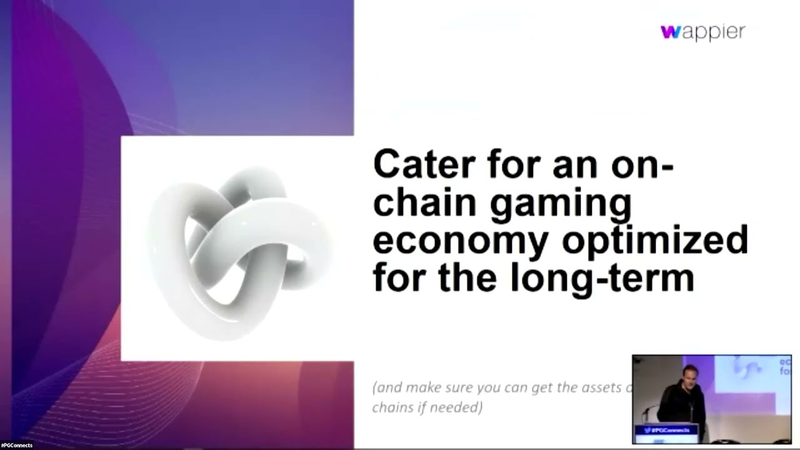
Make the On-chain Kingdoms Last: Welcome to 2001
The gaming industry is currently undergoing a transition toward on-chain ecosystems that mirrors the early mobile era of 2001, characterized by fragmented "walled gardens" and experimental business models.
- To achieve long-term sustainability, publishers must transition from simplistic play-to-earn mechanics and speculative NFT drops toward integrated economies where NFTs and traditional in-app purchases coexist.
- Mass adoption of on-chain gaming requires abstracting Web3 complexity by leveraging existing store-compliant payment methods rather than forcing consumers into complex decentralized workflows.
- Scaling global operations necessitates moving away from manual NFT management toward automated infrastructure, including cross-chain asset management, oracle-based minting, and dynamic pricing models.
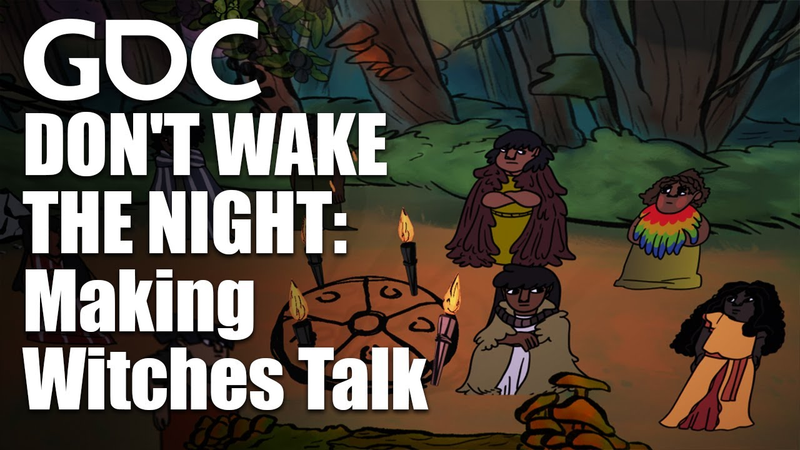
Making Witches Talk in 'DON'T WAKE THE NIGHT'
The development of the 2019 title Don’t Wake the Night serves as a case study for integrating non-linear storytelling with minimalist, evocative game mechanics.
- In 'DON'T WAKE THE NIGHT' (2019), the player acts as an omnipresent bystander with no influence over character dialogue, meaning the only agency provided is the ability to choose the order in which conversations are viewed.
- To ensure narrative balance, the development team audited dialogue across spreadsheets and documents to prevent any single character from receiving disproportionate focus or bias.
- The game utilizes a dual-view system, switching between a bird's-eye environment view for interaction and a visual-novel-inspired interface for character dialogue.
3 Tips for Stylized Character Models in Blender (Cuphead in 3D!)
Achieving high-quality stylized character models in 3D requires a disciplined workflow that balances technical precision with deep historical research.
- Prioritize the blocking phase to establish a strong, readable silhouette before adding intricate details to ensure structural integrity.
- Conduct deep historical research into the artistic origins of a style, such as 1920s cartoons, to improve aesthetic fidelity and inform design choices.
- Implement a consistent workflow of regular backups throughout the modeling process to safeguard progress and encourage iterative experimentation.
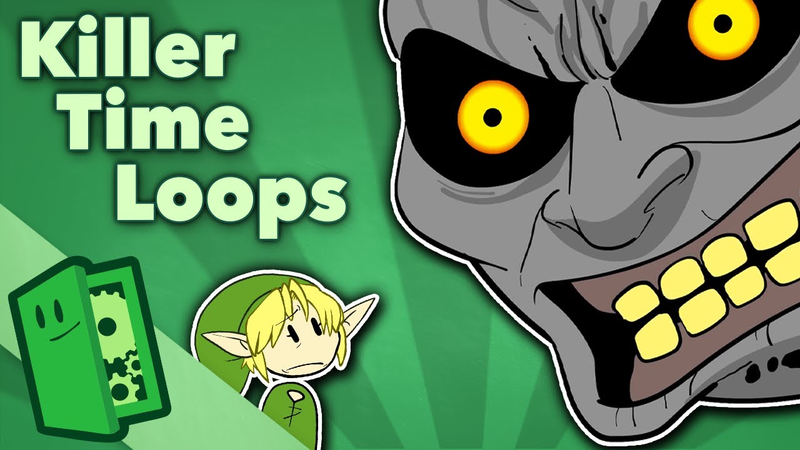
Why Time Loops Work Best in Video Games - Extra Credits
Video games provide a uniquely effective medium for time loop narratives because they align the player’s experience of trial and error with the protagonist’s in-game reality.
- Time loops uniquely align the player’s real-world trial-and-error process with the protagonist’s in-game experience, turning failure into a narrative-integrated tool for discovery.
- Unlike traditional games where death is a disconnected failure state, time loop mechanics transform repeated resets into a core pillar of character growth and progression.
- The genre fosters deep world mastery by requiring players to learn schedules and character behaviors, as demonstrated in titles like Majora’s Mask, Elsinore, and Outer Wilds.
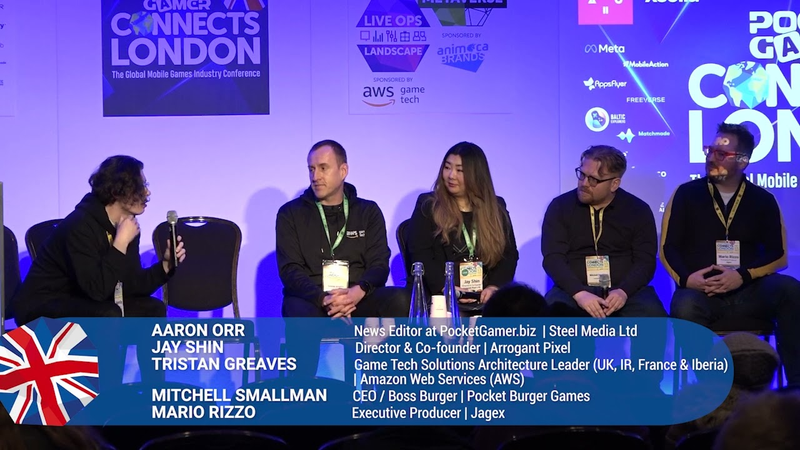
Panel: What are the Challenges of Running Live Ops Across Different Game Genres?
Modern game development increasingly centers on the games-as-a-service model, where long-term player retention depends on the seamless integration of live operations into the initial design phase.
- Live operations must be integrated into the initial design phase rather than treated as an afterthought to ensure long-term player retention in the games-as-a-service model.
- Studios should prioritize a disciplined development flywheel that emphasizes systemic, manageable processes over reactive, high-pressure content cycles to prevent developer burnout.
- Data analytics must be used to distinguish between vocal community feedback and actual player behavior to accurately measure engagement and lifetime value.
Master of the Katana: Melee Combat in 'Ghost of Tsushima'
The development of Ghost of Tsushima centers on the realization of a precise, skill-based samurai fantasy that prioritizes player discipline and fluid combat.
- Ensure the most effective way to play the game is also the most enjoyable, as players will resent being forced into either ineffective fun or effective drudgery.
- Front-load the best ideas and mechanics in the first 15 to 60 minutes of the game, because if the initial experience is not compelling, players will not reach the end.
- Use 'carrots' instead of 'sticks' to encourage variety; rather than nerfing overused abilities, incentivize the use of underused ones to improve player engagement and satisfaction scores.
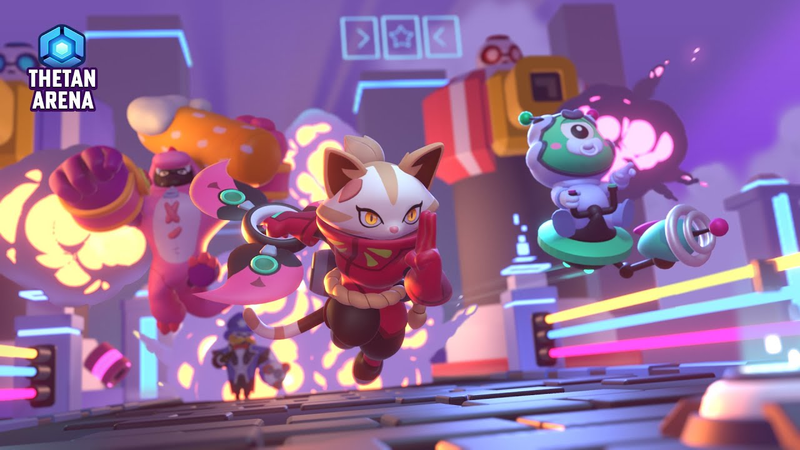
Deconstructing Thetan Arena - the game that combines F2P and P2E
Thetan Arena serves as a critical case study for revitalizing underperforming free-to-play titles by integrating blockchain-based play-to-earn mechanics.
- Thetan Arena achieved 10 million downloads in two months by repurposing the codebase of the struggling game Hero Strike, which had only reached four million downloads over three years.
- Blockchain integration served as a powerful marketing catalyst for user acquisition, particularly in competitive markets like Brazil and the Philippines.
- The game's economic model faces sustainability issues due to inflationary pressure, as it relies on new capital inflows to subsidize the earnings of early adopters.

Environmental and Motion Matched Interactions; 'Madden', 'FIFA' and Beyond
The integration of advanced animation systems within sports titles like Madden and FIFA represents a significant shift toward fluid, physically grounded character interactions.
- EA's multi-character interaction system (Interact) was extended to support environment and object interactions by using 'locators'—abstract points in the world—instead of relying solely on character-to-character matching.
- By using locators to represent predicted future positions of objects, such as a football in Madden, the system enables complex multi-character catches and interactions that anticipate movement.
- Integrating motion matching with the interaction system allows characters to navigate toward ideal interaction points, significantly reducing the need for visual warping or alignment during gameplay.
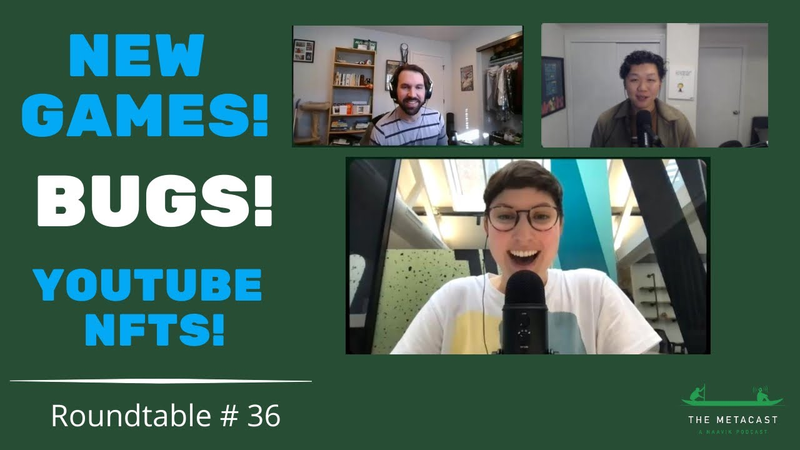
The Metacast by Naavik: Roundtable #36 - New Game Ideas, Costs of Buggy Launches, & YouTube’s NFTs
Successful game development relies on a strategic balance between a studio’s core competencies and rigorous, data-driven market analysis.
- Studios prioritizing new game ideas generally follow one of two strategies: iterating on a single core IP to achieve perfection, or taking multiple 'shots on goal' across different genres to identify market fit.
- The cost of buggy game launches is significant, as poor day-one performance can permanently alter consumer purchasing behavior, leading players to wait months or years before buying new titles.
- Early access models, such as the one used by Supergiant Games for 'Hades,' allow developers to iterate based on player feedback over time, which helps avoid the 'hype-versus-reality' trap that often plagues high-profile, day-one launches like 'Cyberpunk 2077.'
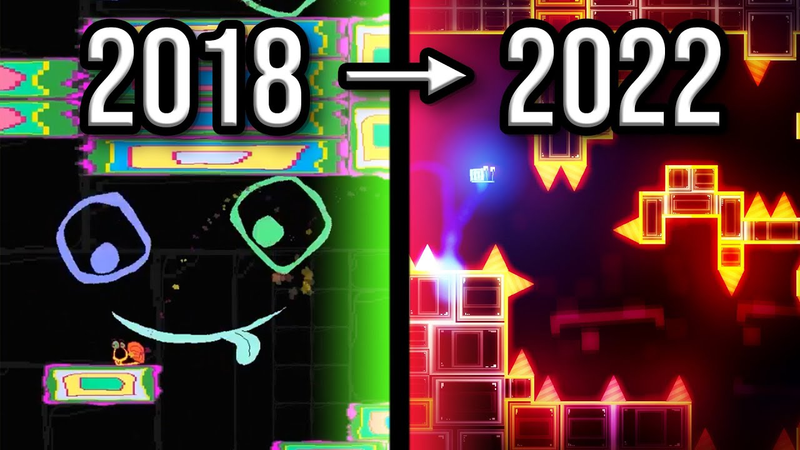
4 Years of Game Development | Making of Will You Snail?
The development of the indie platformer Will You Snail? spans a four-year journey, chronicling the transition of a side project into a fully realized commercial title.
- The development of Will You Snail? spanned four years, evolving from a side project into a multi-platform commercial title released on PC, Nintendo Switch, PlayStation, and Xbox.
- The core gameplay mechanic utilizes an artificial intelligence that predicts player movement to dynamically place obstacles, specifically designed to increase watchability for streamers and content creators.
- Managing the production of over 1,500 voice lines proved to be a significant logistical challenge, with the actual time required for recording and editing far exceeding the initial two-day estimate.

User Story Mapping: Developing a Shared Understanding
Traditional, static design documentation frequently fails to align development teams, often resulting in fragmented interpretations and the inefficient "broken telephone" effect.
- User story mapping replaces static documentation with a chronological narrative, shifting the focus from exhaustive feature lists to a shared, unified vision of the product.
- Teams should organize user activities into a logical backbone to prioritize tasks based on urgency and resource constraints, which facilitates the identification of minimum viable releases.
- Limiting core planning groups to 10–12 participants is recommended to maintain clarity and ensure consistent focus despite potential staff turnover.
Press Y to Cry: Generating Emotions in Videogame Narrative
The historical divide between emergent gameplay and authored narrative remains a primary obstacle to achieving deep emotional resonance in interactive media.
- To effectively generate emotion, designers must choose between simulation (matching player and game emotion), representation (indirect emotional triggers requiring interpretation), or abstraction (using symbolic elements to evoke feelings).
- Ludo-narrative dissonance occurs when the game's emotional content conflicts with the player's experience, often because developers fail to provide the necessary context for the player's actions.
- Designers should structure narrative around 'emotional boxes,' where each segment contains a specific emotion, a thematic question, and the necessary context for the player to interpret the situation.