1 free read left. Create a free account for unlimited reading + AI research.
Create free account
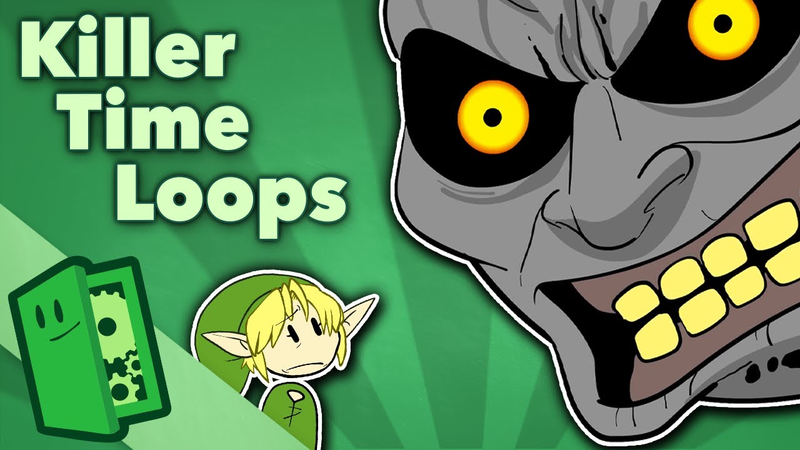
Why Time Loops Work Best in Video Games - Extra Credits
Key insights
5 takeaways- 01Time loops uniquely align the player’s real-world trial-and-error process with the protagonist’s in-game experience, turning failure into a narrative-integrated tool for discovery.
- 02Unlike traditional games where death is a disconnected failure state, time loop mechanics transform repeated resets into a core pillar of character growth and progression.
- 03Time loops allow for a level of exploration and experimentation within a fixed temporal window that is difficult to achieve through linear storytelling.
- 04The genre fosters deep world mastery by requiring players to learn schedules and character behaviors, as demonstrated in titles like Majora’s Mask, Elsinore, and Outer Wilds.
- 05Meta-narrative games like Undertale use the loop structure to create persistent consequences across iterations, effectively blurring the line between player actions and internal game logic.
Ask AI about this video
Transcript
You ever just feel like time is slipping away but also isn't? Like you're repeating the same motions over and over again or maybe you're doing things differently but everything around you is stuck instead. Hmm, I don't know. Maybe I just need to spend more time away FROM THE PODIUM. YOU ever just feel like time is slipping away but wait wait wait wait wait no I've already said this. Oh no. Okay, let's not panic. I've seen enough time loop movies and more importantly played through enough time loop video games to know how to fix this. Actually, I'd wager that video games are the best way to experience time loop narratives and if I can prove it maybe I'll get out of this one. Thanks so much to Curiosity Stream for helping us stay looped in. We all know that time loop narratives are pretty popular in video games. Now of course they appear in plenty of other mediums as well. Heck, there's a reason why time loop narratives are also popularly called Groundhog Day stories. Don't drive angry. But games can offer these narratives something special that other mediums just can't match. The
ability to deliver an experience to the player that most closely mirrors that of the main character in the time loop narrative. So, let's start our examination of how exactly this works with a definition. A time loop narrative is a narrow genre of story that usually focuses on a character repeating the same sequence of events during a specific time period. They can remember or realize the sequence of events is repeating but everyone else in the loop is usually oblivious to it. In said loops, there are also a few ways to trigger a restart. The most common being a time period elapses or the main character dies. And hitting this end point resets everybody or mostly everybody back to the beginning of the loop and it all plays out again. Now typically these narratives focus on the individual loopy character bettering themselves in some way as they learn how to break the loop. And after some bold character growth or realizations, they can finally move past the point where time would reset. Ah, sounding familiar yet? Okay, let's look at a similar experience but from a different angle. Most video games ask the player to repeat the same
level again and again until they've mastered the mechanics enough to move forward in the game and not die along the way. And hey, that's also exactly how a time loop works. So wait a minute, does that make the very concept of video games also a time loop narrative? I mean, kind of sort of in an existential way for the player playing the game a little, but overall no. Because if I'm playing through a sequence of say Uncharted and I get Nate killed, the game doesn't really care. The only narrative that is true is the one where Nathan Drake never dies. And all Drake deaths belong solely to the player who is told by the game that they're wrong, that that's not really what happened. So it starts you at a checkpoint and you try again and again until you match whatever the game's narrative says that Nathan Drake does. However, in games with full time loop narratives, failure may reset the stage of the game, but it doesn't backtrack its narrative. It's assumed in the story that the character is going to need to take multiple loops in order to do or discover something. Failure doesn't feel like an inconvenience or a punishment, but is instead a natural and necessary part of the story. You know, actually, I'm having a hard time thinking of any time loop game that can be won on the first
loop without resetting the loop at all. Though if you got one, let us know in the comments. And crucially, this knowledge of trial, error, and the loop itself occurs to both the player and the character. While most everything else in the story may reset, the main character and the player both have continuity through each and every loop. And this means there's even a smaller divide between the player's experience and the character's experience than there usually is in games. In fact, time loop narratives so closely mirror these standard game mechanics of trial, error, and repeat that there's something particularly powerful about being in the protagonist's time trapped shoes. And I think it's because it's about you, the player, and the character both using the game's rules and story constraints to explore where and how you can have an impact. That exploration is also integral to time loop stories themselves. Elsinore, for example, is a game about playing as Ophelia trapped in a time loop of Hamlet. And using pre-existing knowledge of Shakespeare, you can explore questions like what if Hamlet's plan is revealed early, what if Hamlet's mother saw the ghost of King Hamlet, or what if you just walked away
from the whole mess entirely? Because there's always another loop, you can feel free to explore those questions. And if you don't like what you find, well, there's always another loop for both you and Ophelia. And because time loop games ask you to explore one experience over and over and over, they can create an incredibly intimate knowledge of a game's world and characters that really sticks with the player. For instance, it's been several years since Arthur last played Majora's Mask, but he still remembers the schedule of Clock Town's inhabitants over the three days before they're crushed by a terrifying moon. But here's another unique and pretty awesome aspect video games can bring to the player's experience of a time loop. And sorry if this doesn't make immediate sense, but try to follow my air quotes logic here. Game mechanics often mimic time loops. And because the act of playing a game itself is its own interactive experience, you know, using a controller, saving, loading, etc., time loop video games can make players experience the effect of the loop even outside the standard way we follow a game's rules and narratives. And one great example of this meta loop is
Undertale. Wait, is Undertale a time loop narrative? Well, Arthur says it is, so go at him on Twitter about it. But without getting too spoilery, Undertale explicitly uses the save and reset feature of the game as a way for the player to manipulate the loop. Normally, time loops are all about the lack of consequences within the loop itself. But by introducing two characters that are aware of the nature of the loop, the game world acknowledges the changes each iteration brings outside of the game world. And in that way, Undertale can directly challenge the notion that these loops have no consequences, which has direct implications for the character, the player, AND THE LOOP ITSELF. I THOUGHT I HAD THAT ONE. OH, BOY. Time loop narratives are nothing new in storytelling. But for the last several years, it feels like we've seen a lot of variety of the kinds of experiences we can have with them within games. From Outer Wilds to Death Loop to my personal game of the year for 2021, which I hope to beat one day, Returnal.
There have been a bunch of titles lately that through their clever combination of overlapping time and gameplay loops marry the relationships between our experiences as players and the actions the main characters in the games take in ways that just aren't possible in any other medium. Which, when you think about it, is pretty extraordinary. Oh, huh, would you look at that? Seems like this was the way out all along. And it turns out we're not the only ones with time loops on the brain. Fellow Nebula creator Jacob Geller did a phenomenal video on the nihilism of time loop games. And while we were mid-production on this video, Jenna Stober of Polygon fame released a great deep dive on the time loops of movies, theater, and video games and why we as an anxious audience seem to be loving these repeats right now. Links to all of that awesomeness right below the Nebula and Curiosity Stream call outs in the description. And of course, if you're looking for some extra extra credits content, Nebula, our by creators for creators streaming service, is the best place to get it. Not only can you get all of our shows on Nebula without ads like this one, but we've also built up a pretty nice collection of bonus content over there as well. For instance, I've done videos breaking down the openings of both
Cowboy Bebop and BioShock, two of my all-time faves by the way. My erroneously titled podcast, The Only Podcast About Movies, explores the discussions films start each week. And of course, the Extra History team and I were able to craft an exclusive episode on Tipu Sultan thanks to Nebula's support. Not to mention, Nebula's home to a ton of our other favorite educational entertainers on the internet such as RealLifeLore, Foreign Man in a Foreign Land, and Wendover Productions to name a few. And because Curiosity Stream loves us independent educational creators, they've teamed up with us over at Nebula so that we can offer you, what in my opinion is the best deal in streaming today. Sign up for Curiosity Stream using our link in the description and you'll get a matching Nebula subscription for free. And that's on top of Curiosity Stream's thousands of big budget non-fiction videos and award-winning original series curated across their ginormous library of shows. And since time has been looping through my mind lately for some reason, I wanted to take the time to learn more about, you know, time. Queue the CS series Genius We Can Time Travel, where Stephen freaking Hawking helps a team of three ordinary people work out the concepts of
time travel for themselves, positing that the greatest mysteries of our universe could be more understandable to everyone than we might at first think. All you got to do is head on over to curiositystream.com/extracredits to get a subscription to both Curiosity Stream and Nebula for 26% off the regular price. And to be clear, that is not for a trial, my friends. That's under $15 for a full year of both services. Then, not only will you be watching some of the best content this whole series of tubes has to offer, but you'll also be helping out us here at Extra Credits in the process. Also, thanks for sticking around to the end of the ad. That's really sweet. You're all the best. Thanks so much to Aurelius I, Kyle Murgatroyd, Joseph Blain, Dominic Valencia, Casey Muscha, Angela Valenciana, Alicia Bramble, and Ahmed Ziad Turk for being awesome legendary patrons.
Summary
Video games provide a uniquely effective medium for time loop narratives because they align the player’s experience of trial and error with the protagonist’s in-game reality. While time loops appear in film and literature, they function as a core mechanical pillar in gaming. In most traditional games, death is a failure state that resets progress, creating a disconnect between the player’s repeated attempts and the game’s canonical narrative. In contrast, time loop games integrate these resets into the story, transforming failure from an inconvenience into a necessary tool for discovery and character growth.
The primary strength of this genre lies in the shared continuity between the player and the character. As the player masters the game’s mechanics and world through repeated cycles, the protagonist simultaneously gains the knowledge required to break the loop. This structure encourages deep exploration, allowing players to experiment with different choices and outcomes within a fixed temporal window. Titles such as Majora’s Mask, Elsinore, and Outer Wilds demonstrate how this repetition fosters an intimate understanding of a game’s world, characters, and schedules, creating a sense of mastery that is rarely achieved in linear storytelling.
Furthermore, some games utilize the meta-narrative potential of the loop to challenge the player’s relationship with the medium. By acknowledging the save-and-reset mechanics as part of the game world, titles like Undertale can introduce consequences that persist across iterations, effectively blurring the lines between the player’s actions and the game’s internal logic. Ultimately, the synergy between interactive gameplay loops and narrative time loops allows for a level of immersion and thematic depth that distinguishes video games as the superior platform for exploring the concept of repeating time.















Comments