Game Design reports and market data
Documents
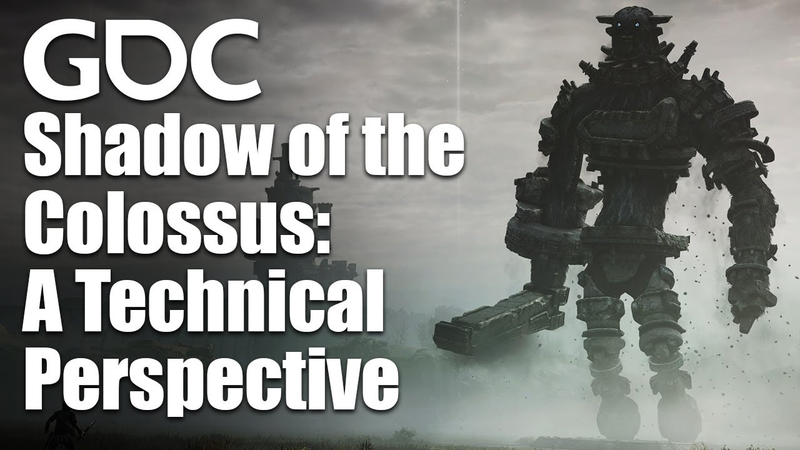
Beyond the Remake of 'Shadow of the Colossus': A Technical Perspective
Modern game remakes require a delicate balance between preserving the original design intent and leveraging contemporary hardware capabilities.
- Successful remakes require migrating legacy game logic into a unified, proprietary engine architecture to decouple the project from outdated pipelines and enable high-fidelity upgrades.
- Developers should implement a component-based task scheduler that treats original game logic as a thread-safe process to improve CPU saturation and eliminate traditional game loop stalling.
- Transitioning legacy titles to 64-bit environments is best achieved using manual address conversion and dynamic, auto-calibrating texture streaming budgets rather than restrictive third-party libraries.
The Metacast by Naavik: Crypto Corner #14 - A Deep Dive into Crypto Raiders
Crypto Raiders functions as a pixel-based RPG dungeon crawler on the Polygon network, blending traditional gaming mechanics with decentralized finance.
- Crypto Raiders is transitioning from extractive play-to-earn models to a skill-based RPG economy on the Polygon network, utilizing RAIDER for governance and AURUM for utility.
- The project is shifting its economic strategy from rented liquidity to a bond-based program and implementing strict character recruitment controls to mitigate inflationary pressure.
- To scale the user base toward a target of 100,000 daily active users, the developers are migrating to the Unity engine to support an expansive overworld.

Why You SHOULD Make Indie Games Solo
Solo game development serves as a foundational career path for aspiring developers, offering a practical pathway to professional growth despite the common perception that large teams are a prerequisite for success.
- Solo development functions as a strategic career investment that provides the technical versatility and professional validation necessary for long-term industry sustainability.
- Managing every aspect of a project—including coding, art, music, and design—provides a holistic understanding of the development pipeline that is essential for future leadership roles.
- Creating and releasing early, imperfect projects in isolation builds professional resilience and provides critical learning experiences that are difficult to replicate in large teams.
The Metacast by Naavik: Crypto Corner #13 - Loot Part 2: Decentralized, Collaborative World Building
The Loot ecosystem represents a paradigm shift in digital world-building, moving away from centralized, top-down development toward a permissionless, collaborative model.
- The Loot ecosystem shifts digital world-building from centralized, top-down development to a permissionless model where on-chain assets function as foundational Lego blocks for interconnected virtual universes.
- Independent projects such as Realms and Crypts and Caverns are building a cohesive, shared narrative without the need for formal leadership or rigid, centralized roadmaps.
- Technical barriers including high transaction costs, network latency, and the difficulty of generating on-chain random numbers currently limit real-time, state-heavy gameplay.
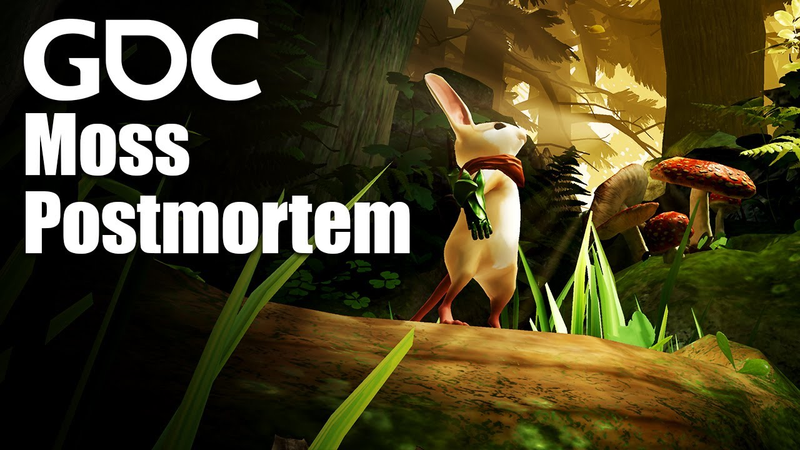
Engaging VR Storytelling: A 'Moss' Postmortem
The development of the virtual reality title Moss demonstrates that successful immersive storytelling relies on prioritizing medium-specific strengths and iterative, data-driven design.
- Polyarc discovered through playtesting that VR players naturally form emotional bonds with characters, leading to a fourth development pillar focused on player-character interaction, such as high-fiving or petting the protagonist.
- To ensure player engagement with narrative sequences, the team implemented gaze detection to trigger animations only when the player is looking at the intended area, solving the issue of players missing content while exploring the environment.
- The team utilized a 'DEAR' framework (Data, Experience, Assets, Research) to make objective, fact-based development decisions rather than relying on subjective intuition in the new VR medium.
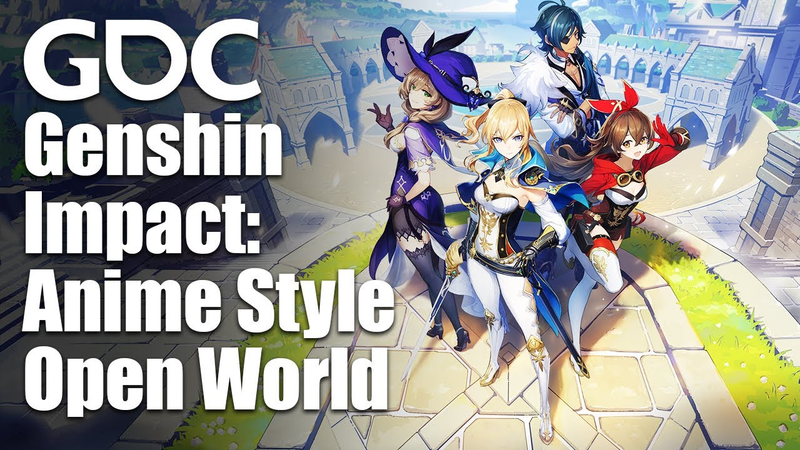
'Genshin Impact': Crafting an Anime-Style Open World
Genshin Impact represents a strategic evolution in open-world game design, focusing on the creation of an immersive, anime-styled universe that prioritizes cultural diversity and character-driven narratives.
- Genshin Impact utilizes a character-centric design philosophy where the world and storytelling revolve around its 33 playable characters, a model inherited from Japanese card games that proved successful across both Eastern and Western markets.
- To maintain a consistent anime aesthetic, the game employs two independent rendering pipelines: a deferred rendering pipeline for environments that supports dynamic weather and 24-hour lighting cycles, and a specialized shading pipeline for characters.
- The development team uses dynamic light maps for character faces, allowing artists to manually control shadow shapes regardless of the light source direction to ensure characters remain visually appealing from any angle.
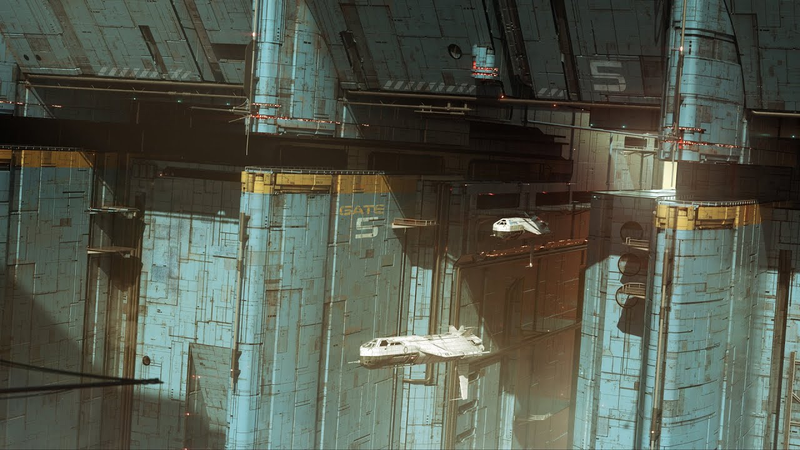
Fast Iteration on Epic Scenes with Boy Sichterman | Art Boost
Achieving high-fidelity hard-surface design in the modern game industry requires a strategic blend of technical precision and creative efficiency.
- Utilize parametric, NURBS-based modeling tools like Fusion 360 for hard-surface design to enable non-destructive, rapid iteration on complex geometry.
- Optimize production efficiency by prioritizing high-fidelity detail only within the camera’s immediate frame and using tessellation to simulate complexity.
- Avoid overscoping by focusing on dressing a single, compelling corner of an environment rather than attempting to build entire rooms.

Adding Blood Splatter To My Game
Implementing blood splatter effects in 3D game development requires a systematic approach to decal projection within the Universal Render Pipeline (URP).
- Implement blood splatter in URP by using a decal projector component oriented downward to project textures directly onto floor geometry.
- Configure the decal projector to a 5x5 unit area to achieve an appropriate visual footprint for blood pools.
- Optimize performance and prevent memory bloat by implementing a cleanup mechanism that automatically destroys decal objects after 120 seconds.
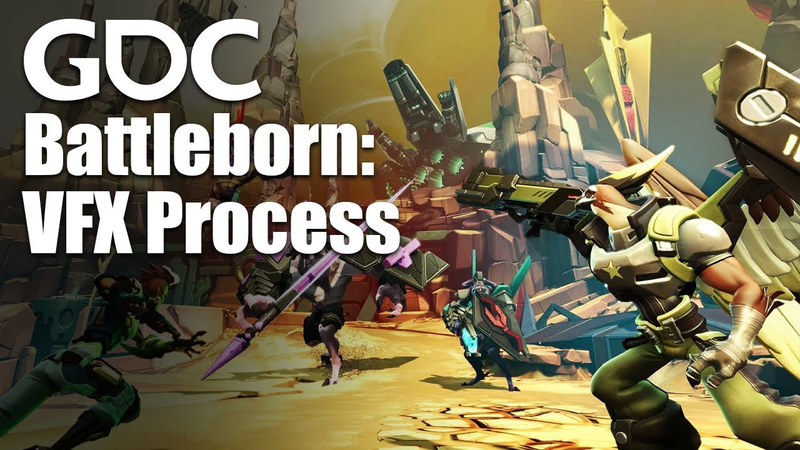
The VFX Process Behind 'Battleborn'
The visual effects strategy for the first-person shooter Battleborn focused on integrating hand-drawn, 2D-style animation into a 3D environment to create a unique, cohesive, and highly stylized aesthetic.
- The development team produced over 30,000 frames of hand-drawn animation and 3,600 individual particle effects to establish a unique, stylized aesthetic that distinguishes the game from realistic competitors.
- Artists applied traditional animation principles—such as anticipation, exaggeration, and secondary action—to 2D assets, which were mapped onto 3D meshes to provide volume and prevent a flat, billboard-like appearance.
- To manage visual coherence across 30 characters and five distinct factions, the team enforced a strict style guide that utilized limited color palettes and gray-packing techniques to optimize texture space.

How to Kill a Game and Pivot Successfully
Prioritizing the preservation of human capital over individual project outcomes is the fundamental requirement for successfully navigating game cancellations and pivots.
- Prioritize the preservation of human capital over individual project outcomes to mitigate burnout and attrition during game cancellations.
- Shift from top-down mandates to a culture of radical transparency by sharing financial data and performance metrics to ensure team alignment on project viability.
- Establish objective kill gates based on development velocity, market performance, and team conviction to remove emotional bias from the decision-making process.

Make A Gorgeous 3D Game w/ NO MODELS OR TEXTURES (FAST!)
This tutorial outlines a streamlined workflow for developing a 3D narrative game in Unity without the need for external 3D modeling software or complex texture assets.
- Developers can create professional-looking 3D narrative prototypes in under one hour by utilizing Unity’s native primitive shapes instead of external 3D models.
- Atmospheric cohesion is achieved by prioritizing lighting, fog, and consistent color palettes over high-fidelity textures or complex assets.
- Unity’s built-in terrain tools, cylinders, and spheres serve as effective stand-ins for environmental assets like trees and rocks.

Add Voice Acting To Your Indie Game FAST & FREE
Integrating voice acting into indie game development is a viable, cost-effective strategy when leveraging accessible digital audio workstations and standard hardware.
- Technical post-processing can compensate for amateur vocal performances, allowing developers to achieve professional-grade results without hiring expensive studio talent.
- Developers can produce high-quality audio assets independently by investing in standard hardware like the Shure SM7B microphone and Focusrite Scarlett interface.
- Free software such as Audacity enables essential audio manipulation, including pitch adjustment, reverb application for room acoustics, and graphic equalization for frequency refinement.