Game Design reports and market data
Documents
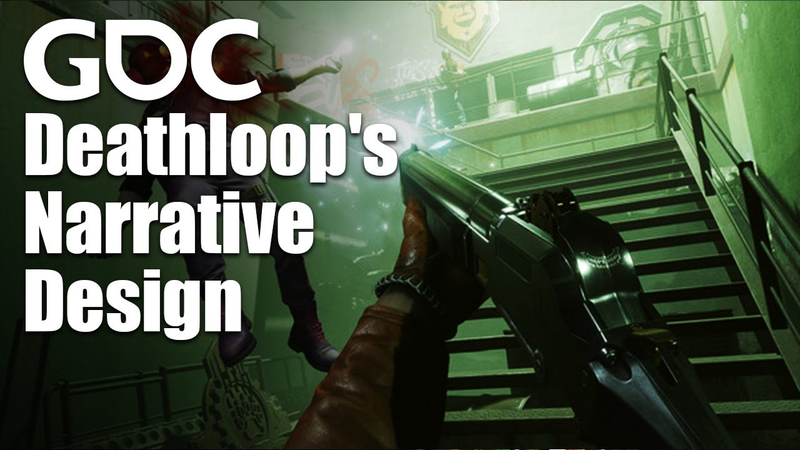
How a Time Loop Influenced 'Deathloop's' Narrative Design
Deathloop centers on the integration of a non-linear time loop structure with player-driven narrative progression.
- To reinforce the theme of being trapped in a cycle, narrative designers categorized content into two types: reactive systems (radio calls, floating messages) that provide a sense of progression through persistent memory, and static content (notes, tapes, overheard conversations) that emphasizes the repetitive, unchanging nature of the loop.
- The game forces players to kill eight visionaries within a single day to break the loop, creating an 'impossible' task that serves as the core narrative driver and justifies the necessity of the time-loop mechanic.
- To ensure players feel the weight of the loop, the team designed the antagonist, Julianna, as a persistent-memory guide and sounding board, allowing for snarky, non-repeating banter that evolves as the player progresses.
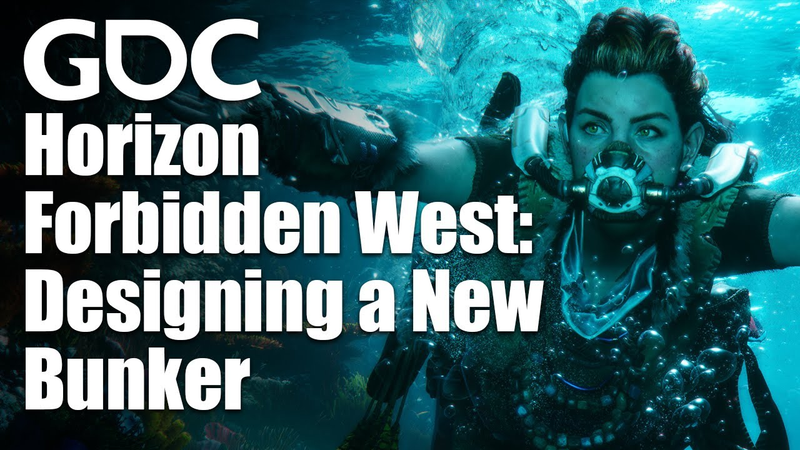
Knocking on Death's Door: Designing a New Bunker for 'Horizon Forbidden West'
The development of the Death’s Door quest for Horizon Forbidden West serves as a case study in iterative level design, emphasizing the necessity of balancing narrative goals with evolving mechanical systems.
- The development team utilized a structured six-phase process over a four-year production cycle to transition from paper prototyping to a final, high-rated level design.
- Designers prioritized environmental puzzles and vertical traversal over humanoid combat to improve upon the bunker environments established in the series' predecessor.
- The ACE (Astonishing, Challenging, and Engaging) framework served as the primary diagnostic tool for identifying and correcting design shortcomings throughout the development process.

Solo Development: Myths, Reality and Survival Strategies
Solo game development offers unparalleled creative autonomy, yet it demands a disciplined, long-term approach to ensure both project viability and personal well-being.
- Prioritize early visual development and polished prototypes to secure platform partnerships while strictly limiting project scope to prevent feature creep.
- Limit initial releases to one or two platforms to minimize the technical and logistical burdens associated with storefront requirements and bug tracking.
- Shift the professional focus from chasing a single 'hit' game toward building a sustainable, long-term catalog of titles.
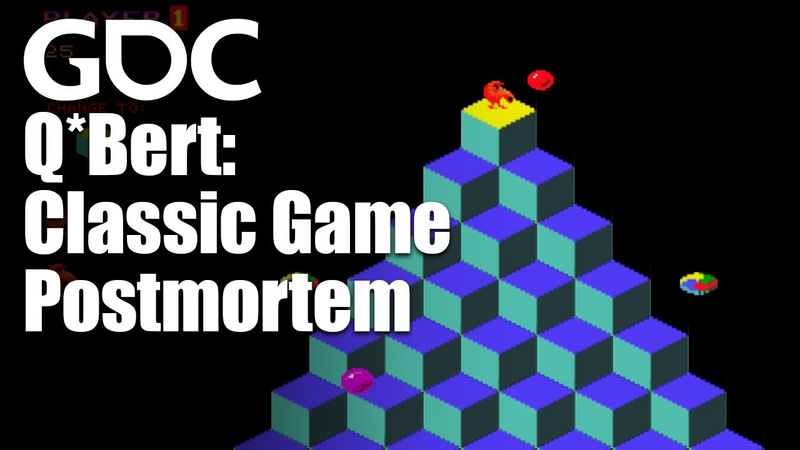
Classic Game Postmortem: 'Q*bert'
The development of the arcade classic Qbert in 1982 serves as a quintessential case study in the ingenuity required to overcome the severe technical constraints of early 1980s gaming.
- The development of Qbert began at Gottlieb in the early 1980s using an MDS-80 development system, with the game's core mechanic—changing cube colors upon landing—emerging from a suggestion by a colleague during the prototyping phase.
- The game's unique control scheme, which required players to navigate the pyramid at a 45-degree diagonal angle, caused significant user friction, leading to frequent player requests to change the joystick orientation to standard up-down-left-right inputs.
- Technical constraints necessitated creative workarounds, such as using a pinball machine's 'knocker' solenoid inside the cabinet to provide physical tactile feedback when the character fell off the pyramid.

Remaking Assassin's Creed Level W/ NO MODELING SKILLS
The process of recreating game environments without advanced modeling skills relies on three fundamental pillars: geometric simplification, color palette management, and strategic asset repetition.
- Environmental design can be achieved without advanced modeling by deconstructing complex architecture into basic geometric primitives like cubes and triangles.
- Strategic asset repetition allows for the efficient scaling of large game worlds by categorizing objects into layers, ranging from background props to high-visibility landmarks.
- Color palettes are essential for environmental storytelling and navigation, as demonstrated by the use of warm oranges for Damascus and teal tints for Acre in Assassin’s Creed.

Should You Care About Canon? - Extra Credits Gaming
The concept of canon in modern media—defined as the authoritative collection of facts and details within a fictional universe—is a subject of significant debate regarding its utility in creative storytelling.
- Canon should be treated as a flexible storytelling instrument that serves the narrative, rather than a rigid or sacrosanct set of rules.
- The modern obsession with strict continuity may be a misinterpretation of the concept's origins, which began in the early 20th century as a satirical, playful intellectual exercise within the Sherlock Holmes fandom.
- Monsignor Ronald A. Knox originally introduced the concept of canon by applying theological debate structures to fiction to mock the tendency of fans to treat incidental details as essential truths.

The Future of Axie Infinity with Philip La, Game Lead at Sky Mavis - The Metacast by Naavik
The future of Axie Infinity centers on a strategic pivot from speculative, earnings-driven mechanics toward a sustainable, fun-first gaming experience.
- Axie Infinity is pivoting from speculative, earnings-driven mechanics to a fun-first model that prioritizes high-quality gameplay, improved graphics, and intuitive progression.
- The platform has adopted a freemium model to lower barriers to entry, allowing players to access the 3v3 battle loop and PvE content without an initial financial investment.
- Economic stability is being managed through a balanced system of token sinks and sources designed to discourage pure extraction and promote long-term sustainability.
I PLAYED YOUR GAMES! | Game Design Feedback
Indie game development relies heavily on the intersection of intuitive mechanics and polished user experience.
- Commercial viability in indie games is frequently undermined by technical inconsistencies and poor visual communication, even when core gameplay loops are compelling.
- Effective user experience requires prioritizing silhouette-based design and icon clarity to prevent the information overload and poor readability observed in titles like Intergalactic Taxi and Swing It.
- Environmental logic, including lighting and collision detection, must be precise to maintain player immersion, as seen in the failure of Unknown Escape to sustain suspension of disbelief.
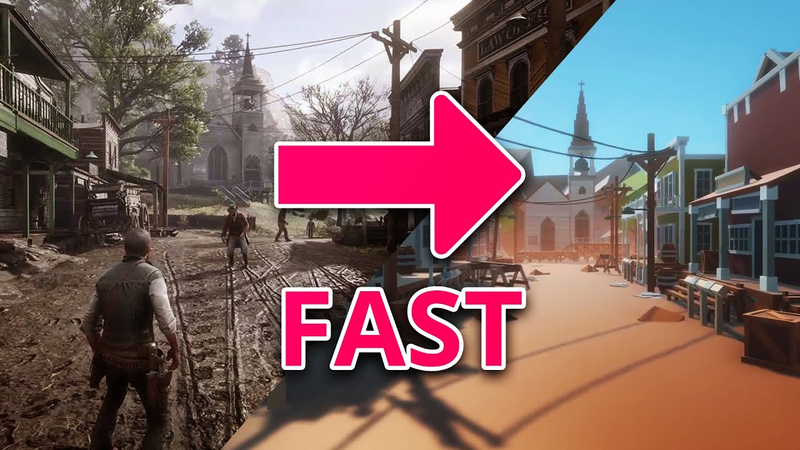
Make a RED DEAD REDEMPTION level w/ NO MODELING SKILLS
Environment design can be effectively executed using only basic geometric primitives, such as cubes, to test spatial understanding and shape composition.
- Environment design can be effectively executed using only basic geometric primitives like cubes to test spatial understanding and shape composition.
- Complex architectural styles should be deconstructed into modular, reusable components to create recognizable game worlds without requiring advanced modeling skills.
- Visual storytelling relies on the strategic use of silhouettes and distinct architectural features, such as varied roof angles or signage, to differentiate building functions.

Evolving Mixed Reality: Designing on the Real World
The evolution of mixed reality is shifting from static, tabletop-based applications toward complex, room-scale spatial computing that demands deep integration with unpredictable physical environments.
- Mixed reality development is shifting from simple, single-plane, user-directed experiences toward complex, world-aware applications that utilize semantic understanding of physical environments.
- Developers should implement 'fallback' systems that allow applications to degrade gracefully—from full spatial tracking down to 3DOF or 2D experiences—when environmental data is insufficient.
- In-situ debugging tools that allow developers to record, pause, and scrub through sensor data in real-time are critical for resolving bugs tied to specific room geometries, lighting conditions, or transient events.

Turn Your Writers Into Programmers: Greyboxing Narrative with Story Languages
Narrative greyboxing serves as a methodology for game development that bridges the gap between traditional screenplay writing and technical programming.
- Narrative greyboxing allows writers to use a text-based programming language to build, test, and iterate on game logic and dialogue flow independently, mirroring the way level designers use rough geometry to prototype environments before committing to final assets.
- Yarn Spinner, a tool used in titles like Night in the Woods, combines screenplay formatting with a programming language, enabling writers to implement branching narratives, flow control, and game commands without requiring constant support from dedicated programmers.
- By treating narrative as code, teams can achieve highly iterative development where writers build the game's scaffolding and logic, allowing developers to focus on building the underlying engine systems rather than manually implementing every dialogue node.

Everything You Need to Know About VR Audio Can Be Learned from Your Car
Virtual reality audio design relies on the principle that users possess an intuitive, real-world understanding of how environments should sound, necessitating a shift from simple filtering to complex, multi-layered soundscapes.
- In VR, audio resolution must scale with proximity; as a player moves closer to an object, the sound should transition from generic white noise to high-detail, localized textures to maintain immersion.
- Avoid head-locked stereo sound in VR, as it fails to account for the spatial reality of an environment where sound sources exist at different points around the user.
- Use common, real-world objects like a car as a reference point for audio design, as they provide accessible, complex, and multi-layered soundscapes that can be easily researched and prototyped.