1 free read left. Create a free account for unlimited reading + AI research.
Create free account
Panel: Mastering Multiplayer: The Super Session
Key insights
7 takeaways- 01Multiplayer gaming is now the industry's primary revenue driver, with 75 percent of the top 200 grossing titles incorporating multiplayer components.
- 02The democratization of development through engines like Unity and Unreal, paired with managed server infrastructure, has lowered entry barriers and enabled efficient multi-platform deployment for smaller teams.
- 03To manage the financial and legal risks of real-time networking and data management, developers are increasingly using iterative, minimum viable product strategies and gray-box prototyping.
- 04Developers are shifting from traditional single-player experiences toward persistent platforms that prioritize community agency and long-term engagement.
- 05Future industry growth is trending toward reduced-friction access via cloud streaming and the development of non-competitive, social-focused environments where players influence virtual world evolution.
- 06The industry is exploring community-owned infrastructure and open-source archiving to address the sustainability of server-dependent games and prevent the loss of digital experiences.
- 07Live-ops models are being utilized to revitalize legacy titles, demonstrating that dedicated communities can sustain older games despite declining populations.
Ask AI about this video
Transcript
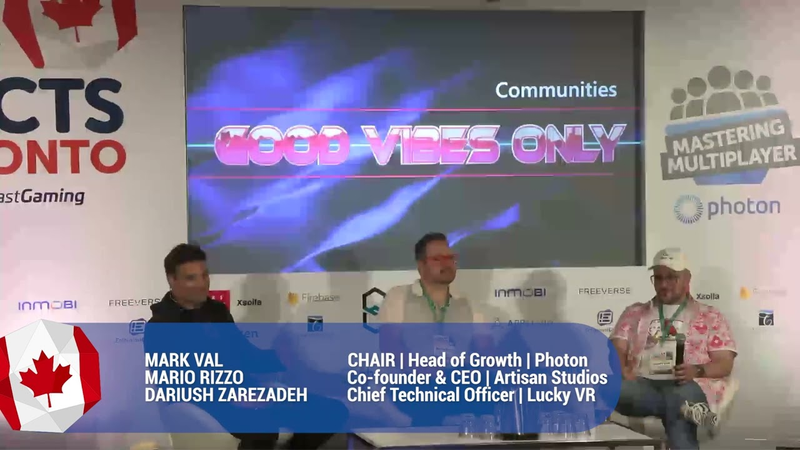
[Music] so i did not introduce myself earlier right so um for me it's marvel by the way so i'm ahead of goal of photon but prior to that i built civils for unity for ubisoft build playfab from xero until acquisition to microsoft manage that inside of microsoft then it started uh with what we have now with photon fusion and obviously i've been in the online industry for a bit more than 20 years but now i have two wonderful gentlemen with me now so i give you this microphone for you here's another one that would be number six there you go
fantastic and we have some slides as well so we can push it up if you guys want um so um there we go it's gonna start soon we have some slides but uh in the meantime so um um maybe i'm gonna ask you guys to introduce yourself right so uh let's start with mario okay hi i'm mario i'm a game developer i am the founder and ceo of a small studio in canada called artisan studios that makes rpgs i've been in the game industry for 20 years i've been primarily a developer of massively multiplayer online role-playing games so i started at sony working on the everquest franchise so i worked on everquest star wars galaxies uh star wars republic warhammer pretty much most mmos except not the big one so sorry uh i'm i'm dirty as everybody hopefully knows right now i'm the cto over at left
vbr um again i mean i explained my whole thing already but i got my start in vr and i've just been going ever since then in that space fantastic so um uh so the format of this panel so first they don't know what we're going to talk about which is great so everything is going to be spontaneous so those are the best panel mapping so first let's look at the history of multiplayer so obviously like it evolved a lot in the past 20 years uh a lot of things that that changed but it's mainly in the game design because the technology is going like they're cranking up slow initializing obviously for us we're helping um so my my question for you guys so feel free one mother to to to answer this but when was the first time that you felt okay i have to start making multiplayer games because this is freaking awesome and what was the drive behind it for you so i think my first i mean my first experience of
multiplayer games was diablo 1 which is one of my favorite games of all time i knew i wanted to go into games ever since then i actually thought i wanted to make single player games um but when i got started i found that while i was developing like what i was developing with my other developers we preferred to compete against each other in both development and in both whatever we were working on we couldn't do that in a single player experience so for me it came from wanting to iterate quickly in a way where i wanted it to grow based on uh sorry develop based on like what what made sense like like if we had a competitive again multiplayer asymmetrical multiplayer vr game and the entire thing was just testing and being like oh well that sucks because that's super op and then changing that and going from there so it was a lot of fun it has a competitive and collaborative nature like you said to even the development process that is difficult to get in a single-payer experience
yes mario okay sorry um i think it was when i took my first job basically at sony i remember i had a group of friends and we yeah this is gonna expose my nerdiness sorry so we used to play a lot of dungeons and dragons so we had a group that we played with every week and one week everybody disappeared disappeared and we couldn't find them for like a month or something and then i went to their house because they were all it's a group of guys you know like late teens early 20s you know all living together sharing a house and i went into the house it was a total wreck there was just pizza boxes and you know like you know microwave food and all this stuff everywhere and they all had their like computers all set up you know in the living room they're all sitting there playing together and i'm like like
i'm a wizard you know we're we're in norad we're playing it's like dungeons dragons it's everquest it's a whole online world there's millions of people it's amazing you have to play and i was like wow like i was like so that was my first kind of like oh you know this could be like kind of interesting and then you know when i met the people who developed it and they're like yeah you know we started our little startup well you know we had six million in funding so he gave us a license and uh yeah we're making about 15 million a month in subscriptions and i'm like what they're like yeah yeah that's that's our little business if you want we'll give you a job answering the phones or something like that and that was when i was like okay this is a crazy business like i'm really interested in not just the higher side but also the business side and the social aspect of it right that's right if you go back like 20 years ago when these games that launched every time there was a multiplayer game you're like oh it's multiplayer wow this is great and uh and
then you you know bring the friends and everything and obviously when parties and that there was a big push forward uh especially if you go back even if you go to the early doom and then age of fires and then you add the rogue sphere and then yeah you just keep adding and adding and then onto the mmrpg jagex did obviously and uh and a bunch of others uh just bring people together and uh but back then if you look at it it's not everyone who had an internet like internet connection so it really ramped up as the broadband starting to get available with higher speed and whatnot so um but nowadays everyone can play a multiplayer game from their phone so um so obviously the reach is incredible and um but i mean like um current state of multiplayer that's the subject now so um um if you if you look at multiplayer games today
and you look at the top 200 games in terms of grossing and revenue 75 of them are multiplayer nowadays but if you go back five years ago it was just you know a handful of them so in the last five years there was this huge growth of multiplayer games everywhere and some you know there's very few single-player games that managed to go in the top 20 grossing revenue i think the latest the last one was resident evil right the la that's that's the last single player game that made it all the way up to top grossing um so it's interesting to see that so what what what is your feeling regarding like um this huge phenomenon that multiplayer just taking over the gaming industry so i mean i think it a lot of it comes from that you create content together right so like uh for single player experiences you can only go so far like
you can play the game for x amount of time um i say that that i know someone who has like thousands of hours in skyrim but uh for multiplayer you create content in the game together right it's an unlimited amount of potential every every time you jump in it's different right whether it's a different people whether you're you have a different experience right and you chase the win you chase the collaboration and it allows you to in a way where single-player games can't again constantly have a new fresh fun experience and i think that's a big part of it uh and obviously internet's getting better everything's getting better the scope of these games is increasing right when you look at like how many people can jump into a first-person fortnight experience because there's like attempts at this before um you know on the ps3 there was a game that had like 100 i think concurrent users or something but it wasn't quite there yet so um but now you can have these extremely fun experiences with so many more people than you could ever have before
in a way where it's not janky and it's actually fun and i think a lot of it comes from that um yeah i think you know for me it's like uh i like to look at the multiplayer kind of game universe in waves of genres right so you had you know mmo 20 years ago then you know before that it was maybe fps with counter strike and things like that then you know mobas league of legends and you know battle royale and i think as most of those games have gone from a pve focus to more of a competitive pvp focus esports have also come up along with influencers as you as you were describing about you know creating content i think that's why we see the convergence now of when you take twitch add in competitive gameplay and then you add in the fact that esports is such a big thing then it's almost driving developers
even from a business point of view to focus quite heavily on competitive multiplayer games because a if you do it right obviously it's like you said it's a gold mine for developers in terms of you know we're making mmos the toughest thing is creating content and keeping up with player consumption um multiplayer games they're creating the content as you mentioned um and second you know it's following the trend of what i think younger gamers are more accustomed to they've grown up with it whereas when i started you know show my age again when i start playing counter-strike or whatever with my friends i was already 19 or 20. you know it wasn't like i grew up from h5 playing a competitive game on a phone right yeah and you should look at the new type of games or the games that got released in the last six months on the other store in ios now you have match three match three multiplayer games for example which are extremely successful and they just keep growing and growing so now we have these casual gameplays
that are getting into this multiplayer world and uh and then if you look also at the connectivity is so much better so for example like um if you go just five years ago like in brazil or vietnam or indonesia or some part of europe where the connectivity was extremely bad and now it's much better so that thank you to the companies or sometimes you're very expensive you did a good job with your powers uh but it brings the people together that's that's really meaningful about it and um and in our perspective so as photon uh obviously like we're seeing in flux so i don't know it's a web tree everything is multiplayer my converse everything is multiplayer and then you have this whole non-gaming sector as well which now are bringing you know the users together and essentially they're taking all the learnings from the gaming industry and putting that into their business so it's
very nice to see that that grow up and um and yeah so we just keep growing and growing it we don't see any limits like right now it's just skyrocketing and um so we can only see more of these multiplayer games in the future and i think that's the next subject actually or not okay we talk about communities that's cool so um obviously in pokerstars community is going to be quite a slang because i don't know if you ever played that would probably play poker one time in your life you're on the table and you know it often involves some some beers which definitely improve your or lubricate your social skills um so by any means like it must be interesting to manage that huge community of yours yeah it's i mean the community and i think any social game is like the whole thing right it's it's we're very very in tune with them um again they're the ones playing the game and just seeing the way we've had people i mean a lot of games have but we've had
people meet and get married in the game we've had we've had people who were you know from opposite sides of the world who had never communicated and actually like you know someone from dubai communicated with someone from texas and they didn't get along at first but now they're best friends and they play poker every day so like communities grow in a way you wouldn't even expect i think in in something like a poker uh where you can play across the world with anyone right and it is the most important thing in our products right is these communities and allowing people to create and nurture these communities sorry um so i'm sorry i'm sorry no i would say for me actually i'll be contrarian then a little bit which is as a game developer i try not to over index on the communities because the communities tend to be quite core in the games i work on they represent usually
less than five percent of the playing population they have quite a strong influence on the development team for future development and stuff and in terms of people oh the community has asked for this so we gotta change it so oftentimes mistakes can be made where you make changes to a game based on what five percent of the most vocal people are asking for and then ninety percent are pissed off right so we i think what i what i've learned a bit about communities is we do want to nurture them we want them to grow i think moderating them and managing them properly is something that more players demand and i think it's a job for developers now to make that number from five percent grow meaning it's our responsibility now to make sure those communities are safe they're welcoming to everybody you know because they're not often right let's be honest there's a lot of you know sexism and you know uh misogyny and like different things that
happen in online communities that the previous i would say when we first started in development they're like oh let everybody kind of moderate themselves and do whatever they want but i think if we're going to really grow online games that's actually a big area of focus for our company what we think about is how to create games that are low friction so meaning if people don't want to compete or if they just want to you know hang out with their friends they feel welcome and safe and same thing with the online communities where they want to interact with the game outside of playing the core game they want to sell items or you know talk to their friends this kind of thing so i think that's a actually a really big focus for us and um uh and mario and i worked together in the ubisoft days and there was times where the server are down and usually what happened with the community is that they come with you know flame torches and picks fork and they're like yeah i want to play my game so so then that's when communication starts so you should not let your community go in flame otherwise this is
going to grow and they're going to grow so you as a community manager or someone that has handled the community you have to talk with them and say hey sorry there was an issue in the database somewhere or there's a data center that doesn't work xyz and then you have to talk with them and i'm going to be like oh okay that's cool thank you for letting me know i'm going to come back in an hour or something like that so definitely you have to uh communicate as much as possible and that way you're gonna have like happy people good vibes only um next subject so now we talk about the web3 games and the towers okay that's cool so um um you know so i i'm gonna start on that so definitely like um those are phases in the game industry where people talk a lot about that and there is a lot of conversation and we yeah we can go on with this subject if we want to or not but i wanted to still put it on the on the slide simply because um to me the web per se like a web page it used
to be a place if you go back in the flash days where you have these huge communities like anyone know club penguin for example okay right but they don't exist anymore right so and and the entry point of the friction is like nothing right so if you don't you just type the website you go in you start so um so where do you see um this coming back like where it's not an app it's not something but it's actually webgl and you you know just dive into the website and yeah you're part of a world right away without installing anything um is it something that you've thought about or it's too risky i don't know yeah um i do think it's gonna and there's gonna be a massive i think that the tech wasn't there for high fidelity games to exist in these spaces before but it's massively improved right you have stuff like i mean even looking at
just streaming services like xcloud et cetera et cetera right you have the ability to your webgl potentially but maybe maybe not but maybe it's just a full streaming service that's used again play in a web page right but it's being rendered it's being powered somewhere else on like a server farm right so i think i think web 3 is a very real very important thing in the next decade or so i know it's a very touchy subject for a lot of people um but i think it goes hand in hand with the metaverse and i think you'll see a lot of experiences popping up with stuff like that where and barrier to entry is like non-existent it's very important for that to be the case right it's very important to have if you want millions of people doing something you got to make it easy for them right you can't add friction so i think it is going to go down that route yeah i'm sorry 100 agree i would say you know microsoft's releasing a tv with samsung yeah there is partnership with
samsung that's correct we have there is no xbox required you have the tv basically you have a series x right directly streamed and the tv is being built custom for their streaming tech so i think i agree it's just a matter of time when it comes to red three and members and these kind of things i try to look at it from the player perspective of what is it that the players want as opposed to how people are raising money and nfts and this kind of stuff and i think from a player perspective the two things we see particularly in online games are players want instant access to virtual worlds so they want a seamless quick connection and although this is kind of let's say the more controversial part a lot of players not all of them want to be able to own buy sell and trade virtual goods not saying they need to do it necessarily with nfts or whatnot but even world of warcraft right now it's about a billion dollar market of grey items and
people go to third-party websites they exchange accounts they you know so this already happens it's not uh it's not something new when i was worked on runescape when the venezuelan economy tanked it was uh all being supported by rinsgate gold there was people were switching to farming runescape gold to pay people in venezuela so i i really honestly think this is consumer demand it's not us as developers wanting to push this stuff on people and i think we have to find the right solutions to meet that demand if we want them to realize those markets in a safe way right where they're not being scammed there's a face there's something to remember is the diablo auction house yeah just just saying yeah okay anyway i think with blizzard they were selling dropped items right that's where i thought they made a mistake meaning you're circumventing the game loop and mmos what people sell and trade are usually crafting items or items you
use to develop further into the game so for me the lesson of diablo is don't sell what you're getting people to go through the time content treadmill to reach because then you're just giving it away for money but just like with mobile free to play games what you're selling is time right if you don't want to grind if you want to you know a shortcut you know then people buy the items directly from other players that would be another thing is blizzard or whomever i wouldn't as a publisher ever sell things directly to players i would let them set the market let them sell to each other and then you just facilitate it in a safe environment but we'll see you're right it could all be crazy like i think that the tech is is early right i think that's what's important and a lot a lot of people don't look at is that it's like looking at the internet like you know 20 years ago right like you i think we got to look at how the improvements go because there's a lot of problems with a lot of you know stuff with entities with how much energy they take et cetera et cetera but like
these are problems they're working on right this isn't like we're saying they're going to be using the stuff in the state that it's in right now it's where can this go in the future um and you're right digital ownership like individual identities are very important there's actually like if you look at the steam marketplace with counter-strike skills that's essentially nfts without a blockchain right it's massively successful people trade skins people sell skins people own skins it's something that's already there but you know with a new technology that needs to make sure it needs to grow first before it gets there but it's it's also the same way with like um x cloud game pass right you can go back a decade and look at when essentially for the xbox one was it they tried to announce it there's like massive backlash because essentially they were trying to create game pass someone was like no but now game pass is incredible it's like whatever best value you can get as a player right to spend 10 bucks a month and get access to an incredible library of games so i think it's a question of
right time this is right time the tech needs to evolve and i need to get to a point where all these things make sense but i think it's only a matter of time until all these things kind of come together i'm still looking forward for the game that you use a deep link which is like a url to go where you want in the game that's going to be super cool it's coming you know in fact if i think about it someone is making it cool so uh okay next subject so uh exclusive tech findings oh my god so that's pretty cool so that's the panda roblox because there's a lot of tech happening everywhere we talk about xcloud cloud is on the tv mouse it needs the only device that you need you need the tv of course but uh you need a bluetooth remote and that's it and then you can play you know aaa hdr 4k game on your screen uh but then there's like um so from my perspective i saw so many tech in the past five years are incredible uh some of them is to do physic-wise some is more about uh
putting the players together the stuff that we're building uh which i can talk about obviously but but for you guys are you have you seen something that you think that will change the way uh multiplayer is built played and uh obviously uh sell right i do think um something like xcloud is something that's going to push that something like the stadia api or smt stadium one year whatever i don't know how to last it but that technology is almost there i think i think being able to essentially include people without again having to teach us a tv right and have access to something absolutely incredible uh in a way that's that's seamless i think that tech is gonna push incredible experiences that you would never otherwise be able to have by just building your own computer i think a little bit in the future still but i think you're
going to see it really come in on its own in the next few years and obviously there's the collaboration tools as well that's proud in the last three years and coding help with that because we want that to work remotely but then when you have to make a build and your you know other people working on the project you think you can get cumbersome so you it's better to have your computer in the cloud and do everything remotely into one giant computer let's say so there's there's tons of techniques that that's proud so have you seen anything on your site that was like incredible like oh my god for me it's still i know it's a bit passe it's still the new hd pipeline for unity is a big difference from uh the original uhd stuff so thank you for that we're using that on on our games and now that they've bought multiplayer you know the server tech that they have with unity has really been a bit more useful for uh how we're able to do matchmaking and stuff like what they did with apex
legends and of course unreal engine 5 right i think both of those engines have moved the needle so far for developers from what like i can tell you a generation ago you know as a ceo and a former game designer i could kind of use these engines in a very rudimentary way i wasn't like somebody who every day was putting stuff into the engine because i'm not a programmer and i wasn't a technical designer but with the new iterations it's quite easy for me even to go into uni to go into uv5 to use all the new tools uh to build uh you know uh scripted scenes that a lot of them use scripted languages that make it a lot easier if you're not a programmer i think it's really democratizing game development and allows you to release games multi-platform simultaneous our team does games with 30-50 hours of content on five or six platforms at once we developed it with a team of less than 30 in two years yeah that's right since reason passing sizes can be very nimble and small and
in terms of multiplayer by saying you said multiplayer and orchestration of servers which is to spawn servers around the world making them go up making them go down you know you need you needed a developed team of you know at least four or five people to manage that and now you have like services that do that for you like multiplying mi and a bunch of others and definitely like you will uh ease the process of creation uh in terms of hosting you we used to say all the time okay what's your server but now like the server can also be on the device obviously it can be in the cloud uh it can be co-rendered in multiple ways using a [Music] communal infrastructure and then on our side at photon we we are working on a mmo service so you know people didn't know but yeah so so soon enough we're going to release or only minimal service and you can have like tens of thousands of people together and again making it
super easy for anyone to create awesome experience and um so for from my perspective i would say again that um uh i'm waiting for 20 25 okay sorry i'm waiting since a while when ar glasses are going to come and that will change pretty much everything in terms of how you um you will you won't carry a phone anymore you just have a little pair of glasses that most a bunch of you have here so you're already well equipped which is great you just need to have like the device that is that is coming so um that's going to be very interesting definitely so um when you are building a multi-player game obviously for me it's like oh my god so where where to start it's it's risky it involves money there's not that much knowledge there's not that much uh experience that or people that have done it in the past well you know what gave us on the panel okay fine only old people
but but where i want to go with this is that um do you seem like um both for indies and for big studios multiplayer as being something that is uh this should be taken as a grain of salt or you know we're past that and you know things move forward i think um i think that it's it is it is risky to build a multiplayer only game as an indie studio right like it's something that is very important for growth but you know multiplayer on the game only works if you have players okay so the very if that's i think the biggest risk is is getting that initial group of players together and making and going through organic equipment you're saying with stumble guys like it's just organically growing right but you need that nest type of really dedicated people to kind of push it forwards um and i think that's one of the big risks of making a multiplayer only game in general yeah i think it's i agree it's definitely it's the riskiest thing
normally in game development because you're introducing a randomization that you can't control right so if you make single player games i always say i have friends that work in film and ask me a little time oh you know it's kind of like making a movie and i'm like okay imagine the movie when the actor comes in the room they can go wherever they want you don't know if they're gonna go left they're gonna go right they're going to jump and you have to plan for all of that now imagine there's 500 of them a thousand 10 000 100 000 how do you predict what people are going to do and make sure that their experience that whole time is uh is a good one and normally that comes through years of iteration and you're absolutely right the big problem with multiplayer games is if you're wrong even 10 the game dies and most indies they make one game at a time which means the company dies so it's a big risk uh if you're if you're independent unless you know maybe you got some funding you've got you know i don't know maybe
maybe you're being paid to take that risk but i always advise people to start you know smaller single player experiences refine game play learn about that first before going into pure multiplayer especially if there's a persistent element because then you have new things that you have to watch out for do you hold people's credit card information are you responsible for their personal data financial data all this stuff is like scary legal financial stuff that you know most developers honestly when we start out we're not thinking oh you know i'm gonna have to prevent hacks and you know all this kind of stuff it's sort of security all this it all comes with multiplayer gaming right that's right and then when we uh when we were building playfab in 2014 you've seen what i used to say to everyone the moment you start making events that you have to descend in the community and whatnot but then obviously when you mix multiplayer with live ups all of a sudden you're like okay i don't own my game anymore right so
it's the players themselves is going to drive the direction of the things you need to build and you have to be listening all the time and obviously when you you it's very hard to make a one-year road map after the game is released it's i would say it's like closed impossible maybe like three months something like that and uh and be very nimble and then really consider culturalization localization and then obviously each community that you're going to have in uh in those pockets an area will behave differently in the game so then you have to implement uh different visual elements but essentially regarding the risk of multiplayer obviously use photon so that way you don't have to think too much about netcode because it's super hard uh but um yeah but me i was still saying contrary to you guys please build most of your games right anyway so uh okay cool so uh yeah the future of gaming so we talked a little bit about that earlier which is more
about the tech itself uh but um um from from my crystal ball um i can literally say that 85 of the very good gameplay uh in multiplayer uh in you know five years from now really doesn't exist i i still very much believe that we are at the beginning of multiplayer simply because there was not enough research and not enough should i say opening the boy scout bible of games that you can do as a kid and take those 2 000 games and type of gameplay and put that online so um so what how how big can this can grow and how how far these things will would be we don't know but definitely there's a lot of things that that are possible so you know if you had if you have your own crystal ball what what do you think is
going to be the next big thing in the coming years i think um i think we'll see a resurgence of of some games that attempted to do things but they were a little bit too early so i don't have anyone played stuff like one verse 100 on the xbox a long time ago it was like a little game show where one person faced off against all hundred other people making so i think you'll see stuff like that at a massive scale with twitch taking off with everything like that taking off having like an influencer based um product like that where they can communicate and interact with their viewers in a way that's not yet done i think that's going to be a big thing uh in the next little while um there's one thing i saw is actually needle lens it's called it's a tv show it's called the ring and then people at home could interactively participate for from their mobile phone with the game show i think that's super original and we should see more of that but um
um i think for me i kind of agree with what you last said i feel like the direction of multiplayer game is going in kind of two ways that we're trying to keep an eye on one completely what we call a developers as stewards as opposed to owners meaning communities and fans will begin to own persistent worlds more than we do this is we saw this a lot on runescape for instance we have the classic server old school runescape and uh because we have lost some of the trust of the community with changes we did to runescape one of the things that we had to do for old school runescape is every time we did an update to the game we had to present all the features to all the subscribers and basically they got to vote yes or no and if it wasn't 70 voting yes we couldn't push that update to the server it got shut down so imagine you know months of development work so we almost had to do like a pr campaign you know to convince people
like hey we need to do these updates and i think games are really going in that direction where developers aren't going to be the sole owners of people's data people's work uh virtual economies and you see that a lot in games like eve online and this is very clear kind of examples the other thing i'm hoping to see for the future of multiplayer games is games that i think are more open and welcoming that are not competitive so i think of things more like animal crossing as opposed to counter-strike or games where people want to and i think you're seeing a little bit of a trend in this in mmos where people are pitching games that have no no combat no killing it's just about i live in a virtual world and i cook potions or i want to in star wars galaxies we have this a lot too i'm a farmer or you know i want to be a dancer and i think that's part of what the drive to metaverse and this kind of shared virtual world experience is going to end up being it's not just about me
fighting in league of legends but it's kind of a virtual space for me to share with my friends right let's not forget that we just got out of covent once where everyone was at home uh and an animal crossing was a big you know empty depressor for many which was just a really fluffy feeling an area where people can just go and be entertained and that's our job right is to entertain it's not necessarily just to make like big flame wars or send swat theme to some streamers people right you know come on right so there's a lot of exploration that needs to be done and uh in terms of the job like seriously there's so many that have no multiplayer name like at all so um especially on mobile i mean they are live ups where you have friends it's turned days but it's not like real-time presence and you know let's don't forget when we talk about multiplayer it's really real-time presence it's not like oh he sent me a pie
and i received my notification i'm gonna accept the pie right this is different so anyway so let's move on forward and uh yeah advice we're getting there so definitely like um um uh so we we've gone through a lot um a lot of success um so um uh what would be your advice for game devs that are either starting or have been iterating in games and uh what would be the path of success that you believe that they should follow to be successful in multiplayer development uh i i think the big thing is don't be disheartened by failure i think you have to fail to succeed uh i think you're going to fail before you succeed that's just the reality of life um and you know you can get very lucky and not have that but it's just don't don't let like you create a multiplayer game doesn't have any players whatever
whatever it's still a building experience you've grown your skills you are better at it you have a better understanding of what players might want for your next one and you can you can use that experience to build something better each time so don't be disheartened because it's hard not to be if something something fails but pick yourself back up keep going great i think the best advice i got when i first started working on online games and stuff was to when we're coming up with a core concept to just erase everything from my mind uh backwards from story you know extra mechanics persistence and focus on the first core five minutes of the interaction loop which is just when multiplayer begins essentially so like if you're in an mmo it would be i guess you know a raid or a dungeon or something like this to create that in gray box do it with a team of less than five or ten people
don't be afraid as you said to fail and to throw it away and to try it over and over and over and over again until you've reached something that you feel like okay this small slice of experience is exactly what we want to do and then i turn that into a factory and you replicate basically and that is even if you remember when world of warcraft went into alpha what they did was they built one zone one dungeon uh in the closed alpha everybody played it right everybody played this one zone they had you know it was uh alan atkin who was a chief creative then he was like okay so they would change ui they added question marks requests all these little touches and then finally after a year they said okay that's it now replicate that that's our multiplayer experience so that's always been the advice that i found most useful for me and i can only double on that one so for example for istanbul guys as i was saying uh earlier we we have 22 million elected users but
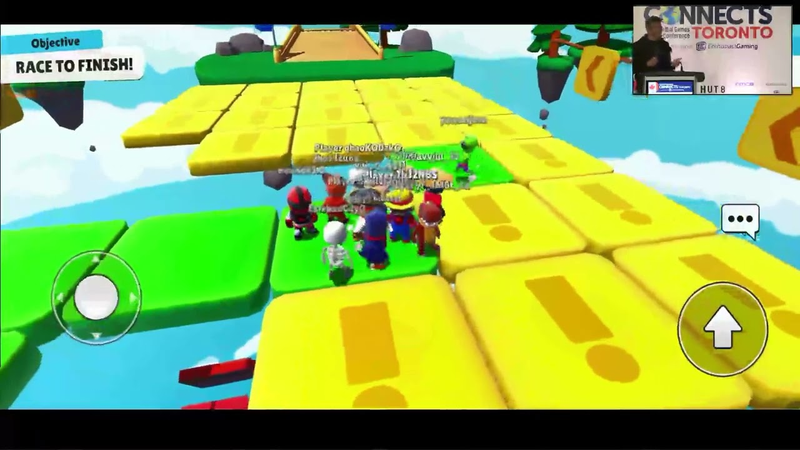
it started at zero right like any game and uh but before it was released in the store uh what we did is create the sample and the sample is literally box and you know little pills moving around and um and you know like we're like wow our little sample is quite fun when we are together and then we found a team in finland called kitka games and uh they took six weeks to take that sample which was very well networked obviously because we built ourselves and they made it pretty right and then launch it in the store and voila so uh like you know stumble guys to uh you know three months total from or sample and you know starting from the sample and building it to make it look pretty but it's still a two-step process like you just said until you have your mvp most variable product and you make sure that it works and then you use and then you're like okay yes it's network it's working well then after
that you start making it look pretty so um that would be my biggest advice for all of you and my second advice is don't be afraid right be unique and be genuine and that way you're going to be able to uh also well it's risk to be unique right but then you all you you would be a lighthouse if you make something that is fantastic cool so um okay we're out of time but we might have still time for one question or two anyone have questions you have a question there okay i'm gonna do the my guy as well so that's great so all right there you go um one thing i've always thought about multiplayer games and video game preservation might not be something that everyone thinks about and it might not be the most important thing but i've always found you know multiplayer games i have a lot of fun memories with some i know a lot of people do and it becomes really hard to preserve those games and i feel like there's three layers to it there's like you know
the shooter games that if they have ran when the server shut down you can keep them going but some don't and they kind of become just unplayable discs sitting in your house and then the mmos like when they shut down you know fans sometimes bring them back but i feel like even with mmos they're so long-lasting that and mario might be able to better you know have insight on this but like even when you create an expansion and the game lasts 15 years a lot of the time the game that people are most fond of are the ones like from 10 years ago and it's a completely different game now with all the expanders later on and then the preservation of this game becomes really difficult to tie down because they're preserving errors of it and then the game alone is so massive when it goes offline it might just be gone completely and like club penguin the web browsers i know there isn't club penguin rewritten but those web browser games since they were never downloaded onto people's hard drives when they go down they're usually completely gone so i don't know do you guys ever think about
video game preservation do you have advice to maybe help it because i know like adding wear into a game makes it well as two point there then i'm going to let mario because i'm sure he has a answer to that but there's a strategy which you can have multiple world right so so for example i was talking about art of conquest earlier my presentation so you have 350 something servers and each of the servers have different calibration right but then those servers after that you can vote to make them merge with others or not and decide what would be the the parameters are kept so in the end like you're literally giving the players a chance to decide where things are going and i think that's what democracy is and you know and all of that and then um yeah how about you mario yeah i mean obviously i would say in the mmo space we have thought about this a lot because the expense to operate and manage those games when they fall below a certain population level is significant it's not cheap for us to maintain those servers
so what i think is there are two things that have happened one kind of my like hopeful prediction that uh games become more community owned the idea that i as the developer of everquest don't own and request you do the community owns it so you own i i see a future where you control the servers you know maybe we or we remote in to do updates or things like that but the servers are not housed necessarily in the development studio or whatnot uh the backups and the archives are more open source people are able to create their own experiences with the code i think that to me is how we'll be able with persistent games at least like mmos to preserve them in the future and that's why we're seeing trends where people are trying to do that with emulated servers with old code and i think it's going to be our job as developers to help and to help actively help but to do that you need independent companies it's really hard public companies ip and things like this are
never you know ea is never going to surrender control of the servers to the community so i think there will be a new generation of game developers that will have to view this as more like i'm you know creating this playground but it's your playground it's not mine that makes sense and uh there's a company called deca games that is not part of amberson group and what they do is they buy old games that have a community and they revive it yeah and they're making a huge business out of that because if there's a community that stays for three years without any update it's like okay there's something there so then they take these games add live ups to it and then you know put more content to that that's something to think about so thank you so much guys that was great so that was the multiplayer track you
Summary
Multiplayer gaming has transitioned from a niche segment into the primary driver of the modern industry, with 75 percent of the top 200 grossing titles now incorporating multiplayer components. This shift is fueled by enhanced global connectivity, the rise of influencer-driven engagement, and the inherent replayability of social dynamics. As developers pivot toward these persistent worlds, the focus has moved from traditional single-player experiences to platforms that prioritize community agency and long-term engagement.
Technical and operational barriers remain significant, as real-time networking and the management of user data present substantial financial and legal risks. To mitigate these challenges, developers are increasingly adopting iterative, minimum viable product strategies, utilizing gray-box prototyping to refine core gameplay loops before scaling. Furthermore, the democratization of development through engines like Unity and Unreal, combined with managed server infrastructure, has lowered the barrier to entry for smaller teams, allowing for more efficient multi-platform deployment.
The industry is currently grappling with the sustainability of these titles, particularly regarding the long-term preservation of server-dependent games. As operational costs rise for titles with declining populations, the focus is shifting toward community-owned infrastructure and open-source archiving to prevent the total loss of digital experiences. Simultaneously, companies are exploring live-ops models to revitalize legacy titles, proving that dedicated communities can sustain older games. Looking ahead, the sector is moving toward reduced-friction access via cloud streaming and a greater emphasis on non-competitive, social-focused environments where players hold increased influence over the evolution of virtual worlds.
















Comments