1 free read left. Create a free account for unlimited reading + AI research.
Create free account
Living Assets: Evolutive NFTs for Playing Fair in the Metaverse
Key insights
6 takeaways- 01The shift toward Living Assets aims to move the metaverse toward a sustainable, player-centric ecosystem where asset value is derived from user effort rather than artificial scarcity.
- 02This framework allows developers to integrate blockchain features into existing game designs, moving away from the industry trend of building games solely to support NFT economies.
- 03Living Assets replace static NFTs with evolutive digital items that change properties and market value based on direct player engagement rather than speculative scarcity.
- 04The model utilizes layer-two blockchain solutions to manage millions of real-time asset updates via API calls, effectively bypassing the scalability and high gas fee constraints of mainnet networks.
- 05The strategy aligns with traditional free-to-play models by enabling low-cost asset distribution while allowing developers to capture revenue through secondary market royalties.
- 06By incorporating mechanics like performance degradation, developers can incentivize consistent player retention and mitigate the dominance of 'whale' investors who hoard static assets.
Ask AI about this video
Transcript
[Music] our next speaker on the stage is uh gerard columner from freeverse coming to talk about living assets uh do we have gerard hey there you are come to the stage please and uh your talk is about living assets uh the evolution of nfts are playing fair in the metaverse so uh give it up please for uh for general column thank you very much yeah sure okay so well hello everyone my name is gerard
and as you can see from the first slide we're going to talk about nfts but before we walk into that let me talk about calzotts i'm from barcelona and this is a traditional food that we eat there usually between winter and spring right and why i want to introduce this topic just before moving to the nft part it's because it's controversial people either love it or hate it you have people that eat 20 of them and people that cannot even eat one single one those are onions by the way and you put it in a small sauce and you eat them straight away directly so this is what's happening on the nft world right and this actually was a meme that was going around in a development group in whatsapp group in barcelona so it's like hey you either love nfts and you believe that our future of gaming and that it's a must to have them or you ever believe that's the demon in person that are just there to steal your money out of it
and speaking of money we actually saw that on the last year those move quite a little bit of money but this created all this controversial debate and what i would like to convey after this talk is that there is some place in between you can have have it both ways a little bit right so let's dive into it first of all why nft is all together so we have seen already that with traditional gaming gamers want to trade their assets and if they are allowed to do it in game they will do so but also if they want to have real cash for it they will try to find alternatives and sometimes those alternatives go completely against the terms and conditions of the games right so they go to outside pages they try different things they might get scammed the user experience of course it's not the same one as it would be if it's within the game but there's definitely a need for it and there are some studies that suggest that even 20
usually in the south asia market of the spend in mmos it's done in this gray area space where it's not controlled by the developer or the creator of the game and where the user might or might not get the actual item that they are paying for so why blockchain why nfts why all of this right why can i not just put this marketplace directly into my game so if i have virtual items and i want to sell them for real money you actually need to have a record on your server of an item that has some virtual well has some value some dollar value and if you have that you actually become a bank with all the legislation and all the technical problems that go directly related to that and with blockchain you can think of as outsourcing all of that complexity to the blockchain this entity let's uh think about it and
this has the records of the ownership you don't have it on your servers so you don't need to have all of this complexity that for instance second life that the previous panelists were mentioning they need to deal with and they hired a team of an accountant and they actually created a company i believe to handle all of that so let's start from the beginning what's an nft because probably we've all heard about it but what it is exactly and in order to define what an nft is i would like to first start defining what an nft is not it's not just an image some nfcs and most of them do have an image representation of it but it's not just that it's definitely not a guarantee of ip writes if i have an nft of an artist or something like that maybe it has some ip rights associated to it but definitely it's not guaranteed i should definitely check it out and the blockchain stores kind of a
receiver purchase so you can see that i bought it but it's not just that so basically what we stored in the blockchain and this is a simplified way it's just three fields you have the owner and that's huge string of text that would be me for instance and you could say hey this is gerard of course you might need to do the relationship if you really want to know that's me on that string of text second thing you have the id a number that identifies that specific nft in this case is 5701 and then one of the most important parts you have a url that contains all the information and you can think of as the 3d representation of the asset you can think of the all the properties if it's an in-game asset the speed for instance the shoot if it's a football player the strength wherever you want to find it it's a store there and there are actually two main ways to do it right one way is to have the url pointing into
a server so all we have seen is stored on the blockchain so it will always be there if the blockchain doesn't crash um but if you point it to a server like here we put it this believeme.com domain um if that domain crashes your nft actually becomes a 404 nft right so it doesn't have a 3d representation it doesn't have the properties or the attributes that you want it but the nice thing about this and why some people use this is because it's quite easy and cheap to change the properties you can just change something on your server and the image is changed and that's why some games use it the other way to do it is to store it on the blockchain and there you have either fixed attributes or an image that cannot be changed the speed cannot be changed or any other uh attribute that you might think of but the distort on the blockchain it's saved and this is usually what has been done so far in some games and of course in the art
world then what has been done so far that i was talking about and we have all seen examples and those are good it's not that those are bad but usually the value of the nfts that have been created in the best majority so far is based on scarcity there's just 100 of those so pick one up and try to sell them for more later on this is good but is it what we want to do for gaming i don't know there have been times in blockchain games that have been developed using a little bit disparity and trying to move away from it so not just based on the scarcity but based on the game and they faced another problem that's the scalability so those two games are two games that are developed and deployed on the blockchain first one cryptokitties it was released 2017 played it and it was great until a lot of people tried to create it because
then the network was impossible to deal on you needed to pay a lot of car a lot of money it was not cash but a lot of ether in this case to do any single transaction and this was a simple simple game just collect some kitties breed them and sell them that was it 10 000 daily active users and the whole ether network was completely cr not crushed but it was impossible to do anything about with it if you didn't spend a lot of money thankfully for us it has improved but even this year beginning of this year sunflower it's a game about farming and it's deployed on polygon which is already optimized on top of ether and despite that with 10 times more users they were able to skyrocket the fees that the people needed to pay in order to do transactions on polygon and this affected not only the game players but everyone else that was developing on that blockchain so this is really a problem scalability
and then how do they solve all of this so basically a lot of those games they need to have players and they need to make money and how they do that is they sell nfts at the beginning you need to have certain number of nfts to play and usually in some games those nfts are not that cheap so you end up with a lot of people spending and some people on the top that uh actually are able to sell those nfts and if you see it it looks like a pyramid right and this is something that has been going around it might work for a while but it's not what we want to go looking forward so the solution that we believe is that collections and collectionism is good it happens in the real world people collect stamps people collect even motorcycles or other stuff but it's just a tiny fraction of the real world economy and why it's all it's almost representing all the nft economy right now let's move it to the next level so what we are doing with our technology is allowing users to move
from just pacif collecting stuff and trying to sell it later on with this speculation to engaging with nfts actively so they can change the value of it and we have put a name of living assets because in the future we maybe don't want to talk about nfts and we want to put some wording that's different to that and i wanted to show some examples so what if you create tons of nfds you sell them very cheaply or even for free to your players right and then the value of those nfts is not high because there are only 100 of them it's high because i had a player i trained them really well and then become the best player in my game so then it has some real value i can use it to win one matches or i can sell it to another player that don't want to put the effort and just wants to win the matches another dynamic that we have and we didn't invent this one but it's really powerful it's instead of the
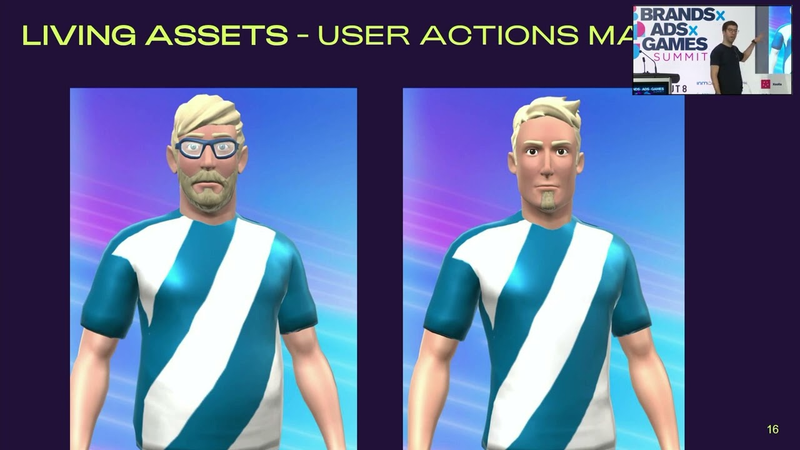
properties of the nft just going up up all the time what if we apply the tamagotchi technique so the properties start to go down and once they hit a certain low point you need to actively do something to bring them up and this boosts its retention as most of the audience will will know quite a bit so while we were developing our technology we started to do a football manager game to prove that it worked and this was a little bit what we built with the two dynamics that we showed so you need to go to the game and train the player and you needed to have this player over time improving if you kept recurrently returning to the game and you could actually see the difference if you were returning to the game and playing with the player improving his skills and winning matches or if you just leave it there and do nothing about it so the actions of the user ended up changing the value of the nft and then just to
summary tap a little bit we believe that in the past on the nft world it has been based mostly on scarcity high initial price that draw this pyramid scheme that we were talking about it was hype driven like hey there's only 10 000 of them go catch one really really quick and that the games were built to have nfts on them right so you had games that were very successful that without nfps nobody would have played and we believe that this is not the future the future should be somewhere where you could drop nfts to all your users free or almost free for you without worrying about gas fees or anything like that you should be able to monetize with engagement like you do in free-to-play games without changing your whole strategy and these will drive long-term retention as we have seen before and finally the nft's technology should be built on top of your games not develop a whole game just to have nfts on it you should be able to develop a game and then easily
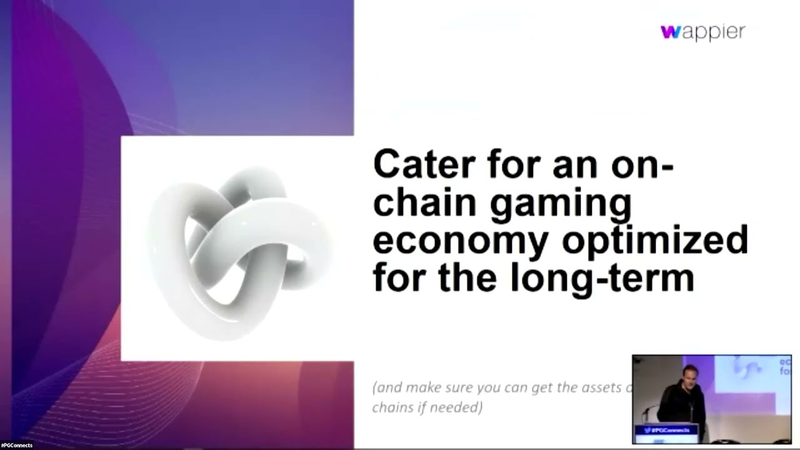
integrate 10 of these so what do we need we need the scalability in order to reach that you should be able to have millions of millions of nfts without crushing any network and you need to be able to have those nfts evolve change the properties and how do we do that and don't hear me for putting a graphics card here we are not trying to move the prices up um we have a layer two solution that basically allows us to have these evolvable nfts and create them in millions just with api calls api call hey create asset and create 1000 of them api call hey the player reached level 10 update the asset of the player that's it all the complexity is left behind and we handle it and also we store all that information in the blockchain not in a server like we saw before in the trustme domain and why
is that important because it allows to have even new dynamics that were previously not possible for instance i could have a pot of money or a pot of gold or nfts whatever you want to have and say hey the first player that reaches level 10 will be able to grab it and this is just stored on the blockchain so it's permissionless i could have even sponsors putting money there just to promote their brand or something like that and then the first player that reaches level 10 with the sponsor t-shirt something that you could think of can have all that money permissionless and the blockchain take care of it so as a quick summary and to ramp up so we can have some time for questions and answers we have talk this is a little bit of what we do we already talked about about being scalable and i don't want to go into detail about the other parts but just so you know with our platform you can have multi-currency meaning you can pay with dollars euros apart from cryptocurrencies if that's
needed so it removes a little bit the fraction the friction sorry that some users have while interacting with nfts then you can monetize the second market that we were seeing at the beginning of the screen so this grey market that before was just outsourced offline and not that legal you can have a percentage of the sales that are done between one player and another and finally the eco-friendly part so we have been criticized on the blockchain community for driving graphics cards prices app and for spending a lot of energy and stuff this is changing but on since we are layer 2 and we are built upon polygon as of now we are 15 times 15 000 times more efficient than polygon and polygon is already built on top of ether so this compounds this was it thank you all for your time uh we have a booth here so you can ask questions now that i think we
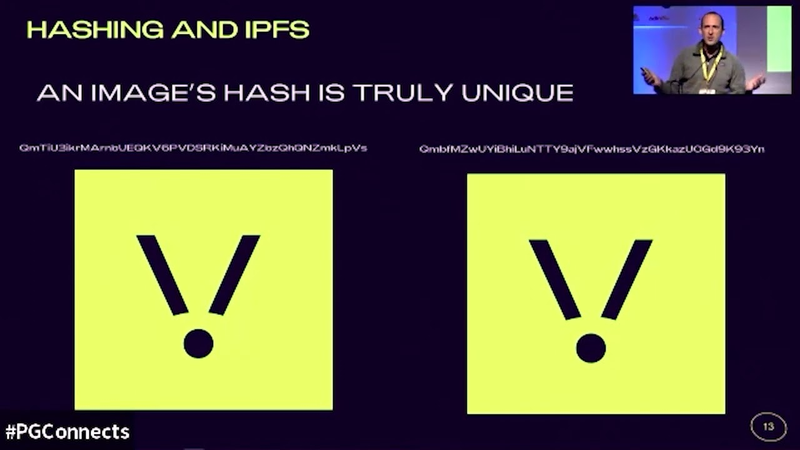
have still some minutes and if you want to have those questions in private feel free to hit us in the in the booth in the in the section that was great thank you i'll just grab this mic and then if anyone has questions does anyone have a question here we go right i'll come over here here we go hey hi how does uh evolving nfts take care of the hashing part right because uh if the nfd evolves the hash would evolve so yeah that's a good question so that's actually a really good question so what he's asking is usually the properties of just to put a little bit of context around usually the properties of the nft is you want to have it in a centralized manner and so on are stored in there are different alternative but one would be ipfs or other servers and how they do that is that they compress all the information that you put there and they create what's called the hash just the text right
and then this is unique if you change something this text changes and this is the key that you use to look for those properties so what he's asking is hey if i change the properties this hash would change so how do you have these properties accessible by the blockchain while the hash is changing and because of that it's why we needed to build a layer 2 solution and we could not deploy the nfts directly on the on the blockchain so the layer 2 solution is managing that is able to change the hashes accordingly and then commit the files to ipfs or another service provider if we wanted to build that directly on the blockchain that would be a main issue and then you just have two options you just have server that we mentioned or you can have a smart contract that changes the properties but then you pay gas fees every single time you update the assets so did that answer yeah okay thank you that was great great question thank you we've got we've got a minute or so does anyone else have a question uh while we
have gerald here ah down the front here uh hey hello again gerard um i just want to ask um with what we're seeing in a lot of digital environments right now with kind of whales kind of taking over owning a lot of the assets and in gaming environments specifically there's a lot of pay to win do you foresee that being a responsibility of kind of your technology to handle putting systems in place to negate pay to win or is that more of the game designer slash developer's responsibility in this ecosystem so that's a good question we just want to bring the tools to the game developers and we believe that the game developer is the best in their position that they are to have the ecosystem that's sustainable in the long term and that benefits the community or the player base that they have so with the tools that we provide them they should be able to manage it if they want to encourage to have whales because let's face it there are a lot of business models that
it's well hunting um they can do that if they want to do a sustainable community where everyone has a chance and so on you can also do that so for instance what we did in order to achieve that with the video game that i was mentioning before was try to mimic real life so the players age and they had peak performance but as the time passes they performances started to decline as in real life that you usually don't see football players in premiere leagues with 50 years right so doing that you are enabled to have just to be able to set them for free and then to be able to have it sustainable because you don't have the market completely fluted with players because you are able to get rid of some of them that's just an option that i wanted to highlight but the decision is on the developers hands great thank you and that's perfect timing we've reached exactly the end sure thank you very much that was a pleasure
Summary
The current landscape of non-fungible tokens (NFTs) in gaming is heavily defined by speculative scarcity and pyramid-style economic models, which often prioritize short-term profit over long-term player retention. This approach frequently forces developers to rely on high initial asset costs, creating barriers to entry and fostering a gray market where players trade items outside of official channels. To address these systemic issues, the concept of Living Assets has been introduced as an evolutive alternative to static NFTs. By shifting the focus from passive collection to active engagement, these assets change their properties and market value based on how a player interacts with them in-game.
The methodology for implementing Living Assets involves utilizing layer-two blockchain solutions to overcome the scalability and high gas fee limitations of traditional mainnet networks. By treating asset evolution as a series of API calls, developers can manage millions of assets that update in real-time without crashing the underlying network. This technical framework allows for dynamic game mechanics, such as performance degradation—similar to a Tamagotchi—which encourages consistent player retention and discourages the accumulation of assets by "whales" who might otherwise dominate the ecosystem.
Ultimately, the goal of this technology is to provide game developers with the tools to integrate blockchain features into existing game designs rather than building games solely to support NFTs. By enabling free or low-cost asset distribution and allowing developers to monetize secondary markets through royalties, this model aligns with traditional free-to-play strategies. This approach moves the industry toward a more sustainable, eco-friendly, and player-centric metaverse where the value of a digital item is derived from the effort and engagement invested by the user rather than mere artificial scarcity.