Game Design reports and market data
Documents

Crafting Level Design for Combat - Max Pears, Level Design Lobby.
Level design for combat serves as the architectural foundation for player engagement, requiring designers to act as facilitators who balance gameplay mechanics, narrative pacing, and environmental challenges.
- Level design must function as a facilitator of player agency, transforming combat encounters into dynamic puzzles rather than static obstacles.
- Designers should establish standardized technical metrics for environmental elements, including cover height, pathing widths, and sightlines, to dictate player navigation and interaction.
- Combat tempo and intensity are controlled through spatial techniques such as 'figure-eight' movement patterns and strategic elevation changes.
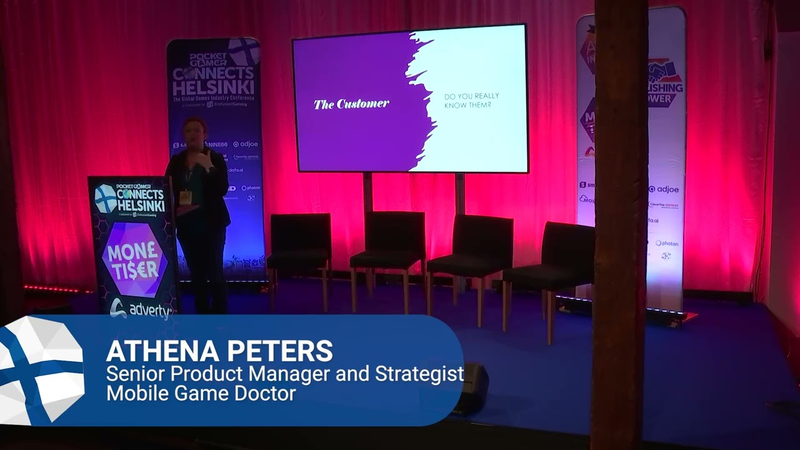
2 Mistakes you are Making With IAP & how to fix Them - Athena Peters, Mobile Game Doctor.
The primary objective of this analysis is to identify and rectify two critical errors commonly made by developers transitioning to or managing in-app purchase (IAP) models within the mobile gaming industry.
- Success in top-grossing mobile games relies on rapid, data-informed iteration cycles that continuously test and refine UI/UX elements.
- Developers must isolate variables by testing only one change at a time during A/B testing to ensure the validity of data regarding retention and conversion rates.
- Monetization should be optimized by segmenting the player base into detailed personas rather than relying on generic demographic data.
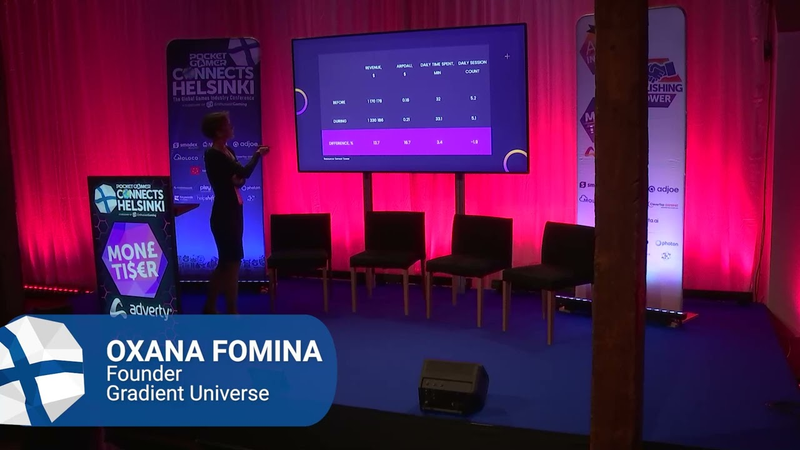
Top 5 Monetization Events in Casual Games: Maximizing Revenue Pot - Oxana Fomina, Gradient Universe
The analysis of monetization strategies in casual mobile gaming identifies five high-performing event models that significantly boost revenue and player retention.
- High-performing event models in casual mobile games drive revenue growth ranging from 10% to 43%.
- Successful monetization events leverage emotional engagement, social mechanics, and structured progression to increase both daily active user revenue (ARDAU) and session length.
- Effective event design incorporates multi-stage progression, intermediate rewards to maintain momentum, and specialized event shops that encourage habitual player return.
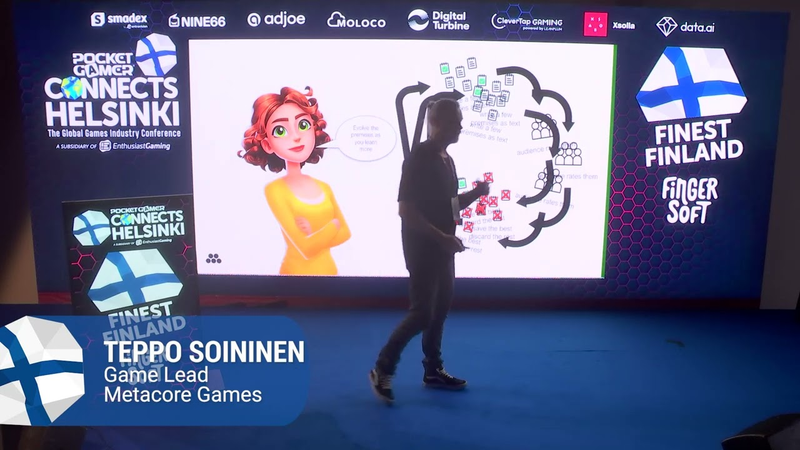
You Need to Know who is Going to Play Your Game - Teppo Soininen, Metacore Games
Concept testing serves as a critical risk-mitigation strategy in mobile game development, allowing studios to validate ideas before committing significant time and capital to production.
- Concept testing acts as a primary risk-mitigation strategy by validating game ideas during pre-production to avoid committing capital to unviable projects.
- Developers should prioritize the core 'fantasy' or entertainment promise of a game, ensuring mechanics, art, and narrative align with specific audience preferences before full production.
- Initial validation should utilize low-cost, text-based premises distributed to target audiences via platforms like PlaytestCloud to identify recurring themes and discard weak concepts early.
How Candivore’s Match Masters Innovates in Match 3
Match Masters represents a strategic evolution of the traditional match-three genre by integrating competitive player-versus-player mechanics into a space historically dominated by single-player experiences.
- Candivore transformed the traditional match-three genre by replacing linear, single-player progression with a competitive, trophy-based PvP model inspired by Clash Royale.
- The studio maintains high operational agility and rapid feature deployment by keeping its total workforce under 70 employees, avoiding the bureaucratic inefficiencies of larger competitors.
- The company secured a $100 million investment to fuel aggressive user acquisition, treating marketing spend as a long-term capital asset rather than a short-term expense.
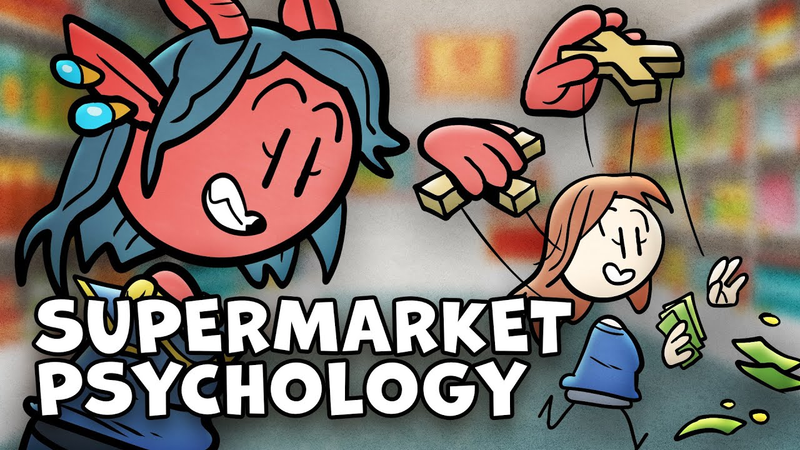
How Video Games Use Supermarket Psychology - Extra Credits
Supermarket design principles, refined over a century of retail history in the United States, provide a blueprint for modern digital monetization strategies, particularly within free-to-play video games.
- Retailers and game developers exploit decision fatigue, where rational decision-making shifts to emotional impulses after approximately 23 minutes of engagement and largely ceases after 40 minutes.
- Supermarkets utilize non-linear floor plans to force customers to traverse the entire store, maximizing exposure to non-essential, high-margin items placed at eye level or on end-cap displays.
- Free-to-play games mirror physical retail by using confusing store navigation that forces users to scroll past paid goods, increasing the likelihood of impulse purchases.
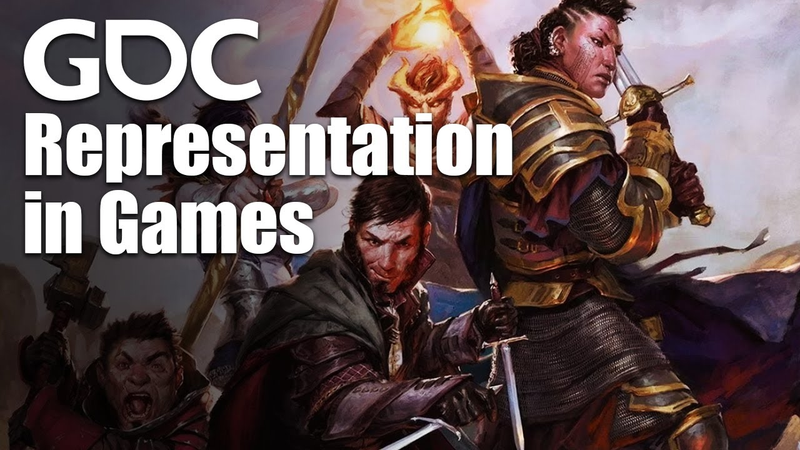
Building a Well-Rounded Party Fireside Chat: Wizards' Everyday Commitment to Representation in Games
Wizards of the Coast is actively reshaping its corporate strategy to prioritize inclusivity and accessibility as foundational pillars for the long-term health of the Magic: The Gathering and Dungeons & Dragons franchises.
- Wizards of the Coast has transitioned to a model of radical transparency, notably placing core system documents into Creative Commons to lower barriers for independent creators following the Open Game License controversy.
- The company’s focus on authentic cultural representation and inclusive storytelling has contributed to record-breaking financial performance, including a billion-dollar revenue year for the Magic: The Gathering franchise.
- Wizards of the Coast has achieved an even gender split within its global player base, a demographic shift that informs the company's ongoing product development and corporate strategy.
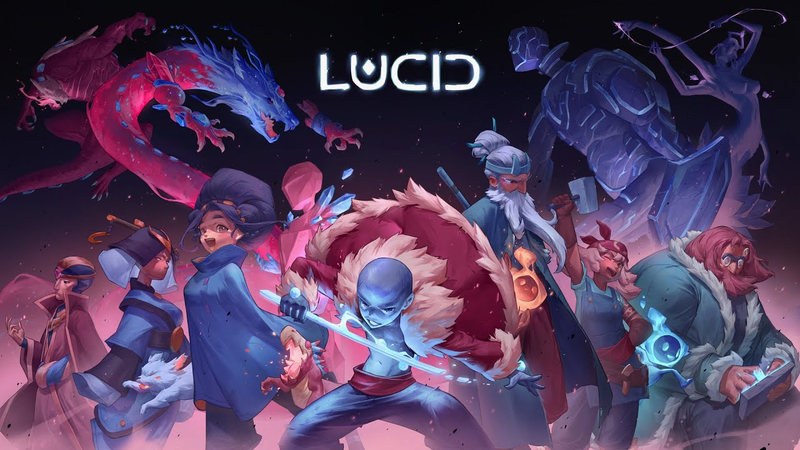
Making Lucid with Eric Manahan | 331
The transition from professional architecture to independent game development offers a unique perspective on spatial design and player progression, as evidenced by the creation of the platformer Lucid.
- Applying architectural principles to side-scrolling platformers like Lucid allows developers to create more cohesive, intentional worlds that prioritize player movement and flow.
- Independent developers can achieve financial sustainability and emotional support by leveraging environmental storytelling and movement-focused mechanics to cultivate highly engaged, niche communities.
- Platforms such as Discord and Kickstarter are essential for modern indie developers to validate projects, secure necessary funding, and maintain direct relationships with their player base.
AI GAMING REVOLUTION: Shaping the Future of Play with Pieter Kooyman
The integration of generative AI is fundamentally reshaping the gaming industry, enabling a transition from bloated, specialized production models toward lean, agile development.
- Generative AI enables a shift from large, specialized production models to lean, multi-disciplinary teams that can reduce development timelines from years to months.
- The industry is moving toward integrated, multi-step AI workflows that allow smaller studios to produce high-quality, multiplayer-capable titles at a fraction of traditional blockbuster costs.
- Competitive advantage in the new landscape will belong to organizations that successfully bridge the gap between manual craftsmanship and automated production.
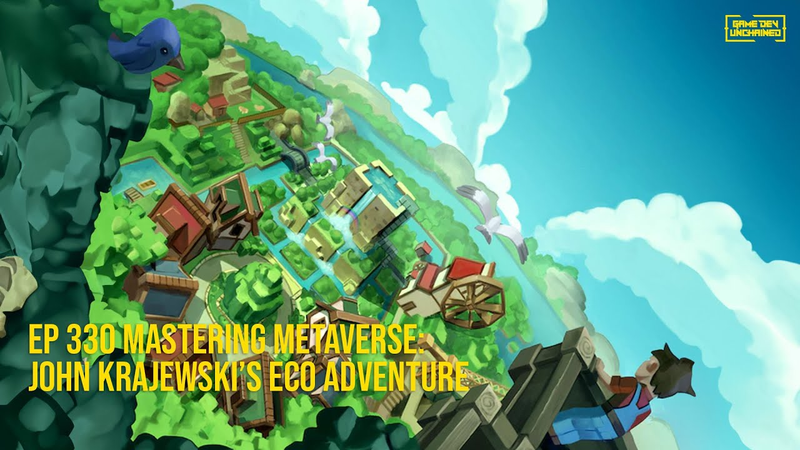
Mastering Metaverse: John Krajewski’s Eco Adventure | 330
The development of virtual worlds should prioritize organic, player-driven ecosystems over the top-down, corporate-led models often associated with the metaverse.
- Virtual world development should prioritize bottom-up, player-driven ecosystems where users establish their own governments, economies, and legal frameworks rather than relying on top-down, corporate-led models.
- Games like Eco demonstrate that interactive simulations can serve as superior educational frameworks by fostering intrinsic motivation and teaching players to navigate complex real-world systems like environmental management.
- Independent developers can maintain creative autonomy and secure essential funding by utilizing iterative, community-focused strategies like Early Access to bypass restrictive publisher timelines.

To the Beat Y'all: What Designers Can Learn From Hip Hop
The presentation explores the intersection of hip-hop culture and game design, arguing that the literary and rhetorical techniques inherent in hip-hop songwriting offer valuable frameworks for narrative design.
- Hip hop storytelling techniques, such as verse-chorus-bridge structures, can be applied to game narrative design to create better pacing and thematic reinforcement.
- The 'vignette' structure used in hip hop—which prioritizes immediate character needs and wants—is an effective model for designing compelling side quests and minor character interactions.
- Undertale (2015) serves as a prime example of musical narrative structure, where boss fights function as verses, recurring themes act as choruses, and tonal shifts like the secret lab act as a bridge.
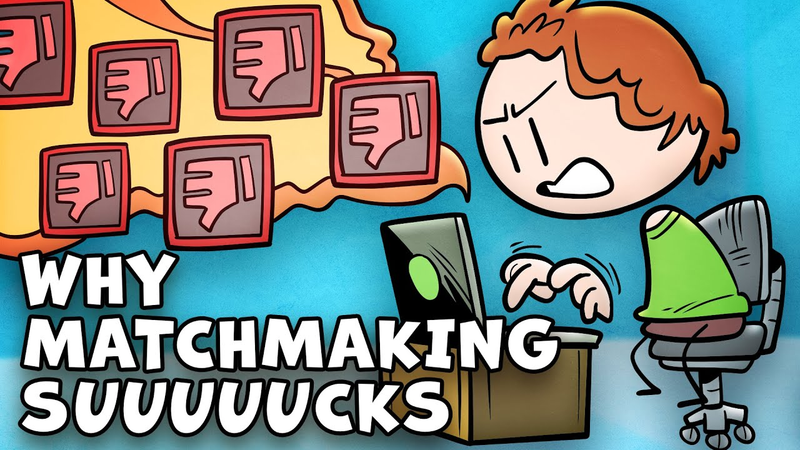
Why Matchmaking Sucks... and How It Could Be Fixed.
Matchmaking in multiplayer video games is a complex engineering challenge that forces developers to balance competing priorities, often resulting in player frustration.
- Matchmaking is fundamentally constrained by the conflict between three competing variables: network latency (ping), queue times, and skill-based parity.
- The available player pool for a match is drastically reduced by technical and design factors, such as platform exclusivity, regional server requirements, and game mode fragmentation.
- A theoretical population of 100,000 players can shrink to fewer than 200 viable candidates once concurrent matches and latency requirements are applied.