Game Design reports and market data
Documents
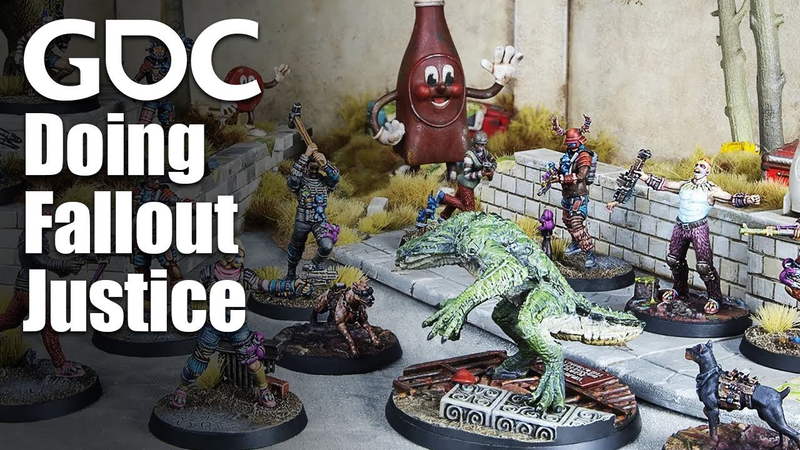
Making 'Fallout' for Tabletop (or How to Be Different but the Same)
Adapting the Fallout video game franchise into the tabletop miniatures game Fallout: Wasteland Warfare requires a delicate balance between honoring established lore and creating a functional, tactical skirmish experience.
- To adapt a video game into a tabletop experience, designers must rescale numerical data rather than porting it directly, as video game values are rarely balanced for physical play mechanics.
- The game utilized a 20-sided die system to ensure that low skill values remained viable, providing a 25% success rate for a skill value of one, while maintaining a non-guaranteed success ceiling for high-skill characters.
- To avoid the 'negative spiral' where winners become exponentially stronger, the settlement system rewards players with structural upgrades that provide tactical options without increasing the point-value of their units in future matches.
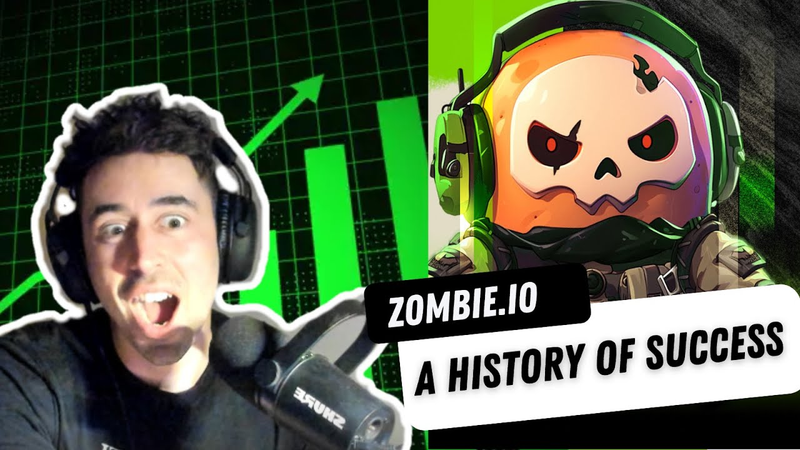
Zombie.io global launch case study: A Midcore game with complex gameplay & wide range of features
Zombie.io represents a significant evolution in the midcore survivor-like mobile genre, blending complex, automated gameplay with a robust gacha-driven economy.
- Zombie.io, developed by the creators of Legend of Mushroom, achieved a successful global launch in April 2024, generating approximately $120,000 in daily IAP revenue with roughly 70,000 daily downloads.
- The game differentiates itself from competitors like Survivor.io by incorporating complex, midcore RPG elements, including hero classes (tank, healer, DPS), pet management, and skill-altering inventory systems.
- The developers utilize an aggressive rewarded ad strategy that integrates 'question mark' triggers throughout the UI to prompt ad views, maintaining an ad impression rate of approximately 65-70%.

Age-Friendly Design for the 50-Plus Gamer
The video game industry faces a significant opportunity to engage the 52 million players in the United States aged 50 and older, a demographic that remains largely underserved and misrepresented.
- The 50-plus demographic includes 52 million players in the United States, with the 26% of this group categorized as enthusiasts and immersives accounting for 45% of total spending.
- Older gamers prioritize mental stimulation, social connection, and meaningful challenges over simplified content, requiring gameplay that respects their cognitive abilities.
- Developers should move away from narrow, stereotypical character tropes and adopt authentic, diverse depictions of aging to better align with the expectations of this underserved audience.
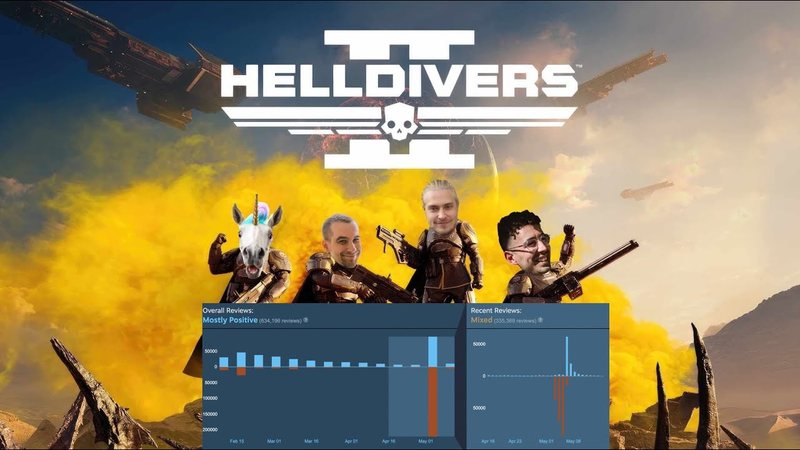
Helldivers 2 Special: Why is it so good? Second Galatic War Begins! New major Order!
Arrowhead Game Studios has achieved significant commercial and critical success with Helldivers 2, a four-player cooperative shooter that synthesizes over a decade of design expertise.
- Helldivers 2 achieved significant commercial success, generating approximately $482 million in gross revenue within its first three months following its February 24, 2024, release.
- The game maintains strong player engagement through a 'Galactic War' system where developers act as game masters, manually driving the narrative and issuing community-wide major orders that influence the game world in real-time.
- Helldivers 2 is positioned as a AA title priced at $39.99, utilizing a monetization model based on monthly 'war bonds' that provide new weapons and gear, which players can either purchase or earn through in-game currency.

Developing 'Hi-Fi RUSH' Backwards and Finding Our Positive Gameplay Loop
The development of Hi-Fi RUSH represents a strategic departure from traditional horror-centric game design, focusing instead on a rhythm-action framework that synchronizes player inputs with a musical score.
- To maintain player immersion, the development team designed the game's rhythm-action mechanics by working backwards from the desired musical impact, ensuring that gameplay features were built to lead into specific beats rather than trying to force music to fit existing gameplay.
- The team implemented a 'positive feedback loop' where players are rewarded for playing in rhythm through subtle damage bonuses and audio-visual cues, while avoiding negative reinforcement or penalties for off-beat play to keep the experience accessible.
- Level design was structured around song composition, using 'mood graphs' and song structures—such as using choruses for combat and verses for platforming—to define pacing and event timing before physical level layout began.

Guild of Guardians, Immutable’s Next Web3 Flagship Game?
The global launch of Guild of Guardians on May 15th marks a strategic pivot for Immutable, positioning the fantasy RPG as a flagship title on its ZK-EVM blockchain.
- Guild of Guardians launched on May 15th as a mobile-first auto-battler, serving as a flagship title for Immutable’s ZK-EVM blockchain.
- The game achieved over 500,000 pre-launch signups and recorded a 48% day-one player retention rate.
- Immutable is prioritizing a 'game-first, ownership-second' philosophy, using high-quality gameplay to drive retention while integrating Web3 mechanics incrementally.

YOUR GAMES | Game Design Analysis
Effective game design hinges on balancing player agency with intuitive mechanics, a principle that remains consistent across diverse indie titles ranging from puzzle-roguelikes to atmospheric narrative experiences.
- Prioritize player agency by minimizing intrusive hand-holding and excessive exposition, allowing players to discover the game world through self-directed interaction.
- Streamline feedback loops and remove unnecessary complexity to ensure core mechanics remain the primary focus of the player experience.
- Integrate narrative themes directly into gameplay mechanics rather than relying on heavy-handed exposition to maintain immersion.
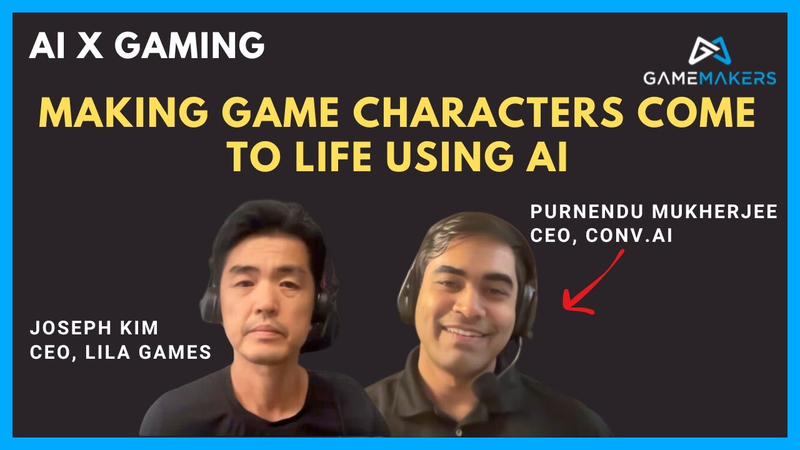
The Frontier of AI NPCs with Convai's CEO | Purnendu Mukherjee
The integration of artificial intelligence into non-player characters represents a fundamental shift in virtual interaction, moving away from rigid, scripted dialogue trees toward dynamic, autonomous agents.
- AI-driven NPCs are transitioning from scripted dialogue trees to autonomous agents that perceive 3D environments, maintain memory, and execute complex, evolving behaviors.
- While initial development labor remains high, the integration of AI agents is estimated to increase gameplay impact and interactivity by a factor of ten to one hundred compared to traditional methods.
- Developers are balancing open-ended AI interactions with narrative consistency by utilizing platforms that integrate LLMs with traditional behavior trees.
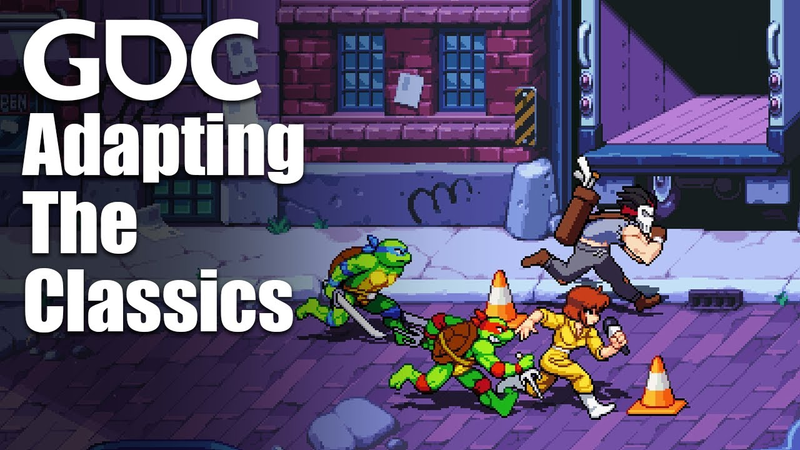
Plays Like You Remember: Adapting Classics for 'Teenage Mutant Ninja Shredder's Revenge'
The development of Teenage Mutant Ninja Turtles: Shredder’s Revenge centers on the philosophy of capturing the essence of classic arcade beat-em-ups rather than strictly replicating their technical limitations.
- To successfully adapt a classic title, developers should aim to make the game play how players remember it rather than how it actually functioned, which involves analyzing the core design strengths while discarding outdated technical limitations like sprite flickering or slowdowns.
- Tribute Games utilized an 'attack token' logic system to manage combat, where enemies must request a token to attack, allowing developers to control enemy aggression and group density for better balance.
- The team established a target pacing of 20 to 30 enemies per minute, a ratio derived from NES-era titles that provided the clearest enemy choreography and most balanced single-player experience.
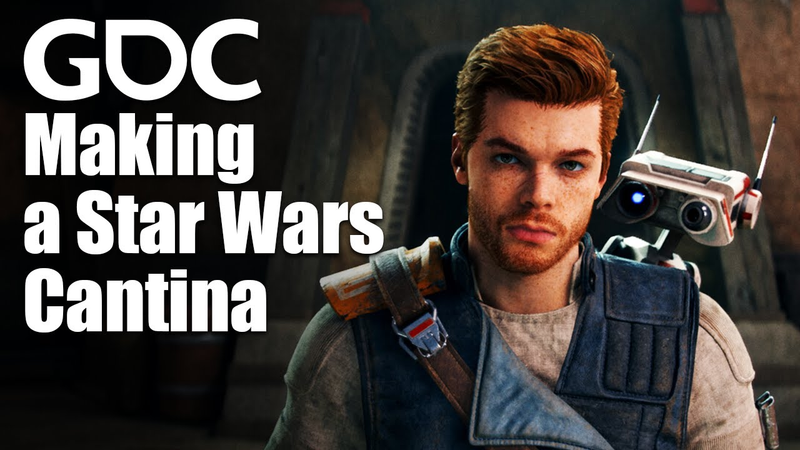
Bringing a Star Wars Cantina to Life in 'Jedi: Survivor'
Pyloon’s Saloon serves as a central, dynamic hub in Star Wars Jedi: Survivor, functioning as a narrative anchor that provides respite from the game’s darker themes.
- The narrative team structured Pyloon's Saloon into five macro states mapped to the main campaign's acts, which were further divided into granular substates to track NPC locations and evolving dialogue.
- Writers utilized a TV-style room approach, conducting brainstorming sessions, table reads, and character voice experiments to ensure consistency across three to six writers.
- The team managed dialogue complexity using a 'Dialogue Matrix' in Google Sheets that calculated character adjacencies and generated templates to ensure every character had at least one unique conversation per substate.
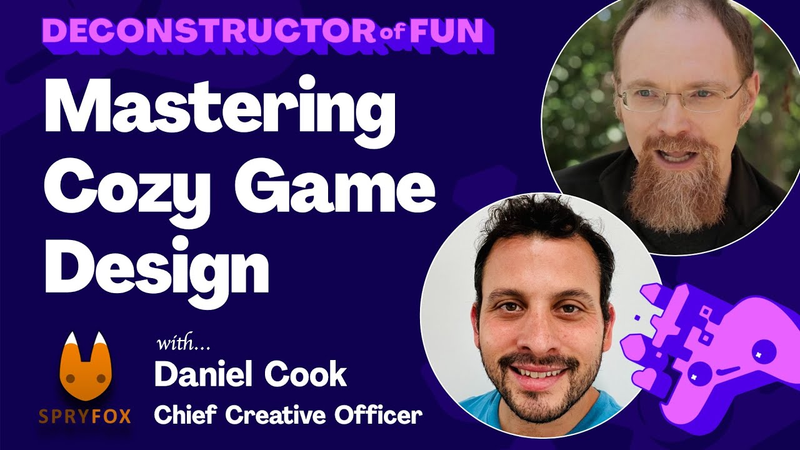
Journey Through Game Design with Spry Fox’s Daniel Cook
Game design functions as an unpredictable, iterative process that requires a synthesis of creative vision and business acumen.
- Sustainable game development relies on small, surgical iterations that amplify promising prototype elements rather than relying on high-cost, dramatic pivots.
- Designers should prioritize intrinsic human motivations—such as autonomy, mastery, and social connection—over extrinsic, stress-inducing engagement mechanics like daily login bonuses.
- Long-term market viability is best achieved by cultivating an authentic creative voice and focusing on specialized skills rather than chasing ephemeral industry trends.
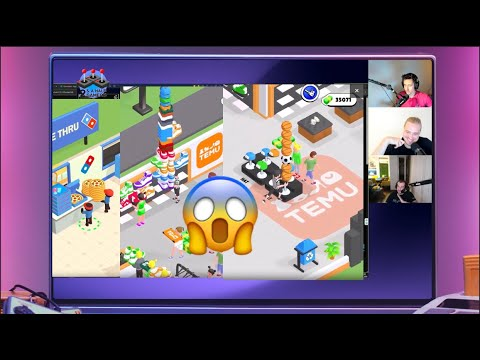
From Hypercasual to Hybridcasual - The Supercent story. Iterative nature & Admon w/ UA in grey zone
The mobile gaming landscape is undergoing a significant transition as studios shift from traditional hypercasual models toward hybridcasual frameworks.
- Supercent utilizes a high-frequency iterative model for hybridcasual games, repeatedly refining core mechanics from successful titles like 'My Perfect Hotel' to launch new revenue-generating products such as 'Pizza Ready', 'Outlet Rush', and 'Snake Clash'.
- Supercent's titles demonstrate a aggressive monetization strategy by integrating interstitials, rewarded videos, and banners from the first minute of gameplay, alongside specific rewarded placements for movement speed, carrying capacity, and equipment upgrades.
- The company has experimented with controversial monetization tactics, such as integrating 'Bright Data' software, which allows the app to use user IP addresses and bandwidth for data scraping, potentially generating significant monthly revenue from a fraction of their millions of users.