VideoDeconstructor of Fun
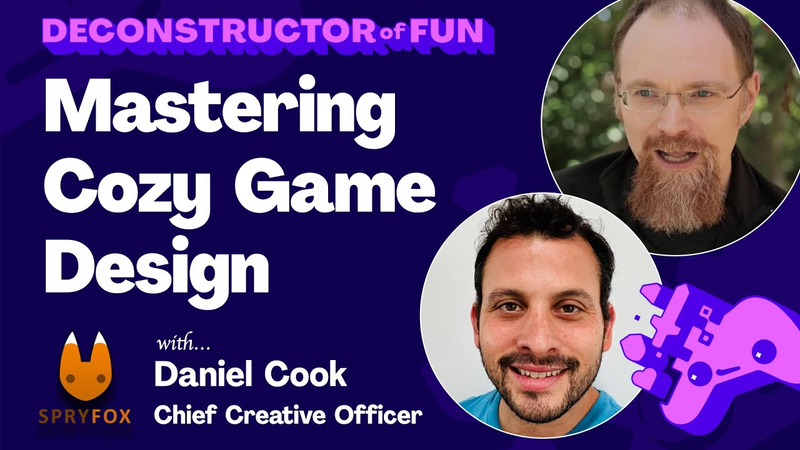
Journey Through Game Design with Spry Fox’s Daniel Cook
6 May 202484 min video
Transcript
[Music] hello twiggies I know it has been a long time since you've heard me give an interview uh but I saw a tweet a couple weeks ago so juicy that I absolutely had to reach out and get someone onto the show uh because I absolutely have wanted to talk to them for years and years and uh thanks to deconstructor of fun I have an excuse to uh today my guest is Daniel Cook Chief creative officer at Spry Fox longtime game design Guru longtime Indie darling someone whose writing whose talks whose games I have admired for a very long time and uh Dan when I saw you tweet that you'd been doing this was it that it was both your birthday and your 30th year in game development yeah yeah double whammy right there when I saw that I said uh I absolutely have to interview Dan actually my brain went I
actually I absolutely have to get mentored by Dan how can I do that how can I trick him into doing that and uh this interview is uh is the excuse uh so Dan dank cook uh welcome to the show ah good GL happy to be here it's I haven't done an interview in a while so this is this is fun I I loved uh uh delving back into your blog and thinking that you you know I feel like it was a Kinder gentle uh version of the internet when you picked dank as your uh nickname uh before it was all about dank memes right well Dan dank was a it was actually a uh Rog likee that I was playing back as a teenager and I misspelled my name as I was typing it and it became dank like uh and and it's stuck with me ever since and then I started I used to do art so I I used to do painting and things like that and eventually pixel art and so I would sign all my things down
cuz you know the demo scene you always had a handle you had a nickname uh and so for probably the first I don't know 15 years on on the internet people only knew me as dank they had no idea who I was and I you know lost guarden my website was Anonymous everything was just like hey here's this random person on the internet who's mostly Anonymous and they make art and writing and games um and I was I was very happy doing that I'm I'm trying to think I know the era of when I first became aware of you as kind of a game design thinker it was probably about 20 years ago I was working at play first where I think you do um that project horseshoe with Kenny dinkin yeah yeah every now and then so I worked for Kenny and I remember I uh paid a lot of attention to flash and somewhere I feel like either bunny went viral role in like the J is games flash
free game of the day kind of universe there was either or that or I feel like there was a Lost Garden cute pixel art pack that like went free and that might was that like what was the first thing you remember um kind of going viral in terms of in the in our insular game design um internet bubble so I remember um writing an article on the Wei and Penny Arcade picking that up and oh I used to read Penny Arcade every day and that was probably the first like thing that really sort of broke out um and then uh the flash games were really just a a fun fun little Hobby and they started getting millions of plays as as they did back then um and uh and that kind of took off and then there was another group because it was sort of the start of the Indie movement that was was
just desperately looking for free art um and I was like look I've got all this art uh because I had been doing pixel art and other art for for years at that point and I had already gone through sort of the the the the death of shareware and I thought oh pixel art is never GNA come back what do I do with all this like garbage that I've collected uh you know hundreds cute bears hundreds and hundreds of things uh and so I'm like I'll just put it up for free on on the internet and then people found it and then they started spreading it from there yeah it's so F it's funny to think about kind of that era before there was a platform for every community and like a way to become a micro influencer over anything when like things that are totally normal Hobbies or side hustles now were just like weird people sitting in front of a computer like I remember spending just months like doing weird filter versions of different Photoshop photo of different photos from my
digital camera just like I was oddly compelled to like make this what would now be like I was just putting Instagram filters on all my art but it used to just be me in a room doing it for absolutely nobody and sounds like now it's mainstream yeah growing growing up uh we had an Amiga um and so we were heavily influenced by bitm brothers and the whole sort of like UK wave of of game development but we were in the middle of nowhere Maine uh like there for like 100 miles around us there was nobody who even understood what a computer was for the most part um and and so I was looking at this the you know the sosis artwork and all these amazing creative things that people were doing and it was like wow like what if I just noodle in Deluxe paint and make make this myself why because I enjoy doing it was there any audience there was no one need to even talk to about that sort of thing so yeah and the fact that it's now now a mainstream thing is
is kind of still does not 100% compute in my head in in my head I'm still you know random kid sitting in a hot room on a summer day making pixel art and making things for his own enjoyment yeah that's uh I I have that same feeling um so I I've touched on a couple things but why don't you give us a proper introduction as as I said at the top 30 years in game development um give us a quick tour of uh of where you've been and what you've worked on um in that time sure so um uh there's no one career in game development um you kind of have a series of accidents um that you sort of bundle together and in retrospect you call a career um so take this all with a grain of salt this is all like a a series of Life events it seems logical now but it seems logical now but that's like I I always tell folks that there's no real career
progression in game development you sort of stumble from Project to project and uh if you're lucky you keep getting you get you get a chance to keep making games as you get older um so it started out uh doing the demo scene pixel art making things called music discs where it's like whoa wouldn't it be cool if we put music and art and animation and code together in the same space so that was the the wild idea um uh that eventually led to a job uh sort of a summer job at uh what was epic Mega games at the time uh they had a game called Tyrion which was a vertically scrolling shoot them up I'd never worked on a vertically scrolling shoot them up before but I'm like spaceships I can draw spaceships so we drew drew a whole bunch of spaceships and we released that eventually we open source Tyrion and it's still out there to this day uh on pretty much any platform you can imagine um then around
2000 um I was uh starting to get out of games I kind of had a big ugly project that I was working on and it failed miserably and I kind of went into like maybe I'll just make software instead but I could not get games out of my head so I started a website called Lost Garden lost garden.com um and started just writing about game design and I was doing board games on the side and I was designing games and I was trying to put together weird little side projects um and it was really a space for me just to think about game design and sort of get my own thoughts in order um and again that was totally Anonymous so I didn't expect anyone to read it um it was more like blogs of that era there was no no concept of influencers there uh it was more like there's a person on the internet writing about something they care about um some people were writing about quilting in buttons and I was writing about Gam
games uh and then um I I ended up getting my MBA around that time because I was really sort of pissed off to be quite honest that uh I had all these ideas and no one would listen to me they were always like going on about money and economics and like feasibility and production schedule and all these things that at the time as a younger you know in my 20s guy I was like this is dumb why don't we just make cool um and so I was like let's let's get the language and the tools to be able to talk talk to folks um and that was incredibly useful and now I can at least speak business with people um I don't know if I'm good at it but um it it gives a framing for for the creative ideas that's super useful um wandered through Microsoft where I met uh my co-founder David edery um uh then we started up uh um spry Fox um sort of
capitalizing on the flash games that we that I was working on at the time um and then that led to a whole bunch of games on a whole bunch of different platforms over like 14 years uh and then uh spry Fox is still going last year we were acquired by Netflix so now we're in a new adventure there I you know listening to that you and I seem to have had a very similar uh inflection moment in in our histories and I love that that your response was that you got an MBA so that you could power through those discussions but then went back to being this Indie kind of punk rock Spirit do-it-yourself person whereas I like uh gave myself an MBA but went deep into I am the money guy right like but it was motivated very much by the same kind of moment which is um and I think we'll talk about this a lot um as as a game designer how do I communicate my ideas
in a way that you will get excited on them and we can start building them together right like how do I turn my thing that's so it makes so much sense into my head into something that makes so much sense that we can work on it together yeah I think of it as uh leading from the side like in a lot of particularly design decision design positions you don't actually have official power um uh but somehow you have to inspire and motivate people and understand their needs and how how the design can serve their needs and that's Engineers artists uh uh marketing money like there's all sorts of pie there's all sorts of people who need to have their needs satisfied obviously the players as well um and so to me part of leading from the side is learning to speak their language learning to understand what they need and sort of building a sort of common Vision that they can all buy into that they're like oh yeah this has what I want within it
um and that the the MBA was like one of the steps along the way to to get that yeah it gave you it gave you the language and the tools to help kind of have empathy with somebody who um probably had a very hard time having empathy with you in what your wants and needs were as a creative person yeah um there's a there's a non-violent communication idea which is that um when somebody is angry or antagonistic all they're doing is they're desperately trying to communicate with whatever tools that they have and they may be poor tools they may be like not the best tools but they're just trying to communicate and get their needs met um and as long as you as long as you accept that then it doesn't have to be a conflict it can actually be a oh I see I see where you're coming from let's talk about that um and then people suddenly they just loosen right up um so one thing that uh unites both
of us is we do a lot of writing on game design we do a lot of speaking on game design we're kind of we both I would say have a hobby of being pro bono game design professors that nobody asked for would you very true I I added to that a pro bono journalist uh within a micro industry for some reason um but uh when I you know the the types of topics you write about um are very different than mine and and I find your work uh your writing very inspiring right some of the uh like if I if someone goes to Lost Garden right now they'll find kind games designing for pro-social multiplayer social design practices for human scale online games like um a lot of your uh work and it and it makes sense if even if you just look at a screenshot of cozy Grove of or bashid bear or alpha bear like there's kind of a kindhearted
um to your work and it it's not just in the games you build on teams with spry Fox but then also I see it in in your writing and what interests you and what what thinks about what you like to think about but um um you know something that I want to ask is why uh what do you get out of writing and speaking and content creation like what is it that uh what where do you find fulfillment or what's your why for for making this content for being this uh uh pro bono Professor out there uh so uh a lot of times these are hard complicated problems and I some some people think by talking I don't think by talking I'm very much an introvert and so I think by writing and so a lot of it is just writing this stuff out organizing my thoughts putting them together in a form that is coherent um is something I do for myself um and then if other folks benefit that's that's great as well um what I found is that a
lot of these topics people don't get it the first time they read through um where I found uh some of these ideas really click is people read it the first time it kind of sits in the back of their head um and then they go through some experience where they can put it into use and then they start to understand through practice I'm a I'm a big believer that theory is great but ultimately you need to put Theory into practice in order for you to get a sort of almost a a mouth feel for it you know you have to have a taste for like what is it mean to do this Craft um and so so I do it mostly for myself and then there's a long-term impact I've seen that that makes me quite happy um but it's really over like five six years where this stuff starts to seep into people's brains and then they start operating on it um that's that's so funny cuz I I feel very similarly like any talk I give it's not
so I can teach the audience it's actually so that I can teach myself it's me like signing up for a due date for a paper that I want to write so that I can myself work through a problem it's that's very much um all all of the writing I've done or talks is inherently selfish in in that way yeah yeah and it's it feels good I mean I think I think I don't know about you but like to me it feels good to like add to the conversation to like help people out like I I am always desperately wanting to help people out like that's just something that I'm not very good at and I I I I feel like I need to try harder because that's like there's an immense amount of joy in helping other people so that's I think Absolut part of it um and then something funny that literally happened to this week when you talk about that long tail um probably the piece of content that I've done that people have brought up the most is this
idea called the Tower of want that I um came up with to help if building um free-to-play game economies and like scaffolding uh loop you know scaffolding activity Loops like going Beyond a core Loop concept that I thought had gotten very stale um and somebody emailed me about it two weeks ago and was like Hey man like just want to say thanks for this thing and I was having trouble with um a game design problem in the game I'm working on right now I was like oh right I built a tool to help me with this exact problem 10 years ago and I watched I watched myself a younger thinner with more hair version of myself give a lecture I'm like you were kind of smart past Ethan and then I I it actually helped me power through um the problem I was working on yeah it it's that that happens that happens all the time uh I did a I did a thing on um uh uh basically loops and how you scaffold
them together to create like um uh skill trees and and and like so you know like oh I need to jump on um uh an enemy oh how do I kill an enemy well I I jump on them but I first I need to learn how to jump so you got to teach jumping before you can learn how to kill the Enemy by jumping on them and so those sort of dependency chains uh with skill learning is something I wrote about ages and ages ago and it comes up in almost every single design and I forget about it like every other design that I work on I'm like oh yeah wait oh wait oh that's that problem again y That's funny well already I feel I feel much less alone U just from talking to you we're we're all stumbl stumbling through the same thing together um that's that's a real truth of all this um so the instigation for this uh for wanting to talk to you as I said was uh uh 30 years in game development is uh
that's an accomplishment not a lot of people you know this is a very difficult industry um it's very hard uh for people to stay in it that long because it grinds a lot of people down I mean I I think with the thousands and thousands of people who've been laid off uh recently A lot of them are never going to take another game development job that's just kind of the nuts and bolts of it um so with this long in the field and this long um having an uh being success uccessful having an in you know as a group spry fox has a defined voice I think from the outset right I don't want to try and represent it like it's all you it's it's a team effort and it's a team that it's like as a band there is kind there is a defined sound to the band um and I've seen it you know mature over time and move into interesting genres and move in interesting ways um what do you think uh as as you reflect on that 30-year Milestone what are some of the hallmar s of how you've matured
as a game designer over that time what are some of the things that you've learned or the ways in you work that have changed um so when I started out there wasn't really such a thing as game design um there were a handful of groups that were practicing it you know Folks at uh you know Lucas arts or or infocom who are practicing it um but the idea like oh game design what is that even wasn't really an idea uh and there definitely weren't like schools or or textbooks or things like that um more manifestos if anything uh and so I approached it as this is a completely unknown space um let's do wild ideas let's take ideas from science fiction books Let's imagine that anything is possible and try to make video games out of it um and you still see that sort of attitude exist uh when I think of what uh Tim Sweeney is doing
with uh epic and unreal he comes from that era in that generation and so like he now has billions of dollars but he can imagine like what if I do this wild and crazy thing because that's the error that generation of of game developer came from um and it's very exciting um but it also results in a lot of um thrash and Miss schedules and experiments that are honestly just bad experiments like I was doing all sorts of bad experiments that was that were dumb game design um and over the years I've started to figure out like oh here's a more reliable tool set here's things that I can take risks on here are things that I can like um not take risks on like I don't need to take a risk on this particular save function or not everything needs to be 100% new um the um the other part of that so you've got your tools that I've slow fully been building and I think that's a lifelong
Pursuit I think in this rapidly changing industry you're always trying to figure out what your tools are um the other piece is a team um like you said this is a this is a team sport it's a band that you're trying to hold together for a long period of time uh you need to communicate really really tightly with one another we use the metaphor of a jazz band a lot it's like you need to be no no like you just need to like tilt your head a little bit and the other person needs to recognize that's that that's when we're doing this particular part of the song um and everyone oh oh that's when this person gets to improv uh and you need that really really tight uh just High collaboration High Mastery communication and performance um and that comes honestly not from throwing a bunch of random people together but by having a team that works together and has had long conversations and lots of failures and lots of successes together yeah that um
what's what what's funny or what's interesting to me about that um is with what I'm doing now currently right I'm like nine months into a startup where I'm working with the CTO who I'd never worked with before but um when we talked for the first time it was clear you know to use your jazz band metaphor it was clear that we'd worked for the same band leader before a very similar band leader right like I done a lot of mobile uh freeo play and spent a long time working from people who'd worked at zing on mobile freeo play and he spent a long time in Mobile freet tolay at Zinga and so it in our earliest conversations it felt like we spoke the same language and then when we got to our first like design test together I made a spreadsheet I was like this is kind of how I see the config design for this set of features he's like got it and then went off built it came back and it was clear that we had that we were speaking the same language or that we were able
to um skip a couple years into that relationship because we'd had enough shared experiences before um but uh speak you know there nothing nothing can beat I think you said 14 years with spry Fox right like nothing can uh beat working with a a band um and I'm sure players have changed and you've got a different oboist now or whatever I'm going to kill this really going to torture this jazz band um but that experience of of working together knowing uh speaking a very similar language and having similar experiences over over years and years yeah it it it it absolutely uh helps and uh I'm fascinated to see that a lot of the long-term surviving Studios I mean some of it is their survivors because they um had wild successes um but some of them end up doing their best work in later years because they have the resources
they have the team they have the tool set um they have the build pipeline you know like all these little tiny things that you don't really think about but are really important when you're trying to iterate quickly and and and uh rapidly on a on a cool big idea um and so so I feel like there's almost a uh a trend um and Nintendo is probably the biggest example of this towards like uh veteran teams having an advantage in this space that is probably underestimated and and to go back to your points the um Advantage comes from um I I love the Insight of just the big change knowing where to take your creative risks right like knowing the things that aren't impactful versus the things that are um that uh I I 100% agree with that's such a hard lesson we we struggled with that like I think of all the the drama that we've had at at
Spry fox and a large percentage of it is sometimes I'm just like a little YOLO and I just I'm like woohoo let's go in this this direction uh and it's like that was a dumb idea um and what we really needed to do is sort of like say well uh we have this this idea of weightbearing um like here's the here's the experience we're trying to drive and here's the elements that sort of like bear the weight of that experience um and you can do something random but it's not going to get you towards the experience you want um and on the other hand if you remove something that is weightbearing like we're just G to throw away combat well what what was that doing in this game um and you need to replace it with something else so being a lot more thoughtful about like what elements you're doing how they contribute to the final experience the cost of those elements you know uh what's the small scaffolding that you can get in place to drive that experience sooner rather than later like
all those things are um sort of the order of operations of game development which is not just throwing stuff at the wall throwing stuff at the wall results not in a building that stands up it's just a pile of crap so that was that was a big lesson that's a great way to think about it and in on that combat example right I I remember in in uh researching for this interview uh one of the things I read was about how a lot of the spry Fox games um shy away from uh or remove combat and um that that probably makes your life a lot harder in terms of um combat is holds a lot of weight in a building that is a game because um it I I think I either heard this in in Clif EB's book or maybe when I talk to him he's like you know it's very simple I shoot something it dies it's a very easy metaphor or interaction to understand I
shoot it or I punch it it gets hurt it dies right and so not only is it easy to understand especially if you've got gun like it's much harder even if you punch things if you're standing away just in terms of Technology it's easy to throw a ball at something and then they get hurt and die right it it simplifies a lot of our problems so what are um when you've removed from kind of known game patterns the the weightbearing uh pillar of game design of uh combat um what are some of the design methods or tools you have to figure out well how do I replace that what does what does that need to replace in this game system and and what are some of the ways you've solved that over time um so it really depends on the game we we've I mean I've built combat games as well um uh the so the biggest shift there is you realize that you're not a uh completely flexible Creator um you
realize like oh wait I'm trained in making combat games and so I have this skill set a set of like rope patterns a set of fallbacks like in Kev and the player has some issue and it's like oh I know the fallback there because I've studied lots of combat games and I know exactly what to do in this situation um and so the biggest thing that happens is you have to realize oh you're not a good game designer you're a good game designer of combat games um and so when you take away combat you're not just invalidating a whole bunch of mechanics you're invalidating a whole bunch of uh creative patterns that you've built up as a designer and so then you need to build a whole new set of of creative patterns uh and fallbacks and and and design tactics um and so if you look outside of combat games there's actually an enormous number of interesting games out there there so we made a word game called alphab bear there's no combat in
alpha bear your goal is to make a big bear uh by spelling words um there's actually a whole bunch of really really interesting word games out there but if you haven't trained on that and if you don't have that skill set you won't know where to go with the design uh when bad things start showing up um and so that that's sort of lesson number one is like find out what the activity is that's not combat and then train yourself on on those on those design tools um and uh it's it's actually not hard once you make that switch because it turns out that board games are mostly non-violent um casual games are mostly nonviolent sports are mostly nonviolent um basically almost every other flavor of play and human hobby is not shooting people in the head so it's really only this weird myopia that video
game designers have that say there's only video games about shooting people in combat because that's all there is and it's like well that's actually not true you just need to break out of that space and look elsewhere and suddenly the world opens up um and then you need to practice at it because it's still not easy if you don't have the skills So speaking um to the world outside of combat games the uh deconstructor of fun audience a lot of us are mobile game developers and uh merge games have been one of the biggest genres of the past couple years um one of the things that created a lot of new hit games and as far as I can tell tripl town the spry Fox game uh was the uh progenitor of that genre right my my uh eight-year-old actually no my three-year-old has been playing My Little Pony main merge on the iPad
recently and absolutely loving it and part of me like seeing that this week I was like oh like that that game traces directly back um to tripl town and tripl town was such a fun and sticky and Innovative game design um at that time and is now turned into like this free-to-play Juggernaut which is really that not that specific game un fortunately but that uh genre so what can you what do you remember about kind of the origins of trip Town how you how the spry Fox team um came to that uh design so yeah that one that one was like uh one of our first games and so it was a early prototype that I had been working on um it was started out as kind of a weird experimental Civ game that was minimalist um like uh how do we do a Civ game on a touch screen and I had this idea of like tapping
things and maybe they they like have some sort of like poker rules to them where they like connect up or transform um and the one that worked the best out of all those was just a simple one which is put three things next to each other and they turn into one thing that's the next level up um and uh and then from there we're like okay that's a little boring on its own maybe we'll add a mechanics on top of that um and so that's that's the origin of it um these were minimalist games I was I was in a a period of my life where I'm like Elegance is really important minimalism is really important um this is uh also the error of like nobody knew how to use touch screens at the time so everyone was desperately trying to figure out how do you use a touchcreen and so you had Fruit Ninja which is like what if you swipe um you had uh you know Jetpack Joy
Ride what if you could tap and hold like what does that do um and this was a like is there any sort of like interesting building or crafting if you just tap on the screen and put a piece down uh on a simple grid and so that was kind of the the problems people were trying to solve at that time and so that I was part of that part of that sort of movement um minimalist games are you try like a thousand different variations and some of them click and uh then you tune in on the fun um they're very fragile um but uh uh it turned out that the merge mechanic was not fragile at all it was actually wildly robust and once you find a wildly robust mechanic that's where genres come from they're like oh let's just keep using this again and again and again as a a team when you're going through so I have mainly worked in startup environments right and where you
don't just the luxury of um trying a thousand things I've I can't think of ever having been on a project like that right like my I feel like I'm always on projects that are like have the idea run get it out there you know right um so on one hand it see it sounds to me uh incredibly freeing but on the other hand um you know that ision that the mechanic is robust and the right one that's subjective that's not highly subjective yeah so how was there a moment where as a team you figured out that like oh this is the magical thing um like how how when you're sifting through all those different ideas do you lock in and say this is the one we're committing to so uh usually um I like to work with basically one programmer I'm not a programmer myself and so my my job is
the um suggest what we do next and help converge the design on something um so we're not randomly searching the space um so a a good example of more randomly searching the space is uh I don't know if you've ever seen the threes uh design doc they released I've never read it no they they basically released like here are all of our chat messages about what we went through over a very long period of time to at towards threes um and it's it's it's a it's a wonderful document it is absolutely not how I design at all um it is like as opposed to trying something and seeing how it works out I try to have a theory of how something will work out and I try to look for things in the existing prototype that I can amplify I'm looking like you know you always hear about um uh design by subtraction um I often look at design by amplification which is like yes we want to remove some things but is there something that I can
amplify make better make clearer make that uh that cause and effect interaction clearer and more obvious um and so we're always making sort of a step forward with the design and some of them don't work but a lot of them do because you're doing it in this very intentional fashion um and part of it is you start playing the game and you start looking for us try to look beyond the um beyond the surface of the game like if you just did a normal play test and you just gave one of these prototypes to somebody uh there would be this is a garbage game it's not fun the pacings are wrong so on and so forth and as I play it I try to look at like could the pacing be fun what would that look like uh is there any sort of interesting like uh uh expressive space in this particular mechanic uh what would that be what would be a good example of that and then you do the next iteration of
the game towards that um and it helps these these uh experimental games converge a lot faster um and the fact that you're only doing it with one programmer I mean back in the day I used to have like five or six projects going at once where I was playing that Designer role and then we would have uh you know multiple programmers working on a thing and some of those work out and some of those don't work out um but um it's a way of reducing the cost of iterating on Innovative things I that that's kind of that's a mind blowing the golden Insight uh from this talk for me the the amplification mindset because as you were saying it I had the strongest sense memory of the original demo of one of the early games um that I built the Prototype and the Prototype was hugely successful internally and we could not figure out how to turn it into a game like we did eventually make a full game it like
probably moderately made its money back but um I know that me the designer then could not have heard that advice and just had the series of thoughts I just had but I'm like oh I just figured out how to design the game I should have designed literally 20 years ago cuz there was one moment of the Prototype that worked and if I looked at that and thought how how do I amplify that moment without innovating in the wrong direction damn it Dan you just solved the mystery of shark Island there there you go uh and and like I do find that you become better at this over time um this uh this sort of surgical surgical design like my team is probably tired of hearing me yours the word surgical because like sometimes people want to do dramatic pivots and usually that's absolute last thing a project needs what a project needs is it needs
to know what it wants to be and then what's the smallest change that you can make to get to move it towards that um and if you're doing like we are very very Indie in our in our mindset like we small teams uh small small changes cost is always an issue like there's a in some AAA teams there's always this idea of like this design who are these Wild building creative crazy people and then there's um prod there's production who basically tells designers no all the time right and that's the AAA mindset you have to set up this antagonistic relationship between cost and design from an indie perspective like cost and design are the same space they're the same problem same set of constraints so I'm always looking like how do we have the biggest bang for our buck um and every single design decision is basically uh taking that into account it's like we've got a small prototype we only have two people on it what's the
smallest thing I can do to move this towards what it wants to be um and uh so so you're doing this amplification but you're doing it in very tactical uh surgical ways yeah there's there's a phrase in uh film making that's like put put all the money on the screen and that surgical uh and what that means is basically all the all the money that you spend better translate into people things people see um and that sort of surgical philosophy is a game design game development version of that right like as you said the a wild pivot where you throw everything out but the high concept and start fresh you just took all the money and threw it in the trash you're not putting it on the screen where the player can see it yeah yeah and and then you know some of these games don't converge they don't turn into something you there's nothing to amplify and then the hard part is knowing when to when to cut your losses and I'm very bad at that but uh okay so
that that gives me a perfect segue into um when I was researching for this I read your essay what is a Daniel Cook game and you mentioned that spry Fox as a team you had a successful Flash game steambirds and then you spent seven years on the uh version two of it steambirds Alliance and just how how did you end up in that trap of of spending seven years uh on one idea and what what was it that drove the team to keep in investing in that game so we had uh we had a a theory a market theory which was uh we had had round with Mad God which was a successful MMO um and it had interesting monetization and it had interesting uh retention and it had very interesting reach and we're like oh that's that's great um uh and I was also super intrigued by and I still him to this day uh multiplayer design and so that that
was like wow this is this is an amazing space to be in as a team like very few people are doing multiplayer design uh multiplayer games um we have a success in that space that maybe we can replicate that we also had an IP which was uh steambirds which was a turn-based strategy game so totally different than r with Mad God and we thought oh let's take the successful IP marry it with this successful genre um and build a MMO airplane fighting game um and um so we're like oh we've got that idea how hard can this be turns out that it was very very hard um we built the game um and we we basically ignored the signs that it was a bad idea we we we kept getting like just little comments from people that like I that they didn't
quite get it or they weren't as excited about it as we were um we'd almost done the intellectual exercise of Justice I'm picturing like I'm picturing you like looking at Journal January 5th wife says this game is not fun you should stop March 8th wife this game I don't get it why are you stilling we we had so many advisers telling us to just kill are asking us why were we continuing uh and uh there's kind of a sunk cost fallacy that shows up at that point um we had you know we had money from Triple Town still around and so there wasn't there wasn't the existential threat saying stop this isn't working um and so we thought if we just push through and ship it um we'll get a lot of players and we'll start having money come in it we'll be self-supporting and all all that um there was a cost to the team the team
really suffered because there was this ongoing NeverEnding project that who's you know kept not meeting its goals um uh the uh I mean we burnt through a ton of money very much so um yeah um yeah anyway no no no one wants to be a bird in an airplane turns out it's a very uh very Niche uh dream is it it it it almost makes me think that the first game was more of a meme game like steambirds you you misund misinterpreted this is a funny pun in word play and it goes viral for its meme ability to an actual player fantasy so so I I think we killed the player fantasy so the player fantasy of the first one was very much World War II with a little bit of Steampunk uh airplane tactics so it was a war game it had like the map view you were maneuvering airplane on a map which is a relatively uncommon thing um and it
it felt very much like strategy tactics War gamer people who like World War II but don't mind a little bit of Steampunk in there and it kind of had the the the the cool uh Danny B uh war music soundtrack that was pumping and it was like it it was it it had a player fantasy and as we merged that with a team that uh really likes cute things and really likes um you know like nonviolence and uh is not really into war um there was a mismatch between like what the players wanted and what we as a team were excited about and I think that showed up in in strange ways within the game um yeah if you could go back in time and give that younger version of yourself day one of steambirds Alliance what what are some of the what advice would you give uh that younger version of you so there's uh in triaa they talk
a lot about player fantasy and I don't think back then we had a really robust sort of language or workshopping of like what is the key player fantasy and I would have spent a lot more time focused on that um and say I know I know you've been thinking about this but really think about it and is that actually a thing and can you name any single individual who wants that um the other one is uh understanding retention um at that point um so when triple time came out for example it had amazing retention we had no idea that was a superpower because at that time um freeto playay really didn't have a strong language around like what were key metrics people were just figuring out the idea that retention was a thing they were just figuring out that like you know uh like oh maybe it's one day retention that
matters no like 30-day retention why would you even talk about that with a flash game um you know it was a it was a different Universe in terms of like understanding of what drove a successful uh games as a service um and so we were still coming off of some of that old like oh we don't really value retention we kind of get do but we're not really focused on it and what ultimately killed that game is we made the real ization perhaps belatedly that retention was important and that game did not retain well at all um and the source of free users that had resulted in the explosion of real of the Mad God from The Flash era was gone like we were in the land of advertising at that point um and so the ability to like just dump a millions and millions of users onto your players onto your game and a small fraction of them stick around was just not viable any longer um and so the market dynamics had
shifted radically our understanding of what success meant had shifted direct radically um and so I would have I would have loved to save uh seven years of learning by just putting those few things in a bullet point and shipping them backwards in time um in in that same essay uh when you talk about your most recent spry Fox period you wrote uh the pain of the previous seven years convinced me I needed new set of production and risk management tools and we bounced around from genre to genre we bounced around from genre to genre excessively and weren't able to build team momentum so my next set of designs tried to lean into all these factors um when you look when you think about that how far do you feel that cro uh when you hear that how far do you feel cozy Grove has taken you on this journey cozy Grove has been a re re relevation actually um it's uh so so we knew the team liked making uh cozy games
we knew the vibe like we have a very high trust awesome set of people here who aren't really into I mean some of them like action games and and and violent games that's definitely it's a mix um but a lot of people you know they don't um and uh a lot of What attracted them to work at Spry Fox were games like alphab bear and Triple Town so um knowing who you are as a as a studio is really really important and we realized oh wait we're not the team that can make anything we actually do have a Groove um and so we had been trying to make a animal crossing game for ages and I just hadn't quite clicked in on the design so I finally understood the design well enough to say sort of make a pitch around it um and uh once we started doing life Sims and cozy games um just
everything became easier the Art became easier the game design became easier the business model became easier um and it was like oh like let's like we're in a we're in a space where we can actually uh build up uh knowledge that's in sync with what the team wants to do and we can get better at this um and I look forward and I'm like oh well we can actually get better at this over many many years like this is a space where I'm excited to sort of invest in it uh and become world class at it over I don't know how many years it will go but I think we'll go quite a few more um so at at the top we talked a little bit about um we hit on this topic of intrinsic motivation right you would sit and make pixel art I would put uh early Photoshop filters on photos we write like there are things inside of us as creators that want to come out for mysterious reasons that my psychologist
has yet to exume but um it sounds like with cozy grov as a team you had an intrinsic motivation as creators to make this style of game um and that has made everything about making that game easier as someone who doesn't play a lot of cozy games um what do you think are the authentic what are the intrinsic motivations for players that they uh what do they get out of cozy games what are their motivations so we wrote a paper on this actually uh back in the day um and uh I I I'll we can link to it someplace um but uh so if you think of like uh sort of maso's hierarchy of needs you know people are like hunger survival you know all these sort of stressors where if you don't have them you you will you will die um like if you don't have sleep if you don't have food if you don't have uh drink um and um that's where games have
mostly focused they're kind of in this like survival based motivations they simulate them um and cozy games tend to sort of be like up a little bit they're more about like um relationship building and friendship and reflecting upon yourself and uh self-improvement and Mastery um and in order to have a space where you can do those sort of higher order operations um you need to like remove a lot of those survival things make a space where those survival elements are taken care of so that you actually have time to like build a long-term friendship with somebody or uh you know like have a moment of calm to yourself outside your hectic hyper capitalist American day um where you can think about yourself or think about what your feelings are or drink a cup of coffee um and so I think cozy games at their heart
that's what they provide um that's um really really insightful uh I it it it seems so obvious uh I'm sure it took a long time to get to that that uh that Insight it's it's funny what it makes me think of is um I spent a couple years trying to make web 3 games work and I had a very specific reason why as someone who had focused on monetization I thought we could do game design I thought we could do game monetization better less exploitatively with web 3 I can put that Unwritten essay on the Shelf it doesn't matter but when I um part of when I quit the web 3 space one of the realizations I had was the number one stress of my life is finances is money and stock values going up and down and am I going to be able to pay for mortgage am I going to be able to send my kids to school and gymnastics camp
and every day it's um that stress is with me all the time and web 3 games by layering on a layer of these liquid assets with volatile um uh value real world valuations that change minute by minute I realized I was just adding extra stock markets to my life I'm like I don't want more stock markets like when I play Mass Effect it is not because I want this stress compounded uh in my life and so it actually it was uh getting rid of all of those digital assets reduced a great deal of stress and I could only see that when I got rid of them I was like oh oh thank God so that's why like thinking about um Animal Crossing and similar games like cozy Grove building a space where you can say well this isn't days to die or the forest all those stressful things are gone now let's do the things that find
fulfillment like it's brilliant absolutely brilliant um so um on that topic of authentic uh and intrinsic motivations um in kind of our pre-interview talk you said something about that you'd been thinking a lot about games that serve these authentic motivations as opposed to inducing new needs via game systems and if I think about a lot of my work in freet to-play it's inducing new needs uh via game systems and I thought like this is a really super interesting and fertile area to dig into so just to start with can you give some examples of of what you mean when you say authentic intrinsic motivations so uh an INT extrinsic motivator is usually like there is some sort of uh outside uh stimuli that is encouraging you to do a particular thing um and an intrinsic one is something
that emerges naturally from you as an organism wanting to do a thing um and uh you know in self-determination Theory you know there's this intrinsic urge to uh sort of self-determine how you operate in the world this comes from positive psychology and you have things like uh autonomy Mastery um um uh oh my God together like togetherness basically support by social social entities and support of others um is is part of it and so these are sort of the broad category of intrinsic motivations and it's a spectrum um like uh there are things that are very extrinsic um like the classic example is there's a person making uh um chairs um and because they're making chairs they're paid $5 an hour to make chairs and they're extrinsically motivated to make chairs because it's their job um and then as they make
chairs they slowly realize that there's actually some Mastery in making chairs um there's like you can make chairs better or worse and they realize that there's some autonomy they have control over like which design of chair they make or how they make a particular chair um and then they realize that there's like uh support there there's social there's a social support aspect to it where there's other people who they wow you made a really wonderful chair that's an amazing job um good well well done and then at a certain point you have the mastercrafts person who is like they make chairs and they love doing it um because there's actually an entire universe of life and and uh growth within making chairs um and so it's a spectrum um and so when you say well is this hard is this an extrinsic motivator is this an intrinsic motivator really depends depends on the person depends on the system depends on the social context um there's um a whole bunch of
stuff that is um intrinsic like generally like our urge to connect with others um can be very very intrinsic like I'm feeling lonely and I wish I I I want to connect with others and have friends that can also be extrinsic as well like I'm a business person who needs to make 22 contacts so I can convert them into in order to make my numbers same exact sort of action but um from from you know obviously within a different system it becomes extrinsic um so these things are are somewhat subtle and they are something that you need to sort of talk to your players and understand like would you do this just because ofc because you you want to um and why do you have any regrets about doing this do you feel any stress when you're forced to do this um so it's it's a little bit of a subtle area um but you know Mastery autonomy and um uh
togetherness and social support are are kind of the the key ones and and what are some well-known games you think are Paragons of fulfilling these uh authentic human motivations so what's interesting is almost every game will have a group of players who are intrinsically motivated to play it a particular way um and uh so uh I look at uh something like Roblox um where bunch of kids they're like I want to play with friends I W to be able to have something to talk about that's delightful there's a space where we can hang out without like parents getting all in our in our in our Grill um like that is a very pure motivation I think um a Minecraft is probably Pro one of the best examples of this I like to explore I like to have a place to play I'm not allowed to go outside because America is frightened of children uh
playing um so like Minecraft is this very very pure space where you can like hang out make stuff play with the mud wander around pretend to kill kill monsters um and do it with your friends so those I think are are some some great ones um uh Nintendo titles tend to have relatively um pure uh intrinsic motivators like why are you playing uh breath of the wild are you really playing because you are like in extrinsically motivated to to save the princess not really you're kind of like it's a fun space you can kind of do what you want there's lots of you know autonomy there's lots of Mastery there's lots of like exploration um and there are systems that sort of nudge you in a Direction but they're relatively light touch they're relatively uh I think of their like is a Nintendo system coercive and they're not very coercive in general right you know with breath of the wild
um one of the things that was a big friction point for me and why it's still actually after a bunch of hours on my backlog of like get back to and appreciate what a a work of art it is um when you wander around that game and like the I forget what they're called the like the Goblins like you come up on them and they just seem to be like hanging out making fish like have not hurting anybody and you go and you slaughter them because video game I was like their their character designs got too good they seem too human like it seems like I'm out here as a rampaging uh monster just destroying these perfectly peaceful villagers for no reason at all yeah and and this is this is the other thing about uh motivations is every person kind of has their own mix of motivations so really when we're talking about motivations of a game we're talking talking about a population level uh understanding um and so and
there are Subs segments within that population and like one group may be really motivated by like just messing with like little minions right and for for that group those uh those little moblins and stuff are like super exciting because they they they fulfill oh here's a little creature I can mess with and take their loot um and then for someone who's more on the like caretaking or nurturing or I see these as people they're like I don't want to do that like like I'm I'm I'm a not surprisingly I'm more of a pacifist player of those games so I like sneak around the edges I run away from enemies I like uh find all the nooks and crannies I can and grab all the loot because I love doing that but I I almost I never I never beat the game because like beating a big boss is like not my motivation at all that's not my motivational profile so when when you're talking about these topics it's really good to talk to real players and talk to multiple real players and see what excites them um yeah and from a game
design challenge um this feels to me like a very difficult challenge you and the team have taken on in in fulfilling these motivations because um uh the the types of games I've worked on you know uh log in for 30 days to get this cool hero right complete all these achievements every day of the event in order to top the leaderboard in in order to get this great gun like these are all um really relatively easy things to do right like but you you know this more than probably anybody else there is a limit to what those can do for you like you can change the long-term retention by relatively small amounts if at all when you do those when you do those things like that level of extrinsic structure like people are smart um eventually they
figure it out um and if you want to make a game that lasts for a decade those things don't work um what you've done is instead of like serving a real human need a real that instead of act you're like actively helping somebody Thrive what you're doing is you're increasing their short-term engagement and shortterm may be 90 days right it may be a year here for like plus 5% or plus 1% um and like that's not the path to creating a long-term value for a long-term Community right yeah those are the the crutches you use to get them to the Elder game to the guild game where the togetherness of the guild working together um but they as you said they can only take you so far um and so part of why as a fellow game designer why I'm kind of in in awe or you know I'm like scared in
a way when I read and and hear you talk about it it kind of scares me because I'm like that that seems really hard um to uh fulfill those things and and like you said making a game that people want to play for five years it's really hard um so what are what are some of the um tricks you've learned or like what are some of the tools you and the team have learned about how to um build game systems that uh authentic that that really harness these authentic emotions um so first you have to start again start with that player promise and player value that's that's the number one place you start with um is like is does this does this resonate with people and people get excited about it even without all the gamification and progression systems and all that do people do people want this in their life um that's sort of like a a the the first
and foremost thing you have to you have to think about um uh the other one is I tend to look for like needs in society that are poorly met um so like right now we're working on loneliness because like loneliness is is a huge issue right now um and how do we connect people a lot of the the you know if if you read things like bowling alone a lot of the Str social structures particularly in America that let people like interact with each other and have a normal human relationship like nor normal humans have had any time in the past like 10,000 years are starting to erode and and not not be present in people's lives and so people are kind of growing apart they're starting to have this sort of hyper individualism um and like then they're sad as a result um so to me that I look at that and I'm like wow all the data points in this direction uh I that there's a real human need there that we could serve and actually help people thrive um by serving that so that's
another one look at look at the big picture like um look at society and and how do we help help people uh out I mean that seems you know um seems like a big idea for poor little video games but poor little video games have been doing this for ages like poor little video games have been like helping people escape they've been helping people like form parasocial relationships they've been helping people like have moments of respite from a difficult time um so video games have been serving real authentic needs let's keep doing that um the um other one is uh think longterm think about communities um as opposed to you know day one day seven day 30 um how does your community generate value the community is they love this thing that you've made they want to bring more more people in because they love it so much it is an important critical part of
their lives like when I hear Destiny players Destiny 2 players talk about like what Destiny means to them it is their social space it is their bar um and they're constantly trying to bring people into Destiny 2 um because they want their friends to hang out with the bar at them so think about community and long-term Community as opposed to sort of shortterm like numbers going up cuz your numbers won't go up long term if you if you don't think about this stuff um and then the other one is sort of a um a counter metrics um how do you know when you're optimizing for the wrong thing um because we we tend to have build these optimization machines um one of the things worth looking at is Regret um do people regret playing your game um if you were to talk to them a year after they dropped $30,000 on your game would they regret it um and if they would if they do then you've actually probably gone wrong
someplace um because I know people who have dropped $30,000 on Magic the Gathering or $30,000 on a car and they're totally happy um we just uh saw someone's train sets their model train set they clearly spend way more than $30,000 on that model train set um and I bet it it provided them with Decades of enjoyment um so so ask about regret have those counter metrics that allow you to sort of like prevent yourself from over optimizing on non-human values and um that's that's great do you do you have any do you have any human needs that you have in that process of those thousands of prototypes and experiments and little um uh trial and error is there any white whale is there any human motivation that you feel like video games uh have been able to crack yet um I mean there's the one I'm
working on right now which is is uh loneliness in human connection I think I think video games have demonstrated they're very capable of doing that um as I was um as I was digging into it I did uh I did a bunch of Investigation into sort of uh three other areas that are adjacent to like a human relationships and Community I looked into um economics which is a mostly pseudo science uh from the 1800s um uh but has like very popular um but it's a very poor it's a very poor design language um it is sees itself as a as a historical sort of uh thing that doesn't understand that psychology exists um and so economics was an interesting area that I think design could bring a lot to how do we design uh economic systems for human thriving which would be how I I would put that
and I don't think there's been a lot of work in that the web 3 stuff theoretically had had that as their goal but in practice it was the complete opposite um yeah um the uh another one is uh religion um the the overlap between religion and Community is vast and if you actually look through the literature on that like how religion works how Community Works how friendship works there's a lot of overlaps there that are super super intriguing um and then the last one um which is perhaps you know maybe very important for the next 50 years is uh governance like how do large groups of people govern one another um and video games are in some ways the perfect petri dish for these type of experiments real world governments move very very slowly they change very slowly the ability to try out a new structure of governance is
incredibly difficult uh but within a video game you can start up a Minecraft server and and add a mod that changes the voting structure of it you know really cheaply um and as games move and I and I feel that games are going to move more online more multiplayer more social because it's a huge amount of value to deliver there um I think there's opportunities to experiment with with governance systems um so those are kind of three three three big areas that I think video games can can have potential in I think the uh religion one is uh very it's very interesting to me or that's actually something I've been studying a lot lately like I just finished a great courses on Buddhism and on Hinduism and like understanding uh other people's uh faiths and and traditions um and actually a lot of it's uh going to come through in the game I'm working on now but in the narrative not in there's not going to be any game system about it but I'm doing something with a very very heavy dose of social
satire and the studying of um uh of religion is going to come into play in that one a lot a I don't know if it's a good book but it's a super interesting book uh there's a a uh Anthropologist social psychologist called uh Robin Dunbar you may have heard of dunbar's number of like a maximum number of social connections is 150 he wrote a book on religion so if you look up Robin dunbar's religion book he talks about uh religion from a uh sort of socialization uh Hardware perspective you know like our brain's ability to uh make connections between different people and how religion plays into that it's quite quite interesting um so you know you're third years in to a really remarkable career in games um what are some of the goals that you've set for yourself as you look ahead to the next decade what's the next 10 years of uh a Daniel Cook game uh going to look like
or what are you working on yeah so um there's uh so I really want uh I would love for spry Fox to become sort of a worldclass uh cozy game Studio I think I think there's a lot of space for us to grow there um so can can we as a studio become like really good at something um that uh I think there's a lot of people in in the uh cozy space right now it kind of exploded recently which is always fun to see um and uh but I think if we mix that maybe with some of the social multiplayer stuff I think there's a lot of untapped space where we can like you know do some new interesting things not have too many like uh uh existing knowledge handed down that we have to follow and we can still experiment and do wild and crazy crazy stuff while improving improving ourselves um uh that's probably like one of the
biggest things um yeah um it's it's um the way I think of uh I call it a social systems design um we have combat design we have progression design we have monetization design I do think there's a new emerging discipline which is this social systems design and I don't think it's been codified yet but um it's fun to be on the cusp of here's another New Field essentially Within game development um and I'd love I'd love to explore that more awesome and uh just to close as I said this this entire interview is pure selfishness and boy has it delivered uh because I have enjoyed every minute of it and just uh this is uh everything I wanted out of talking to you um but uh you know here I am I'm 20 years into
game design I'm a I'm a mere journeyman I'm still working on finding the joy in the chair and uh what what advice do you have for me uh when it comes to the next decade of of development of personal development and growth as a game designer so the industry is um wildly tumultuous um I joke that there isn't a game industry it's like every five years there's a new game industry uh which you've lived through a couple of them at this point right um and so but I have noticed something super interesting which is if you become world class at something if you become like uniquely good at something people will sort of like beat a path through your door um and so like what are you good at what do you want to become good at what do you want to do that like uh uh let's people say like oh yeah I need that thing oh I know I totally know the
person um so I think that's one one way of doing uh getting longevity um the um like spry Fox survived as long as it did because we basically had a a house style um and we said do you want a spry Fox game on your new platform um and if people wanted that they would say absolutely yes and then they would pay us money and we would do a spry Fox game on their platform and we were good at that one thing it's a very specific thing it's not like monetization or like you know uh uh uh shoot firstperson Shooters but like that spry Fox style was our one unique thing so I think finding that is really important and I think one of our my goals in the future is to hone in on that more um and that that sort of ties into this idea of like you need a unique voice um I think we tend to chase Trends
a lot um and uh Trends are ephemeral um you know web 3 was mostly ephemeral um freeto play a lot of like uh Facebook free-to-play was mostly ephemeral mobile freeo playay has gone through several several different types of ephemeral Trends um so ultimately you are a Creator and you are an artist um and so what is your voice and how does that voice resonate with an audience and how do you invest in that because ultimately I think that's one of those things that's going to give you an undeniable unique advantage that lets you keep delivering value for years and years and years to come um yeah I don't know it's it's a it's a complicated question uh it's a great it's a great set of advice and and to tie it back um
earlier to the um that spry Fox had a style which I would say was a lot about for period it was about Vibe right it was about art style and Vibe and a feeling of coziness but that wasn't always expressed in the game play necessarily true and it was as you said when when you as a team Collective figured out oh we should make the games that um align with our preferences and what we're feeling inside of us with our authentic voice you said everything got easier and so in these challenges you've laid out for me and for the listeners which is becoming world class finding a specialization I know from uh several different periods if you're doing that inauthentically if you're chasing what you think a trendy voice would be or a popular voice would be but it's not
yours everything is harder yeah right and so the the to to tie it back to something from earlier um one can I I feel like one can embark on the journey you've just laid out uh first that you have to figure out what what your authentic Voice or desires as a Creator are and that's an incredibly hard challenge until you figure that out it is a journey is what it is it's a uh you know know thyself uh is the worst thing you can possibly say to a person um uh but that's that's partially what you have to do here is you have to go on that Journey figure out like what are your intrinsic motivations figure out what you're good at figure out like what resonates with other people um and uh do that that hard looking inside yourself to uh and and find uh to go back to the idea of amplifications find the things that that click that resonate and amplify them like say oh yeah this is
you know like like our games are cozy but they're not sacran um I don't know if you've played much of cozy grve but it's like it's all about uh death and ghosts and like it's all about like again creating that safe space to process very adult emotions because people who play that game have lived through all sorts of in their life um and they don't need a disi landscape to tell them to be happy all the time that's not cozy cozy is like engaging with like the real authentic adult that we all go through in a safe space um and so there's darkness in a lot of what we do um and it's been there all along if you play any of our games there's darkness in there but recognizing that as actually that's a good thing and we need to put that into our games because that's the authentic part um again you only figure that out by looking at yourself looking what resonates and then amplifying it amazing well uh Dan thank you so much
for your time uh we went real long and and I wish um you know the the pre-interview our pre-interview document is as good as the interview and we covered a bunch of stuff in there that we didn't hear that I almost I feel bad that it's just for me at this point not for the listeners um but thank you so much for coming on and for sharing with us I I really enjoyed this so much very very enjoyable thank you so much
Auto-generated captions from YouTube — names and numbers may be misheard.




















Comments