Game Design reports and market data
Documents

The New Business of Narrative
The modern landscape of game development is undergoing a fundamental shift as a new generation of creators prioritizes narrative innovation and socially conscious storytelling.
- Developers are shifting away from high-cost cinematic cutscenes toward mechanics-driven gameplay to explore complex human experiences like cultural identity and the immigrant experience.
- Titles such as Before Your Eyes and Venba demonstrate that interactive systems can foster deep player empathy without relying on traditional branching dialogue or conventional win-loss structures.
- Narrative-focused studios are achieving commercial viability by bypassing traditional publishing models in favor of building dedicated, niche communities through social media distribution.

The #1 Trick To Make BREATHTAKING Game Art
Achieving high-quality, cinematic game art does not require innate artistic talent but rather the application of structured color theory and disciplined design constraints.
- Elevate visual quality by replacing arbitrary color choices with a limited, scientifically grounded palette that establishes clear design constraints.
- Utilize triadic color schemes to create a cohesive visual foundation and prevent the visual clutter often associated with unrestricted color selection.
- Simulate atmospheric perspective and depth by mapping colors diagonally across a gradient, transitioning from light, saturated tones in the background to darker, muted tones in the foreground.
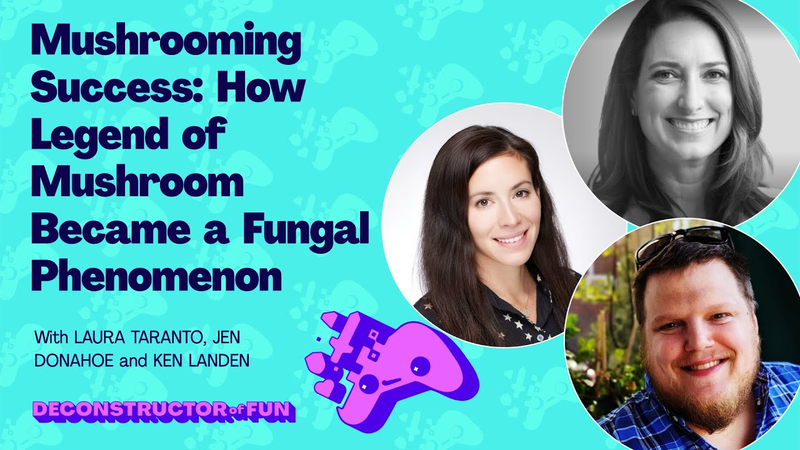
Legend of Mushroom Deconstructed - How it became a fungal phenomenon
Legend of Mushroom represents a significant case study in the idle RPG genre, demonstrating how a complex, interconnected progression system can drive rapid global monetization.
- The core monetization engine relies on a central lamp-pull RNG mechanic that creates a persistent dopamine loop, driving high-value spending through tiered starter packs and battle passes.
- Legend of Mushroom achieved top-grossing status in Japanese and South Korean markets by leveraging an interconnected progression system designed for rapid monetization.
- The game is currently experiencing a decline in daily active users and average revenue per user due to a lack of catch-up mechanics and a competitive environment that favors established spenders.
Music as Gameplay: The 'Lullaby of Life' Journey with Francisco Lara Sikorski | 344
The development of Lullaby of Life serves as a case study for the viability of small, agile teams in the modern gaming landscape.
- Small, agile teams of five to six developers are highly effective for maintaining quality control and communication in the current gaming landscape.
- The industry is shifting toward high-fidelity, cozy, and narrative-driven games that are designed to be accessible across PC, console, and portable hardware like the Steam Deck.
- Music is being elevated from a background element to a core gameplay mechanic, where dynamic systems use sound waves, timing, and note combinations to drive puzzle progression.
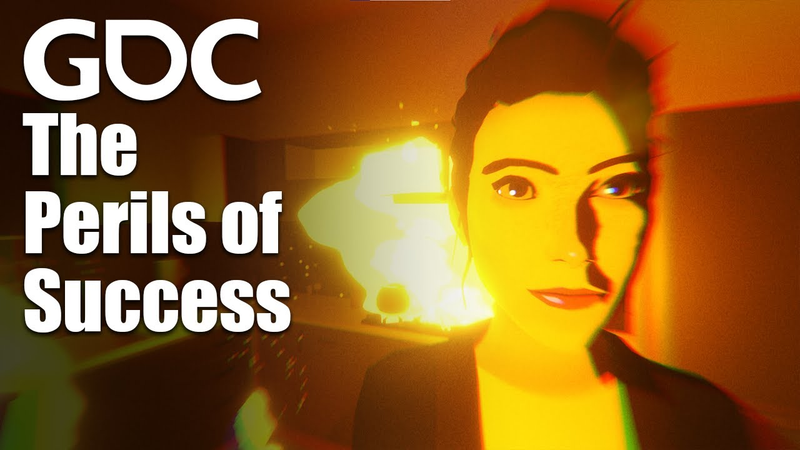
How We Almost Wrecked Our Second Game, 'The Wreck'
The transition from a successful debut title to a sophomore project often triggers a dangerous period of overconfidence, leading studios to expand teams and budgets prematurely.
- The 'second game syndrome' occurs when teams rely on past success to justify over-ambition, leading to a loss of focus and the development of a 'clunky' vertical slice that lacks a cohesive art style or clear gameplay loop.
- Effective feedback must be kind, trust-based, and provided by experienced partners, such as the investment fund Kowloon Nights, who can identify when a project's core identity is failing to translate into a playable experience.
- The 'CRY' methodology (Consider, Refocus, Yield) provides a framework for salvaging a failing project by identifying what works, discarding what doesn't, and pivoting to core strengths rather than forcing experimental mechanics.

Game Narrative Summit: It's Not in the Writer's Manual: A Q&A Session for New Writers
Transitioning into professional game writing requires a fundamental shift from traditional prose to a facilitator-based mindset, where the writer serves as an architect of the player’s experience rather than the sole narrator.
- Game writing requires a shift from traditional prose to a facilitator mindset, where the writer acts as an architect of player experience rather than a sole narrator.
- Narrative must prioritize gameplay mechanics and environmental design as the primary vectors for storytelling, ensuring the script supports rather than dictates player agency.
- Professional writers must master technical narrative management tools such as Twine, Ink, and spreadsheet-based systems to handle complex branching structures.

Stuff They Don't Tell You About Game Development
Game development is a complex, iterative process that often defies conventional industry advice.
- The first 20 minutes of gameplay are the most critical factor for player retention, review scores, and the success of marketing demos or publisher pitches.
- Projects often lack a cohesive identity until the final month of development, as the urgency of a deadline forces the culmination of years of iterative trial and error.
- UI design and cross-platform input optimization represent the most significant technical hurdles for developers, alongside the necessity of light mapping for hardware with limited processing power like the Nintendo Switch.
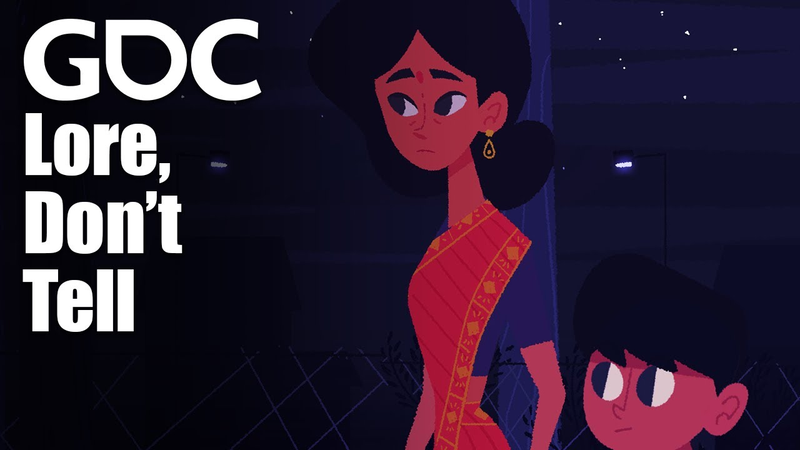
Lore, Don't Tell: A Guide for Telling Culturally Rooted Stories Like 'Venba'
Effective cultural storytelling in video games relies on a "lore, don't tell" philosophy that prioritizes lived-in authenticity over didactic exposition.
- Avoid the 'educational' trap by refusing to explain cultural elements that characters would naturally understand, as forcing characters to explain their own culture creates narrative dissonance and weakens storytelling.
- Lean into the 'Lore, don't tell' approach by presenting cultural details as existing facts rather than exposition, which encourages players to engage with the material organically and conduct their own research.
- Maintain linguistic authenticity by writing dialogue in the native language first and then translating it, rather than writing in English and attempting to simulate a non-native thought process.
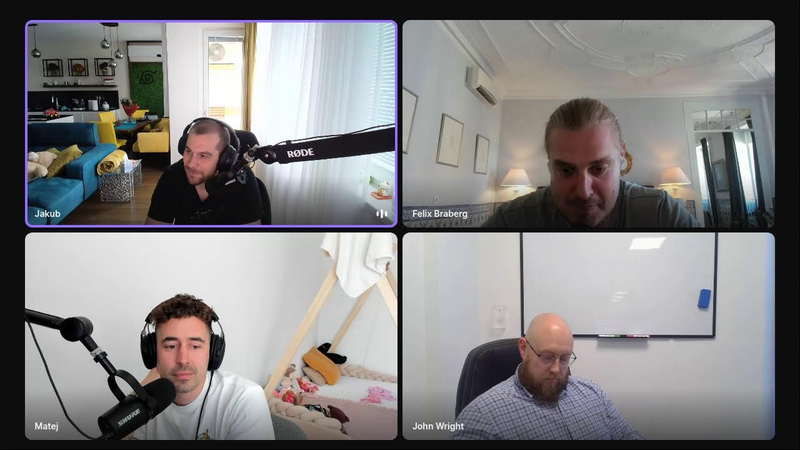
2.5 gamers x Live AM(F)A #2 - Ask Me Anything @ April 23 5 pm CET
The mobile gaming industry is undergoing a structural shift toward long-term sustainability, favoring evergreen genres such as solitaire and merge games over the fleeting trends of traditional hyper-casual titles.
- The mobile gaming market is shifting away from hyper-casual titles toward evergreen genres like solitaire and merge games to ensure long-term sustainability.
- Publishers are gaining market power by providing the essential financial stability, historical modeling tools, and UA infrastructure required to navigate complex, data-intensive user acquisition.
- Developers should adopt a rigorous development cycle where prototypes are abandoned if they fail to meet specific retention or Return on Ad Spend (ROAS) benchmarks within three iterations.
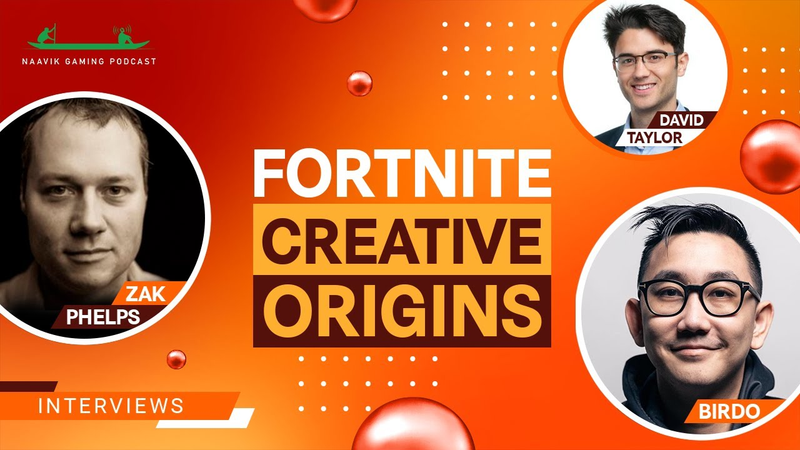
Fortnite Creative Origins
Fortnite Creative has evolved into a dominant user-generated content engine, fundamentally shifting the platform’s engagement model.
- Fortnite Creative now accounts for 35 percent of the platform's total player engagement, marking a fundamental shift toward a user-generated content model.
- Epic Games distributes 320 million dollars annually to a network of over 25,000 creators to incentivize ecosystem growth.
- The transition from a basic playground mode to the Unreal Editor for Fortnite has enabled professional-grade development, though it has also created a steeper learning curve for creators.
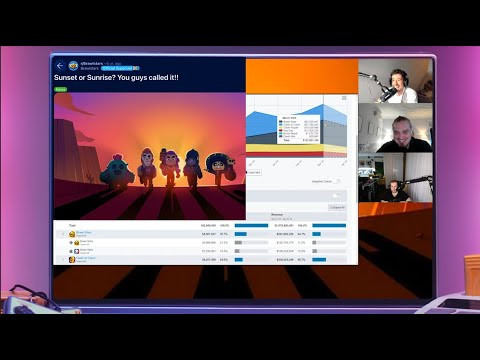
Brawl Stars' UA & Creative Strategies, Game Review Radar vol4, GAM not dead yet? (#106)
Brawl Stars has successfully revitalized its market position, doubling year-over-year monthly revenue seven years after its initial launch.
- Brawl Stars achieved significant growth following its global launch, with US daily downloads increasing from 7,000 to 40,000 and sustained revenue gains driven by a shift toward standardized UA creative strategies.
- Supercell has expanded its UA strategy beyond YouTube, increasingly utilizing 'altered gameplay' creatives—where scenes are constructed from game assets—which now account for approximately 60% of video creative output.
- The Google Ad Manager (GAM) partner ecosystem underwent a major shift around December 20, 2023, as Google restricted video inventory for third-party resellers, forcing companies to adapt their monetization models.
'Stray Gods': The Challenges of Creating an Interactive Musical
Stray Gods represents a pioneering effort in the interactive musical RPG genre, aiming to bridge the gap between traditional narrative-driven roleplaying and dynamic, player-influenced musical performance.
- Creating an interactive musical requires balancing branching narrative choices with traditional song structures, resulting in a production ratio where every five minutes of finished music requires 35 to 40 minutes of recorded material.
- The development of 'Stray Gods' spanned five years and involved nearly 100 recording sessions with actors, totaling six months of studio time to capture the game's five hours of interactive musical numbers.
- To maintain musicality while offering player agency, the developers utilized a 'randomized' choice system for certain segments, concluding that forcing specific narrative paths undermined the structural integrity of the songs.