Age-Friendly Design for the 50-Plus Gamer
17 May 202466 min video
Transcript
All right, GDC. Good morning, everyone. Thanks so much for showing up at 10:00 a.m. on a Friday. Um all right, we'll do the thing. So, um silence your cell phones. No authorized video recordings. I've been told I have to stress that. No authorized visual video recordings. Uh look for evaluation emails, and please submit an evaluation. Please do that. Um and remember to Oh, that's for me. Okay. I'll do that some some other time. Um so, I'm Bob De Schutter, uh and I'm an associate professor at Northeastern University, where I specialize in game design for older gamers. And I'm Laura White. I am a senior director at AARP, in charge of gaming and community. So, Bob, I don't think I've ever asked you, do you consider yourself an older gamer? Well, Laura, that's a great time to ask when we're doing this. So, I guess I am
one of the youngest players that I would have researched myself at some point in my career. I'm in the 40-plus cohort right now, and I've been playing games for as long as I can recall. Great. Well, I am in the 50-plus gamer cohort, and I have been playing games, you know, online and mobile for uh a little bit less than a decade. And today, I head up AARP's gaming and community business. Uh less than a decade, you say? Less than a decade. That makes you a bit of a noob, right? Yeah, but along with millions of other gamers. Um although many 50-plus gamers um are the original gamers, and they certainly contribute to who is playing today, you know, they gave rise to the industry playing Sega and Nintendo and Atari. Well, many others have discovered gaming by playing with their family and with their kids. And also, there are those that came to gaming because they wanted
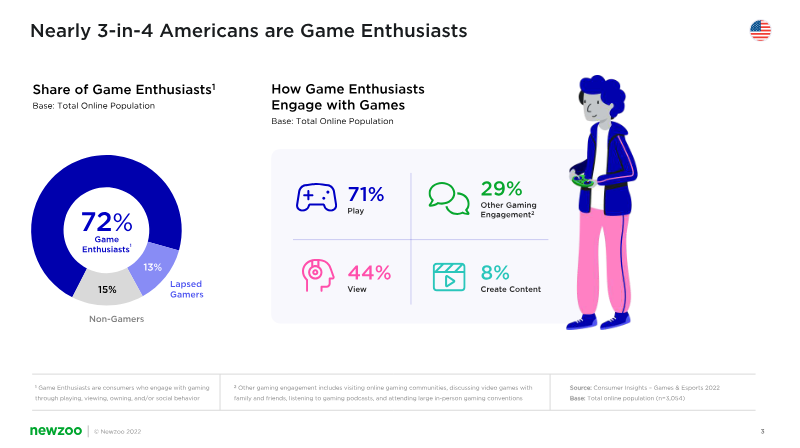
to stay mentally challenged, to relax, and to socialize. In total today, there over 52 million older gamers playing in the United States, according to AARP's and other industry research. But, there's an issue, isn't there, Bob? Yeah, and it's a serious one. Um there's an AARP report that we have the cover on the slide right now. And the research shows us that the 50-plus gamer is underrepresented in video game industry, and older players feel that games aren't really designed with them in mind. But, don't take our word for it. Let's listen to one of the interviewees of the study that AARP has been doing, so you can get the story straight from them. I play games maybe 3 days a week for a little bit of time. Now, I don't spend hours and hours and hours playing. I've been playing ever since I was a kid, but as I kind of got older and became a teenager, I just started growing out of it, and especially when I became an adult, I got all the way out
of it, unlike these kids nowadays. I do not see people in my age range reflected in the video games. I feel like we get left behind, we get left out. The people who design these games believe that their audience is the younger generation, the teenagers, the the younger kids. If they created games that reflected my age group a little more, then yeah, I would definitely play games a lot more. So, key trick here is someone who sees the value of play. This was just a fragment, but in the entire interview, he talks about how he used to play when he was younger, and he feels that it's important right now for his daughter to play as she's growing up. Yet, he feels that his age group is not being catered to by the game industry. And that's a sentiment that, according to AARP research, is likely shared by approximately 36 million other US 50-plus gamers. And that's what we're going to talk about today. Yeah. How to represent the 50-plus gamer in your games and business.
I'm excited, but you know, I've been studying this for two decades now, and that's such a big question. There's so much to do. Where do we even start, Meryl? Well, it's a good thing you brought along a newbie because in my experience, I find it is usually a good idea to look around and see what I can learn from others. Maybe people who haven't had their nose in the academic papers for 20 years. Okay, okay, I hear you. What are you thinking of? Well, first, Bob, what I'm thinking about is, you know who's done this really well? Hollywood. Yeah, you know, in Hollywood today, many megastars are over the age of 50. You know them, right? Julia Roberts, Morgan Freeman, Salma Hayek, Meryl Streep, and so many more. But, it did not always used to be that way. Back in the '90s when AARP saw that its audience loves movies, but that the
industry lacked representation of older actors in the top roles, AARP launched its own program called Movies for Grownups. And it highlighted movies that the 50-plus audience would enjoy. And AARP also created the Movies for Grownups Award Gala to shine the light on the representation issue. Now, 30 years later, the fruits of that labor are in full view with an increasing number of actors and actresses aged over 50 winning top awards. This year alone, 18 out of 35 nominees were over the age of 50. Last year, the two top actors awards were won by a 60 and a 64 year old woman, Michelle Yeoh and Jamie Lee Curtis for the movie Everything Everywhere All at Once. Pretty exciting. Hollywood also embraces having actors
age on camera as they have in real life. Take the Harry Potter saga for example, which might not be a series about a 50 plus year old character, but it works for aging the cast seamlessly throughout the series. And then, there is the aging storyline in Top Gun. Casting the 1986 movie's flying daredevil Maverick played by Tom Cruise as an instructor in the 2022 sequel. Taking the storyline further, the writers acknowledge the deep friend friendship of Maverick's best friend Goose who died in the original movie and they created a rule a role for Goose's son Rooster to come in as a student of Maverick's in the 2022 film. Well, the tension between Maverick's guilt over Goose's death
and Rooster's blame of Maverick teed up the perfect scenario that the movie successfully resolved and soared above. So, incorporating aging worked really well for the plot. And there are many more examples including lots of TV shows and of course every movie that Tom Hanks has been in in the last 10 years. So, this leads to the question, why wouldn't we make sure that aging characters are represented properly? Aging is not what it used to be. It has become truly a number. Just look at the professional sports. You've got key sports folks like Tom Brady, right? Novak Djokovic in tennis, Alex Ovechkin in hockey, LeBron James in basketball. Diana Nyad, right? Featured in in the
film this year for long-distance swimming. Well, they have all defied the boundaries of age and excelled in their respective fields, moving the expectation of what the age limit is for their sport. And with the 50-plus now highly engaged in work and continuing to be physically active, AARP and Getty collaborated on creating a special Disrupt Aging collection of over 1,400 images that more accurately reflect the 50-plus of today. And yet, it continues to be a struggle to have the older audience reflected accurately. Just recently, I asked for an image for a promotion from a graphic artist, and they provided a suggestion of a granny with blue hair. We've got so far to go. Representation is one of the keywords
that makes everything else fall into place. And yeah, if we look at the game industry, and this is a key point of today, we see how aging is represented that there certainly is some work to do. Look at this 117-year-old video game character. Well, Mora Mora, I mean, Link was in a healing chamber for 100 years. I mean, he went in there as a 17-year-old, but you're right. Link in Breath of the Wild is probably the best looking centenarian of all time, and I don't think we'll ever see someone in real life climbing mountains like he does. But Link aside for a moment, if we are looking at how 50-plus characters are usually represented in games, it tends to be very stereotypical. I'm going to oversimplify a little bit here, but there's the cute, chibi, menial task granny that needs your help or will teach you a skill. Sometimes she even follows the grandmother in a fridge stroke and becomes the reason for you to go on a on your hero's journey. Then we have the superpowered action hero granny, shotgun optional,
who can accomplish the most incredible feats of strength and endurance, often to comedic effect. And then finally, there is the terrifying give your old grandmother a kiss body horror granny that represents the fear of the aging body. And while these are not necessarily a problem in certain context and for some purposes, it is a very limited portrayal of aging in games. The Wind Waker, Watch Dogs, and Resident Evil, we all know those are great games, but they do illustrate how restricted the representational potential of an aging character becomes once it adheres to the stereotypes. And that's not great because the research is showing us that 50-plus players do want to see themselves represented in games, just like everybody else. Sometimes that means that they want to play a younger or idealized version of themselves, but a lot of times it also means characters that are accepting of their aging and that go through life transitions. This is why we wanted to start with representation as the first point for the talk today, as it is a core concept
that will have everything else fall into place. So, let's ask ourselves here, how do you represent the 50-plus gamer well in your game? Now, to answer that question, you need to start with a different one. Who is the 50-plus gamer? That 50-plus gamer? I'm glad you asked. Uh AARP has been gathering data on this topic since uh 2015, and we have a lot to share here uh that can really help game developers and the businesses answer the question. There are 52.4 million gamers who are 50-plus in the United States. And when we look at the 50-plus population overall, we see it has an enormous economic power generating nearly $8 trillion of annual economic activity. If a country, the 50-plus population in the US would be the third largest
country after China and after the US as a whole. So, yeah, I mean, this is a market, all right? But, that's today. What happens when we start looking at tomorrow? Now, 8 years ago at GDC, I also had a talk and I made two projections. So, I thought it'd be kind of fun to just bring them back up, see how well that went. Maybe some of you were here back then, as well. The first one, it assumed that people would lose interest in games after they grow older than 50, and it projected an estimate for the 50-plus graphic of 46 million people by 2045. Not very exciting. If you've been paying attention, you know we're already past that. So, the second projection, that one assumed that people who were gaming once would keep gaming as they grow older, and that one led to a total of 105 million people by 2045. Now, that was just conjecture, of course, even if it's based on data from Pew and the United Nations, but AARP Research provided us with three data points starting with 40 million back in 2016
and more recently 52 million in 2022. And if we do a linear trend plot on those, it puts it on this line, which is not too dissimilar from scenario two. Now, sure, this might not end up being a linear trend, but we'll see. It did flat a little bit during COVID, probably an anomaly. In any case, the animations here are to serve a point. This is a growth market, people, and we're expecting it to double in the next 10 to 20 years from now. So, will you be ready for it? Well, that's what we're here for, right? That's right. Get you ready. What does this market looks like? And it's one word, it's heterogeneous. There are many, many different kinds of 50 plus players, right, Mora? You bet. There are a number of different ways of representing the various audience segments and our gamers, including the one that you shared back in 2016, Bob. In 2022, AARP also looked at this area, developed a passion model, which includes the following types. There are five. First, the dabbler.
The dabbler is the least passionate, a casual gamer who plays card and puzzle games, mostly when they're just bored or because they feel, "Well, maybe it's good for my health." The mainstreamer plays similar games, but they bring a mental stimulation and challenge into the mix. Um this is the word game and puzzler and an enormous fan of Wordle. Indulgers see games as a way to relax and reduce their stress levels. Still very casual, but casino and card games enter into the mix, and of course, they also do like word games as part of this group. Which The other piece to this is sometimes they feel a little bit guilty about how much they are playing. Next, the enthusiast are passionate, but also are able to keep the gameplay limited either to the morning or to the
entertainment slot at night. These gamers are unique because of their genre preferences. They like action-adventure, story-heavy games, and they also like playing with family members and people they know. Finally, the immersives. They are, as you might the most engaged audience segment, and the one that enjoys all of the genres of video gaming, including RPG, action, multiplayer games. As you might expect, the more passionate the gamer, the bigger spend. There is also part of the spend issue, which is a function of the genres of games they play. I think you you could see that. Enthusiasts and the immersives uh spend substantially more than the other three categories. In fact, they are responsible for 45%
of the spending, despite only being 26% of the audience. Right. Now, this is all still pretty abstract, I would say. So, before we move on, we want to briefly show you the people behind the stock footage images that you're seeing. Give you an idea of who they really are in person. And actually, before we do that, I'm in the 40 to 50 demographic right now. I'm probably one of the youngest card-carrying members of AARP, thanks to Mora. Um and I would be down here right now. I don't have enough time for games. I'm a professor, but it's something I like to do with my family. I'm passionate about it. Certainly not absorbed by it, although Tabletop Simulator, Dave the Diver, um Phasmophobia, I can kind of get into it. Um but anyways, this does bring up another key point though, because even though I am right there right now, people move around during their lives on the passion model. Um I wasn't there forever. For most of my life, I was up here. How about you, Mora? Right. Well, I'm there in the indulger
group, definitely passionate, and I like to start and end my day with playing games. But before I got into games, um I was here, barely a dabbler. Uh maybe joining friends and college mates in solving the New York Times crossword puzzle. So, yes, people's gaming behavior changes over time, and it might change even more after 50. But, enough about us. Let's look at how others are fitting the model, and maybe starting with Ketrick. Play is a very important part of healthy aging because it keeps you on your toes, it keeps you thinking, it keeps you sharp, and it keeps your mind challenged. And I believe if you're always using your mind, you're thinking, you're solving problems, and it's going to help you live a long life and to go further. I don't really consider myself a gamer. I really don't play a lot of video games, but when I do play the video games, I play because I'm bored or if
I'm sitting in a waiting room, just waiting around to kind of pass the time. I play a couple of video games on my smartphone. I don't consider myself a gamer. I see the video games I play as just ways to relieve stress, occupy myself when maybe I'm watching TV. I guess I see video games as what my grandchildren play. I play video games every day. I play this color game. You get a daily picture and you can color it, and then off and on during the day, usually if I'm watching TV or if we're in the car, I might play solitaire or I might play Wordscapes. I'm looking for games that are fun. I want it to be easy to play. I don't want it to be hard for me just to jump in and start playing. And I want it to be uh challenging. I usually play an hour or so a day, on and off, you know, it's in spurts, you know, I'll feel like I need a break, you know, I need to switch off my work mode and
just let myself be uh entertained. Primarily solitaires of various kinds, either using cards or Majong tiles. They come in different layouts and styles and things like that. There's even 3D versions. And that can be quite challenging. It's something that I can drop into or drop out of without it being a a big deal. I like to play most types of video games. There's puzzle games out there, there's first-person shooters out there, there's two-dimensional scrollers out there, there's fighting games, and I own a few titles in every single one of those categories. I I do consider myself a gamer. I play on Xbox One, and I play on a Wii. My Xbox I've had in different, you know, forms for going on two decades now. And so, you have an account, they give you free games, they they want brand loyalty. There's something to be said for having
to do, you know, solving and just keeping it going, and, you know, keeping those synapses firing, you know, when you're playing, and I think that's important. Do you like to consider myself a gamer? Yes, because I built a computer to play a video game, and that's the only thing that it's for. And gaming is one of the best things that has ever happened in my life, and I don't see myself never not gaming. I play games every single day. There is I I I I cannot I cannot lie. The biggest feature that I love in the game that I currently play is the world building, the characters that you create, the abilities that you get, and, you know, how you can interact in your story. And I think everyone should game. I don't I don't care how old you are. You know, the older the better. Teach those kids a lesson.
All right, so I hope how that is clear how heterogeneous of an audience this really is. Even when we try to put them in these neat little boxes, and the categories make a lot of statistical sense, it's still difficult to pinpoint just one category to a specific person. Humans are complicated, right? And there is obviously overlap between the categories when you talk to people individually, cuz one size doesn't fit all. But there are certainly trends that developers can work with. Let's start by looking at the platform preferences. Mora? That's great. Looking at the orange columns in the chart representing 2022 data, we see that mobile keeps rising. It is dominant with 84% of the 50-plus gamers playing on their smartphone. And that is up 47% since 2016. PC dropped a bit in 2019, but it stabilized in 2022 at 53%.
Console is on the rise, almost doubling since 2016, and it sits at 28%. This is one of those spots where we see the 40 to 50 demographic push the platform. XR is making the other category relevant, but it remains small overall. Handheld is small, but the data really hasn't gotten the Steam Deck influence yet. I will say I hear about adult children getting switches to their parents. When it comes to game genres, recent AARP research shows that the 50-plus still prefers the card, puzzle, word, and trivia games. Part of what we observed as well is that there was a Wordle effect this time around in the research that justified separating out a separate word category
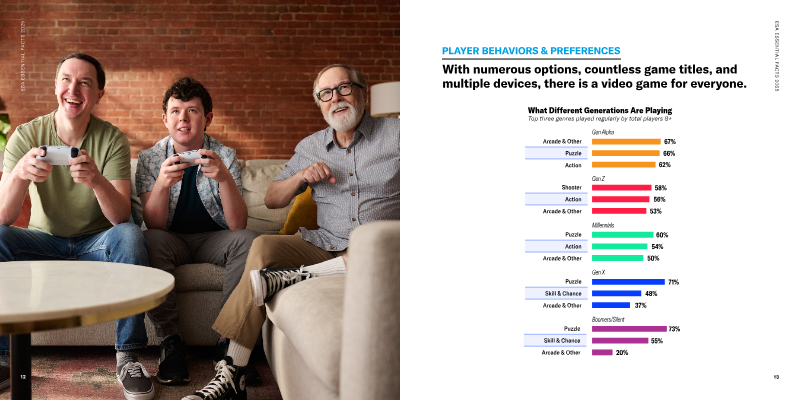
out on its own. Specifically, we saw people who prefer trivia and board games drop a bit from 22% but 36% said word games are their favorite genre, aka the Wordle effect. Okay, okay. Well, this is really great, Mora, but do you remember that Wayne Gretzky quote you taught me about while we were prepping this? Yep. You got to skate to where the puck is going, not where it's been. Yep, that's right. So, let's see where the puck is going. And let's take a look at the 40 to 50 demographic. That will be 50 plus gamers before you know it. First thing there is that, well, we've been talking about puzzle and arcade games, but they're not going to go away cuz everybody loves those and it doesn't really matter how old you are, which also means that that's not really a genre that we associate with older people. It's very stereotypical to do that. Second, here's how the genres change for the 40 to 50 demographic. All the genres that didn't make the cut on the previous slide because they were below 50%, they're gaining popularity
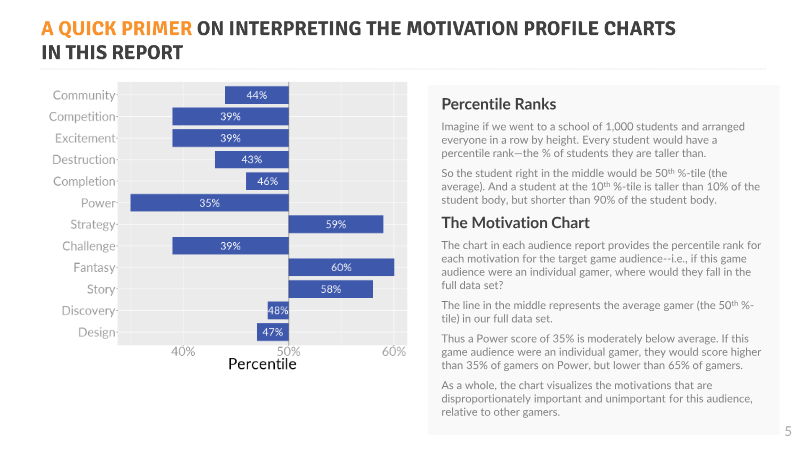
with the 40 to 50 crowd. And sure, they're still in the 10 to 20% range, but that is easily 10 million people that just gets added to the existing 50 plus player base for these genres. These are a lot more people um that you can categorize as immersives and the enthusiasts that we saw in the passion model and it really shows in their genres and in their motivations. Speaking of motivations, we have some data on that as well, right? You sure do. To no one's surprise, the 50 plus demographic likes to have fun. But there are also additional key motivators including to relax, stay mentally sharp, be challenged, and reduce stress. All are part of staying healthy, which is a growing concern as someone ages. I have a hunch you're going to tell me that the puck is heading somewhere else again, right, Bob? Well, I'm glad you asked. First, the 40 to 50's overall ranking is not too dissimilar really.
The motivations are in similar spots. One was even exactly the same. Um but in general, the motivations go up slightly and there are only three that really take a hit. Um staying mentally sharp still a big difference, but it's relevant because it's at 63%. And as I mentioned earlier, health becomes more important as we age. Finally then though, as we mentioned, 40 to 50 has more of the immersives than the enthusiasts and we can see that reflected in the motivations below 50%. Again, because those two player profiles are pushing their weight. First, there are motivations that are clearly immersive and that you would expect from genres like action, adventure, RPG, uh first-person shooter, sports games. Um next, we're seeing social motivations and it's really important here to notice these are social motivations with people that they already know. We'll get back to that later. Finally, we see childhood nostalgia coming through as well. Now, we do want to take this with a bit of grain of salt, right?
Yeah, we certainly do. One thing we know well at AARP is that life does not happen in a straight line. And when it comes to motivations to play games, it's important to note that life changes often affect how much time a person has to play. And one's health becomes a greater part of one's focus, especially brain health. So, although the 40 to 50 today is not so interested in games that are about health, they're likely to follow in the footsteps of their predecessors. However, we expect that they will bring their love of different genre of games to their next phase of life, but just not maybe have as much time to play. They might supplement their game choices with additional types of games to meet their goals. We know who and we know what we are
trying to represent, but what does that look like in practice? Let's tie this together, Bob, into the age-friendly game design, which brings us back to the key topic of this talk. Um and to start, Bob is going to bust three myths that he has heard a lot. Yeah, so there are three things that I wanted to bring out before we get into the specifics. Um and I'm hoping I'm preaching to the choir to the choir here. Um but if I'm not, here goes. So, first up, don't dumb down your games when you're designing for this demographic. The 50-plus gamer wants to be challenged. 74% had it as their top motivation. So, it's not about making your game necessarily easier or slower. That's just a stereotype. Second, age-friendly game design does not necessarily have to be expensive. It only becomes expensive if you're going to have to do it after the fact. So, plan for it from the very beginning, you should be fine. Third, age-friendly game design should not per definition mean that you're
making a game that is no longer appealing to a younger audience. Back when I was a kid in Belgium, all the board games were labeled from 7 to 77 years of age because great games tend to be fun for all ages. The goal of age-friendly game design is simply to make good games. Or actually, no, no, no, let's scratch that. The goal of age-friendly game design, just like every other game, should be meaningful play. And I I do mean this in relation to the incredible work by Katie Salen and Eric Zimmerman who defined meaningful play as the outcome of successful game design. But I also see this in the context of the 50-plus demographic with games being meaningful in relation to a long-lived life and a plethora of experiences. Which brings me to another quote of that book that illustrates how play is shaped by the outside world. It's a reflection of who we are, which extends to the meaningfulness of play as it has different shapes and forms throughout the different stages of our lives. And I'd argue that when play is meaningful, good things tend to happen for you.
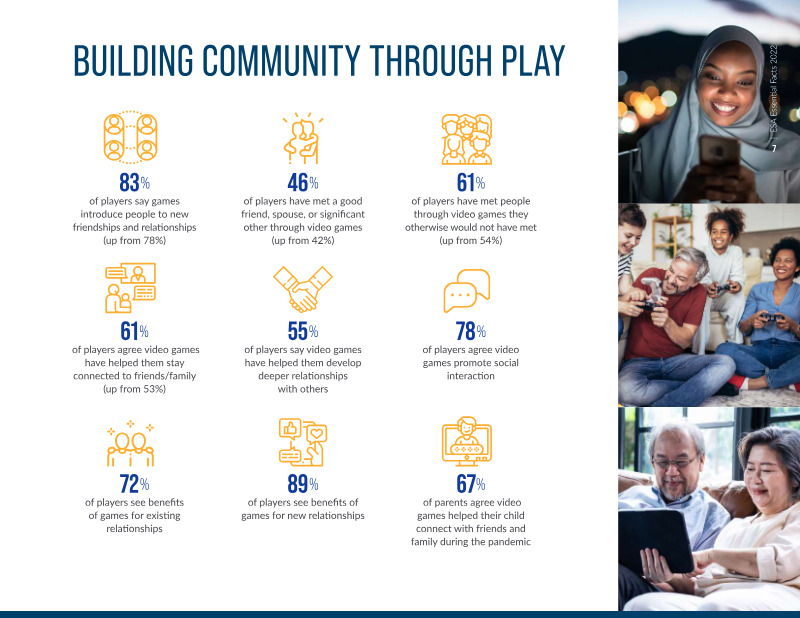
It'll It grounds us. It It connects us to the world. It helps us to grow as people. And that goes well beyond whether or not playing games results in a higher test score on a standardized cognitive test. So, that is what meaningful play has meant for me over the last two decades, and that is why Mara as a director of AARP Games and myself as a game designer and researcher found some common ground. Absolutely. Uh the benefits of meaningful play are significant, and AARP has a lot to thank Bob for to helping us understand how to put video game play into context. Um through a lot of research with 50-plus gamers on our own, with the Entertainment Software Association, of course Northeastern University, and other organizations, it's clear that video game play is meaningful play as it provides relaxation, stress reduction, creativity,
social connection, and mental stimulation. These are all part of longevity. So, as such, AARP recognizes video game play and all meaningful play as part of healthy aging. And the key to achieving uh meaningful play starts with listening to your your players. So, you nothing in place right now uh to support the 50-plus demographic? Here is the simplest tip ever. Go get 10 people, right, in the 50-plus cohort and have them play your game. Sit back, relax, enjoy, observe what they are experiencing. Where are they running into snags? What are their comments? When do they really like something? 10 people, that's all. And that will reveal opportunities and challenges that
perhaps you have not yet considered. And all it takes is a few people to play your game. Isn't that what you referred to as player-centered design, Bob? Yeah, pretty much. Of course, there's so many different approaches to player-centered design. We're at GDC here, after all, but I agree that involving your player is a starting point here um for age-friendly game design. And it is all about doing this throughout your entire development process, from the earliest concepts through maintenance. Bringing 50-plus gamers and 50-plus non-gamers, involve them, and listen to them. The slide just gives you an overview of how I've been doing this in my lab over the years, but there's so many other ways to do this, and every studio is unique. But thankfully, AARP has now an age-friendly game development brochure that you can get with the QR code on the slide, as they have obviously been working in this space for quite a while. Speaking of which, Mora, do you have some war stories for us? Yes, we survived, but we have lots of war stories. Just a couple to share here today. Uh we've all had our mishaps with design
oversights. At AARP, uh we have over 2 million players uh each month, by the way, on our games. Um and so, we're no exception to making mistakes. Uh when we were implementing theater mode to enable the full-screen gameplay, the QA forgot to test with zoom. And that's a popular setting with the 50-plus gamers. Our players were complaining that the game area had shrunk, which was exactly opposite of what we were trying to accomplish. As we looked into it, we that for those who used Zoom at 150% or more, the game shrunk while the ads increased. Luckily, we were able to fix it. Secondly, another story, um and this pertains to the platform on which we host our casual games. The new wrapper we implemented did not
work on laptops very well because our mega menu was encroaching heavily on the game board. In this case, the players were complaining that they were being taken off of the game, and it turned out they were right. The mega menu was so close to the game board that accidentally the users were activating a navigation link and were taken off the page. So, of course, the takeaway, make sure to test across all devices. One of the areas also that we make a point of testing for is audio quality. This is important because adults one well, one in three adults over 65 has hearing loss. It can happen gradually and people are not often aware of it. But, most often it affects the ability to hear high-pitched sounds such as phones
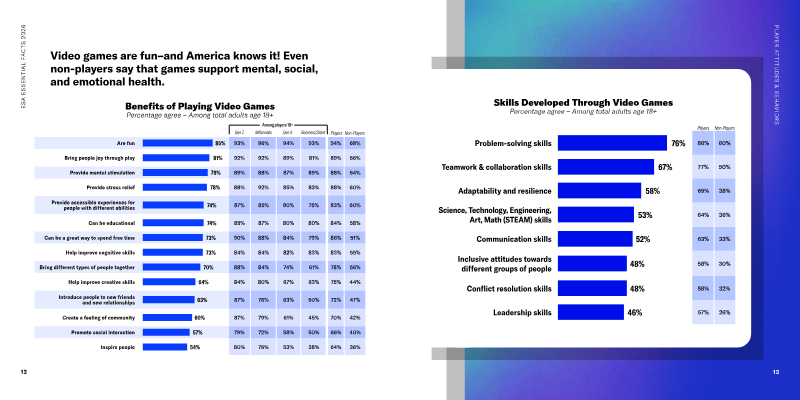
ringing or even women's voices. So, it's important to test for high-pitched voices if you have any characters with those and to test for audio distortion at the highest volumes. Yeah, and I mean, those examples are all about accessibility, I would say. And they illustrate the importance of accessibility, which ARP understood and it inspired them to do a consumer study that is on its way to publication right now. So, this kind of a a a premiere of the trailer, if you will. Um and since the main author of that study couldn't be here today, I'm going to run you through some of the key insights as a premiere. So, key findings, um two in three people experience age-related health decline. 74% feel that we need more inclusive or customizable features in game for them to enjoy them. And only 46% have actually noticed that games tend to come with cognitive or physical accessibility features when playing them. So, how did we get there? Well, it it
follows the principles that we have been highlighting so far as it started with AARP listening to their players. They asked them, "What barriers do you face when you're playing games and how can the game industry help you to overcome them?" And they got so many unique responses. These are just a handful of them. I'll show you a bigger list later. But what I think is really interesting to note here is that they're all kind of the responses that you would expect. That what that was what AARP was asking about is accessibility barriers and accommodations. Things such as customizable controls, a way to remove distractions, adjust the pace, change the font size, even things like memory aids were mentioned. But AARP also learned from doing this that there are other barriers to this particular audience. Some people mentioned that they wanted time management features. "Can I please have a way to keep track of time so that I can get to bed on time?" Uh I think we've all been there, right? Like I should probably not play too long at night or I'll get in trouble the next day, that kind of thing. Um but this comes from my own research. I also learned that a lot of 50-plus year old
players worry about addiction because that comes in the media a lot. And this kind of feature feels like a bit of a safety net in relation to excessive play. Next, many people really if this was Family Feud, this was the top answer. They took the term barrier very literally and they voiced that they want games that do not have advertisements or paywalls to unlock content. That's also very well known in the literature. This is an audience that's not a big fan of modern monetization. I mean, can you blame him? I Back in the days when I was a kid, if I wanted to play a Spider-Man in Tony Hawk Pro Skater, I used my cheat code, not my credit card. So, I digress. The key point here is that while this study was meant for accessibility purposes, we're going to interpret that term a little bit broadly as we want to give our participants like Keitrick the voice that they truly deserve today, even if we're not going to get too much more into monetization right now cuz that's not what this talk is about. So, what did we learn when we zoomed out a bit and we looked at the barriers? Well,
there's a lot of depth on this in the upcoming report that you can download then, but these were the results for the question when playing video games, which of the barriers have you personally experienced? The slide shows us the findings from AARP and I divided these up in what I would refer to as cognitive, audio-visual, and input barriers, which is more common for the industry, I feel. The bigger picture here shows that half of the participants reported at least one barrier. But when zooming in, the numbers are a little bit lower than what I was expecting, but keep in mind the vast majority of this sample are people that are playing casual games on mobile, which reduces the accessibility a little bit, I would say, because you don't necessarily have 3D navigation or spatial audio and things like that. I'll get into that stuff in a second, but before I do that, I also want to contextualize the results for the color blind mode first because only 1% mentions color blind mode. That might look low, but that's a common mistake I see when I talk to this about people. 1% for such a big demographic is still more than half a million people in
the US alone that are struggling with that. And this is obviously a feature that you want to see bigger than just a 50-plus demographic. There are 10 million color blind gamers in the US alone, so having that implemented is still a must despite the percentage being on the lower side. Looking at the next graph then, here we're surveying the features that people absolutely needed in order to enjoy a game. Participants are clear here. The numbers are way higher. Accessibility accommodations, they're essential to your game for them to enjoy it. However, it gets even more interesting if we go back to that hockey puck metaphor because there is a strong connection between genre and accessibility. A game with less complexity has a less big need for the accommodations. So, if we're looking at the 40 to 49 demographic where we have more of the enthusiasts and the immersives, all of these numbers go up. Um in fact, we even see some new ones uh emerging that weren't breaking the 60% mark on on on the previous graphic, but I do have to pace myself a little bit here because this is getting quite an
extensive list again. And earlier I was saying, "Age-friendly design doesn't have to be super expensive." So, how do you how do you manage this when you're on a budget? Well, obviously, let's make this really really clear. All accessibility features are equally important. I cannot stress that enough. But, if you have to make a choice here, according to the 50-plus gamers in the study, this is how they would recommend that you prioritize and allow them to customize these features in your game. The top requests are adjusting different audio levels, better on-boardings, things like tutorials, the ability to remove distracting effects, uh difficulty adjustments, and customizable font sizes. Now, I'm not going to call them all out, but for the second category though, I do want to point out that the sensitivity of the mouse and the controller would likely be replaced by having customizable controls and key bindings when you're considering the 40 to 50 demographic again. Anyways, as I mentioned earlier, try to move beyond just this list as accessibility features are equally important, but this gives you a starting
point if you're working on a budget and you have to make really tough choices. Now, moving away from the latest AARP research, I want to bring up a design point that my own lab is currently working on and that emphasizes a different side to age-friendly game design. While it's important to reduce barriers, it is essential for any age-tech related project to design towards the strengths of the target demographic, not just the weaknesses. And I feel it's often times missed in relation to this group. So, think about what you heard in this talk. Ask yourself, what do you think is a game that does this really, really well? Are there games that gamers get better at as they age? Well, we often hear 50+ gamers say like, "I'm not that interested in FPS anymore because they're I'm not as fast as I used to be." So, what can I what what can we do about that? If you've ever heard me talk before, that brings me to crystallized and fluid intelligence. When people think about games, they're usually thinking about games that are designed around the skills that peak in their 20s.
Current of psychologists call those things fluid intelligence. That's like your reaction speed, memory, perception, and so on. And yeah, younger generations are better at those. That's why e-sports top players are typically older teenagers. However, there is another kind of intelligence called crystallized intelligence, and this encompasses everything that requires experience. Vocabulary, knowledge, anything that you accumulate throughout your life will peak at a later point in your life. So, what do crystallized intelligence-based games really look like? I think more has some great examples from AARP games. Yeah, AARP has developed games for the 50+ incorporating their motivations. First, Right Again Trivia is a game that is tied to relevant topics for this audience, including sports, which did so well that we actually created a second version called Right Again Trivia Sports. Secondly, Throwback Thursday capitalizes
on the popularity of crossword puzzles and nostalgia. And it is a puzzle that relies on one's own crystallized intelligence. Listening to music is important for brain health. And that is one thing that AARP is is very involved with. Um our third example here is AARP's Song Theme, which helps players listen to music uh with its song matching activity and through peer recommendations. Song Theme also taps into one's own personal music library that they have accumulated over their life. Now, these games specifically cater to this audience, but Bob, you've got some examples, right? Yeah, yeah, I I do. Um I'm obviously want to represent the 40 to 50 demographic maybe, but like here's a game um that I really like that does this well. It's called Synonymy. It involves Richard Dawkins and it's a game where you have a starting word and an end word and you have to get from one to the next
by picking synonyms. It's it's super clever and it's entirely based on crystallized intelligence because it's all about past knowledge. This is my favorite example, honestly. It's called The Secret World. It's an MMORPG with your typical quests except many of the quests involve puzzles that require prior knowledge and experience. For instance, in this screenshot, players are asked to decode incoming data, hack it, and I'm sure many of the developers in this room will have no issue figuring that one out. The game even offers its own fake version of the internet for younger players who look things up. So, many of these puzzles are second nature if if you're a 50-plus gamer. But that's just one strength. Um I have other strengths as well. What about uh 50-plus players being better at introspection and meaning uh and reminiscing, sorry. There are many meaningful um and meditative games on the market. Some that are exactly what you would expect, but others have a very different feel to them. For instance, SoundSelf creates psychedelic imagery using your own voice. This game's called Brukel. It's an indie game that I designed with my 92-year-old grandmother and it's a game in which she
reminisces about her World War II memories. You hear her do the voiceover and it's all in the uh the participant's own voice. So, listen to your audience, right? Next, we have for 50-plus players uh being associated with higher emotional maturity or altruism. And games can do this really, really well. For altruism, just look at how citizen science games do it. For instance, Foldit is a puzzle game that has led to numerous crowdsourced scientific breakthroughs, and it has a number of uh a higher number of 50-plus gamers uh or that's what the developers have told me. For emotional maturity, there are so many beautiful thought-provoking games that deal with extremely meaningful and personal themes. I I just put The Last uh The Last of Us II on the slide as it's very relatable for non-game developers due due to the TV show. But at GDC, I'm sure I'm I'm preaching to the choir here. We all know many games that allow for complicated moral choices and that have incredibly well-written narratives. Finally, the research shows that 50-plus adults are also more selective in their social connections. There are many
options here, but what about It Takes Two, a game about parents that are trying to make their failing relationship work for their daughter? Or Bound Them, a mobile game in which you and another person use your smartphone to dance? And that brings us to the benefits of intergenerational play, of course, which is a great starting point for age-friendly game design. Yeah, our gamers don't play multiplayer games as much as the younger audiences. However, it is a growing trend, one one definitely to to watch. And as Bob pointed out, a key strength of this audience is that when they trust, they trust deeply. So, it's no surprise that when they do like to play with others, 25% play with grandchildren and children. The other categories are around 15% around 15%. So, intergenerational play with children and grandchildren is your goal as a designer.
And that brings us to one final note. You know the saying, "Look at yourself first, Bob." Yeah. Uh yeah, well, this is what the US uh workforce currently looks like. The three segments representing 25- to 54-year-olds are the largest contributors. But this is what the game industry looks like. The video game industry over indexes in a large way for the 25- to 44-year-olds, and it lacks representation in the 50-plus segments. We could use some more representation through the video game companies. If the 50-plus gamer is going to be able to see that games are designed with them in mind, the industry needs to include this age group in their organizations.
So, this brings us to uh one of our final slides. Uh we hope that these research findings um and direction have been helpful, and that you have a stronger sense of just how to make your games age-friendly for the 50-plus. However, if you would like more assistance, AARP and Northeastern are going to be holding a free workshop on May 15th, and Bob is going to help direct uh to provide feedback to you directly on your own games. Space is limited, so please make sure to sign up by sending me an email at [email protected]. Yep, and that brings us to our wrap-up slide. So, this is of course just a starting point, and some of these items will need to be revisited as new generations grow into the 50-plus demographic. But we hope you will take these to heart, and that is going to be
the end of our presentation. Um but, I do think I'm forgetting something that Marsha's going to like, so let's put that up there. Ah, thank you so much. All right. And uh this is the end, so we can't thank you enough for getting up early and joining us this Friday. Um and uh before I move on, I do want to give a shout-out to my colleague, Dr. Britney Kukulka, who is the author of the amazing ARP accessibility research that Bob summarized uh for us today. Unfortunately, she wasn't able to attend. Yeah, and uh aside from my colleagues at Northeastern, I also want to recognize support of the Department of Emerging Technology and Design and Business and the College of Education, Health, and Society of Miami University of Ohio. But, that that's where a significant amount of my insights came from. And with that, we're building some time for Q&A, so do you have any questions FOR US?
HI. YEAH, SO OKAY. UM THANK YOU FOR the talk. Um super insightful, so incredibly dense with really useful information. Um I had one question uh related to genres, specifically because we saw that breakdown of popular genres among the 50-plus crowd, uh 40-to-49 crowd, and uh one re- very recently emerged genre that I think uh just kind of crystallized into its own thing, and own space, has been cozy games, specifically um like Stardew Valley, all that kind of games, and I'm currently working on the very early stages of a project to potentially make a cozy game for for targeted towards this crowd. So, I am I'm wondering if you have any personal insights or experience looking into that, or if there's any research in into cozy games specifically. There is gender Yeah, sure. No, actually yeah, this is kind of funny cuz I wanted to mention cozy games in the
talk cuz there was a good talk in the GDC earlier and I I kind of forgot to do it. So like yes, I think that makes a lot of sense. One of the things that we've kind of seen this this is my research from from a while back but like I've interviewed a bunch of people that were talking about toxicity online on the one hand but also how do I find the right playing partner? And I think cozy games in itself because as the motivation show us like relaxation and you know stress reduction are are really big motivators. I think it's like a perfect fit but since you know it's it's a little bit up and coming as well. So the you know, we'll see probably in a year or so what the new data tells us. Mhm. I I think generally the genre is one that would be of interest you know to this audience. Right now it's in the nascent stage so it doesn't have you know the easy discoverability for the audience but this is part of what I'm looking to do, right? To be involved in the industry and to bring forward you know great
gaming opportunities. So make sure you send me a note. Okay, thank you. Thanks so much. Thank you. Hi, thank you so much. This was such a cool dynamic that you guys had and a great presentation. My question kind of has a little bit of context. I tried to play Baldur's Gate 3 with my mom on the PS5 and it was really fun for a little bit until she said, "I'm not a gamer. I you know, I'm going to give you the controller. You play." And that was just really frustrating for me cuz I wanted to share this experience with my mom. So my question is do you see research on like age friendly games for like women? Like is there like a gender difference in the research that you'll found? And how can we bring women to recognize like they can be gamers too throughout their lives. All right. Well, there would be cross tabs available on the the recent research. It is truly hot off the press. Um so, that's something that Bob, Britney, and I will look into and it's a
great question. Um something something to to look at. I think across all of the different segments, right? Um it's one that that folks in general are interested in. So, thank you for raising it. I don't have any answer for you right now. Um but Well, I think I can add something then. Okay. Um you know, we've seen in the research like uh in the 50-plus demographic there are more female players, so that's one thing. But on the other hand, um like when I first started doing this, I noticed that for a lot of um older players, like we saw vicarious play is what we call it. So, it's a very common phenomena where we do that. So, I think one of the ways to to to do it is I'd like to see developers to um include more modes that really bring down the required input level. Um and I think the example I usually give about that, I think uh is is Mario uh Sunshine Galaxy like I'm getting confused for a second. But like you go the one on the Nintendo Wii and like you could give a Wii mode to like a kid or
you know, your your grandmother who has never played on the Wii mode and all they have to do is just point and pick up the coins. And that can kind of, you know, segue in because now of a sudden you're getting used to a Wii mode and you take it from there and you move along. Like at one point, um I was actually teaching um older people that never used a computer before. And like the first thing I did was like, "Okay, well, let's go play Tetris. I'll teach you how to use a keyboard. Let's go play Solitaire. I'll teach you how to use a mouse." So, I think that would be my advice to to move forward. But I think this is definitely something that the industry could start building in more and more. So, thanks so much for the question. you. Thank you. Hi there. Um my name is Kat Rose. Um I'm 70 years old. I'm right in your demographic. I'm a big gamer. I have been all my life. Um during the pandemic, my son bought me a Switch and Animal Crossing. And I was stuck I live in a little island. I was stuck with no one around and I got back into gaming cuz I had it been years since I had done it, you know, since early on. But I just want to say one thing. The thing that really helps me cuz I have all the platforms, all the consoles. I mean, I I love exper- you know, dipping
into all these different games, not necessarily playing them the whole way to the end, but seeing what they're like. But there's a barrier because some of them are they're the fighting they're just too intense. So story mode is my friend. Being able to go into Baldur's Gate or, you know, and and just play at a simpler level. I don't want to win. I don't want to kill everybody. I just want to be in the world and walk around and stuff, you know? So I love those kind of games. The other thing I want to say is that I'm a big quest. I do Supernatural VR exercise every day. I've lost 80 lb. I'm I'm fit. It's like it's changed my life to have it and so many seniors are doing that Supernatural because it you can do it standing up in your bedroom, you know? So I just want to thank you for even considering us older people and as I talk to my cohort of older women, a lot of them think games are evil. Like they are destroying America. They are just like
kids these days all they do is look at their screens, you know? And so I just I try to encourage my older friends to just come and just see what it's like that it's not big evil, you know, blood and gore all the time that they're really fun games to play. It's just I appreciate that and I think hopefully as was evident, there's so many different types of players, right? And luckily the industry is way ahead of, you know, this this cohort catching on to it. But there's different ways and it's almost as if, you know, you can take that passion model and exactly to what you were saying, kind of start at the dabbler mode and and move your way up and you will find the the level, right? Um I will say that it was a stretch for AARP, right? To understand, you know, just how important gaming is. And but AARP research, you know, since it had been following it since '15, you know, the
numbers started to to add up. And luckily, you know, the the whole task of assigning the team, you know, to go uh work on this was endorsed. Um and we have a long way to go. I do appreciate AARP with on the Quest, the Thrive Pavilion. There's a place that we can get seniors go I go I go one a couple times a week I go and meet up with other seniors all around the country and we do different things. Have trivia night, do you know, go bowling, all kinds of things. Just go do escape rooms. And so it's really it's That's great. I love it. I love it. Thank you so much. I'll I'll I'll quickly respond cuz like um you know, we did the AARP game summit the inaugural one um this year. And like Wanda cuz the first uh question was about wow, this is a really dense uh presentation. There's so much stuff we couldn't talk about but your point about the power fantasies and the communication, it's so relevant. We did didn't really make the cut for this presentation cuz we only have so much time. But like if you look at all the
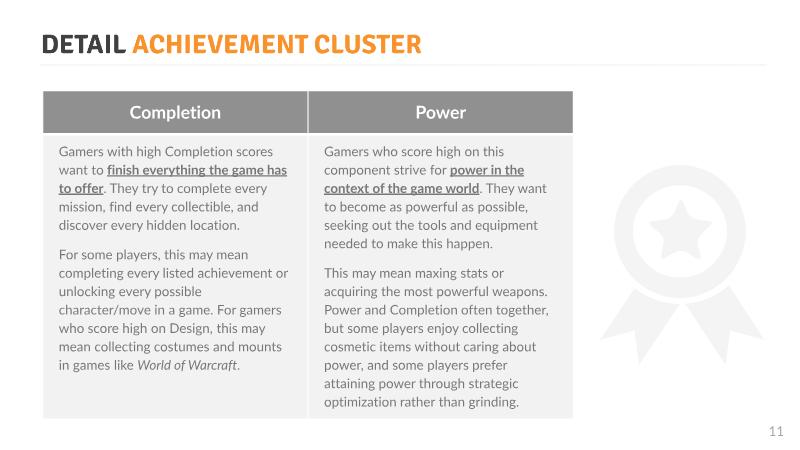
most popular games out there right now like I I literally just went down the charts. They're all power fantasies. And power fantasies, if you have a very rich filled life and you've had so many experiences, you know, you've been at the top of your career, like it's not as appealing anymore as much um but the game mechanics still are. So that is also something as developers that we can make a really big difference I think to getting more people to get into games as we grow older. Anyways, your question, please. Hi, thank you so much for your incredible talk. Um something I've like, I care a lot about um like 50 plus gaming is um games are one of the one of the best ways I can connect with my parents nowadays, but something I've noticed is like a lot of the games that you know too difficult or they just can't scale with the difficulty compared to like me. Like for example, like there's some like platforming games where it's like they just can't keep up because I've been playing games for like a decade now but all platformers and this is the first platformer they've ever played. But some games that I've actually noticed that like they keep going back to is um there's this game called Ultimate Chicken Horse. It's this more
smaller game but the general idea is like it's a competitive game where you have to go from one side to the other through platforming. But the thing I noticed there is that you can scale the difficulty per player. Which might So my even though I may be clearing the stages a lot faster or um a lot more consistently than my parents, they're still able to keep up because the scales of difficulty is It's not so much difficulty scale, it's a score scale. So they're able to keep up score-wise or games like Jackbox where there's no internal um skill that you can get from the playing other games. These are just more knowledge These are more knowledge-based games. I would like your thoughts on how difficulty may difficulty in games may affect um two very different ages or two different experience levels playing with each other. You know, I think um Csikszentmihalyi when when he talks about the idea of flow, I think many game designers are aware of that concept. You you want a difficulty level that is optimized to your player. Um so I think with that in mind it's you know, we don't necessarily need to bring
the challenge down, but we just want to make sure that people are able to play it at their own level. And I think that's really where it starts. Um just like the examples that you were giving like I've I've played games like FIFA uh football you know, this football cuz I'm European but soccer in the US. Um I played that with my mom and I just put it on the mode where you only need to use two buttons and she has a blast. So um I think that's kind of where it comes down to. You just want to give people options and and customizable features to the extent that you are able to do so. Mhm. And we're sensitive to that sometimes difficulty levels aren't enough because really highly skilled players can come in and crash it and you know, take away the the joy for the player. So I um in our conversations Bob has told me that there are games that actually, you know, use ratings of players to pair up, you know, the players. And I think that's important. Outside of gaming, I'm a tennis player. And I play at a certain
level and my league play is playing against others that are generally in the same level. So you end up having a whole lot more fun. I think this is something else that needs a a broader extension, you know, within the gaming community. All right. Thank you. Thank you. Thank you. I'm going to check quickly cuz I see it's 11:00. Do we need to or should we go to the wrap-up room? Oh, okay. Cool. Let's have some questions then. Awesome. Uh thanks for the talk. It was amazing. Um you were mentioning earlier in the talk about representation for older gamers. And you mentioned like kind of like some bad stereotype, but I was wondering if you can think of good examples that resonate well with that age group with like characters that are maybe more fleshed out and not just like kind of a very shallow stereotype. Yeah, I know. That's a great question. Um I'm so tempted to just Marcus Yeah, we were going to put Marcus Fenix in there but I'm like
You know, I mean you could say like yeah, Geralt from The Witcher but like it you know, it goes into that stereotype again. But like um I mean it's easy for me to just use it as a way to just plug my game obviously with my grandmother cuz like it's it's a game in her voice. Um you know, uh like I think there's lots of games in the indie scene that that that have done this really well. like on the spot like I'm like oh gosh um um ha But yeah, I'm I'm just kind of blanking on it right now. But like Yep. Yeah, I know but um there are games in the in these space that have been doing this really well but um I'd have to look into my notes and that kind of tells you enough I think as well cuz like it's not just like oh yeah from my top of my head of a whole bunch of them. But it's um like you know, we can discuss this further in the wrap-up if you like and uh my mind can refresh a little bit. Okay. Thanks. Thanks so much though. Thank you very much for the talk and bringing attention to this topic. My question is for games that allow personalized play styles, do you have
any insights on how to bridge those play styles in a cooperative setting? So for like a younger more reactionary play style bridging it together with a more older thoughtful play style. Oh yeah, yeah. Um like back in 2008 we were making a game where um that was for Nintendo Wii and um the idea was we wanted intergenerational knowledge transfer. So we we we we basically did something similar to like the bus trivia games that you would have but we really dressed it up as a uh the TV show and we put a whole bunch of Nintendo Wii challenges in there. So at that point you get something where older players can really show off their knowledge and for the younger kids there's all these like you know, kind of like how in in certain game shows there are like these physical tests that you have to do as well and you combine them up and you have everybody play to their strengths. So that's the way that I've I've I've been able to do that. Um like I said, I really like um you know, offering different levels of difficulty and input
so that everybody can play to their own skills. Um but yeah, like there's also I think something that you know, as as we're we're seeing more and more games go over 50 I I'm I'm kind of waiting for games that are approaching this really cleverly cuz right now I think it's not something that a lot of people have been thinking about, so I kind of hope that this talk makes a little bit of a change there. Thank you very much. Thank you. One more. Okay. Awesome. All right. Thank you so much. we'll go across the hallway to the wrap-up room. Yeah. Jan, thank you so much. Actually, on an indie team that's working on a low-input, story-driven game, and we didn't even think, quite frankly, of the idea of like making this game potentially for the for this, you know, group of people. So it's really amazing that like, you know, maybe there's something that we didn't even know, you know what I mean? So thank you very much for for that. But my question was actually more so for Maura, but you moved in a very interesting way from like dabbler to indulger, right? Which Yeah, I would love to hear a little bit more about
that because sort of conventionally I would imagine as time goes on people move sort of down that train, but like or down that spectrum. But like for you, what was like the inciting incident or game or like what really brought you up the up the train? question. Sure. Well, I I think my son had a lot to do with it. Um So he's 33, loves gaming. We were strict not to let him play except on the weekends to make sure the homework got done and all of that. Now he Now he plays all the time and he's my consultant, too, besides Bob. Uh and, you know, so I think a lot of a lot of us parents, we we want to relate, you know, to our kids. And so I would play with him. I'm terrible with a controller. Absolutely terrible, even though I play piano and you know, other things. And uh so I was looking at at other opportunities. And like I said, I kind of do crossword puzzles before. So
I I started getting into the simple puzzles, the matching games. And like we know, you get good games, it's addicting. I mean, it really is fun. And then I would feel like my head hurting, which I actually thought was a good thing, right? And um I I knew intuitively, like our audience does, that this is good for you, right? And we've had so many conversations on on that. Um but yeah, so I just wanted to keep growing. And then when I took over games, I just delved into the industry and have kept up with this as much as I can, and every time I hear Bob talk, I'm like, "Ah, I got a long way to go." But uh uh yeah, that's that's been my journey. Well, thank you so much. Really appreciate it. Thank you. All right. All right, thank you everyone. So, we'll be in the wrap-up down uh across the hall if you want to continue the conversation. Okay.
Auto-generated captions from YouTube — names and numbers may be misheard.
Key insights
Distilling the key insights…
Ask AI about this video
Cite this video
Citation
Generating citation…















Comments