Game Design reports and market data
Documents
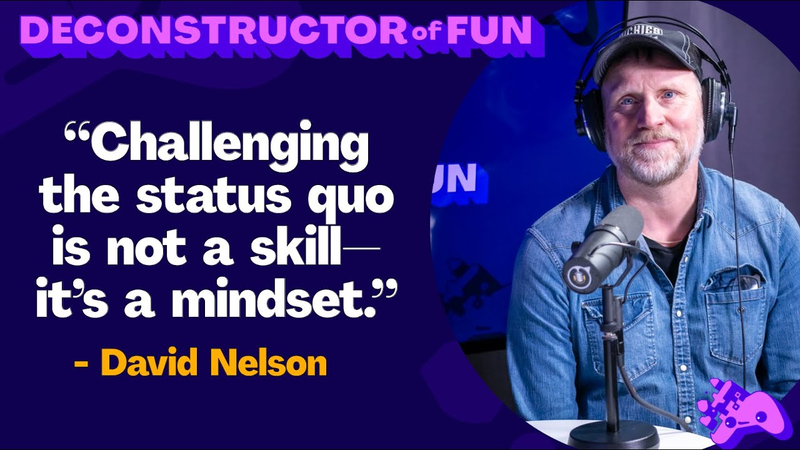
David Nelson: The Maverick’s Guide for Thriving in BIG Organizations**
Navigating large-scale mobile gaming organizations requires a departure from passive, incremental management toward a culture of constructive conflict and high-stakes experimentation.
- Large-scale mobile gaming organizations must shift from incremental A/B testing toward high-stakes experimentation that challenges fundamental product mechanics to drive long-term retention.
- The 'fail-fast' methodology often produces derivative products; developers should instead prioritize 'succeeding fast' by leveraging deep genre expertise and intuitive market insight.
- Data-driven optimization is a necessary tool for efficiency, but it cannot replace the creative vision and gut-level understanding of player motivations required to build enduring titles.

2.5 gamers x Live AM(F)A #7 - Ask Me Anything @ December 19 5:30pm CET
The mobile gaming industry is currently undergoing a structural shift, moving away from traditional store-dependent growth toward web-based platforms and Telegram mini-apps.
- The casual merge game market is currently dominated by Microfun and Moon Active, who have successfully scaled by maintaining high production quality and utilizing intrusive ad strategies that prioritize long-term retention over short-term revenue.
- For soft launches, the United States remains the primary testing ground; if a game fails to perform in the U.S. market, it is unlikely to succeed elsewhere.
- Consent Management Platform (CMP) implementation is critical for compliance, with paid solutions typically achieving 93–95% opt-in rates compared to 80–87% for free Google-based alternatives.
How To Make Indie Games In 2025 w/ Edmund McMillen — Full Time Game Dev Podcast Ep. 029
The independent game development landscape in 2025 demands a departure from trend-chasing in favor of radical creative autonomy and the cultivation of a distinct, uncompromising artistic voice.
- Success in the 2025 market requires prioritizing a distinct, uncompromising artistic voice over trend-chasing to differentiate projects in a saturated industry.
- Developers should adopt an organic, discovery-based development process that favors iterative idea-volleying over rigid design documents or speculative high-budget models.
- Financial constraints should be leveraged as catalysts for innovation rather than viewed as hindrances, as the industry shifts away from bloated, speculative investment models.

Lessons In Writing and Directing for Video Game IP
Effective transmedia storytelling in the gaming industry requires a fundamental shift in perspective, moving away from the passive consumption of film toward an active, participatory experience.
- Integrate narrative development directly into core production teams to ensure story beats align with gameplay mechanics, which prevents players from filtering out narrative elements during active play.
- Utilize a 'sledgehammer-to-paintbrush' methodology that treats iterative playtesting as the definitive final rewrite to ensure the story remains functional and essential to the player experience.
- Implement evergreen narrative frameworks, such as the geopolitical lore used in Battlefield 2042, to ground map design and provide long-term value in live-service titles.

TWIG #312 THE GREATEST WEEK IN F2P. EVER? EVER!
The gaming industry is currently navigating a period of intense volatility defined by a surge in high-profile free-to-play releases alongside a contraction in studio stability.
- Steam reached a record 39.2 million concurrent users, a milestone driven primarily by growth in the Chinese market.
- Developers are increasingly adopting a dual-skew strategy, launching high-fidelity titles like Marvel Rivals, Delta Force, and Infinity Nikki simultaneously across mobile, PC, and console.
- Traditional pre-launch metrics such as wishlists are becoming unreliable indicators of success, as many new releases experience rapid post-launch retention decay.

Royal Kingdom Game Review: The Art of Level Design in Puzzle Games Genre
Dream Games has solidified its dominance in the mobile puzzle market through the strategic launch of Royal Kingdom, a sequel designed to complement the revenue-generating success of Royal Match.
- Royal Match has become the world's largest puzzle game, generating approximately $4.5 million in daily revenue.
- Dream Games maintains a long-term monetization strategy for its titles, often requiring a two-year payback period to justify high user acquisition spending.
- Royal Kingdom integrates its marketing creative directly into the gameplay experience through special, high-reward levels that feature the 'Save the King' mechanics popularized by its predecessor.
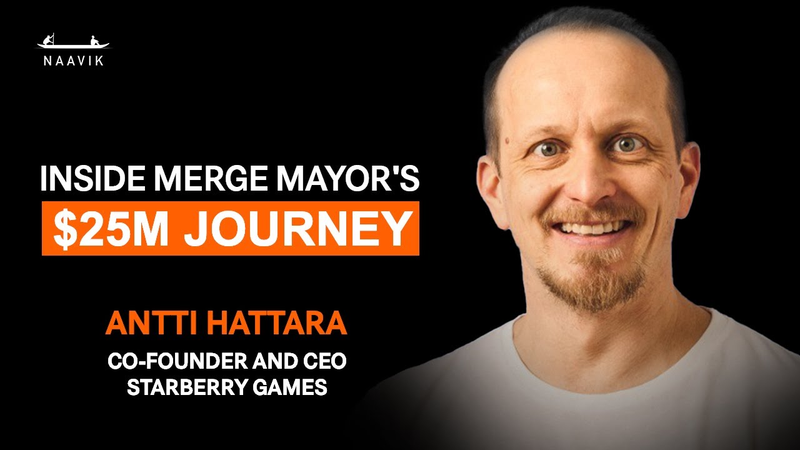
Mastering Merge: How StarBerry Built a Merge-2 Hit
StarBerry Games has successfully navigated the highly competitive Merge-2 mobile gaming market by pivoting from idle titles to a community-centric development model.
- StarBerry Games generated over $25 million in lifetime revenue from Merge Mayor by utilizing a lean team of only 22 employees.
- The studio prioritizes long-term retention by integrating social connectivity directly into the gameplay loop rather than relying on high-budget user acquisition.
- A 50,000-member Discord community serves as a primary source for qualitative insights, which the studio balances against quantitative data to refine live-ops and seasonal content.
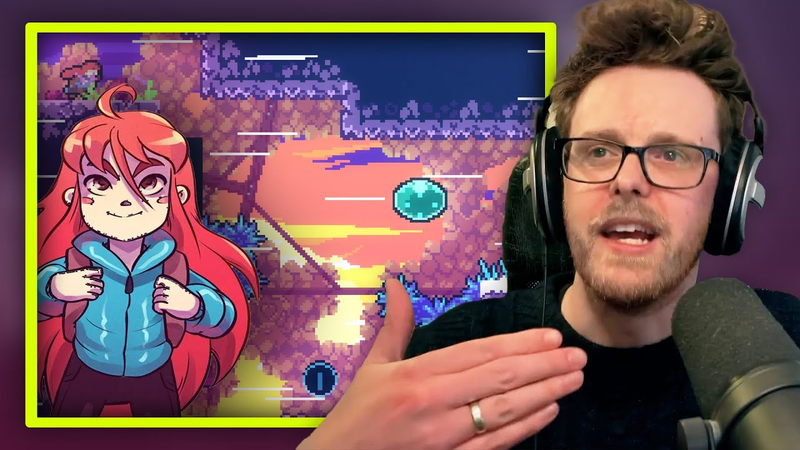
Why Some Games Just FEEL Good For Some Reason — Mark Brown @GMTK
Game feel, often referred to as game juice, serves as a foundational element in game development that dictates how responsive, satisfying, and immersive a player’s interaction with a title is.
- Game feel is a multi-sensory experience that requires the integration of responsive movement, sound design, particle effects, and animation to create a cohesive, living environment.
- Developers should dedicate significant time to tuning core mechanics, such as jump height and gravity, in a simple prototype environment before building out complex levels.
- Sound design is a critical component of game feel that should be implemented early in development, as even simple effects provide essential feedback that informs the player's experience.

Let's Review Your Games — Ep. 001
The indie game development landscape relies heavily on the balance between innovative core mechanics and accessible visual presentation.
- Indie game success depends on the synergy between innovative core mechanics and high-quality aesthetic execution, as visual polish is a primary driver of long-term player satisfaction.
- Unique gameplay hooks, such as Morse code interactions or physics-based movement seen in titles like SOS: Forgotten Planet and Chickens Don't Fly, are frequently undermined by poor environmental design and inadequate visual clarity.
- Developers must prioritize visual storytelling and intuitive onboarding to ensure players can navigate systems during unguided play sessions.

Why Do Unreal Games All Look This Way — PontyPants
The discussion centers on the growing trend of asset-flipping in the indie game industry and the resulting homogenization of visual aesthetics, particularly among games developed in Unreal Engine.
- Creating custom assets instead of using store-bought ones ensures visual cohesion and prevents the 'generic' look often associated with Unreal Engine 5 titles.
- Relying on third-party assets carries legal risks, as demonstrated by the removal of the game 'Only Up' from Steam due to copyright issues regarding asset ownership.
- Players possess a subconscious ability to distinguish between 'asset-flipped' games and those with custom, intentional design, which can negatively impact the perceived quality of a title.

Indie breakout: Stirling Rank's Rise with Ready or Not
The tactical shooter Ready or Not serves as a case study in independent game development, demonstrating how a commitment to core gameplay loops and a distinct creative vision can overcome the limitations of a small, inexperienced team.
- Void Interactive successfully launched Ready or Not into early access after five years of development by prioritizing a clear vision and community engagement over traditional crowdfunding.
- The studio utilized a supporter program and a high-quality gameplay trailer to generate initial capital and traction, with the supporter edition accounting for a significant portion of early revenue despite representing a smaller percentage of total unit sales.
- Scaling the team proved challenging; the company grew from three founders to 15 employees before compressing back down to five, highlighting the difficulty of managing rapid expansion without structured roles.
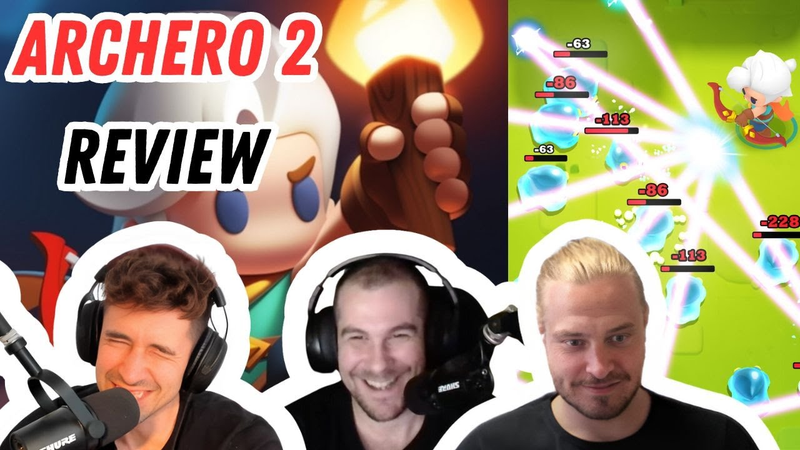
Archero 2 Review: The Evolution of gaming & Habby template perfection
Archero 2 represents the latest iteration of Habby’s highly successful game design framework, effectively refining the mechanics that defined its predecessor and other hits like Survivor.io.
- Archero 2 features a more complex and fleshed-out core gameplay loop compared to its predecessor, incorporating expanded progression layers like a 10-slot rune system that allows players to modify skill abilities.
- The game is currently following an Asian-centric soft launch strategy, with significant traction in markets like South Korea, China, and Taiwan, generating approximately 100,000 downloads per day.
- Unlike the original Archero, which relied heavily on ad revenue, Archero 2 has significantly reduced ad placements, limiting users to roughly four rewarded ad opportunities per 24-hour cycle.