Transcript
We talk about the industry and how things are getting so expensive to make. I think there's a real need to get down to reasonable high quality content. I do think the PS5 between the Dual Sense and the SSD really brought something special. We talk about creators of games, but we don't really talk about the people behind the the hardware, but to me those guys are really amazing. Hello and welcome to the game business show. One of the big topics we've been discussing here at the game business has been the role of the video game console in 2025. And one developer that has spent this generation building games purpose-built for consoles, specifically the PS5, is Team Aobe. That's the developer behind 2020's Astro Playroom and 2024's game of the year, Astrobot. Now, Team Aobe has also become a bit of an example in the industry. The studio is comparatively small, only around 65 people. And that team put together Astrobot in just 3 years. And if you played it, you know it stands up. there with some of the best games this industry has to offer. So to talk about all those things, I'm delighted to invite team studio director Nicholas Ducet onto the show. Hello Nicholas,
welcome.
Hi Chris, so happy, so delighted to be with you today. Thank you for the invitation.
No, thank you for coming. Every time I've seen you, I think over the past 12 months, it's usually been at some award ceremony and your arms are full of trophies. So must have been a bit of a whirlwind. Yeah, it's been it's been an incredible story. But yeah, it's true that we we we met we had a chat at the game awards afterwards. I remember having
work with you
and we met at the bas.
Yeah, we did. We did. Well, I interviewed you before that. I think I interviewed you actually when um team sort of opened its office offices and that's right.
I remember us talking about Banjo Kazouie in the game awards.
Yes.
It's not just been you not just been going around the world winning awards, you've been keeping the game updated with new levels and all sorts. Was that always part of the plan?
Yeah, it was it came it came to be a part of the plan near maybe near the the final year and a half or so when we knew we had some content that wasn't going to make it into the main game because maybe um it was like a repeat or maybe like some bits where kind of we we knew we
wanted to we didn't have time to really polish them yet. So we we finalized our first scope and then we thought okay this kind of extra content available and we wanted to make something out of it. And there's one thing to say. It's also like it's easier to make challenge levels because it's easier to make hard stuff in general. Usually, you know, you usually, you know, the challenge levels in Astro are quite um, you know, difficult and, you know, it's very much, you know, great content for the gamers, but it's actually a lot harder to make something that is really playable and enjoyable by everyone from say five all the way to, you know, 75. So these challenge levels, it was very useful to kind of keep a bag of them and, you know, polish them really quickly to be able to kind of distribute them and also see what people liked and kind of respond quickly to kind of find a good fit. Yeah.
Yeah. I'm not done the challenge levels yet. I mean, I do enjoy really tough platforming to a degree. I mean, I guess it's the more hardcore players that are still playing it for years and years after the release.
Yes. And you know, this fact is also
like the online needle board. That means that you know the people who really like shave like milliseconds can keep playing and it's quite fun to watch people play. They're better than us.
Did you expect people to keep playing it for so long after release? Was that did you imagine it?
No. I mean, you know, we didn't imagine to be honest. A lot of it, you know, when when you're building the game, you're just focused on them doing the, you know, the best possible. You're looking at problems all day long to to fix to make it the most best possible thing. It's like there's no real time to kind of imagine what it would be like afterwards, especially a year later, you know. Hm. Well, I guess the industry wants to know. You delivered this game of the year, highly polished. It's AAA with a relatively small team in just three years. So, everyone wants to know how you did that. What was what was the secret?
Yes.
It's interesting actually, you know, you use the word AAA. It's really interesting because ourselves, we don't really use, you know, we know what it means, but I mean, it's interesting that some people it's all about team size and game size and, you know, budget size.
But, thank you very much for the, you know, the nice comments. nothing.
There was a talk at GD GDC this year.
Mhm. And at the end of it, there was a little bit of time to reflect on and I think it came down to the sum of lots of small things carefully created. At no point we ever imagined that, you know, we would end up with with a game that could stand in the spotlight like it did. But we did put care every every day or every couple of weeks. We have these kind of two weeks, you know, sessions where we create something and then we review it together. and we've been careful to just review and to jump onto things that weren't right
just because we care. We want the user and the player to be to be really enjoying themselves. So I think it's that kind of continuation of like carefully fixing middle things that in the end becomes you know the the sum of these things the total of it ends up being you know something of you know good quality but it's not like was plum as one big thing. It's just like you know the sle of flossy little things are coming together and and the effort of every member in the team because you
know programmers have different kind of problems to solve than artists than audio people than the people doing you know the engine people doing the game design so I think it's the the care of every single person kind of coming together and it just makes me feel like you know in the end by just trusting the process we get to the end in a in a logical way.
Yeah. Does that make sense?
Yeah it does make sense. I guess I guess the question you must have to prioritize though cuz you're working with some constraints. You don't have 500 people able just to keep throw throwing ideas at things. How do you prioritize? Is there a process there or is it just happens naturally?
Yeah. Yeah. Yeah. So there is first of all is the there is a priority put on um the game quality rather than the size of it. So the scope is of course that you know there is a minimum scope that you need to have in order to to to have a full game but um it was never an obsession that we should have you know x amount of hours you know or being worried that you know of that comparison and especially I think it's a normal bias to have as as humans and as
creators that you know sometimes we feel like you know more is better and I think you see a lot of that in society where well look at this game collection
for example it's like more you know you want we want to amass. But actually the first thing that was really important to set for the philosophy of the team is that we should not spread thin and start doing lots of things that we can't do well. So we should do less but of a higher quality. So that's the first priority that we set. And another priority is that in order to do a lot of fresh innovative content we have to be able to prototype really really fast with a minimum amount of dependency over each other in the early phase. And that's why we have this prototyping process where one person owns a piece of content and develops it to quite a long length before we bring other members of the team to embellish it.
And these people are the gameplay programmers, the one that really get this first thing on the screen that you can get your hands on and play. And if
you can give control to one single person over the feeling even to some extent the look and feel of one piece and get that really right later once you you bring you know an art team such as you know like you know modelers and animators and FX people and audio people you are working over a very strong base and it's it's much more likely that you're going to go in a straight line and not having to do big reworks that are very costly.
Yeah. All right.
One of the reasons why a small team can then end up doing like that much content, I think.
Well, the question I often ask is somebody says, "I've got a new game. I'm not wondering how much it is. I'm asking how long is it?" And then they go, "It's 100 hours." Well, I've got the money, but I don't have 100 hours.
Yeah. Yeah. Yeah.
I've got to the point in my life where actually I'd like less.
You're right. Different people at different points in their life might have more or less time. You know, we use the analogy of food. for example, like um when you're really hungry, if I propose to you to go to a buffet, we can you can eat anything you like and that's kind of quite appealing, but as you're
kind of getting through that that meal and maybe by the end of it, you you've eaten too much and you sort of almost regret and you don't really necessarily appreciate what's left and maybe you keep a lukewarm memory about it because it was almost too much.
Yeah. Whereas if we go to a place where it's going to be just enough or even even not quite enough to to be completely full but enough to feel good, you're going to keep a good memory and maybe you would want more of it, right? And I think the way we kind of try and think of it is to not overload people, overload the player so that in the end they sort of feel like, you know, fed up. And I think it's true of the full size of a game, but it's also true of each play session. You know, there are moments where you play a game sometimes and it's been so taxing on you that continuing the next time is going to take some extra effort.
Yeah. And for us to be able to just give you just the right amount of satisfaction without the pressure to to continue next time and to feel like
actually every time is as rewarding as the the last and the next in a different way is a very very important kind of part of the tempo in order to get to the end of the game. Because that's also what we were really aiming for is that of there was some additional content that was really for hardcore gamers, but we really wanted everybody even with fairly basic skills to be able to get to the end of the adventure and that should be a a metrics that we use for success. I think people finish the games. You know what the new Zelda game t the kingdom is one that came out. I really really love that game. But I also I found it very difficult sometimes to want to play it. And I think it was because the previous play session was always quite
overwhelming or um or taxing. It's an interesting I hadn't thought of it like that before, but you might. I think you're right. We you've learned that from one of the previous game on VR. Near the end, near the three quarters of the game, we had this really long level that was like in fire. It was quite stressful because it was long, it was difficult. It was also like just like
tense, right? And we realize a lot of people dropped at that point which is shame because they were actually had done all the hard work and they were almost at the end of the game when there's a lot of rewarding stuff coming.
But that can be in itself can be something that puts you off.
Yeah.
I think it's the same thing with the analogies like of food. It's that if you you have that bad experience where you feel really stuff you might be put off of certain type of food and it's a shame because it's not
Yeah. that food is just happens to be like an overload.
Yeah. So I think it's it's our responsibility as as creators but also in professionals. You know we talk about the industry and oh things are getting so expensive to make. I think there's a real need to get down to reasonable high quality content.
Wow. I I'll I'll wanted to talk about consoles and specifically obviously the PlayStation 5. But actually before we get to that cuz you've been working on PlayStation consoles for years. You're at London Studio at some point where you so what can I just get a bit of background? What was your sort of earliest experiences working on on PlayStation hardware?
PlayStation. My very first experience
that was in UK that was in um in Vanbury at the place called Silicon Dreams.
Oh, really?
Maybe you know there was a company that was created from US Gold.
Yeah. Yeah. Yeah. I do. Yeah.
Yeah. When they switched over to to and at that time I was I was in England learning English actually working a cafe and I had this amazing opportunity. It was the beginning of internet like in um schools and stuff like that. And I had the opportunity to send a motivation letter online to work as a translator tester translator
for Idos.
Oh, really?
In Yeah. In Wimbledon if
Yeah. Yeah. That's right.
And they were the publisher of this game, this football game, UFA Champions League 1998 n working with Silicon. So they sent me up there with some other testers and we we stayed there for you know months you know finishing the game and I remember like uh starting the day on a it's almost like on a Friday I was working in a cafe over a phone call I got a job and
then the next Monday I was in Banbury that's it testing video games and I remember seeing a PlayStation on my desk and thinking this is so real I am being paid to to do something that I love which is you know playing video games. you started in because my first job in the games industry I worked for a um localization company called University Speaking and I was testing for them and my first job was testing PlayStation games.
Oh really?
It was a PS3 slightly slightly a little bit later but it was um I I worked on the first Uncharted Ratchet and Clank Tools of Destruction.
Okay.
Uh Warhawk um a g a snake game called Snake Ball. Um that was all the stuff that I was I was I was only for about six months before I I got the job in the games mediate but yeah. So, and so you was it the original PlayStation you were working on? It must have been.
Yeah. Yeah. Yeah. So, it was a blue blue PlayStation, you know, one of those um test PlayStations
and we would put like, you know, freshly um burnt discs, you know, close the lid. So, I would work on on PC to do translations. These
translations would kind of make it make their way into the game. The game would get burned and then I get version, I get them the game, set it to French and check all my working game. That's the only way to do. There was no direct link between a PC and a console. You had to get it done, get it burnt on a disc, test it on the console, and if you've made a mistake, start the new program again.
Yeah. Quite expensive.
Yes.
Wow. Wow. I guess at that stage you were quite new to the industry, but you you saw these hardware leaps over time, right? It was um because then PlayStation 2, weren't you working on it toy and stuff and sort of really experimental hardware?
Yeah, I was in the PlayStation then. I was at Lego. Uh so when I was I was a Lego I was able to kind of get my hands also on you know other other systems you know because we were a multi multiplatform publisher and then the PS2 so the PS1 actually oh because you asked me like professionally that was my first experience my my first experience personally was when I was in France I was 16.
All right.
And I think we we worked in the summer in the fields with my brother to buy a PlayStation one from Japan.
Oh wow. So it came out in December 94 and we we got it I think in April or May 95. Uh and it was just Ridge one memory card and we played it you know 6 months like you know I knew that game by heart inside out and it was it was amazing right it was like amazing memories
and then shortly after you taken Ace Combat and then the European launch happened and that's when you had Wipeout that's when you had destruction derby it's almost exactly 30 years since that launch.
Yeah. Yeah. Yeah. That's exactly that. Which is why, you know, working on um Astrobot and and Astros Play Astro, it was really like um there's a lot of emotions to put in and a lot of respect for all of these games that that that made the history of PlayStation. And then the PS2, I was at Lego at the time. Um and I also imported one from Japan, I remember, with the Ridge Racer 5. Uh Rich Five. Yes, it was Rich Racer 5. Um and
uh it's amazing. They made four races in a space of one generation. It's like, you know, you could tell like, you know, back in those days, you know, a game every year, right?
Um, and that was, yeah, that was an amazing leap already because I think a lot of the problems of 3D were worked out in the early phase of PlayStation, you know, cameras and things like that. And I think PS2 was also a moment where there was really like a a really a consolidation of these rules. I remember playing um Devil May Cry and feeling like okay, Devil May Cry is perfectly is like it's like that perfection of 2D gameplay in sense of like you know you don't have to fight the camera or fight the tech.
However, the game is in 3D but you had you know pre-rendered background and stuff like that. So these kind of games became like hingy I think between full 3D and kind of a little bit of leftover from you know the previous generations
but adapting the new codes. Uh these are
great memories. Yeah. So seeing all these leaps, you know, from, you know, PS2, PS3, you know, PS4 and uh getting involved into these kind of pre-installed titles from PS4, that was really special.
We've had we've had comments even on the show, seen them online, that this generation of hardware, the PS4 generation, the Xbox generation, whatever, isn't noticeably different from the previous generation. And but through Astro's Playroom and Astrobot, your games have sort of become a showcase for actually what the PS5 hardware can do. It's showing off that this is that this is this is a step up. But I'm interested from a developer point of view, what do you think makes the PS5 a distinct machine from what's come before? though it's it's interesting because you could argue that when you put you know graphics side by side between you know like end of life cycle PS4 game and early cycle PS5 game you could argue you know they're all HD graphics you know with more power perhaps it is the trend eye you know is required to see the difference but as we work through um the
dual sense controller early on we got prototypes you know team so they were like really big and like you know with loads of cables and stuff and when this idea of haptic feedback and adaptive trigger was put on the table by mechanical engineers usually they're the ones to bring these ideas to the table and they tell us okay that's that's what we're thinking well what can you do something with it then it comes to us and then we we make demos we try to to understand what could be different about having this kind of trigger with a resistant pos you could you could simulate you know pulling something you could simulate maybe cracking something you could simulate like crushing or even like you know guns would be you know more realistic I suppose
or acceler rating in cars, you know, you could get some pressure like, you know, when you when you your brake and your excel could feel different. So, all of these things we we test them in a very primitive manner using some demos and that goes back to them so they understand, okay, if you that's what you're trying to do. Maybe we need the hardware to react a bit more like this, bit more like that. So, or game play
engineers and the hardware engineers start exchanging about, you know, they try to synchronize basically to give the best the optimal result. Um and at the same time um you know these demos also get shown around the world. So when you've gone through all of that um you get to appreciate maybe the there are some leaps but they they are kind of like maybe less obvious than they were when you went from uh HD graphics to HD graphics because these these are things that you can just stare at the screen for a few seconds and understand. with the controller, you have to get in your hands and really understand, you know, and and get a feel for it. And that's when, you know, like sampling and really getting people to try the game,
controller in hand becomes, you know, an important part. But I do think the PS5 between the dual sense and the SSD uh really brought something special because the SSD was up until now, you know, there were some games like, you know, sometimes I'm thinking about the Souls game, you know, you die a lot and when
you died, you had to really wait a long time before you get a second try and with the SSD like you know this kind of loop became really really fast. So in terms of the
yeah just just the pleasure of play I think really really increased. So between the controller and the speed of access I think just these two things you know became a a a big changer and that's what we tried to illustrate in Astros playroom and in both Astro what I find is if you go back you notice the differences more than
yes necessarily when you go forward because it is you know you're right that speed you take for granted now and you go back and you know even I play on in fact I play on Nintendo Switch 2 and there's Donkey Kong Ban is a great example which I think is a wonderful game but um whenever I have to load that game I'm Oh, I don't I don't have to do this with I don't have to do this with Astrobot.
Yeah, there there's a funny like what what you explaining there. I found the same with for me like sports game over the years.
I used to play you know winning 11 Pro evolution soccer for example these kind of games
and every time there's a new version the
version was a true step up but somehow there is something you feel like a little bit uncomfortable you feel like it's unnecessary and then you get used to it.
Yeah. and then by accident you go back to the previous version and you realize how stiff it was.
But it's it's it's actually very often when you look back that you notice, you know, that that you know after a certain time of getting used to it.
Um I think it's probably like a human kind of
yeah again another cognitive bias of some some sort. But I think we maybe we expect so many things
that we feel like they're not quite you know meeting our expectations but afterwards we realize actually they did.
Yeah. just defend.
Well, cuz your team Asob is like right next to the platform team, right? Aren't your offices near each other?
And and it sounds to me like as well as you being able to get in and play with all their new toys, you
do you help shape the technology as well? What you were saying suggested that's what you're doing.
Yeah. Yeah, that's exactly that. So they they they bring really early prototypes to sometimes those prototypes have you
know features functions that they're not sure about but you know maybe someone in one studio maybe thought it'd be nice to try. So in order to to to to keep all the you know doors open they they quickly like mock up a a version of it and then that comes to us um then we make those demos you know sometime it takes a week two weeks and then uh and then we invite them. So, you know, we we pretty much speak with them every week and uh and honestly, these hardware engineers, I think they they we don't, you know, we talk about creators of games, but we don't really talk about the people behind the the hardware. But to me, those guys are really amazing because when they decide to put haptic feedback or they decide to put the adaptive triggers on the table, they're not too sure what the application is going to be, but they have a hunch
that it's going to lead somewhere. and we are just grabbing those opportunities and running with them. And of course, there's a lot of work in there. But the people who put that on the table in the first place, to me, they have a bit of a
six sense. They're pioneers, you know, because they they they have a sense that something might work. And that's probably informed by many years of expertise, right? They have at their end and the fact they come out of sometimes very different fields where they've researched technology over the years. Maybe something they knew about 10 years ago wasn't quite ready, but now it is mature. So it can be miniaturaturized. Look at this. There's probably loads of reasons um you know lots of things going on in their heads but we we we very grateful because I think their creativity becomes a spark and then we can run with that. We can let that fire to Yeah.
Do you often get anything where they created something and you're like it's cool but I have no idea what we can what we going to do with this.
So ideas usually we can have but sometimes there are things that are really unusual. There used to be like in some past generation there was some kind of like devices that were just harder to use you know trying to be sometimes like you know when you try to innovate
you complicate things for the sake of it I think that's valid in many many different various fields sometimes like simple things are the best and you just like you know there's no point to add you know extra layers but there's also you know we were talking about that bias earlier that you know more is better and I think that's also true of sometime um engineering where we think that if we add more features it's going to get better but then the usability and the accessibility drops.
So sometimes you know we've had discussions like that and
I am interesting. I went to E3 many years ago and I went to I think it was a I think it was like Turtle Beach and I went to their booth and they they showed me this big screen up their booth and it was it was Avengers on the screen and I was like and and they said can you hear it and I went of course not this E3 it's it's noisy is you know he goes stand on this spot and I stood on this spot and I was hearing surround sound Avengers I couldn't hear the rest of E3 all I could hear was Avengers no headphones on nothing that's what I thought I thought wow my mind was blown this was like 10
years ago. Nothing has happened since. And I had to caught up with someone who built Turtle Beach two years ago and said, "So why did that not come out?" One,
it's really expensive. Two, headphones exist,
right?
Because like it was solving a problem that wasn't
that wasn't really a problem.
Yeah,
that's right. So even if you clear the cost, you know what? How many how many movies do you watch in a very very noisy space anyway? Right.
It It's interesting.
It blew my mind, but it was solving a problem that didn't people didn't have cuz they all could just put these on.
Yeah. Yeah. Yeah. And sometimes yeah there are such things like that and that's why research is is really interesting and I understand the people who are into R&D just for the researched because it is the thrill of just getting solving something really complicated.
Yeah.
Um and then it's our job to actually make that you know useful
for the player.
Yeah.
And it's the combination of both that becomes like you know something like digital. Well, what do you think of the role then of first party teams like yours to play in, you know, what role do you think you have in in playing to uh
I'll again what role do you think first party teams like yours should play in showcasing what the new hardware should do? Is that is that what is that the expectation that's on you and your and your and your sister GS?
I mean we we certainly like take it at heart that um um you know we want PlayStation to stand out. We want it to be um you know different you know to have a differentiator and to have like very much that sort of you know there's a word in in Japanese called condo which is really like you know um making you know like people emotional and you know
and that's very much in the DNA of uh of Sony as a whole right over the you know the many many years and so when whenever we make a game of course we make people feel lots of emotion through the game itself but if there can be some you know like mechanical innovations or sometimes software innovations as well that are really unique that are a little bit um adventurous
and we should we should grab them and we should you know um show them. So um
that's very much you know we we being in Japan especially you know close to the hardware you know division mechanical engineers we feel like it's something that every game that we make you know we we want to have that extra value. It's interesting because sometimes it's also something we have to gauge carefully according to the audience. You know, there's a time and a place to do this sort of showcase. Sometimes if you do too much of it, uh the game might start start feeling like a little bit gimmicky or forced. It feels like you're doing it because you're trying to really really show it.
Mhm.
Um so which is why Astros Playroom and Astrobot have a slightly different philosophy about how we're showing it. I suppose was a showcase game that was supposed to be there to really explain and to show all the cool things the controller can do. And that's why we really used every single feature, the touchpad and stuff like that. But then when we played when we made Astrobo, we we took a different philosophy. We thought we're only going to do it when it's really adding to the game experience. Um, you know, the showcase,
the 100% showcase, that's the other project here. We're going to drop a little bit so that we continue being a showcase and being innovative, but we're never going to do it at the expense
call game,
right? So, whenever there was like a two features that may be like conflicted, we would have to judge, you know, which one, you know, um
why because my son has been playing Astrobot. He he saw the other Astros playroom on my bar and he said, "Oh, what's that one?" And I said, "I'll show it to you." And I think there's a bit where you zip yourself up in a suit. And I remember thinking I don't know if that maybe I'm remembering this role maybe it's actually an Astrobot but I did think that felt unnecessary but it was clearly to show
the for example something like that right when you are up in Astrobot we don't want to slow down the player we want we want to keep the tempo going so we remove the zipper for that reason for example that's a really good example oh good good I got that right
think well I mean Astrobot is a PS5 game but you know there are other PlayStation games that have been coming to PC and you also have to be mindful of the fact
there's going to be future hardware ware and all that does that make the fact that does the fact that you've got to be potentially in the back of your mind it might end up on other hardware somewhere down the line does that impact your what you what you feel you can do or you should be you know I is this PS5 feature going to cause me is that using this PS5 feature going to cause me problems down the line is that something you that does that impact your ability at all
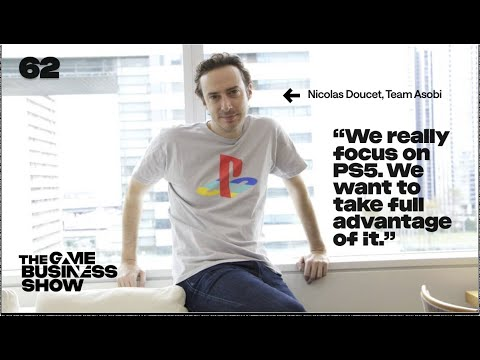
you know okay it doesn't we really focus on you know PS5 and you know we we we want to take full advantage you know in this case the dual sense or the SSD or you know whatever is in is in you know really like hey you know there's a feature set that we we 100% know we have so for us we really do that and the rest is an afterthought you know there's always a way to cross bridges if you ever need one but really the main focus is on you know PlayStation console the hardware to really you know make that the best experience I'm speaking for Timobe uh of That's, you know, but
that's all all angle.
Yeah. Do I mean this as somebody who makes who's made a console game, right, with consoles in mind, how do you think, cuz I've got my views on it. How do you think consoles differ from the other devices out there? I mean, I'm obly particularly thinking PC. I think it's pretty obvious with mobile, but but how do you think consoles differ from from from that?
So, I don't have much experience in making actually games for other platforms. I mean, this for the last 20 plus years anyway. I mean, and before I was always working on consoles, so it's not like, you know, the PC world is not something I'm super familiar with. I've had my own, you know, gaming PCs over the years, but I think it's this, you know, this the thing that people would always talk about, which is the the permitations, the fact that, you know, you have a specific hardware that is absolutely set and everybody has the same the very same experience. So you can really, you know, uh, what you see in your office making the game is definitely what people will see in their home playing the game. I think that's,
you know, the single biggest um, you know, like point, you know, and and he allows us to just focus, you know, on the game because the time you're not putting into dealing with compatibility or permutations or, you know, kind of levels of displays. It's something that you can you can put in in a game. So, um, that's that's but it's been like that, you know, for forever. That's why I've always liked consoles. You know, when I used to be there used to be um we had two departments inside the same department, console and and and PC. At the time, the PC permutation were much greater than they are today, to be honest. Compatibility was a real name.
Uh today, it's more unified, I think.
Yeah.
But, um I've always preferred to be on the console side because it was all about just, you know, plug and play. And so it's it's a bit of a maybe a habit as well. I've not been, you know,
supposed to PC as a when I was a kid, I had an amigga,
but it was kind of console, right?
Yeah, it was.
Yeah,
I played Dale Attack on the Amigga. For me, the console, yes, it's in in people's bedrooms, and yes, PCs can be in the living room, but for me, the consoles is is a bit more of the living room device.
Yes, there's playing Astrobot is a really good example. My son's playing Astrobot and I'm watching him and he's passing the controller to me and my wife's sitting next to him and she wants to have a go and we're all interacting and that's just a single player game. It's obviously a little bit more obvious the interaction of multiplayer game and I think back to it's you get less of this now but I think back to eye toys and sing stars and guitar heroes and Wis and motion controls and move PlayStation move and I think to all of those things and I think this these devices and perhaps it's less of a thing now with multiplatform it's it's creating a challenge but for me I think consoles have a play a different role in everything you're talking about technically but also I just think it's it's more it's the the space that people play that in is not necessarily the same place base you pie a PC and um I don't
really
Yeah, I'd agree with that. Um it's uh yeah and and that's probably like you know when I was saying like how does it I always had this affinity but it wasn't just a habit. And I think it's also the fact that you know it's um you know maybe I was used to sharing actually a lot my consoles it was like that we used to pay you know on on mom's TV you know she kept telling us it damages the TV and stuff but there was like there was something on social everybody could see the video games and I suppose it's kind changing a little bit because smartphone has arrived and smartphone has also got people used to like um you know like having your own screen and having the kind of privacy over what you you watch or what you play. Um, so it's true because a lot of the games you've mentioned, it does feel like there's a lot less of these
Yeah. social games where you will sit in the sofa and play together than there were maybe um Yeah. about 15 15 years ago.
Yeah. And because I'm old, I think that's a shame.
Well, I'm I'm mindful of the time, but I was going to ask you about how mindful you are about um making sure your tech you got all these technical ambitions. You want to show off all these things. Um, but actually, you know, you've just you've kind of answered this question. I was going to ask, you know, how mindful are you in making sure your technical ambitions of games like Astrobot don't impact your overall need to keep it accessible, overall need to keep it accessible and fun?
And it seems to me that that you answering about how you approach Astro Playing versus Astrobot, that is actually something that um is very top of mind when you're making new features.
Yeah. Yeah. Yeah, but also in general with the accessibility, you know, it's like it it comes down to um um it comes down to having this philosophy that you we are tech lovers, but our responsibility or job is to translate that tech into magic, right? And so there's an element of simplification. It's a little bit like when you see a a magic trick and it's very smooth and happening in front of you and it's like
really really sleek, but the training that has gone behind the amount of strings that are being pulled, it's like quite a complex complex training and a complex machine. And our job is to to really show this kind of really sleek, very elegant experience um that came from technology. But first it had to go through this tunnel of lots of kind of optimization and understanding and kind of throwing away what we don't need and optimizing what we need. And at the end it goes through that pipe and it presented to the player as magic. So um the philosophy of the team has to be built to be like that. We are not here to please ourselves as uh globers. We are here at the service of the audience and really getting into that mindset is is a big thing. uh is very important and I think it's taken time but I think at team we all um hardcore gamers but we end up making family games
and I think the games that we love and the games that we make there is actually a separation even though of course we
love our job and we love making and especially when you know Astrobot I think afterwards when I got to play it again with a little bit of gap I I got to appreciate even more how you know some of the good sides of it that you know when you you can't focus you don't really see you just look at the problems
um but I think um
yeah it's there's a constant reminder for us that we are not we are not just tech guys making games for people like us we are about to making games for a different audience and I think in there what I love about it is that there's an act of um uh I don't want to sound it might come across wrong but there's an act of generosity in there which I really enjoy.
Mhm.
You know, we we enjoy playing certain types of games, but we put our brain at the service of a different type of game for a different audience. And I like that because it's a fun challenge. I think it's more fun to do that than to do something that you are very kind of
trained to
and used to to
Yeah, that's that's that's the Yeah, your bills. I guess in a way you're turning you particularly if you're thinking of a younger audience. Astrobot has an older audience as well, but it has a when you think about a younger audience, you're thinking, how do I make them? How do I take them from where they are to the sort of games that I'd love to introduce them to? Astrobot obviously features those in the game itself, but you're sort you're introducing people to gaming and and it's yeah, it's a joy. Um, has actually your philosophy in that your philosophy on game development? It seems very sort of set now. Has it evolved much from when you I mean obviously I guess it's evolved quite a lot from when you started in localization but has it evolved much over the generations?
So for Tim not really the moment we we set those that those philosophy that philosophy we kind of kept it so for the last you know decade or so it's been always the same sort of you know we have this kind of five values in in a studio which are you know magic innovation playful uh universal and quality. So
these kind of things that kind of, you know, encapsulate who we are. But what's really interesting is that when I was younger in my in my um in my career, I wasn't too sure, you know, I ended up in at Lego by accident. It was a job that I could I could go back to London and and when I went to Lego, I was thinking, oh, I don't I'm not sure I really want to make video games at Lego. I was 20 what? 20. And that's the time where you kind of out of the Lego phase, right? you know, I wanted to Yeah. I would have loved to finish.
Yeah. Yeah. Exactly. And then you get back when you have kids again, you know,
and and then from there when I went to PlayStation, I thought, okay, now I'm going to be making PlayStation, so there's going to be more like Wat stuff, you know, and actually ended up in it toy and sinstar and buzz kind of, you know, like and that's when I started appreciating it. I appreciated actually the stuff I learned from Lego was applicable and there was a whole new
audience enjoying it and it felt like okay you know there are some amazing teams out there they're doing like you know God of War and Uncharted and stuff and anyway we can't do these kind of games but here we have an opportunity to do something like different and the challenge wasn't so much the technical graphical challenge or story challenge it was about getting to your point earlier getting people interested people who would normally like walk past video games and maybe think it's not for and certainly actually getting them interested. Um, so to me that's when the turn really operated. It's at entering PlayStation in uh in in London studio.
Mhm.
And at that point I started appreciating that career. So when I came over to Japan, it was in 2011. It was something that I felt like now I'm enjoying working with audience. It's no longer a limit. It's no longer a a choice by default. it's now a choice, you know, a a a um a culture choice and I'm enjoying, you know, doing things for the audience. The fact becoming a parent probably
helped as well because he gave me that extra that, you know, renewed interest maybe in, you know, in in a younger audience.
Yeah.
I was going to ask if there's any particular era or project that shaped your last question was like is there a particular era or project that shaped your approach? Um um but it's that is it was it Lego then and I toy was that sort of thing? Um I think Lego a little bit, but I thought it really was it was really interesting because it was at the time where also um it was very bold, right, to to say that you're going to be playing a game without a controller at the moment at the time where you know like um PlayStation has just kind of on the second generation taking off really with this amazing hardware and they saying actually you know the base hardware or the base controller you don't need it. instead use the camera, use your body. And he felt like that's very very brave.
I think again it's part of this sort of Sony DNA of really wanting to innovate and the fact the company was open-minded enough to allow this project to happen
uh was great. So I think there was an appreciation at that time. I really enjoyed the people at the time also. There was a really you know it was it's my best time I think in in UK. I felt like really like integrated with the people I was working with and stuff and uh maybe that gave me a confidence that actually that was a really fun fun field to to make a career in.
Yeah.
Well, I think we're out of time, Nicholas, but thank you so much for joining me. I mean, Astrobot is a genuine I mean, I know you must hear this everywhere is now a genuine triumph, but for me, I always thought it was a triumph when it came out, but watching my 5-year-old start to play it. He's basically learning to play video games through Astrobot, through Mario, and it's just been I've been a joy watching him do it. And I can see why you would you must get a joy out of that, too. And I'm sure you hear stories like that everywhere you go. These are the best, Chris. Honestly, the fact that it translated to tangible stories that people tell us, the number of times I meet people and they say, "Oh, you know, my son, my daughter, my nephew, my
niece, L Ro and and they tell you stories and you tell at that point, you know, they're talking about the most important thing in their life,
right? Their family, their kids."
And so, the fact you can connect with people that way, it's um it's really great. It's it's um it's a responsibility as well because it means we're going to have to continue being good. So we we sure work hard.
You've set you've set the bar quite high.
Well, well, good luck with that and but thank you for joining us and and thank you to everyone tuning in. That's it for today's episode of the Game Business Show. We'll be back later in the coming days with more news, analysis, data, and interviews. To make sure you don't miss anything, do sign up to our newslet.com. Nico, thank you for joining us. Um, and for everyone at home, until next time, thank you for tuning in. To you, what is the greatest platform game of all time?
Um, platform game of all time, Super Mario World. What do you think has been the best video game console generation? I've got a soft spot for the 16 gigs
era. Ah, yeah. If you could work on one other PlayStation franchise that isn't your own, what would it be? If I had the talent for it, and I'm not sure I have it, it would be the Eco Shadow 3.
Yeah. Wow. What is your favorite video game soundtrack of all time that isn't by Kenny and and Astro?
So many so many. I'm literally got them in my background the whole time. Um, can we come back to this question?
If you could give one piece of advice to anyone building a PS5 game, what would it be?
The Dual Sense is great. So, you can really use all the features safely and with confidence.
And ask again, what is your favorite video game soundtrack of all time that isn't your own? The Street Fighter 2 soundtrack and the sound design of it is amazing. I always come back to Panza Dragon on the Sega Saturn. Beautiful soundtrack. Jets Radio. Oh yeah, that's got Richard J. Great track friend Richard. I love also the Neo Geo era. I think they did a lot of really really great team with the King of Fighters. I
think Fighting Games tend to have some really good soundtracks. Yeah. Too many. Yeah.
Auto-generated captions from YouTube — names and numbers may be misheard.























Comments