Game Design reports and market data
Documents

Shooter Monthly #3 Marathon vs the Market, Valorant Goes Massive, Marvel Rivals Misreads Progression
The shooter genre is currently navigating a period of significant strategic recalibration as developers struggle to balance live-service retention with evolving player expectations.
- Valorant Mobile has doubled the franchise's total monthly active users, proving that mobile-first design paired with established IP is the most effective strategy for international expansion.
- Bungie has delayed the launch of Marathon to March 2026, reflecting the industry-wide challenge of timing high-stakes releases against established extraction shooter benchmarks.
- Call of Duty is shifting its strategy away from rapid-fire sequel releases to combat player fatigue and prioritize long-term engagement over iterative product cycles.
Steam Wishlist Scanner: The games that matter by Jakub Remiar
Steam wishlists serve as a critical early-warning system for identifying emerging gaming trends and potential hits, often providing actionable insights for mobile market expansion.
- Steam wishlists function as a predictive market indicator, allowing developers to validate game mechanics, art styles, and themes before full-scale production or release.
- Co-op horror games are a high-growth segment driven by strong demand for social, shared player experiences.
- Chore simulators, characterized by repetitive, satisfying tasks and intuitive mechanics, are highly scalable and represent a significant opportunity for mobile market translation.

Slipknot's Clown: Building Games Like You Build a Band
The development of Vern Earth, a custom Minecraft realm, represents a shift toward artist-led game design that prioritizes immersive world-building and surrealist expression over traditional commercial metrics.
- The development of the Vern Earth Minecraft realm prioritizes artist-led, surrealist world-building over traditional commercial metrics to foster deeper emotional resonance.
- Successful gaming collaborations require moving away from profit-driven constraints toward a model where artists act as core architects rather than just promotional figures.
- The project draws on three decades of experience in music and early modding culture to recreate the creative autonomy found in early titles like Quake.
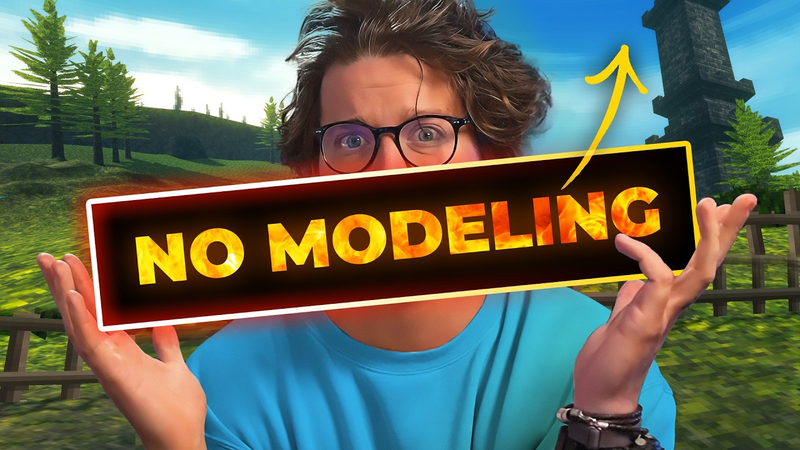
Making A 3D Game Is Way Easier Than You Think (Retro 3d Game)
The process of developing a retro-style 3D game, specifically one capturing the aesthetic of late-1990s titles like The Legend of Zelda: Ocarina of Time, can be achieved efficiently without advanced 3D modeling skills.
- Retro-style 3D games can be developed without traditional modeling skills by utilizing free assets, basic geometric primitives in Unity, and simple texture mapping.
- Visual cohesion in retro games is achieved by manually color-matching assets—such as grass, dirt, and water—to a unified palette and using a consistent skybox.
- To achieve a retro aesthetic, developers can apply post-processing effects like posterization to reduce color depth and use pixelation filters on textures to mimic early 2000s graphics.

Pokemon BDSP: Play Like A Designer Episode 6, Onward to Mt. Coronet!
Pokémon Brilliant Diamond and Shining Pearl serve as a case study for the friction between accessible, casual-friendly design and the franchise’s deeply entrenched, opaque mechanical systems.
- Game design loops that force players to switch from a primary gameplay mode to a secondary, complex system—such as the underground mining mechanic in Pokemon BDSP—often feel ham-fisted if they lack an organic bridge to connect the two experiences.
- The RPG reward loop typically follows a 'battle, reward, spend' sequence, making the game's decision to trigger level-up notifications mid-combat feel unintuitive compared to industry conventions where XP is awarded post-combat.
- In Pokemon BDSP, Technical Machines (TMs) function as single-use items, requiring players to manage limited inventory resources and strategically select which Pokemon can learn specific moves based on individual stat compatibility.

Let's Review Your Games — Ep. 038
Effective game development requires a rigorous balance between ambitious mechanics and the practical constraints of production.
- Game design is the process of reinforcing specific emotions; developers should use techniques like internal monologues to explicitly guide how a player should feel during gameplay.
- Effective game trailers must capture viewer attention within the first 10 seconds before transitioning into narrative or gameplay substance.
- Sound design should prioritize texture and dimension by mixing organic sounds with sci-fi elements, ensuring a balance across treble, bass, and mid-range frequencies.
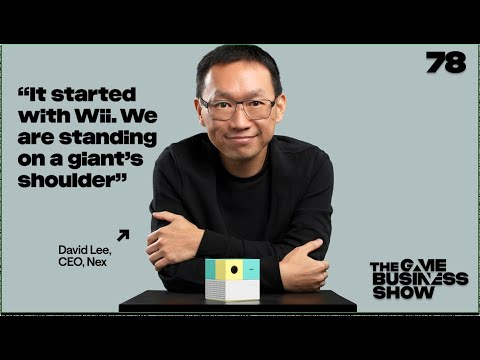
Interview with Nex CEO David Lee: “We want a Nex Playground in every living room”
Nex, a technology company founded by former Apple developer David Lee, has successfully entered the home console market with the Nex Playground, a camera-based, motion-controlled gaming system.
- Nex has scaled the Nex Playground from an initial 5,000 units in 2023 to over 600,000 units sold by late 2025.
- The platform utilizes computer vision for controller-free, motion-controlled gaming, positioning itself as a modern successor to the Nintendo Wii.
- Nex employs a subscription-based revenue model to ensure recurring income and continuous content updates, moving away from the traditional cycle of individual game sales.
Fortnite’s Platform Problem (It’s Not What You Think)
Fortnite functions primarily as a centralized licensing powerhouse rather than a true open platform.
- Fortnite functions as a centralized licensing powerhouse that absorbs external IP, such as Ferrari and James Bond, rather than operating as a decentralized platform for third-party creators.
- Despite reaching 9 million concurrent users during the Chapter 7 launch, Fortnite struggles to translate these spikes into significant growth or engagement for the Unreal Editor for Fortnite (UEFN) ecosystem.
- Fortnite maintains a superior financial position compared to Roblox by prioritizing monetization efficiency and higher average revenue per user, despite Roblox’s significantly higher concurrent user count of 21 million versus Fortnite’s 3 million.
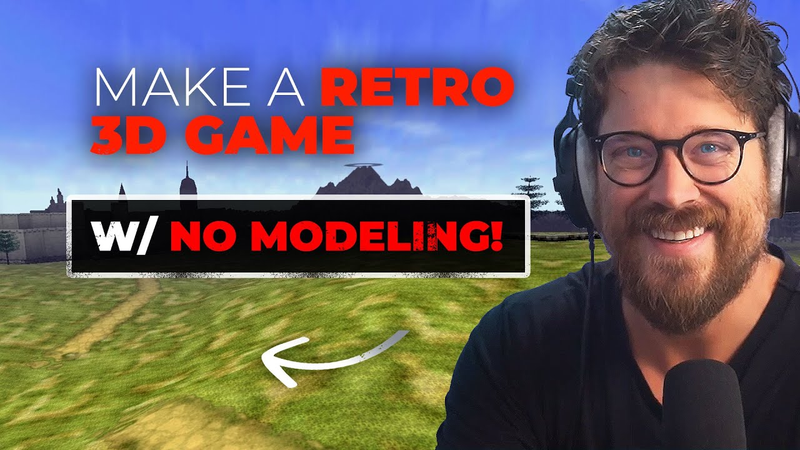
Retro 3D Game Workshop (No Modeling Experience Required!)
Creating a retro-style 3D game does not require advanced modeling expertise or complex production pipelines.
- Achieve a 90s-era aesthetic by stripping away modern rendering features such as normal maps, metallic properties, and high-resolution anti-aliasing.
- Prioritize manual texture manipulation, including pixelation and mosaic filtering, to ensure visual consistency across all environmental assets.
- Bypass high-poly modeling by utilizing gray-boxing, simple geometric shapes, and 2D billboards to construct game environments.
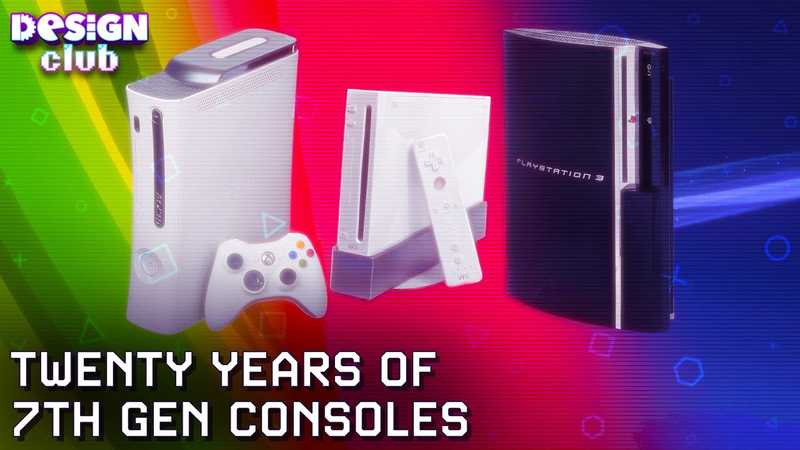
Generation 7 Consoles: 20 years Later | Design Club
The seventh generation of gaming consoles, spanning the mid-2000s to the early 2010s, represents the most transformative era in modern interactive entertainment.
- The seventh generation (mid-2000s to early 2010s) transformed consoles into centralized living room hubs by integrating high-definition media, digital storefronts, and persistent internet connectivity.
- The era established the modern industry blueprint by shifting from fragmented hardware to standardized, high-performance platforms that utilized dedicated GPUs to rival PC-level graphics.
- Nintendo’s Wii achieved massive commercial success by selling over 101 million units through the introduction of innovative motion controls to a broader demographic.

Sunday City Review: GTA or Casino? Sunday City’s INSANE Onboarding
Sunday City represents a sophisticated evolution in the social casino genre, successfully employing a bait-and-switch strategy that masks a traditional gambling core behind the aesthetic of a life-simulation or open-world game.
- Sunday City generates over $60,000 in daily in-app purchase revenue and currently holds a top-10 position within the social casino category.
- The game utilizes a 'bait-and-switch' design, masking a traditional gambling core behind an urban life-simulation aesthetic to lower the barrier to entry for casual players.
- Long-term engagement is driven by a 'third-generation' social casino model that layers meta-game systems, such as collectible albums and seasonal events, over core slot machine mechanics.
PLAYERUNKNOWN’s Comeback… So Why Did They Do This?
PlayerUnknown Productions, a fully remote AAA studio led by Brendan Greene and CEO Kim Nordstrom, serves as the focal point for an analysis of studio strategy and the risks associated with high-profile game development.
- PlayerUnknown Productions, backed by a $70 million investment from Krafton in 2021, released the survival title Prologue as a technical proof-of-concept rather than a flagship product.
- Prologue failed to gain market traction, peaking at only 182 concurrent players on Steam.
- The studio’s decision to launch Prologue in Early Access invited negative public scrutiny, as the release lacked the controlled environment typically used for technical testing.