VideoThe Game Business
Interview with Nex CEO David Lee: “We want a Nex Playground in every living room”
18 Dec 202530 min video
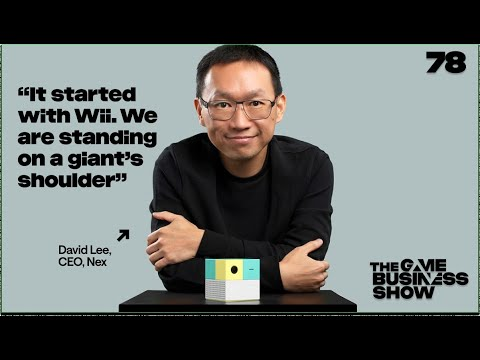
We spend so much time, so much time on monetization. Oh, what we could do to kind of get people to pay. Oh my god. All if all these goes away, we just have much more time focus on building great games. We want to kind of create something is so worthwhile that would earn our place [music] to be in every living room. Hello and welcome to the game business show with me, Christopher Ding. We've just had the market data in for November 2025 and one of the standout successes was something called the next playground. The camerabased family games machine was the third most successful console in the US according to Zakana ahead of Xbox and it's limited supply at pretty much every major retailer. It's a device that features games from bigname brands from Bluey to Sesame Street. It's available for under $250 and it utilizes subscription model when it comes to paying for titles. But where did this come from? Who is behind it? What's the strategy? How is it working? Well, to answer those questions, I'm joined by the CEO and co-founder of Nex. It is David Lee. Hello, David. Welcome to the
show.
Hello, Christopher. Thanks for having me.
Let's start with you. Who are you? Where did you come from? What's your background?
Okay. I'm David Lee, uh, co-anch. I started my first startup before I left college.
Oh.
In Hong Kong. I'm from Hong Kong. And the startup eventually got applied by Apple. So I worked for Apple for eight years before leaving Apple to start next. We start in 2017. So before all of that like I spent majority of my like my entire career building web apps, productivity web apps. So my first company built one of the first online spreadsheet like Excel.
Mhm.
Online on the browser. We call ourselves like the senior citizen of web 2.0. when we get when we get started is when uh Reddit, Facebook also roughly get started. So we building like advanced web apps leveraging latest browser technology back in the day. uh back in the day like even IE6 was like wow that
is like a lot of great capability in IE6 is crazy um and obviously you know web advance and we can do a lot more and that's like my previous life building web apps advanced 42 web apps and Apple I built helped build the web apps for i work pages numbers and keynote bring them online uh on the web and also enable the whole collaboration architecture supporting like collaboration on document. So multiple people can work on the same document at the same time. Um is something that we bought into Apple. So that took me eight years, learned a lot in Apple. Um I spent three and a half years of my life basically convincing Steve Jobs that we have we can do web apps. Who can do web apps? Great.
Um and 2017 I left Apple and doing something different. I love basketball. Um so it's crazy. I'm a short guy, 5'5, but I I just love to play. Um, and I
Hey, how about we just do something with the basketball. So that's how we get started with next and uh we start with fast training app. We end up with next playground.
That's quite the journey. So you started off with apps and then you ended up in hardware. Um how did that happen?
Yeah, so like I love basketball great to create an app that track basketball shots. That's basically where we got started. looking back is really niche idea. So who want who want to track puzzle shot on the app? Uh apparently that's you know a bunch of like middle school kids, high school kids want when they want to play next level basketball they care about making their shots they you know go into training. So that's basically how we get started. We created an app that track basketball shots and problem first and we figured out technology to how to solve that problem. Um because the only thing that you have is I have my phone and the phone have a camera so let's use a camera to do it and we end up basically building AI technologies which can understand the
court understand the hoop understand the ball understand ball trajectory um so it's pretty advanced computer vision stuff that is like we are a little bit like ahead of the world so when Apple see what we're doing they put us back on stage I thought my relation Apple came to an end but like 18 months after left Apple I was on the stage when they announced iPhone 10s when it reached the breakthrough performance to process video in real time like 30 frames a second. So this basically the first time computer division AI actually can happen on the edge when Apple increase the processing power of their um they call it Apple new engine like what behind it is the common term the new processing unit basically the the component inside the chip that have do AI inference right machine learning inference. So that is basically how we get started and then like how we end up in hardware. Let me answer that question. How we end up there. Um so we we know this pretty
niche. So how about we do more with the technology? So not let's not just track shots, let's also like track you handling a ball. So that's when we start making use of the frontfacing [music] camera. So when we track shots, you basically set up a phone on a tripod looking at a basketball court. is a very complicated setup. But when we change it to hey, let's use a fun pfacing camera. Let's use let's check your dribbling basketball. Let's like give you queue and give you something so that you can look at the screen and react to things and you they dribble it with but forget you have a ball. It's like you know we get in the zone of like you know man the ball handling. So we do that and oh how about we can also do without a ball and how we can like give you some cues of like oh moving left and right touching cones here touching cones there and giving cues you can jump across some hurdles. So we basically doing kind of like a basketball training um and exploring some of these games.
The crazy thing is when we when we are doing that pandemic happens
and we thought like oh nobody play basketball anymore. home called went viral in the US and global um people actually when they stuck indoor looking for something to kind of stay active and they download homec court a possible training app to use the interact training games on it. So the industrial games they basically went viral. who say wow great let's take these games out and create another app so that it's would be a for both the audience that gap is called active active went rival again um this time more in mean in Asia um and when we look in active's data looking at their their the customers we found something very interesting um if user use it on an iPad the retention is 3x
If any user could connect their phone or an iPad to a TV is 10x. So for a while we're looking for 65 in iPad. And that get us to get us to our partnership with Sky in UK. Um when I look for that and Sky come in lock our door. Hey you have a game that I want. I'm building a new device called Sky Live. Um and it's a camera on the TV. um and have real processing power on it. So they come in and license some of our games and we start you know going into the living room space by that collaboration and in that is a deep technical collaboration. We think about like you know the chipset how to optimize for that great experience for a big TV so that like a little more our adventure start with a partnership with Sky in the UK and bringing some of our games beyond active arcade. We we we begin to build more games on the mobile but we cannot really find bottom market fit on mobile. The screen just too small to have a great
experience. So we spend been spending more time spending more time building game for the TV specifically for the sky live device. Um and next step was to say hey where where we can find another sky. I search the world for another sky. I can't find any. So, you know, and we say, "Hey, we may as well build one." And when we build one, we we are fed penated to build the best experience that can run our games really, really well. And that's how Next Playground come to be.
Wow. Well, what [clears throat] a journey. Well, I find this really interesting. You have the next playground. You're taking this out to market, right? And I'm thinking I'm obviously in the games industry. Nintendo's Yeah, I look at that. I want one.
I can send you. and the um the uh Nintendo has scaled back on its motion controls and Xbox has obviously dropped Connect. So, you're going out and I guess you're pitching this to retailers and stuff. Um what was their reaction?
Was it reaction we need, we've missed this, we need something like this or was it actually we've been here before?
Um so that experience is actually like pretty interesting. So we do what we call a selfarter. We have our own website. We talk about this device um and we tell the world that we are building this and we only manage can manufacture 5,000 of it. We sold out the first 5,000 unit way before Thanksgiving. Um and and when we when we achieve that like the whole goal for the whole company is only one thing. Make sure the first 5,000 customers who got it were really really happy about the product. That's the focus for our 2023. We thought about wow we want to can bring this product to retail. Everybody tell us that yeah like you have only sell 5,000 units for like you know a pre-order campaign. You can think about going to retail 2026.
That's what all the industry like players like you know a retail agent tell us it will take a long time you know keep it take it slow. Um and and then we send samples to Walmart, Best Buy and Target. Uh apparently all the buyers have kits. They actually test the product with the kits and everybody want to come back and carry product in the first year. So in 2024, we have 1,000 retail store carrying the product. half chain target like they bet big half chain target 100 Walmart and 225 Best Buy so roughly like a thousand store carry product for the first year and and we also uh spend a lot of time how we make the retail experience great is just not like putting product on shelf put on shelf doesn't really do anything so we created a retail demo
setup I just have it here just right next to So you walk walk up to it and you see you're ready get you to play some games is pretty wonderful. We create product that sells product and apparently that that we have retail dam did its job in communicating what this product is and we also like have have parents sharing sharing it talking about it and in second year we sold 150,000 units uh we again sold out in the morning of Cyber Monday. Um so that's our that's our second year. The last 2024 and this year um the same story kind of repeat again. Um which you know surprised us too.
So how are you doing this year? How's it? So 150,000 year two 5,000 year 1. That's [clears throat] quite a growth jump. Um how are we looking for year?
Yeah this year we sold more than 600,000
units already.
Oh wow. We sold through like our target for this years is 550,000. We thought it's pretty crazy already when we thought about this number in the beginning of the year. Um and we we sold through those units already. We need to basically fly in supply from from our manufacturing uh facilities. Um is expensive
um to to meet demand. So we are replenishing our retail at the moment. is like largely out in all of Sam's Cup, Best Buy, Walmart, Target. We have over 5,000 stores. It's basically everybody is out. Um, so we are we are working hard to restock them. I used to work for a retail uh games title in the UK, so I'm I'm familiar with what you get to when you're having to air ship things in rather than uh rather than use boats. Um, well, here's the price is a key element to this and
everything. I know how much things are costing right now for hardware manufacturing and components and stuff like that. How are you managing to keep the price low?
Well, we make a different set of decisions.
Um, so we are not going to compete with in high-end graphics. So our graphic capabilities on Playground is roughly similar to PS3. So like basically two generation before. Yeah,
but we can create great games on PS3. Like we can create like even the graphics is is is not bad. Like compared with Wii, I think we roughly at 10x the Wii. So it's not like wow, it's not improved. It's actually improved and we can like this graph capital allow us to basically create immersive games. Um and and not toy like you know can create serious games on the platform already. Um and and there's no controllers. So
like controller get expensive these days, you know, and we we we have a simple remotes to navigate games. That's it.
Um and the everything basically move into using camera to track that and using camera to track four people at the same time. So can create like cultural or or party four player games just with the camera. So the cost suddenly significantly reduced to have access to like that four player games that is we we we make a set of choices that can keep the price low um and make it more affordable.
Yeah.
I think gaming or you know a particular family gaming supposed to be like that too.
Yeah. Um but if you say oh I need to kind of compete and giving like highest end graphics then yeah just like the memory or everything just cost a lot more.
Yeah.
So it just a different set of choices that we make to keep it affordable for families.
Is is the hardware profitable as well or
is it mostly making money from the subscriptions and the uh [clears throat] is that the way the is that how it works?
Um so well going to you need economics for us. Um so we as our smaller company um we need to kind of manage this really well. So we are we need to manage so that like we we we are sustainable that we can we can put it at that
uh we want to manage so that we're sustainable. It's very important for us to build sustainable business because we need to always think about sustainable business because building a sustainable business is what good for our customers because you know we can day in day out keep coming back to the market with a better product. This how we keep the sub you know hardware cost affordable and how we can have a subscription model that so that we can keep building for the customer that we are serving and and with that flywheel of more customer have us bring in more games we just have keep
having a better brand better product
[snorts]
um
so it's a little bit counterintuitive from the perspective but also kind of help us help customers self- select to joining the journey with us. Um, so I see that as as a very positive.
So what was the thinking behind the subscription model? You know, it's it's kind of different for for this market. I mean, at least from a game's perspective, um, wouldn't it, you know, rather than just selling the game separately and make simple that way? What what was the thinking behind that model?
So that model allow us to do a few things. First of all, um we would pour our heart we so we how we how this whole product came to be is we understand our customers. Our customers are family with younger kids, family with multiple kids, multigeneration families and families who are a little more you know careful about the content to be put in front of the kids. So we are create a product
that's like 100% family aligned and solving real problems because we see oursel as a good alternative to outdoor when outdoor is like too hot too cold too too wet we have something that keep kids active bring family together. So once we fully understand who the customer that we are targeting. So what they has to do is yeah it's something that keeps the family active and and and they have young kids they don't want kids to coming back and like ask them for things like you know all the time. So subscription model works best for them. It actually a model they would prefer. So if you're not preferring the subscription model, it also means that you may not be like our target audience
and and that that model help have help customers see that. The beautiful thing of a subscription model is
we can kind of count on that to keep investing in our content. And when we have subscription model also means that we are having to create a much bigger
creative freedom to pick what kind of games that we create as well. So not just like oh I need I I need to kind of stick to certain genre because only those genre sells. We don't really need to think about that. We think about how we serve our customer better. How we innovate for them how we can surprise and delight them for things that we create. So it's a kind of very different way to kind of think like how we create games because like oh games don't really need to have business model on its own. The creative freedom just explode. Oh we can try that too. Oh, we can try that and see whether the customers like it. For us, it's more fun. For customers, equally fun too because like they don't want know what we have in store for them for next year, right? So this year we create 20 new experiences and many more updates. We upgrade OS as well. So this all enabled by the subscription model. We have sustainable resources to keep innovating. Oh my god, it's so liberating. Back in when we create the
um the the the the basically mobile app, mobile motion games which cannot really figure out where the business model is. We spend so much time so much time on on monetization. Oh, what we can do to get people to pay. Oh my god. All if all these goes away, we just have much more time focused on building great games. M
when monetization go away, we just spend so much more time making great games, period.
And you've partnered with some big brands this year and Bluey, I mean, I call Bluey a kids brand, but I I know parents who will watch that when the kids are in bed. Um, I'm definitely one of them. Um, Peppa Pig, Sesame Street, those sort of things. Was this always part of the plan, getting the big license IP in? I'm assuming they're the most Are they the most popular games on your on your platform? I mean, how's that gone? Well, we have both original IP games and [clears throat] also licensed IP games and um if you look in the data, the original IP games also
very popular. Obviously, Buoy is very popular. I think Buoy is persistently top five on the platform. A lot of people play that game. We also pour our heart into making that game great because it's supposed to how brewy is like in the buy world like you know the healer family play games and we want them to basically immerse into the brewy world and be able to play games just like you know Bruy and Bingo do. So that is I'm really proud of the game and really proud of the internal studio that take on that IP and do the right thing for that IP. Mhm.
Um
um yeah, we we is it always to be planned? Uh yes, we always want to bring in recognized YP on the platform. It it it bring in the audience. It bring in like you know the the more like recognition, credibility. Um we are standing on our partner shoulder to create something great
and and and with partners it just helps us like legitimize the product like very quickly. So we spend substantially in partnering and we pour our hearts into great big making great game for our partners.
Do you work with any third party developers? Are you open to working with third party developers?
So at the moment we have free internal game studios which combine they actually build a majority of the games on the platform. We have increasingly bigger group of what we call second party studio who work with us to bring games onto the platform as well. So last year in 2025 this year um like wait it's not we are not 2026 yet uh we have half a games built internal half a game built by external studio um but we are we are a very curated experience so we not like open the platform for any third party build games on platform yet because we we the safety part security is very very important for us so we are not ready to make it anyone can come um
is is that a goal is that you'd like to get to eventually.
Um maybe I don't know yet. Um it's too far from that perspective. So we want to kind of keep it very curated experiences so that we we can care our customers. Um I don't want to kind of turn it into like some monetization engine from other games. We want hey this is this is the platform designed fully like and from the ground up to serve our target audience and we put them in our hearts. We always want to you know give more than we take and and and have the product grow through you know word of mouth
and that's the intent of that. So you having dev sort of pitch games to you or do you go out looking for them? I mean I'm I'm interested to see
both. people like when we get more and then we this is like the the biggest volume of inbang that once the news come
out while we are like number three
like the inbang of developer that like you can now it's been been it's been the time when like you we go on people's door we basically like the door doesn't even open to now that they would you know come to us oh my god this the the so thankful for the change and and now actually have have conversation with more
really famous studio who interested now you know yeah big games for the platform
oh wow now I have a three-year-old and I have a six-year-old and when I saw this I thought I need this this is what I want but I'm in the UK and I can't find it I can find a cheap knockoff one on Amazon but um so what's the do you have international plans
yeah we would be expanding internationally um I think UK is very high on our list. Um so like I would leave to my team to communicate com you
know um confirmed plans but yes we will be uh very expanding our international blueprint in 2026. Um in 2025 we expand to calendar already. Um so we are getting every pieces ready so that we can serve uh more customer who want to be part of the journey with us. Now the Wii which is I know it's a different completely different product but it's a similar audience that sort of fa did very well for for a good few years and then it sort of faded away. Um what have you been looking at that I mean what why won't the next playground? Um well learning from history is nearly one of the most important thing we should learn from history and try not to commit to like you know the same limitations um and that's why we have subscription model that's why we have subscription model and I can imagine that back in the
days if you because Nintendo expand audience with the Wii and that's also the intent when you expand the audience um you know and they want different things when those audience buy only the the Wii feed we sport and not like buying many other like franchise people or Nintendo friends then like it's kind of a little bit more like oh little bit problem for for you know the franchise I cannot really kind of you know who am I to kind of speak for Nintendo Nintendo office have their really great strategy of like how they want to serve the audience Um, so if we think from from our perspective, then what? That's why we want to create something that's sustainable.
Um, because you should sell if you sell a platform and then people come in and buy a couple games and that's it. The the whole system is not sustainable.
It's just not.
It's just not. So it's very important that how we can set ourself up to serve
our customer continuously with new innovations is how the whole system can sustain. So one thing that we learned from that is yeah we come to that that that the whole thing that basically start by the Wii again we are standing on giant shoulder
we was a massive success so many people you know want the Wii U um you know it's similar to that like they sold out like you know multiple times
and like for us it's not intentional at all we just you know can produce more um given our scale
um and And that's that's that's a first signal that basically people want it. But then we know also need this come from morang with a simpler like better tech with a sustainable model and with a genuine focus on this market. Um and there's a market that yeah you can say that like you know other player basically move away from and we come in
and and craft a strategy that is fully align with the market. That's how we kind of get here.
Well David I've got so many questions I wanted to ask you. I wanted to ask you about the design. It's so cool and unique. I wanted to ask if you were planning anything for sort of like older players like fitness games. Got loads of things I wanted to ask you but I'm out of time really but I was going to ask one more which is what's your ambition? Where do you want to be? I'll keep it simple. Where do you want to be this time next year?
I want to always talk about the long-term future. It would be great if there would be a playground in every living room. That's where we want to get to create something so meaningful and to earn the place to be basically at the center living room because this camera so is you need to be in certain places for the gameplay experience to be
natural. So literally we need to be in the middle under the TV. So literally is the center living room. Um so we want to kind of create something is so worthwhile that would earn our place to be in every living room. That's the long-term future, long-term vision of like how we can really serve family really well that that being welcome to all living rooms in the world. Um that's where we want to be. Um and next year obviously we will take a step forward like you know more units, more international market, better and bigger game library. Um it's all included in a subscription too. So it's like, you know, it's a it's a is a I would say this a simple, honest, sustainable business model is what we pursuing here.
Yeah. Well, David, I'm good. I mean, I'm delighted to see it too. Well, I've been writing for a while now and talking for a while now about how I feel that games, consoles, maybe not Nintendo so much, but certainly some of the others have moved away a little bit from living room
and creating devices for the living room. I think that's important. So, I'm delighted to see you doing it and not only doing it, but being really successful at it. So, congratulations and thank you for your time. Thank you so much.
That's it for today's episode of the Game Business Show. We'll be back in the days and weeks to come with more news, analysis, and interviews about uh the video game business. Until next time, thank you for tuning in.
Auto-generated captions from YouTube — names and numbers may be misheard.
Nex, a technology company founded by former Apple developer David Lee, has successfully entered the home console market with the Nex Playground, a camera-based, motion-controlled gaming system. Positioned as a spiritual successor to the Nintendo Wii, the platform focuses on family-oriented, active gameplay that utilizes computer vision to track player movement without the need for traditional handheld controllers. By prioritizing accessibility and physical engagement, the company aims to fill a perceived void in the living room gaming space left by major console manufacturers who have shifted away from motion-based peripherals.
The platform’s growth has been rapid, moving from an initial production run of 5,000 units in 2023 to over 600,000 units sold by late 2025. This commercial success is supported by a retail presence in over 5,000 stores across major chains including Walmart, Target, and Best Buy. The hardware is designed to be affordable, utilizing mid-range processing power comparable to previous-generation consoles to keep costs low while maintaining high-quality, immersive experiences. A core component of the business model is a subscription service, which provides recurring revenue that allows the company to continuously update the platform with new content and OS improvements, avoiding the traditional, often volatile, cycle of individual game sales.
Nex maintains a highly curated ecosystem, currently relying on three internal studios and a select group of second-party partners to develop content. This strategy ensures strict adherence to safety and quality standards, particularly for its target demographic of families with young children. While the company has successfully integrated licensed intellectual properties such as Bluey and Sesame Street to drive engagement and credibility, it remains cautious about opening the platform to third-party developers. Looking forward, the company plans to expand its international footprint beyond North America and Canada, with the United Kingdom identified as a primary target for 2026, as it continues to pursue the long-term goal of establishing a Nex Playground in every living room.

The Game Business · 2026

The Game Business · 2026

The Game Business · 2026

The Game Business · 2026

The Game Business · 2026

The Game Business · 2026

The Game Business · 2026

The Game Business · 2026

The Game Business · 2026

The Game Business · 2026

The Game Business · 2026

The Game Business · 2026

Deconstructor of Fun · 2025
Deconstructor of Fun · 2025
Deconstructor of Fun · 2025
Deconstructor of Fun · 2024
Deconstructor of Fun · 2021

Deconstructor of Fun · 2026

Deconstructor of Fun · 2026

Deconstructor of Fun · 2026

Deconstructor of Fun · 2026

Deconstructor of Fun · 2026
Deconstructor of Fun · 2026

Deconstructor of Fun · 2026
Comments