Game Design reports and market data
Documents

Let's Review Your Games — Ep. 040
Independent game development requires a delicate balance between creative vision and technical accessibility.
- Indie developers frequently fail to bridge the gap between creative visual identity and fundamental user experience, leading to disoriented players.
- Common technical failures include inconsistent control schemes, such as conflicting button mapping, and unreliable audio or UI cues.
- Poorly paced onboarding sequences and the premature introduction of complex mechanics often prevent players from engaging with the core narrative.
Video Game Difficulty is Hard (But It Doesn't Have To Be) | Extra Credits Gaming
Traditional difficulty settings in video games often fail to serve players effectively because they require users to commit to a specific challenge level before they have experienced the game’s mechanics.
- Traditional difficulty settings often fail because they force players to make a permanent choice before they have experienced the game's mechanics or pacing.
- Player ego frequently prevents users from lowering difficulty settings; developers report that many players would rather quit a game entirely than switch to 'easy' mode.
- Adaptive difficulty systems, such as the 'game rank' feature in Resident Evil 4 or 'automatic challenge tuning' in Ratchet & Clank, secretly adjust mechanics like enemy health and item drops based on real-time player performance.



Why Chance-Based Mechanics Keep Us Hooked
Chance-based mechanics drive player engagement by prioritizing the psychological thrill of anticipation over the actual value of rewards.
- Monopoly GO! generates $100 million to $125 million in monthly revenue by utilizing a 'saw-tooth' gameplay loop that alternates between resource depletion and sudden, event-driven recovery.
- Player engagement is driven by the dopamine release associated with the anticipation of rewards rather than the intrinsic value of the prizes themselves.
- Developers manipulate game probabilities to prioritize emotional impact over mathematical fairness, such as limiting low-tier prize outcomes to as little as 13%.
How To Make "Zelda: Breath Of The Wild" Workshop: Day 2 (Part 2)
Creating a high-fidelity, open-world environment reminiscent of The Legend of Zelda: Breath of the Wild requires a disciplined approach to asset integration, terrain sculpting, and atmospheric post-processing.
- Effective terrain sculpting relies on using specialized brushes for large-scale mountain creation rather than manual, single-brush detailing.
- Fog is a critical tool for managing visual depth and environmental cohesion, helping to blend distant terrain and improve the overall aesthetic of the game world.
- Manual painting of environmental details like snow and grass requires balancing artistic intuition with logical placement based on mountain topography to avoid a 'mappy' or unnatural appearance.
How To Make "Zelda: Breath Of The Wild" Workshop: Day 1
Replicating the distinct visual aesthetic of The Legend of Zelda: Breath of the Wild within the Unity engine requires a disciplined approach to asset management and color theory.
- Establish a consistent color scheme for environments and biomes early in the development process to create a cohesive visual foundation, even if deviations occur later.
- Implement Level of Detail (LOD) groups for all exterior assets to manage poly counts and texture sizes, preventing performance issues when rendering large-scale environments.
- Maintain strict folder organization for all imported assets to ensure project scalability and prevent workflow bottlenecks during development.
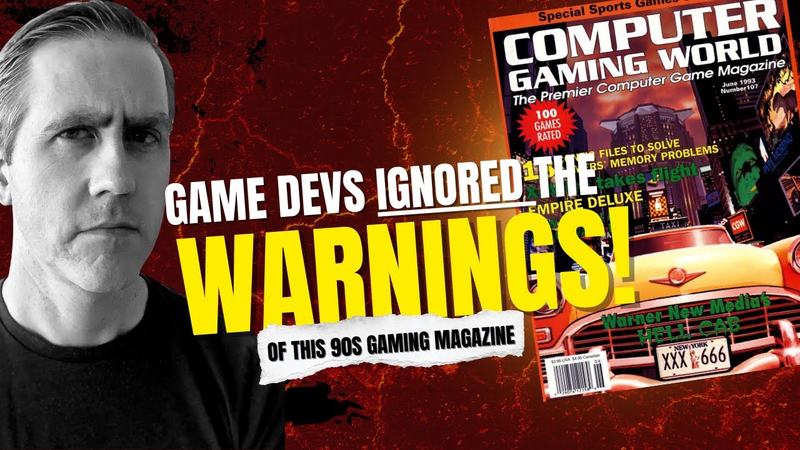
This Old Game Magazine Explains Why Most Games Fail Today
The enduring success of PC gaming is rooted in a distinct cultural preference for complexity, simulation, and sandbox-style gameplay that has remained consistent for over three decades.
- Long-term success on PC platforms like Steam is driven by aligning development with the platform's historical pillars: strategy, management, and simulation.
- PC audiences consistently reject console-native genres like platformers in favor of data-rich interfaces and deep, systems-driven gameplay.
- The core PC demographic possesses a 'tinkerer' mindset that prioritizes granular control, performance optimization, and extensive customization options.
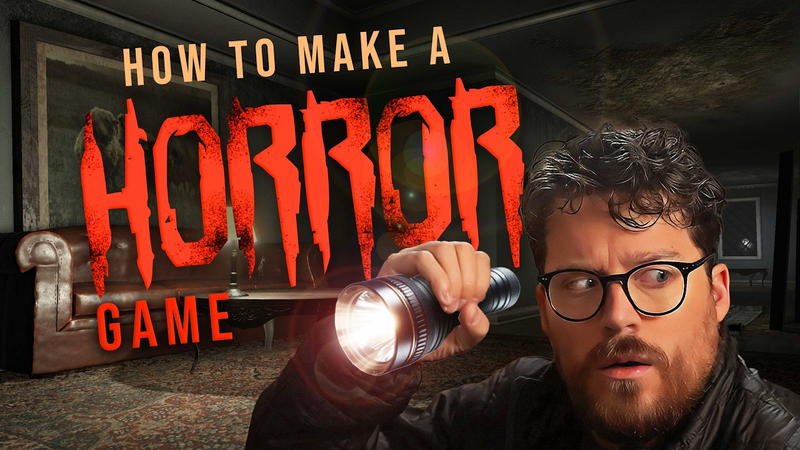
How To Make A Horror Game (Fast, No Modeling)
The process of developing a 3D horror game without traditional 3D modeling skills relies on leveraging modular design, grid-based layout tools, and royalty-free assets.
- Use Unity’s ProBuilder package to construct environments through modular block-outs, ensuring consistent scale by adhering to a strict one-meter grid system.
- Maintain visual consistency across disparate royalty-free assets by applying a unified color palette and standardized lighting throughout the environment.
- Generate professional-grade material maps—including normal, height, and roughness—from flat photographic references using tools like Materialize.
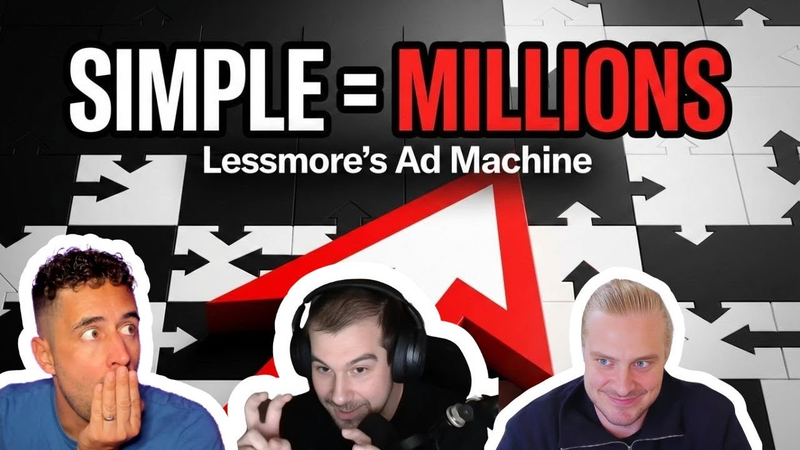
↪️ Simple ARROW design FTW. You don't need super high-polished art to make $250k/day!
The mobile gaming landscape increasingly favors functional, minimalist design over high-fidelity aesthetics, as evidenced by the rapid ascent of Arrow Puzzle Escape.
- Arrow Puzzle Escape achieved 4 million daily active users and $250,000 in daily revenue within four months by prioritizing functional, minimalist 2D design over high-fidelity art.
- The game's success relies on a distribution-first model that utilizes AI-assisted level design and creative generation to rapidly optimize for lower cost-per-install metrics.
- Monetization is driven by a high volume of interstitial and rewarded video advertisements, leveraging the game's low barrier to entry to maintain profitability across the US, Japan, and European markets.

Let's Review Your Games — Ep. 039
Effective indie game development relies on the strategic application of "juice"—the essential polish, sound design, and visual feedback that renders gameplay responsive and satisfying.
- Melee combat requires high-impact sensory feedback, specifically layering punch and crunch sound effects with visual cues like screen flashes, particle effects, and gore to make hits feel satisfying.
- Adding personal stakes or relational motivations, such as a vendetta against a specific antagonist, is more effective at driving player engagement than generic objectives like research or exploration.
- Voice acting is a critical component for indie demos to stand out; developers should utilize resources like voices.com to integrate professional audio early in the development process.
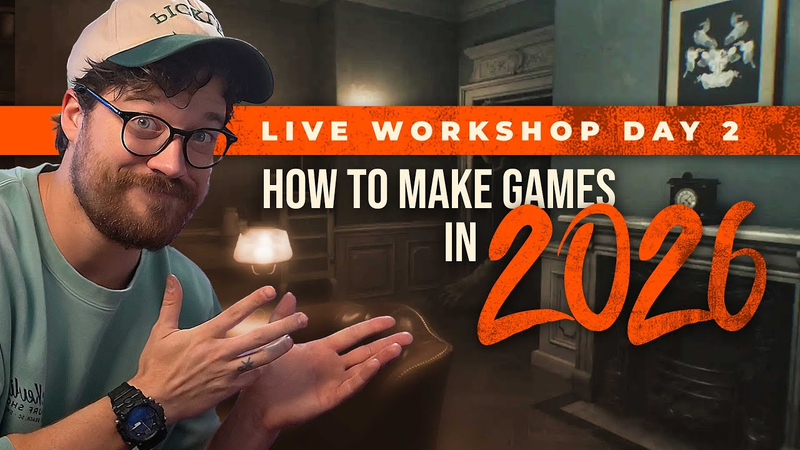
How To Make Games In 2026 (Workshop, Day 2)
Achieving AAA-quality visual fidelity in indie game development is highly feasible through a disciplined, cost-effective workflow centered on custom texture creation and meticulous set dressing.
- Indie developers can achieve AAA-quality visuals by replacing expensive 3D modeling and high-poly baking with original photography and royalty-free assets.
- Custom texture creation using tools like Photoshop and Materialize allows for the generation of normal, height, and smoothness maps to add depth to basic geometry.
- Adhering to Physically Based Rendering (PBR) principles, specifically the precise configuration of alpha channels for roughness and specular highlights, is essential for visual fidelity.

🚨📢 BREAKING NEWS: Meta Buys AI Brains, Love & Deep Space Goes Royal, GOG Goes Home
The gaming industry is currently navigating a period of significant transformation characterized by aggressive AI integration, strategic corporate restructuring, and the elevation of live-ops into global cultural phenomena.
- Meta has acquired the Singapore-based startup Manus to consolidate autonomous AI agent capabilities for its consumer and business product lines.
- CD Projekt has divested the GOG platform to co-founder Mikall Kinski for approximately 90 million PLN to refocus its corporate strategy exclusively on AAA game development.
- Gamebyte secured $1 million in funding to develop AI tools capable of generating playable games and advertisements directly from text prompts, signaling a shift toward rapid prototyping.
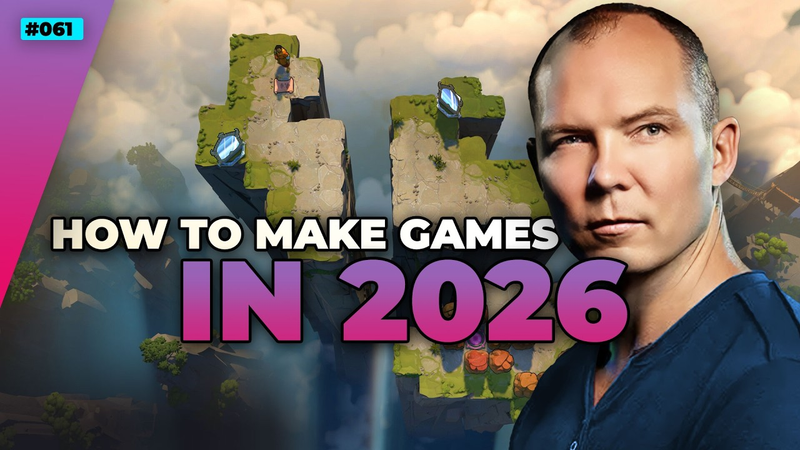
How To Make Indie Games In 2026 w/ Jonathan Blow — Full Time Game Dev Podcast Ep. 061
The modern indie game landscape is defined by intense competition and a precarious pricing environment, necessitating a strategic shift toward long-term discoverability.
- Jonathan Blow’s upcoming game, Order of the Sinking Star, represents a 10-year development cycle that involved building a custom game engine and a custom programming language from scratch.
- Steam remains the most accessible platform for indie developers to reach a large audience, though developers must still navigate the difficulty of standing out in a crowded marketplace.
- Large Language Models (LLMs) are effective for debugging specific issues by scanning multiple controllers and systems, but they struggle to maintain complex, multi-system constraints in larger codebases.