Game Design reports and market data
Documents

Sunday City Review: GTA or Casino? Sunday City’s INSANE Onboarding
Sunday City represents a sophisticated evolution in the social casino genre, successfully employing a bait-and-switch strategy that masks a traditional gambling core behind the aesthetic of a life-simulation or open-world game.
- Sunday City generates over $60,000 in daily in-app purchase revenue and currently holds a top-10 position within the social casino category.
- The game utilizes a 'bait-and-switch' design, masking a traditional gambling core behind an urban life-simulation aesthetic to lower the barrier to entry for casual players.
- Long-term engagement is driven by a 'third-generation' social casino model that layers meta-game systems, such as collectible albums and seasonal events, over core slot machine mechanics.
PLAYERUNKNOWN’s Comeback… So Why Did They Do This?
PlayerUnknown Productions, a fully remote AAA studio led by Brendan Greene and CEO Kim Nordstrom, serves as the focal point for an analysis of studio strategy and the risks associated with high-profile game development.
- PlayerUnknown Productions, backed by a $70 million investment from Krafton in 2021, released the survival title Prologue as a technical proof-of-concept rather than a flagship product.
- Prologue failed to gain market traction, peaking at only 182 concurrent players on Steam.
- The studio’s decision to launch Prologue in Early Access invited negative public scrutiny, as the release lacked the controlled environment typically used for technical testing.

Inside General Intuition’s Push to Build Embodied AI Agents
General Intuition is advancing the development of embodied AI agents by utilizing billions of gameplay clips from the Metal platform to construct sophisticated world models.
- General Intuition is developing world models that simulate environments by predicting future frames based on user actions, allowing for interactive, embodied AI agents rather than just passive video generation.
- The company is leveraging a proprietary dataset from Medal, a platform for recording and sharing gameplay clips, to train agents on human behavior across diverse, consistent first-person perspectives.
- General Intuition aims to provide game developers with tunable AI bots that allow for skill-level adjustments (on a scale of 0 to 100) and steerable text-based prompts to control agent behavior.
What Nintendo's Aggressively Bad Patents REALLY Mean | Extra Credits Gaming
Nintendo’s recent acquisition of patents related to creature-battling mechanics and mount-based traversal systems has sparked significant industry concern regarding their potential to stifle competition.
- Nintendo is utilizing patents as a strategic tool to potentially stifle competition, specifically targeting smaller developers who lack the financial resources to defend against expensive litigation.
- Patent litigation is prohibitively costly, with Inter Partes Review (IPR) proceedings costing upwards of $500,000 and full-scale federal court litigation reaching up to $2,000,000 per patent.
- Nintendo's recent patents, such as the September 2024 'Amore' patent, contain highly specific, narrow claims that require a game to replicate a precise sequence of user inputs and mechanics to constitute infringement.

GoldenEye and TimeSplitters creators return: “Maybe this isn’t what we should be doing”
The modern gaming industry is currently defined by a fundamental tension between the instability of large-scale production and the enduring dominance of legacy content.
- Over 50% of all current gaming activity is dedicated to titles that are at least six years old, highlighting the market's heavy reliance on legacy content.
- New game releases, excluding annualized sports franchises, are struggling to capture even 1% of the active player base.
- Major publishers are increasingly pivoting toward remakes and established live-service ecosystems to secure revenue as consumers prioritize massive backlogs over new, full-priced titles.
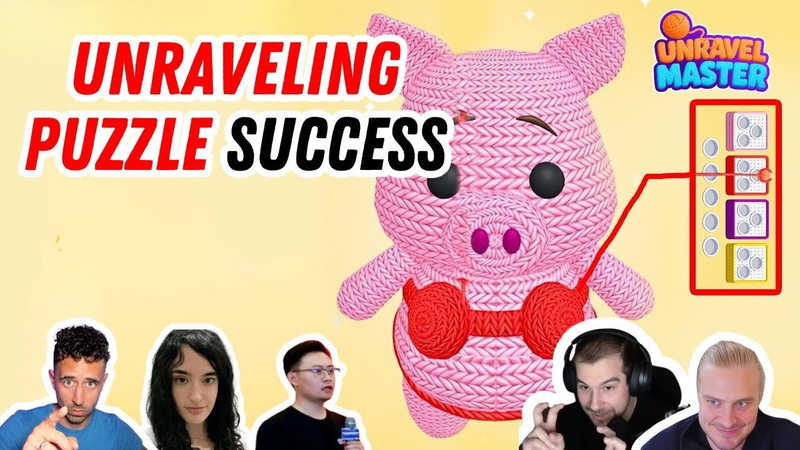
🐷🧶 Unravel Master’s success explained: 25 key insights on modern Hybrid-Casual design
Unravel Master exemplifies the modern hybrid-casual model by synthesizing hyper-casual user acquisition tactics with the deep, sustained engagement mechanics of traditional puzzle games.
- The hybrid-casual model achieves financial stability by targeting a 50/50 or 60/40 revenue split between in-app purchases and advertising.
- Early-stage difficulty spikes, a technique adapted from Chinese puzzle design, are used to drive Day 0 monetization and identify high-value users.
- User acquisition performance is maintained in high-CPI markets through a high-frequency creative strategy that produces hundreds of unique assets in short timeframes.
Writing Clean Code for Games (Industry Veteran)
Game development success is fundamentally driven by human coordination, team dynamics, and pragmatic design rather than the pursuit of perfect technical architecture.
- Success in game development is driven 80% by choosing the right game and team, while technical programming skill primarily serves to reduce bugs, minimize crunch, and improve maintainability.
- Avoid over-architecting systems before development begins; most successful games are built on codebases that are messy but functional rather than perfectly structured.
- Gameplay programmers should function as 30% game designers, focusing on player-facing features and the fun factor rather than treating development as a pure coding challenge.
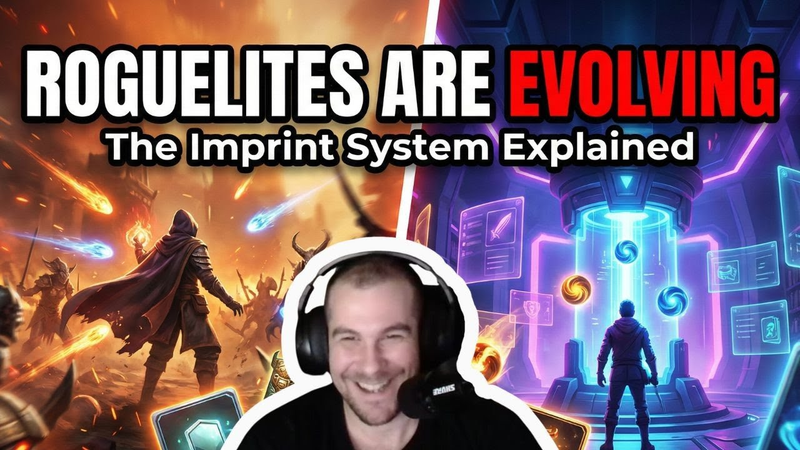
The next evolution of Roguelites is finally here by Jakub Remiar
The roguelite genre, while currently dominating mobile and Steam markets through titles like Survivor.io and Vampire Survivors, faces a critical design stagnation.
- The roguelite genre is shifting from temporary, reset-heavy cycles toward an 'imprint system' that allows players to save successful builds as permanent, usable assets.
- By 2026, the adoption of imprint systems is expected to become a standard feature for major mobile studios and Western developers to combat design stagnation.
- Imprint systems increase player retention by allowing users to deploy their saved builds into diverse game modes like PvP, daily missions, and specialized tournaments.
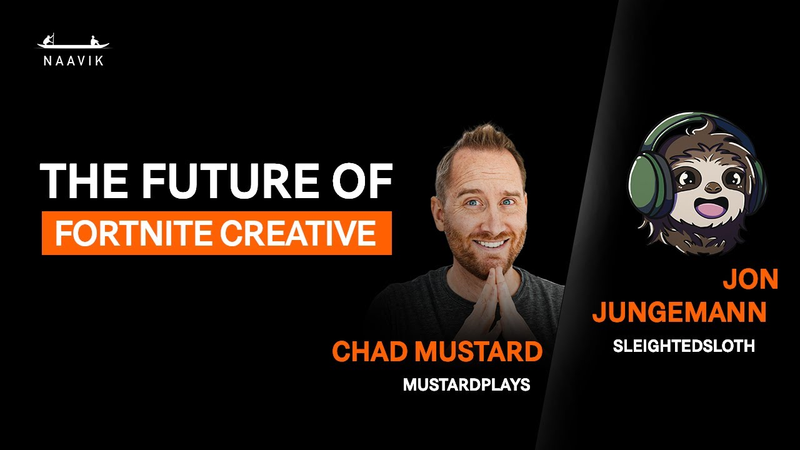
The Future of Fortnite Creative
The Fortnite Creative ecosystem is undergoing a fundamental transformation, shifting from a supplemental mode into a professionalized marketplace capable of sustaining diverse, non-Battle Royale experiences.
- Epic has introduced in-island item sales, allowing creators to monetize experiences through gated content or virtual items, though this creates potential friction with Epic's own internal monetization strategies.
- Fortnite's concurrent user base has declined from a peak of over 3 million during the 'Fortnite OG' event to approximately 1 million, signaling a shift in the platform's current engagement lifecycle.
- New user acquisition tools, including UA rewards and paid campaigns, currently operate on an auction-based CPM model where early bidding costs are volatile, with some participants bidding as high as $20 per CPM.

Let's Review Your Games — Ep. 037 (Part 2)
Independent game development in 2024 requires a strategic balance between technical polish and high-concept marketability.
- To maximize streamability and viral potential, indie games should incorporate high-stakes mechanics such as permadeath, intense difficulty, or horror elements that encourage streamer engagement.
- Visual clarity in puzzle games is essential; UI elements with different behaviors must be visually distinct, and sprite assets require proper import settings to ensure a crisp, high-quality appearance.
- Game developers should utilize environmental storytelling and lighting to establish mood, as seen in the effective use of dark, atmospheric lighting in 'The Hambagu Shop'.

Let's Review Your Games — Ep. 037
The indie title Devoid demonstrates significant creative potential, characterized by a compelling art style and well-conceived core mechanics.
- Menus serve as a primary indicator of a game's overall polish; a lack of hover sound effects or excessive time spent navigating them often signals an unrefined product.
- Avoid using walls of text to explain mechanics; instead, use icons or short video clips to demonstrate controls, and introduce mechanics gradually rather than all at once.
- Text-based dialogue should be paced automatically or allow for manual progression, as players cannot gauge reading speed without accompanying audio cues.

Let's Review Your Games — Ep. 036
Indie game development requires a rigorous focus on the intersection of technical polish and player experience.
- Game UI should balance aesthetic and functionality, with the host recommending blurred backgrounds and darker, cleaner designs over heavy chromatic aberration effects to improve professional presentation.
- Developers often struggle with lighting consistency due to high-brightness gaming monitors, leading to games that appear too dark or have flat, cheap-looking specular highlights on standard displays.
- Effective player feedback requires clear, immediate sensory cues, such as audible impact sounds for combat and on-screen prompts for key mechanics like flashlights to prevent player confusion.