Game Design reports and market data
Documents
An Introduction to Situational Game Design
Situational game design offers a player-centric framework for analyzing and creating games, shifting the focus from the mechanics of the interface to the internal experience of the player.
- Situational game design shifts the focus from mechanical feedback loops to the player's internal experience, defining play as the intersection of external system constraints and the player's personal strategies and expectations.
- A 'situation' is defined as a stable set of constraints limiting player action, while a 'move' is any physical or cognitive action that alters those constraints and transitions the player into a new state.
- To maintain engagement, designers should provide a meaningful range of choices, ideally between three and seven options per situation.
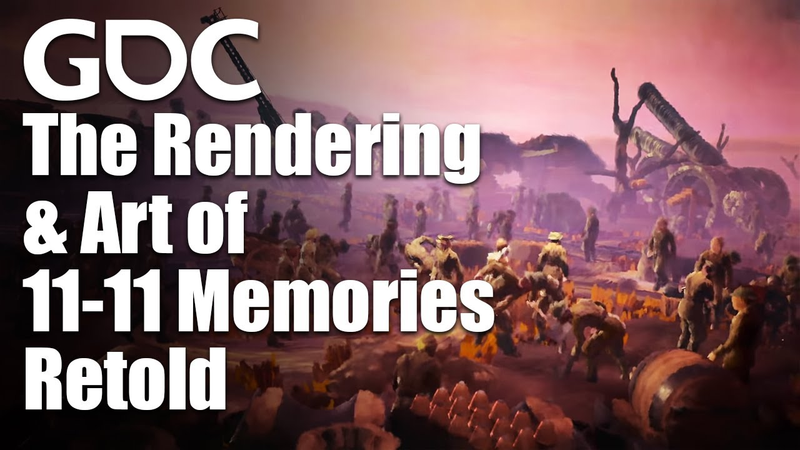
A Living Painting: The Rendering and Art of 11-11 Memories Retold
The development of 11-11: Memories Retold demonstrates a successful integration of technical engineering and artistic vision to create a distinct, oil-painted aesthetic within a 16-month production cycle.
- To achieve a painterly aesthetic in '11-11 Memories Retold,' Aardman Animations developed a custom rendering pipeline that uses motion vectors to ensure brush strokes move coherently with the scene, preventing screen-door flickering.
- The rendering pipeline utilizes a coarse culling system with 16x8 tiles to manage particle-based brush strokes, while a Kawase blur filter is applied to backgrounds to soften edges and maintain a painterly look.
- To optimize performance, the team repurposed an unused channel in the G-buffer to store specularity data, freeing up an entire buffer for the painterly effect at the cost of more expensive lighting calculations.
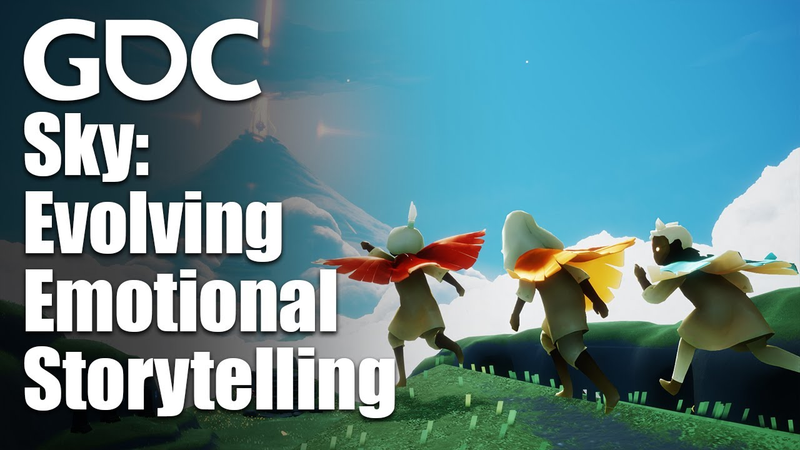
Evolving Emotional Storytelling in thatgamecompany's Sky
Sky: Children of the Light represents a fundamental shift in game design, moving away from traditional conflict-driven narratives toward an emotion-first framework that prioritizes social connection and altruism.
- thatgamecompany shifted the traditional hero’s journey to an emotion-first framework in Sky: Children of the Light, replacing conflict-driven mechanics with altruism and social connection.
- The game utilizes a candle mechanic to facilitate gifting and cooperation, intentionally replacing transactional progression with systems that reward collaborative behavior.
- Designers successfully iterated on social mechanics by pivoting away from forced progression after early beta feedback identified friendship systems as unclear or overly greedy.
Designing Games for Female Audiences | Renata Caldani, Maryna Iaremenko, & Joana Marques
The female gaming demographic represents a significant and rapidly expanding segment of the global market, currently comprising over 50 percent of mobile players across a broad age range of 10 to 65.
- Women now represent over 50 percent of the global mobile gaming market, spanning a broad age range from 10 to 65.
- Female players are increasingly moving away from simplistic casual titles in favor of mid-core and hardcore gaming experiences, such as Genshin Impact and Minecraft.
- To effectively capture this demographic, developers must abandon gendered marketing tropes and one-size-fits-all design philosophies in favor of data-driven, inclusive strategies.
How Killer Queen Built an Esports Scene on an Indie Budget
The development of a national esports scene for the indie arcade game Killer Queen demonstrates how small studios can foster competitive communities through grassroots engagement rather than high-budget marketing.
- Killer Queen Arcade built a national esports scene by leveraging a five-on-five team design that mandates physical proximity, forcing players to interact and form local communities at arcade venues.
- Developers can foster community ownership by releasing source assets like logos and sprites, allowing fans to create their own merchandise, event posters, and marketing materials.
- Consistency in event scheduling, such as the '5v5 Fridays' at NYU, is more effective for community retention than sporadic, high-effort events because it lowers the barrier to entry for regular participation.
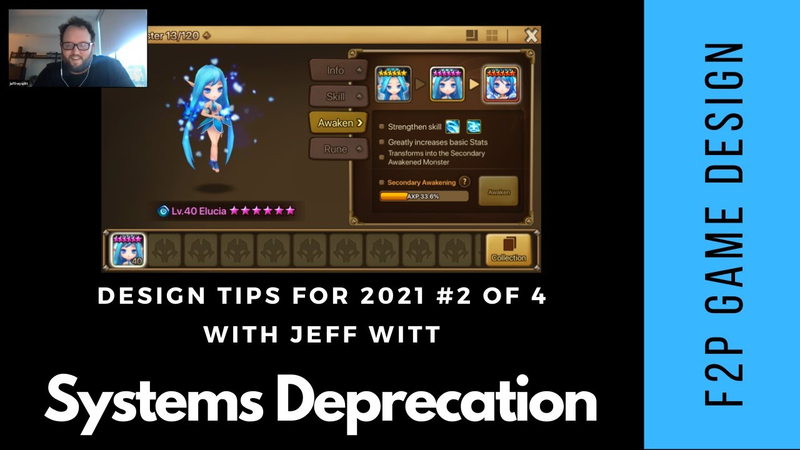
F2P Design Tips for 2021, Embrace System Deprecation (2 of 4) Ft. Jeff Witt
For developers managing long-running free-to-play games, the strategy of system deprecation is essential for maintaining economic health and player engagement.
- Developers of long-running free-to-play games should use system deprecation to reset economic balance when veteran players accumulate resource stockpiles that render original progression systems ineffective.
- Instead of inflating costs or adding incremental tiers, developers should introduce entirely new currencies or inputs to regain control over the game economy and reset player expectations.
- The mobile title Summoners War successfully implemented this strategy by introducing a 'second awakening' system that required new energy and boss-fight materials, bypassing the obsolete resources held by long-term players.
I suck at 3D and REMADE Resident Evil 8 Village... (IN ABOUT A WEEK)
This project demonstrates the feasibility of recreating high-fidelity environments from AAA titles like Resident Evil Village using modular assets and rapid prototyping techniques within the Unity engine.
- Atmospheric fidelity in 3D environments is driven primarily by lighting, sound design, and volumetric fog rather than the creation of unique, custom-built assets.
- Modular asset packs and rapid prototyping allow indie developers to recreate high-fidelity AAA-style environments, such as Resident Evil Village, within a one-week development window.
- Strategic 'asset flipping' is a viable production technique when developers treat game environments like film sets, prioritizing composition and visual consistency over individual prop creation.
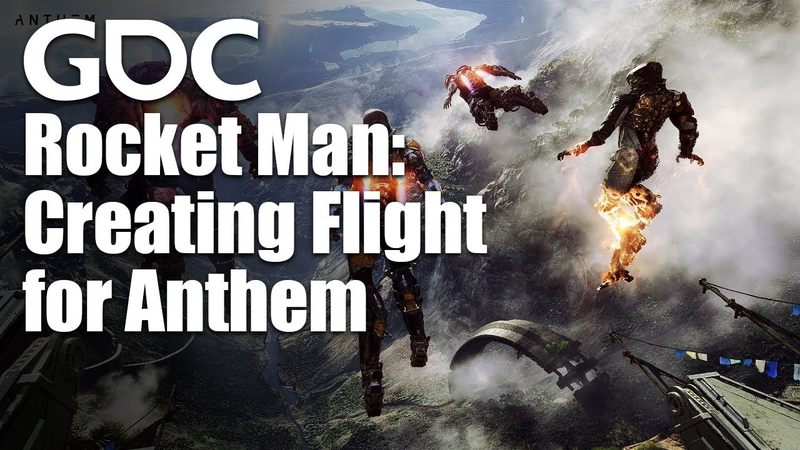
Rocket Man: Creating Flight for Anthem
The development of flight mechanics in Anthem centers on the pursuit of a high-fidelity superhero fantasy, prioritizing intuitive, fluid movement over strict adherence to realistic physics.
- To solve the problem of players bypassing level design by flying over the map, BioWare implemented a heat-management system that forces players to navigate through cooling environments like waterfalls or water surfaces, turning traversal into a skill-based mechanic.
- The team abandoned realistic physics in favor of 'game feel,' utilizing a binary boost state that triggers immediate visual feedback—such as camera shake, field of view adjustments, and post-processing effects—to simulate speed while the character's actual velocity ramps up over time.
- To maintain consistent physics, the game capsule never rotates on the X or Z axes; instead, all banking, pitching, and rolling visuals are handled entirely through animation, requiring 27 unique base poses per suit to cover slow, medium, and fast flight speeds.
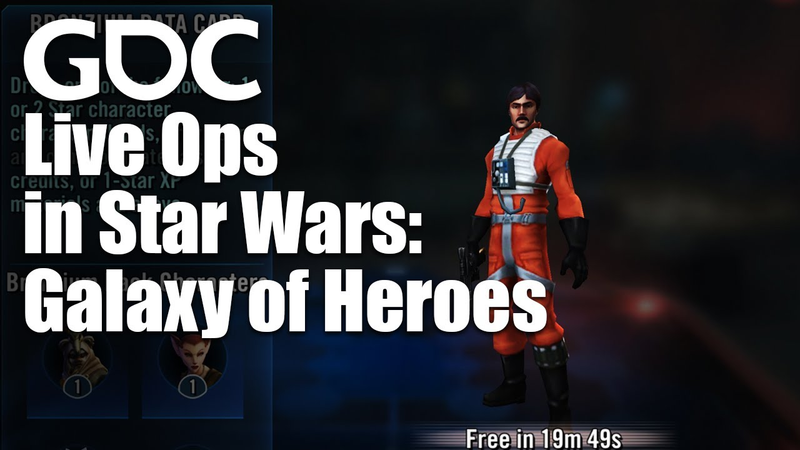
Live Ops in Star Wars: Galaxy of Heroes
The live operations strategy for Star Wars: Galaxy of Heroes centers on maintaining a durable, character-based economy within a mid-to-hardcore mobile RPG framework.
- The game maintains a durable economy by treating individual characters as the primary units of value, ensuring long-term player investments remain protected against power creep.
- To manage a roster of over 170 characters, the development team employs a 'nesting utility' strategy that creates specific faction-based synergies rather than relying on static power hierarchies.
- The ecosystem approach forces players to utilize their entire collection by revitalizing legacy characters, preventing new releases from rendering older units obsolete.
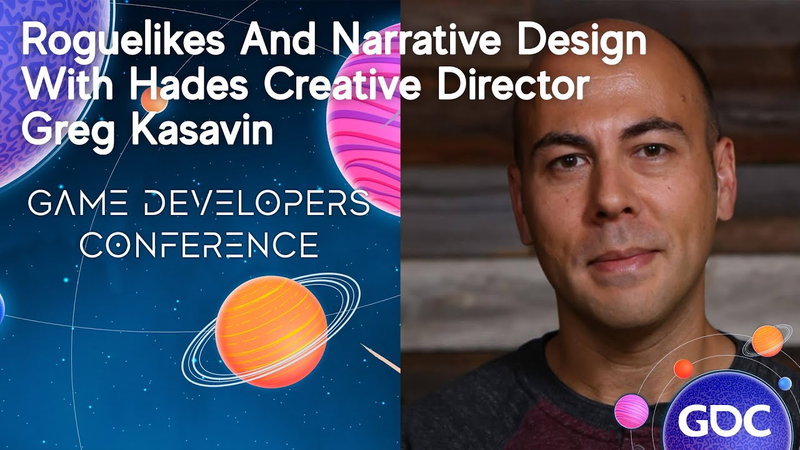
Roguelikes And Narrative Design With Hades Creative Director Greg Kasavin - GDC Podcast
The transition from game journalism to development offers a unique perspective on the industry, emphasizing the importance of analytical rigor in creative production.
- Supergiant Games maintains a small, stable team structure to preserve the long-standing personal relationships and collaborative synergy that define their development process.
- The studio prioritizes the element of surprise in game design, intentionally avoiding sequels to ensure each project offers a distinct and novel experience.
- Supergiant Games utilizes Early Access to shorten the feedback loop, allowing them to test core ideas and validate narrative resonance with players long before a full release.
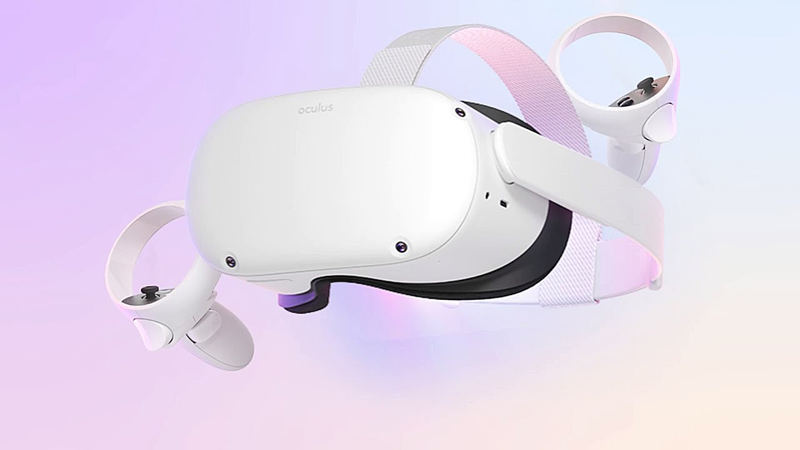
What's next for VR with Scott Rogers | Game Dev Unchained Episode 260
Virtual reality is currently undergoing a significant resurgence, driven by advancements in hardware accessibility and the elimination of restrictive cabling.
- Mass adoption of VR remains stalled because the technology is currently a niche luxury hindered by high hardware costs, physical space requirements, and a consumer preference for low-effort, seated entertainment.
- The industry is shifting its strategic focus from location-based VR, which struggled with high maintenance and pandemic-related setbacks, toward the evolution of augmented reality.
- Future growth in AR depends on moving beyond basic social media filters to integrate sophisticated environmental recognition and haptic feedback for more tactile user interactions.
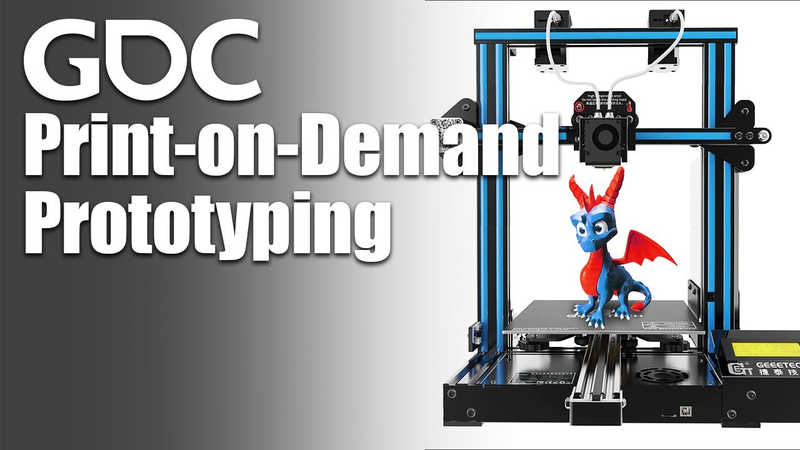
Using Print-on-Demand for Prototyping and Fast-to-Market Paths in Game Design Research
Print-on-demand services offer a viable, sustainable alternative to traditional manufacturing for tabletop game designers, particularly those focused on niche educational or historical subjects.
- Print-on-demand (POD) services like The Game Crafter offer a viable path for game designers to bypass traditional manufacturing hurdles, such as international shipping logistics, managing return merchandise authorizations, and securing retail shelf space.
- Designers must conduct rigorous quality assurance (QA) rounds; in the case of the 'Lost and Found' series, the team performed 19 rounds of QA on the final print-ready files before moving to production.
- Regulatory compliance regarding child safety is critical, as POD providers may have different age-rating standards (e.g., 12+ vs. 14+) than legal requirements for ink safety and small-part hazards, necessitating independent product liability insurance.