Game Design reports and market data
Documents
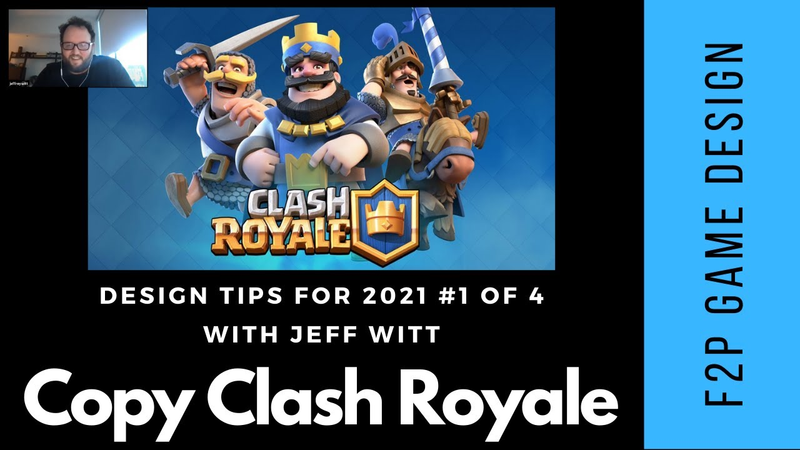
F2P Design Tips for 2021, Copy Clash Royale! (1 of 4) Ft. Jeff Witt
Game design strategy for 2021 emphasizes the importance of selectively adopting successful mechanics from established titles rather than replicating entire systems.
- Adopt the real-time, card-based combat mechanics of Clash Royale while decoupling them from its shallow card economy to avoid long-term engagement and monetization plateaus.
- Replace flat, steep stat-boost models with a granular progression system spanning 40 to 60 levels rather than the standard 12, ensuring more frequent rewards and consistent player achievement.
- Mitigate the frustration of long grinds by keeping players within 'striking distance' of the next milestone through more frequent, manageable progression rewards.
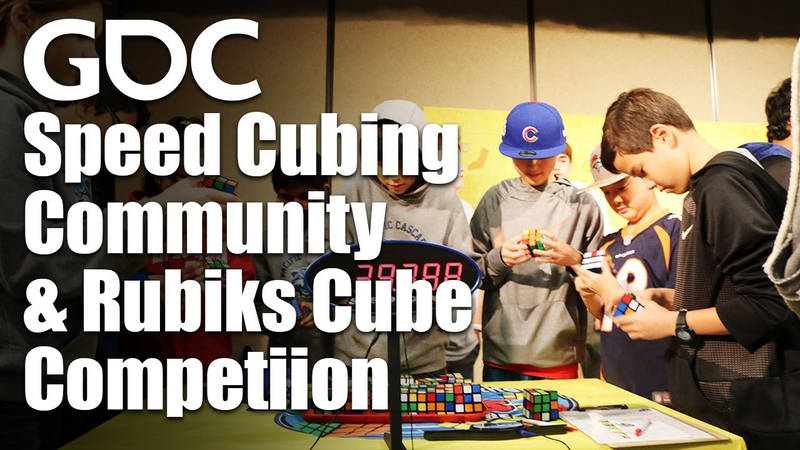
How the Speed Cubing Community Turned Rubik's Cube into a Competitive Genre
Speed cubing has successfully transitioned from a niche hobby into a structured global competitive sport by prioritizing community-driven governance and standardized performance metrics.
- The speed cubing community transformed the Rubik's Cube from a stagnant 1980s toy into a competitive sport by establishing the World Cube Association (WCA) to standardize regulations and event formats.
- Competitive speed cubing utilizes an 'average of five' scoring system, which discards the fastest and slowest times to mitigate the impact of luck-based scrambles and ensure fair performance comparisons.
- The sport is categorized as a 'low-trust' game with parallel play, meaning participants solve puzzles independently without direct interference, fostering a collegiate and friendly environment.

Superstar Session: How to Enhance the Gaming Experience Through Content Micro-personalisation
Micro-personalization serves as a critical strategy for modern game developers to enhance player retention and revenue by leveraging data science and artificial intelligence.
- Micro-personalization leverages centralized player data and AI to transition from generic engagement models to highly tailored, context-aware experiences.
- Studios can manage technical complexity by using behavior-based player clustering, which enables targeted content delivery at scale without requiring individual-level processing.
- Implementation requires a dual-model framework that integrates machine learning with business-oriented rules to provide real-time suggestions, such as gear recommendations or personalized in-app purchase offers.

I Made Animal Crossing, BUT WITH GUNS
The development of a modified, combat-oriented version of the Animal Crossing aesthetic serves as a case study in efficient indie game design.
- Indie developers can achieve high-quality, viral-ready results by prioritizing workflow efficiency and focusing on core gameplay loops rather than building every component from scratch.
- Visual cohesion across disparate assets can be achieved by applying a universal shader, such as Toon Colors Pro 2, to unify custom-modeled and third-party resources.
- The signature curved-world aesthetic can be replicated in Unity by utilizing Blender’s bend modifiers combined with custom projectile physics to account for non-linear geometry.
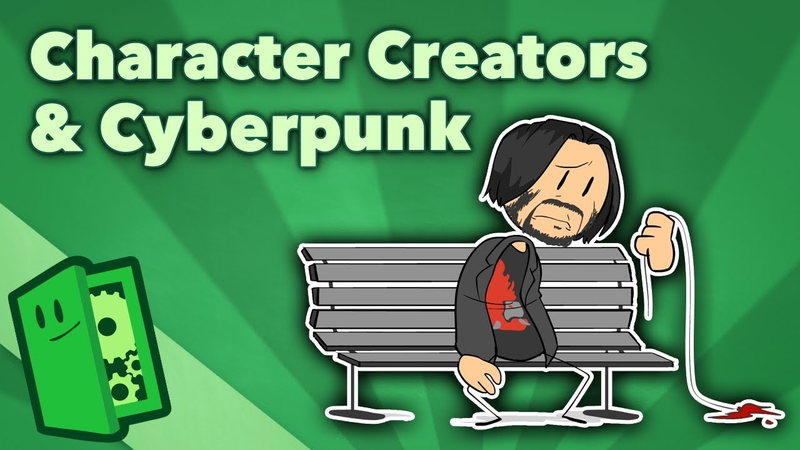
Character Creators & Cyberpunk - Player Freedom in Expression - Extra Credits
Effective character creators serve as a critical bridge between a game’s thematic identity and player self-expression.
- Developers should decouple customization levers—such as voice, hair, and body type—to ensure independent variables are not artificially linked, thereby maximizing player agency.
- Rigid design frameworks, rather than technical limitations, are the primary cause of restrictive character creators that prevent non-binary or gender-nonconforming expression.
- Cyberpunk 2077 failed to deliver on marketing promises of radical inclusivity because it locked hair styles to body types and tied voice options to gender, contradicting its own themes of human malleability.
Winding Road Ahead: Designing Utility AI with Curvature
The presentation introduces Curvature, a standalone, open-source utility AI design tool developed to address the common industry challenge of making complex AI behaviors intuitive and accessible for designers.
- Curvature is an open-source, engine-agnostic utility AI tool designed to decouple AI logic from game engine pipelines, enabling real-time editing and faster iteration.
- The tool utilizes a natural language-based preset generator that maps plain-language behavioral descriptions to complex mathematical response curves, lowering the barrier to entry for designers.
- Designers can achieve 'intuition through play' by visualizing how specific input variables, such as distance or team affiliation, directly influence agent scores and final behavioral outcomes.
The Elementary Particles
Visual effects design functions as a highly contextual discipline where technical execution must align strictly with the unique gameplay mechanics and narrative requirements of a project.
- Visual effects design must be context-dependent, requiring artists to adapt textures, motion cues, and spatial distribution to the specific gameplay mechanics and narrative needs of each project.
- The development process follows an iterative cycle that begins with low-fidelity representations for timing and debugging before layering in high-detail and volumetric elements.
- Designers must employ manual adjustments and visual cheats to preserve gameplay readability when camera angles or weapon positioning threaten to obscure critical information.

The Science of Desirability
Desirability functions as the critical intersection between sensory anticipation and emotional appraisal, serving as the primary metric for whether a digital experience meets or exceeds user expectations.
- Desirability is defined as the anticipation and expectation that an experience will meet or exceed a user's hopes, a metric that varies significantly between novices and experts.
- Experts possess a specialized vocabulary—such as tempo or time signatures in music—that allows them to articulate why they like or dislike an experience, whereas novices often struggle to move beyond vague, unhelpful feedback.
- Developers can bridge the communication gap with users by providing them with specific terminology or worksheets during playtesting to help them translate general feelings into actionable design feedback.
Middle-earth: Shadow of War: Creating Multi-Character Combat Animations
The development of Middle-earth: Shadow of War centered on the implementation of complex, multi-character combat animations to establish a visceral and brutal aesthetic.
- Monolith Productions managed a high-volume animation pipeline for Middle-earth: Shadow of War by producing 1,200 unique sync-action animations between the player and orcs within a three-year development window.
- To maintain production efficiency, the team utilized a motion capture-first workflow where in-house animators performed the stunts, allowing for rapid iteration and immediate feedback from designers on-site.
- The studio employed a 'destructive' animation workflow that prioritized baking keys and layering poses over traditional non-destructive rigging, enabling animators to quickly adjust timing and weight without getting precious about curve handles.
Fighting The Devs of a Broken Game
This analysis examines the evolution of indie game development through the lens of a speedrunning competition featuring Glitcheon, a title originally created during a community game jam.
- Successful post-jam game development relies more on sustained team synergy and iterative refinement than on simply increasing the volume of content.
- The transition from a rapid prototype to a polished product involves replacing placeholder assets with 3D models, implementing spatial audio, and utilizing advanced lighting and hand-painted textures.
- A one-year development cycle following a community game jam can transform a minimalist project into a complex, feature-rich title with competitive viability.
World Building with Architecture
Architecture functions as a foundational narrative and navigational instrument in game design, operating beneath the level of conscious player awareness to establish tone, strategy, and emotional context.
- Architecture serves as a primary narrative and navigational tool, using materiality, scale, and spatial hierarchy to guide player behavior subconsciously without relying on HUDs or dialogue.
- Games like The Legend of Zelda: Breath of the Wild, Fallout 3, and Inside demonstrate that silhouette-based wayfinding and cultural material expression are essential for creating immersive, legible worlds.
- Developers can leverage the absence of real-world financial and socio-political constraints to employ non-Euclidean geometry and forced perspective, creating structures impossible in traditional construction.
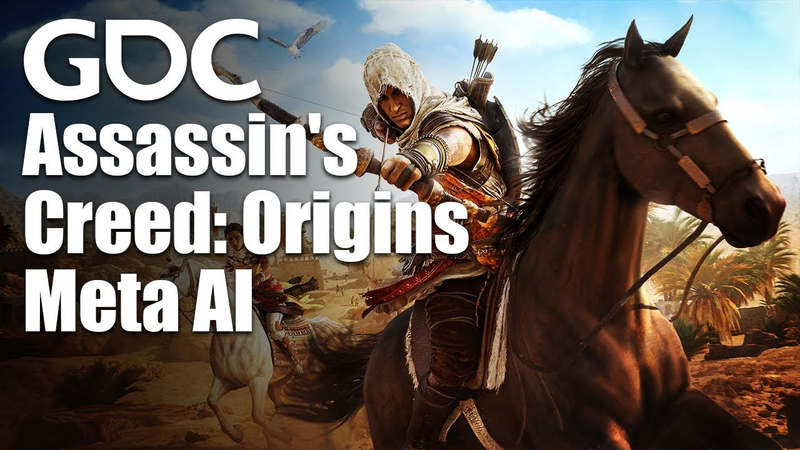
Virtual Insanity: Meta AI on Assassin's Creed: Origins
The development of Assassin’s Creed: Origins introduced a sophisticated Meta AI architecture designed to sustain a persistent, living ecosystem within a massive open-world environment.
- Ubisoft implemented a 'Meta AI' system for Assassin's Creed: Origins that manages NPCs and objects globally, allowing them to function autonomously, navigate, and maintain persistent states even when they are far from the player or outside the loaded nav mesh.
- The game utilizes an AI network graph to handle long-range navigation for entities, enabling NPCs to travel across the map and perform scheduled tasks like eating or socializing without requiring the player's presence.
- To optimize performance, the engine uses a component-level Level of Detail (LOD) system with six states based on distance and visibility, allowing the game to disable or reduce the update frequency of specific components like head-tracking or AI logic.