Game Design reports and market data
Documents
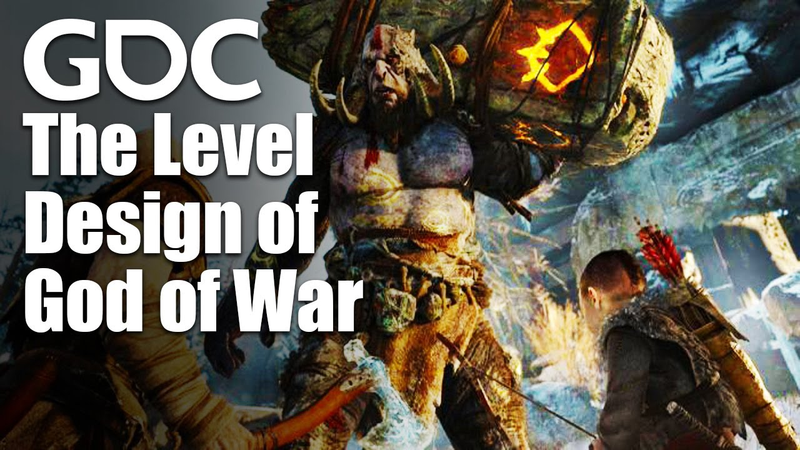
The Level Design of God of War
The transition of the God of War franchise from a fixed-camera action series to an immersive, modern experience is anchored by three core pillars: combat, narrative, and exploration.
- The game’s design is built on three core pillars—combat, narrative, and exploration—which serve as a consistent lens to ensure environmental cohesion and seamless transitions between gameplay and cinematic storytelling.
- Development teams utilized standardized architectural metrics based on specific unit values for movement and spacing to ensure technical consistency and creative flexibility across the entire game world.
- To maintain pacing and prevent repetition, the design team introduced new mechanics as thematic anchors every 90 to 120 minutes.
Player Interactions Visualized
Visual effects serve as a fundamental pillar of player immersion, transforming static game environments into responsive, living worlds.
- Environmental interaction systems should prioritize a few high-quality, refined mechanics over a high volume of less-polished features to ensure meaningful player engagement.
- Developers should implement interactions using efficient shader-based methods, such as vertex manipulation or shader remapping, rather than relying on complex per-object logic.
- Tracking player movement and proximity is best achieved through the use of top-down buffers and render targets, which allow for scalable performance in expansive game worlds.

Understanding the New Opportunities in Mobile Game Audio | PocketGamer.biz RoundTable
Audio has evolved from a secondary production element into a primary driver of player engagement and monetization within the mobile gaming industry.
- Mobile game audio has transitioned from a secondary production element into a primary driver of player engagement, monetization, and emotional connection.
- In-game audio advertising is emerging as a critical non-intrusive revenue stream to offset the impact of privacy-related data restrictions such as iOS 14’s IDFA changes.
- Developers are leveraging AI-driven voice synthesis and social audio to create immersive environments that align with modern multitasking and social interaction habits.

Defying Expectations: 7 Lessons from The Sims FreePlay
The Sims FreePlay demonstrates that long-term viability in the mobile gaming market relies on transitioning from static, premium development models to iterative, live-service frameworks.
- Long-term mobile game viability requires a transition from static, premium models to iterative, live-service frameworks centered on time-limited, quest-based engagement.
- Operational efficiency is achieved by providing designers with internal tools that enable content creation without constant engineering intervention, ensuring a consistent update cadence.
- Integrating user-generated content, such as player-designed housing, effectively removes development bottlenecks while simultaneously deepening community investment.

Data Informed Decisions with the Champions of League of Legends
Riot Games employs a sophisticated, data-informed strategy to manage the character roster of League of Legends, balancing quantitative engagement metrics with qualitative sentiment research.
- Riot Games utilizes a 'breadth versus depth' framework to measure champion engagement, where breadth tracks the number of unique players and depth tracks the frequency of play per user.
- Champion updates, such as the rework of Akali, create significant spikes in play rate driven by both existing players and new users attracted by updated visuals and gameplay kits.
- Mass champion surveys are used to collect sentiment data on non-gameplay attributes like personality, voice, and visuals, allowing developers to understand player affinity beyond raw telemetry.
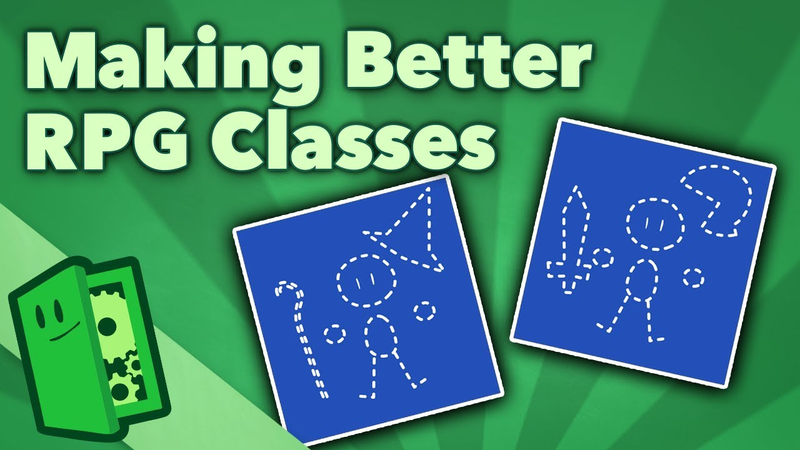
Making Better RPG Classes - What Makes a Class Classic? - Extra Credits
Effective character class design in role-playing games relies on creating pre-packaged archetypes that provide players with a clear, engaging identity.
- Effective class design requires balancing mechanical utility with thematic flavor to provide players with a distinct, engaging identity.
- Designers should maintain niche protection by ensuring each class remains the most proficient in its designated area, making every player feel essential to the group.
- Classes function best when they operate like a band, where individual specialization enables collaborative play and group synergy.

The Game Jam Experience
The game jam experience is characterized by a recurring cycle of ambitious ideation, technical friction, and eventual time-pressured development.
- Game jams function as high-intensity, 72-hour development environments that test rapid prototyping, project management, and team communication skills.
- Teams frequently struggle with 'scope creep,' where initial goals for simple, polished projects are undermined by the addition of complex features like narrative cutscenes and boss fights.
- Technical friction, specifically regarding version control and synchronization errors, is a primary cause of development delays that consume significant portions of the limited 72-hour window.

Game Development Best Practices
Game development success depends on aligning organizational structures, engineering workflows, and stakeholder expectations with the specific demands of a project’s genre, scale, and platform.
- Project management should treat task estimates as probabilistic averages rather than fixed commitments to prevent scope creep and task padding.
- Development teams should scale their organizational structure based on project needs, utilizing agile groups of 10 to 15 members for early iteration and expanding to hundreds for AAA content pipelines.
- Technical stability requires implementing continuous integration and automated testing early in the development lifecycle, tailored to the team's specific size and experience level.
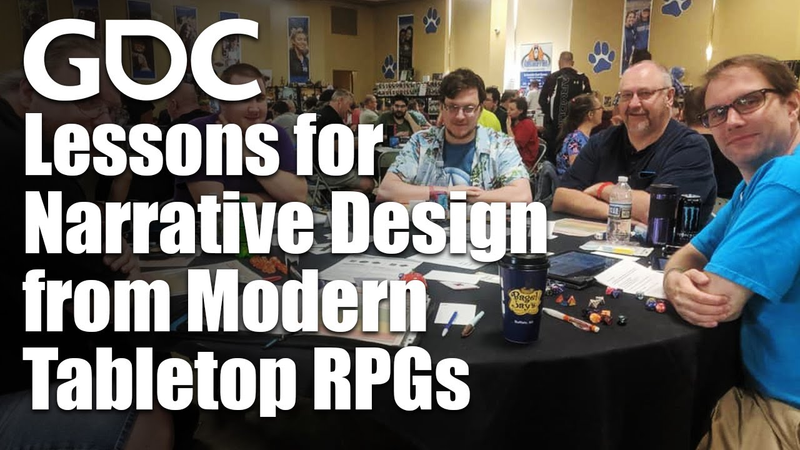
Lessons for Narrative Design from Modern Tabletop RPGs
Modern tabletop role-playing games, particularly the emerging class of indie story games, provide a transformative framework for digital narrative design by shifting the focus from traditional win-loss mechanics toward collaborative, thematic exploration.
- Modern indie tabletop RPGs prioritize narrative experience over tactical or strategic challenges, often shifting the focus from winning or losing to collaborative storytelling.
- The 'Sega Principle' in story game design suggests that when one person holds all narrative authority, the game's focus is defined by what is not mechanized, meaning developers should carefully choose which elements to explicitly systemize versus which to leave open.
- Narrative authority can be distributed by carving up the traditional Game Master role into discrete chunks or by allowing authority to flow directly from the fiction, as seen in games like 'A Thousand and One Nights' or 'Fiasco'.
Can You Make a Good Game Without Good Play Mechanics?
Modern game design is evolving beyond a strict reliance on traditional play mechanics, shifting toward a broader definition of interactive experiences that prioritize player agency and emotional resonance.
- Game design should extend beyond traditional play mechanics, as fun can be derived from exploration, social interaction, and creative expression rather than just mechanical challenges.
- Exploration can be gamified without traditional obstacles by using 'itemization' and 'visualization,' such as using checklists or stamps to define boundaries and provide a sense of progress in open-world environments.
- In role-playing design, developers must distinguish between 'being you' (allowing player personality expression) and 'being him/her' (maintaining a character's consistent identity), ensuring that player choices align with the character's established persona to preserve immersion.
Min-Spec vs AAA - The Secret Accessibility of the PC - Extra Credits
Technical accessibility regarding minimum hardware requirements is a critical, often overlooked component of game design.
- Prioritizing low minimum hardware requirements is a strategic necessity for global market penetration, as many players in regions like Brazil and India rely on PCs because consoles are prohibitively expensive or unsupported.
- Steam hardware survey data confirms that a significant portion of the global PC gaming audience utilizes entry-level GPUs, dual-core processors, and monitors with resolutions of 1080p or lower.
- Games like Valorant and Fortnite demonstrate that maintaining low minimum hardware requirements is a proven strategy for sustaining large, active, and inclusive player bases.

Self Actualization Through Video Games
Video games function as essential arenas for sense-making, providing structured environments where players exercise agency, master complex systems, and pursue self-actualization.
- Video games serve as structured environments for self-actualization, allowing players to develop transferable skills in strategic thinking, resilience, and complex system mastery.
- Current industry reliance on quarterly financial targets and short-term engagement metrics often prevents the development of deeper, psychologically meaningful game experiences.
- To capture long-term value, design philosophies must shift from purely mechanical or persona-based models toward frameworks that actively foster personal development.