Game Design reports and market data
Documents
(P)Layer Character: Designing Immersive Narratives for Location-Based AR Layers
Effective augmented reality narrative design centers on the concept of seasoning physical environments with digital layers rather than attempting to overwrite reality.
- Effective AR narrative design should 'season' physical environments with digital layers rather than attempting to overwrite reality.
- Developers should utilize reverse level design, constructing narratives around existing physical architecture to ensure the experience remains grounded in the tangible world.
- To mitigate player self-consciousness in public spaces, designers should issue direct prompts that invite participants to define their own roles within the fiction.
A House Built on Sand: Engineering Stable and Reliable AI
Achieving stability and reliability in artificial intelligence requires a rigorous architectural approach that strictly separates high-level gameplay logic from low-level mechanical services.
- Strictly decouple high-level gameplay logic from low-level mechanical services to prevent rigid systems and cascading failures.
- Replace functional proxies like animation states with dedicated mapping layers and robust predicates to ensure probabilistic AI data translates into predictable, discrete actions.
- Centralize decision-making processes and establish a unified frame of reference to eliminate floating-point errors and conflicting calculations across the codebase.
Critiquing Game Visuals: Common Problems and How to Solve Them
Effective game art critique requires moving beyond subjective, instinctive reactions toward a structured, goal-oriented analysis.
- Effective game art critique requires moving beyond instinctive reactions by defining clear project goals, such as player focus or information legibility, before evaluating visual effectiveness.
- Visual clarity issues are often solved by adjusting value contrast rather than hue; converting an image to grayscale is a reliable diagnostic tool to ensure characters or objectives stand out against backgrounds.
- To manage high-density visuals in genres like bullet hells, developers should prioritize brightness and clear silhouettes over heavy outlines to ensure hitboxes and gameplay elements remain readable.

How I Made My FPS Weapons - Devlog
The primary objective of this development overview is to define and demonstrate the concept of game feel in first-person shooters.
- Game feel is defined by the immediate, responsive relationship between player input and audio-visual output, serving as the primary differentiator between mediocre and successful FPS titles.
- Weapon systems should utilize a centralized state machine paired with animator override controllers to manage weapon-specific animations, particle effects, and kickback intensities within a streamlined codebase.
- Dynamic screen shake can be achieved by integrating Cinemachine’s Perlin noise, with amplitude and frequency scaled to match the perceived power of individual firearms.
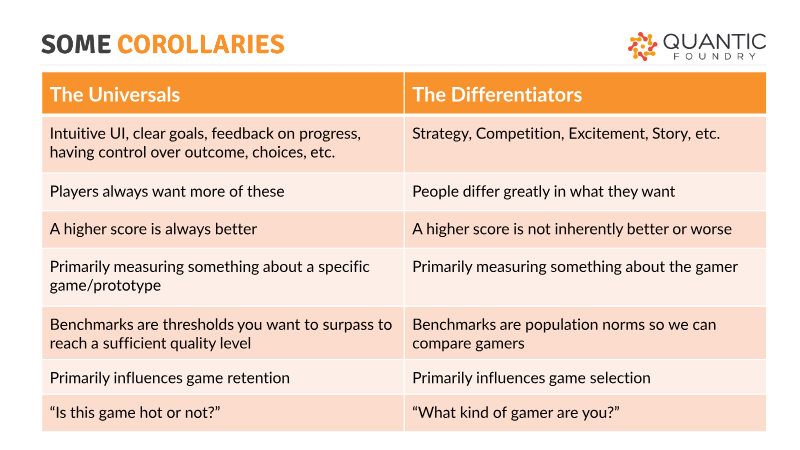
Universals vs. Differentiators: A Tale of Two Motivations
Understanding player behavior requires distinguishing between universal needs and individual differentiators.
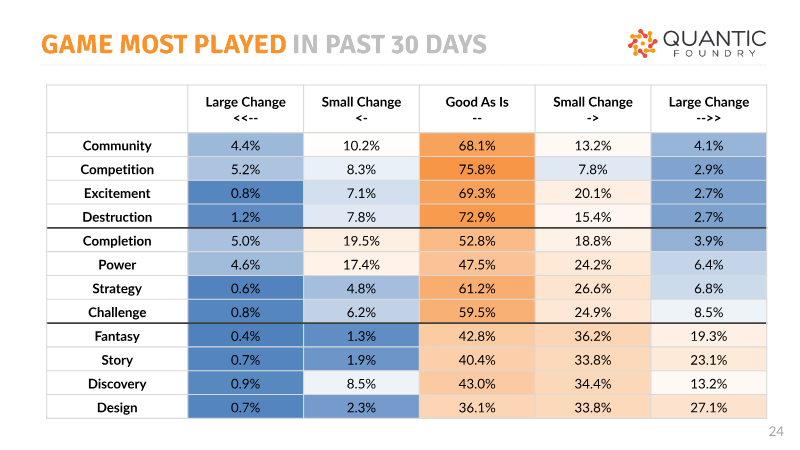
- Player behavior is driven by two distinct categories: universals, which dictate baseline retention and quality, and differentiators, which determine game selection and audience targeting.
- The underlying motivation model is built on data from over 500,000 video gamers, categorizing drives into six primary pairs: Action, Social, Mastery, Achievement, Immersion, and Creativity.
- Universal requirements—such as intuitive UI, clear goals, and consistent feedback—are objective metrics where higher performance is universally preferred for all titles.

Balancing Nightmares: An AI Approach to Balance Games with Overwhelming Amounts of Data
Modern game development faces a significant challenge in maintaining balance within titles featuring billions of potential party combinations and frequent content updates.
- Square Enix utilized genetic algorithms (GA) to automate game balancing for 'Grimms Notes Repage,' a title featuring over 10^182 possible party combinations across 80 heroes, 60 weapons, and various costumes.
- The GA system evaluates party performance by mapping diverse metrics—such as battle time for victories and damage dealt for defeats—onto a single dimension to identify the top 80 parties for each subsequent generation.
- To manage the massive, evolving dataset, the team implemented Apache Spark for scalable, cloud-based processing and Apache Superset for low-cost, customizable data visualization.

Creating a Deeper Emotional Connection: The Cinematography of God of War
The development of God of War centers on the pursuit of empathetic immersion, a state where players move beyond mere sympathy for characters to experience the narrative as a personal, lived journey.
- The development team utilized a continuous, no-cut camera technique to eliminate traditional editing, preventing the mental disconnects that typically disrupt player immersion.
- To achieve a documentary-style aesthetic, the team implemented a 'first-and-a-half-person' perspective that anchors the player directly to the protagonist’s internal emotional experience.
- The production relied on sophisticated technical maneuvers, such as invisible zooms and precise character blocking, to replicate the impact of film editing within a single, unbroken shot.

Before you make your DREAM INDIE GAME… WATCH THIS
Aspiring indie game developers should avoid making their dream project their first commercial release.
- Avoid making your dream project your first commercial release to prevent burnout and ensure you have the necessary skills for long-term success.
- Apply the 80/20 principle to your development process, focusing on the 20% of your efforts that generate 80% of your success to identify your unique value proposition.
- Release small, low-stakes projects on platforms like itch.io to build technical proficiency and practice the essential cycle of finishing and publishing content.
End-to-End Procedural Generation in Caves of Qud
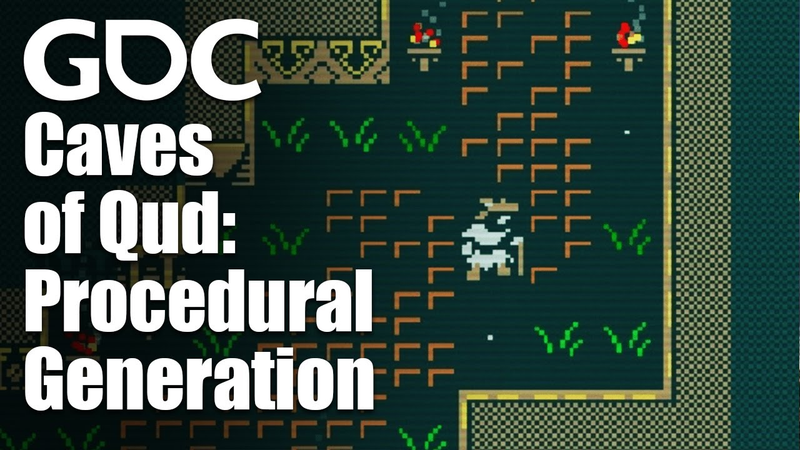
The procedural generation architecture of Caves of Qud functions as a multi-tiered pipeline designed to bridge the gap between abstract historical simulation and concrete environmental manifestation.
- Caves of Qud utilizes a multi-tiered procedural pipeline that translates abstract historical data—such as factional history and religious practices—into concrete game objects like NPCs and architecture.
- The generation process follows a five-step pipeline that converts abstract key-value pairs into specific game states only upon player entry into a map, ensuring memory efficiency and narrative coherence.
- The system integrates advanced algorithms, including Dijkstra maps for pathfinding and Wave Function Collapse for context-aware layout generation, to bridge the gap between cultural blueprints and physical environments.
5 Rules for Design Tools - Developing RPG and Tabletop tools for other people to be creative!
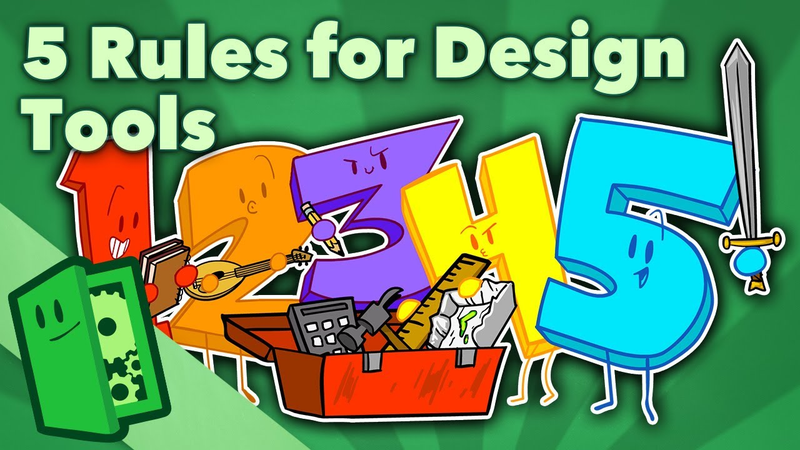
Designing effective creative tools for tabletop role-playing games and sandbox environments requires a balance between providing structure and allowing for user-driven innovation.
- Prioritize versatile, basic building blocks over hyper-specific components to maximize user creativity and system flexibility.
- Embed hidden synergies within the system to encourage user experimentation and discovery of unintended, creative combinations.
- Define a clear project vision using evocative adjectives to ensure all design elements remain cohesive throughout development.
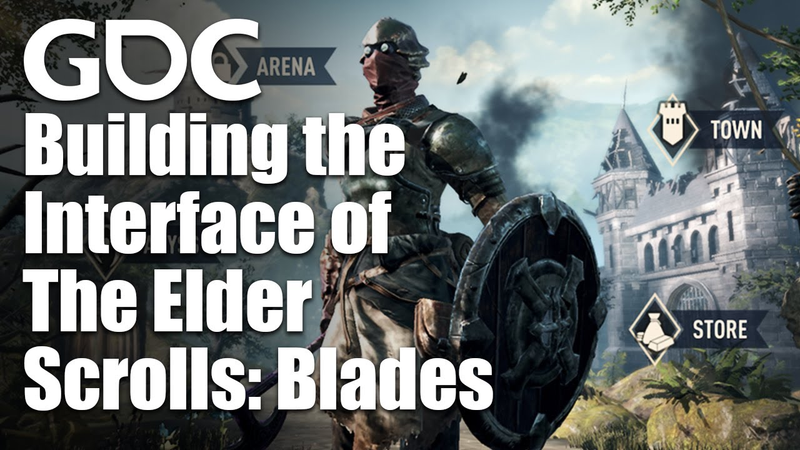
Building the Interface of The Elder Scrolls: Blades in Landscape and Portrait
The development of The Elder Scrolls: Blades for mobile devices necessitated a strategic decision regarding screen orientation, ultimately resulting in the implementation of both portrait and landscape modes.
- Supporting dual orientation in mobile game UI adds 20% to 60% to the total UI conception time, as every mock-up and wireframe must be produced for both landscape and portrait layouts.
- Portrait mode is a critical accessibility feature for mobile gaming, as it enables one-handed play for users in contexts where they cannot use both hands, such as during commutes or meetings.
- Designing for dual orientation forces UI simplification; for example, Bethesda distilled complex crafting information into simple visual indicators (red X or green check marks) to fit the narrower portrait screen, which improved user confidence during testing.
Collaborative Approaches to Getting Great VO Performances
Achieving superior voice-over performances in game development requires shifting from a transactional model to a collaborative partnership.
- Shift from a transactional model to a collaborative partnership by treating voice actors as creative contributors to foster shared ownership of the final product.
- Provide comprehensive context during auditions—including character visuals, narrative goals, and emotional arcs—to enable actors to achieve the neural synchrony necessary for authentic performances.
- Balance narrative secrecy with the actor's need for information by providing non-spoiler parallel details that maintain intellectual property security while ensuring performance depth.