Game Design reports and market data
Documents
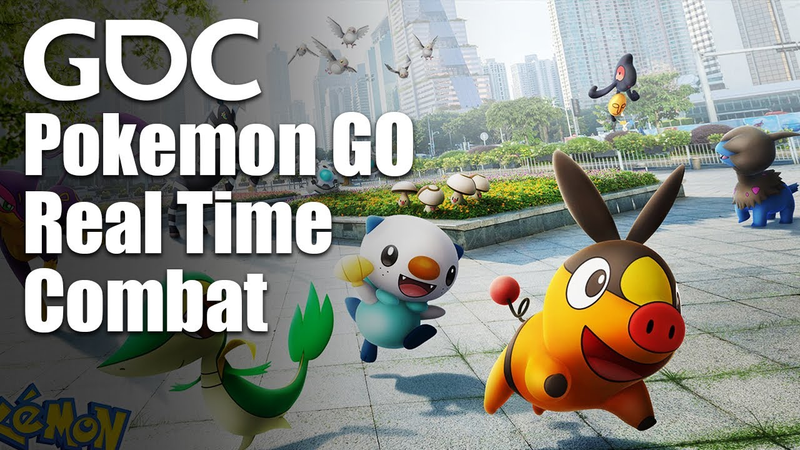
When Trainers' Eyes Meet: Creating Real Time Combat for Pokemon GO
The introduction of real-time combat to Pokémon GO serves as a strategic initiative to bolster player retention and re-engage lapsed users by transitioning from traditional turn-based mechanics to a faster, more interactive system.
- The transition to real-time combat was a strategic move to increase player retention and re-engage lapsed users by shifting away from traditional turn-based mechanics.
- Developers balanced accessibility and competitive depth by combining simple tap-to-attack controls with tactical features like protect shields and secondary move slots.
- To mitigate pay-to-win concerns and ensure competitive integrity, the game utilizes tiered battle leagues (Great, Ultra, and Master) defined by specific combat power caps.

Turing Tantrums: AI Devs Rant!! 2019 Edition
The modern game industry faces a critical stagnation in technical proficiency and design innovation, driven by an over-reliance on standardized game engines and superficial AI implementations.
- The game industry is suffering from a technical skills gap where educational pipelines prioritize standardized engine tool mastery over foundational programming, debugging, and optimization.
- Current AI development is stagnating due to an over-reliance on superficial tropes like basic pathfinding and repetitive dialogue barks rather than building systems with genuine depth.
- Systemic progress is hindered by high compute costs, opaque APIs, and a disconnect between academic theory and practical application in the workplace.

The Art of Afterparty: The Devil's in the Details
Afterparty represents a significant evolution in narrative-driven game design, transitioning from two-dimensional aesthetics to a fully realized 3D environment while preserving the signature branching dialogue mechanics of Night School Studio.
- To bridge the gap between concept art and in-game assets, Night School Studio developed a 'rotoscoping' pipeline where 3D geometry is modeled precisely around perspective-corrected concept art, which is then disassembled and textured for Unity.
- The game's visual identity was built on three pillars: 'comedic' dialogue and animation, an 'alive' world inspired by the nightlife of Shibuya, and 'heart' derived from character-driven storytelling.
- The 'liquid courage' mechanic allows players to influence dialogue branches by choosing specific drinks, which trigger a third, unique dialogue option during conversations.
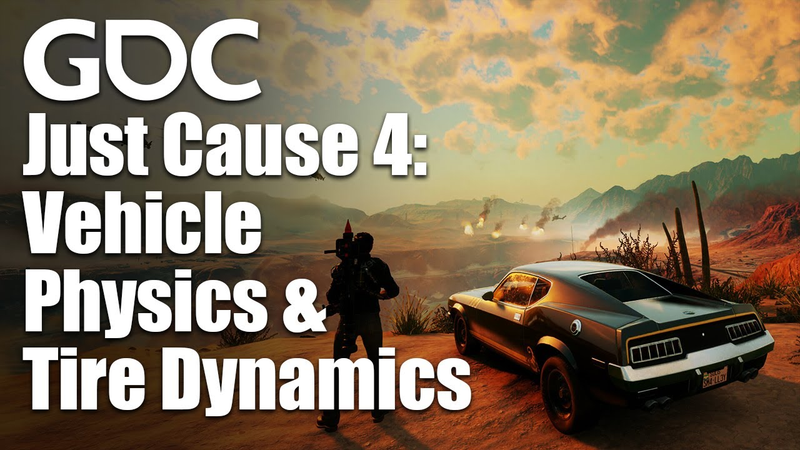
Vehicle Physics and Tire Dynamics in Just Cause 4
The vehicle physics system in Just Cause 4 was designed to support over 100 diverse vehicle types within a large-scale open-world environment while maintaining a 30Hz simulation rate.
- To maintain stability in a 30Hz simulation, Avalanche Studios implemented friction clamps that prevent the physics model from diverging when applying high levels of grip.
- The team utilized a 'useful mass' heuristic to calculate friction clamping, which determines the ratio of vehicle mass represented by a single tire based on its relative wheel load.
- By decoupling the tire model from strict realism, developers can use steepness in friction curves to simulate 'feel'—where the slope represents grip levels and the leveling off of the curve simulates the sensation of sliding.
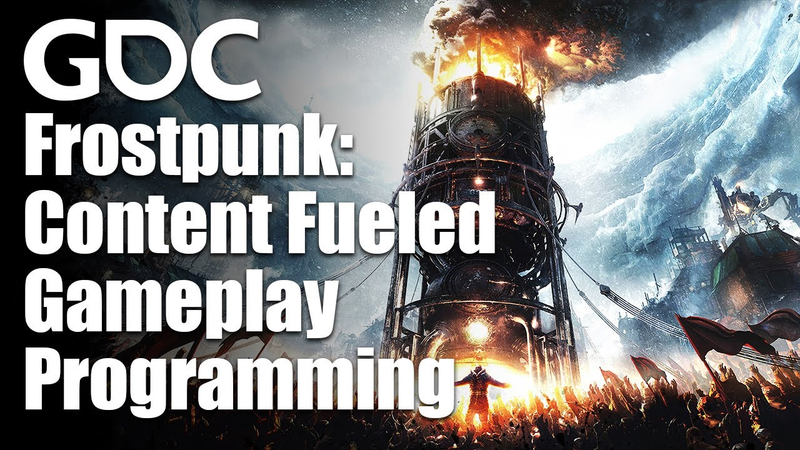
Content Fueled Gameplay Programming in Frostpunk
The development of Frostpunk centers on a data-driven architecture built upon a proprietary Liquid Engine, utilizing an Entity Component System (ECS) to manage the game’s intricate society-survival mechanics.
- 11 bit studios utilized a custom data-driven architecture based on Entity Component Systems (ECS) to manage the high entity count and complex gameplay logic required for Frostpunk.
- The architecture enforced a strict 'one system per component type' rule, which improved code clarity and maintainability for a growing development team by adhering to the single responsibility principle.
- Designers were empowered to control game flow, narrative events, and building visuals through a template-based system that allowed them to configure game state conditions and effects without direct programming.
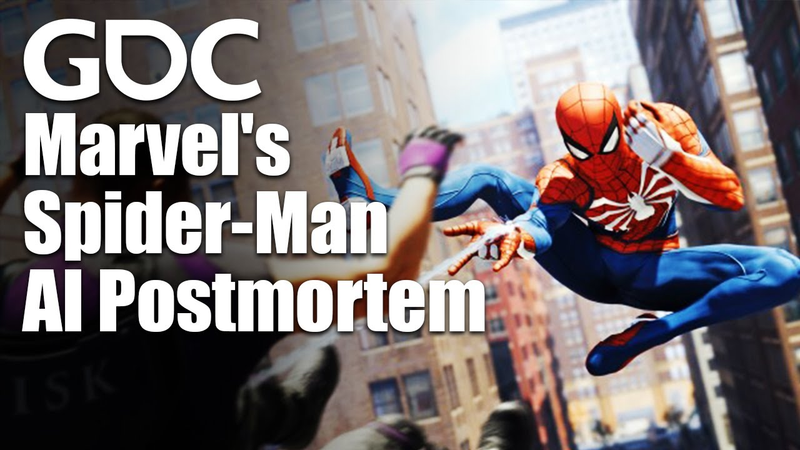
Marvel's Spider-Man AI Postmortem
The development of Marvel’s Spider-Man necessitated a fundamental shift in artificial intelligence architecture to manage the complexity of 64 distinct enemy classes within an open-world environment.
- Insomniac Games utilized a data-driven approach for combat AI, where designers configured complex move sets and combos through data files rather than directly editing behavior trees or finite state machines.
- To prevent combat from feeling stagnant, the team implemented an 'intensity meter' that tracks enemy aggression and triggers special attack sequences or simultaneous strikes when the meter fills.
- The AI combat system manages enemy positioning using a 'hill climber' algorithm that iteratively pushes potential bot locations radially outward to maintain optimal spacing and keep enemies on the navigation mesh.
Top 3 Mistakes of Angry Birds 2
This analysis outlines the primary development and design challenges encountered during the lifecycle of Angry Birds 2, as presented by the game’s former product lead.
- Prioritize the experience of high-value players over non-paying users, as focusing resources on the majority of non-monetizing players can neglect the primary revenue drivers.
- Avoid underestimating player capability by over-simplifying interfaces; adding depth through features like arenas and daily challenges significantly increases engagement.
- Ensure that core gameplay remains the primary focus, as retention mechanics like daily login rewards are ineffective at converting disinterested players if the fundamental experience is not enjoyable.
Final Fantasy VII: Breaking the Remake - Reboots, Remasters, and Remakes - Extra Credits
The gaming industry frequently revisits classic titles, employing three primary strategies: remasters, reboots, and remakes.
- The gaming industry categorizes title revisits into three distinct strategies: remasters (aesthetic updates), reboots (new narrative foundations), and remakes (modernized visuals and mechanics with original story retention).
- Final Fantasy VII Remake defies traditional definitions by functioning as a meta-textual narrative that diverges from the 1997 original's plot.
- Unlike a standard reboot, Final Fantasy VII Remake requires player familiarity with the original 1997 title to provide the necessary context for its narrative subversions.
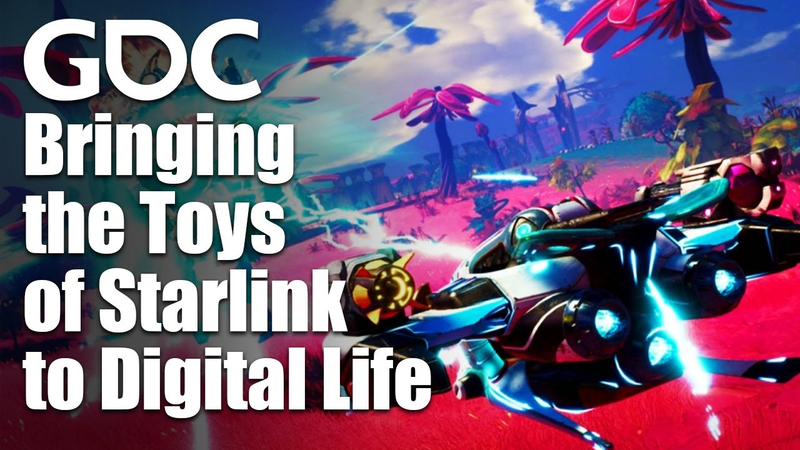
Starship Physics and Controls that Feel Real: Bringing the Toys of Starlink to Digital Life
The development of Starlink: Battle for Atlas focused on creating a responsive, physically plausible flight system that translated the tactile experience of physical toy ships into a digital open-world environment.
- The Starlink: Battle for Atlas flight system utilizes a modular architecture that dynamically adapts physics and controls to diverse ship geometries without requiring unique collision hulls for every combination.
- Movement is managed through a layered behavior system that sequences reusable classes—such as thrusters and terrain-following repulsors—to handle distinct navigation modes for space, atmosphere, and ground skimming.
- Procedural animation techniques apply additive offsets to the base ship transform to simulate engine activity and environmental reactions, maintaining tight control while providing high-quality visual feedback.
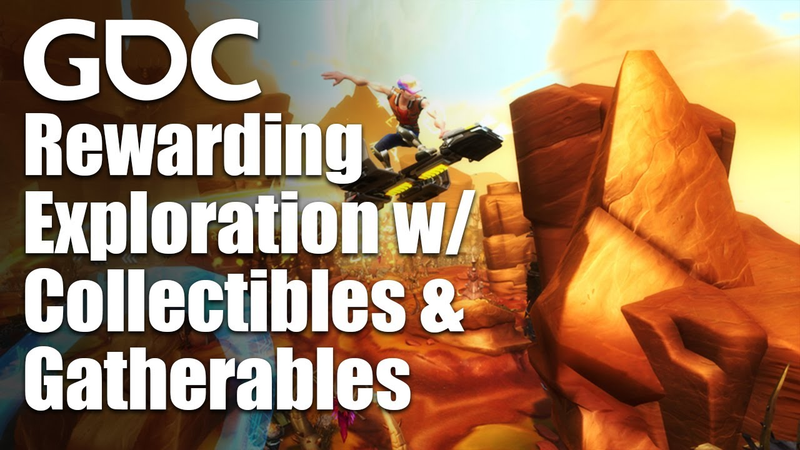
Rewarding Exploration with Collectibles and Gatherables
Strategic placement of collectibles and gatherables serves as a fundamental pillar of game design, functioning as the connective tissue that bridges environmental storytelling with player progression.
- Effective exploration design, as seen in The Legend of Zelda: Breath of the Wild, uses consistent visual language to teach players that environmental anomalies—such as out-of-place rocks—consistently yield rewards.
- Gathering systems in MMOs like World of Warcraft serve as a social anchor, as players who combine resource collection with social interaction demonstrate higher long-term retention than those who engage in non-productive social activities.
- To prevent player frustration in shared game worlds, designers should use spawn migration or discrete spawn groups to ensure that resources are distributed across the map rather than clustering entirely in high-traffic areas.
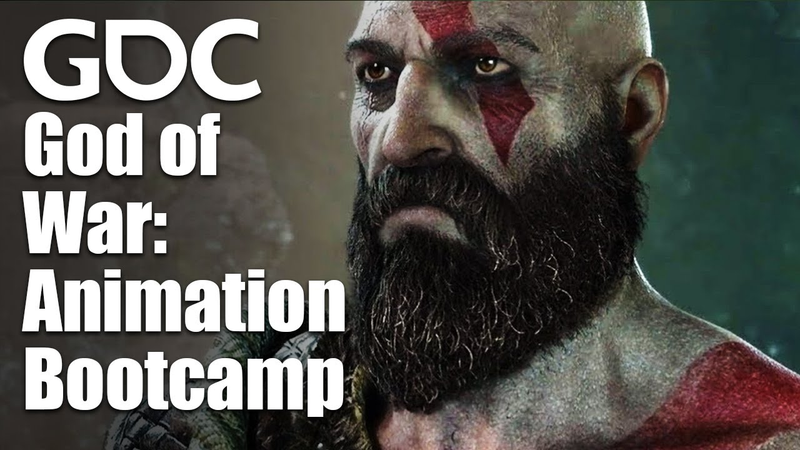
God of War: Breathing New Life into a Hardened Spartan
The 2018 reimagining of God of War represents a fundamental shift in character design and narrative delivery, moving the protagonist, Kratos, from a stylized, rage-driven figure into a grounded, relatable mentor.
- The 2018 God of War reboot transitioned from stylized, rage-driven character design to realistic, human-like models to explore themes of fatherhood and vulnerability.
- The production utilized a theater-inspired model, incorporating extensive rehearsals, table reads, and live-action pre-visualization to support a continuous one-take narrative style.
- Full-performance capture—recording body, face, and audio data simultaneously—was implemented to ensure consistent emotional chemistry between Kratos and Atreus.

Ethics in Artificial Intelligence
The integration of artificial intelligence into the gaming industry necessitates a fundamental shift from profit-driven engagement metrics toward frameworks rooted in equity, transparency, and user well-being.
- Developers must shift from profit-driven engagement metrics to frameworks rooted in equity, transparency, and user well-being to prevent AI from codifying societal biases and harmful stereotypes.
- Ethical considerations must be integrated into the entire development lifecycle through behavioral psychology and rigorous data auditing rather than being treated as a secondary concern.
- Industry practitioners should adopt multi-dimensional success metrics that prioritize long-term user satisfaction over short-term retention to mitigate the influence of manipulative dark patterns.