1 free read left. Create a free account for unlimited reading + AI research.
Create free account
Games in Education - How Games Can Improve Our Schools - Extra Credits
Key insights
6 takeaways- 01Integrating games into schools requires a fundamental change in pedagogical philosophy rather than the simple adoption of digital tools or software.
- 02Prioritizing student-led exploration over grade-focused instruction is essential to leveraging the innate human instinct for play as a mechanism for knowledge acquisition.
- 03The efficacy of games in education is fundamentally dependent on their voluntary nature, as mandating games as assignments strips away the intrinsic motivation and cognitive investment required for effective learning.
- 04True learning occurs when students are encouraged to obsessively research and strategize within complex systems, a behavior that is neutralized when games are treated as static, scheduled classroom content.
- 05Educational institutions must shift from a top-down, content-consumption model to a mentorship-based approach that fosters student curiosity and self-driven discovery.
- 06The 'Reality Ends Here' program at USC achieved nearly 100% student participation by using a low-tech, card-based alternate reality game to pique interest rather than requiring attendance.
Ask AI about this video
Transcript
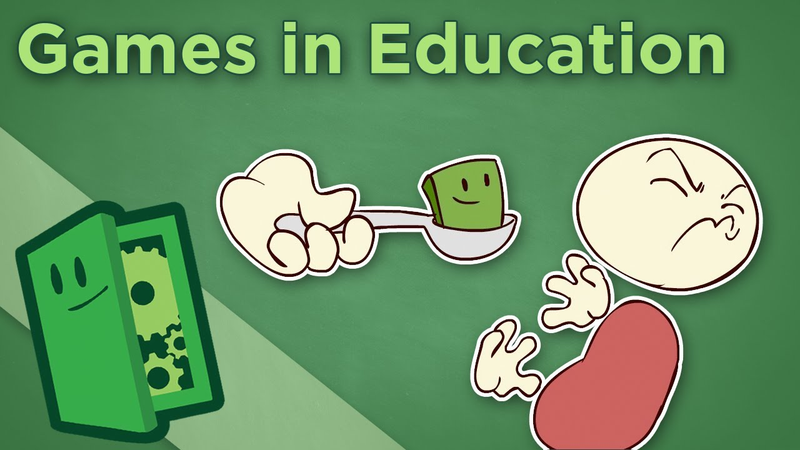
Over the last few weeks, James has been traveling a great deal talking about the Games for Good initiative. He's talked to companies and organizations at conventions and in closed door meetings. And in the end, it's made him realize a lot about the mentality on games and education that currently pervades the United States. And it forced him to think a great deal about his basic underlying understanding of games. It's made him realize how many things we as players might take for granted that someone outside this world may not know. There are many things we understand on some basic subconscious level, simply as players of games, that we might not know how to verbalize or express. And in dealing with people looking at games for education, people with their heart in the right place, but who perhaps stand outside the gaming community, one particular core concept of gaming has really come into focus for him. Games are voluntary. You can't impose games on people and expect them to get anything from it. Play is nature's way of getting us to learn. It's why it's so great for education, because it's something we and
pretty much every other animal are hardwired to want to do. Whether it's a lion cub on the Serengeti wrestling with its brothers in order to learn how to better fight in the wild, or a human child in the 21st century learning our world of electronics by poking at a tablet screen, the instinct to play is the most basic innate natural way for us to learn. But a big part of that is that it's something that we think we choose to do, that we desire and want to do for ourselves. And so we'll put more effort into it. Unfortunately, this isn't fully part of the collective thinking on games and education in the US. Here the approach seems to be a very top-down approach. The general idea seems to be that we will build games, we'll put them in schools, we'll make kids play them in class, and things will be better. And truth is, it might be. If well done, it's probably better than some of what we're doing today. But it doesn't really harness the full power of games. It doesn't deliver on the magic of play that's so powerful, that promises so much for education. You can't just make somebody play a game. I mean, any of you who have been play testers know that even the best game when played over and over again cuz someone's making you isn't fun or engaging. Play has to be an
act of volition. It has to be something you engage in voluntarily. And fostering that desire, that drive to play games of worth and games that educate, is really how we're going to succeed in using games to help bolster our ailing educational system. Because any of you who have really sunk deep into that desire to play, know how much of your brain space it takes. When you're driving somewhere, your brain's busy thinking of optimal strategies. When you're stuck sitting in a boring lecture, you're sneakily writing out builds in your notebook. Or brainstorming ways to optimize the run you're going to do when you get home. You know how you love to research the game and find out more, to really dig in and learn spawn timers or drop rates, and do the math and memorize the geography. You know how it gives your brain something to work and cycle on all day, something to engage with when otherwise you'd simply be zoning out or otherwise not tuning in. That's what we want to harness. That's what we want games in education to do. It's what we need them to do. But to do that, we can't just impose games. We can't just assign them as homework or tell you that from 11:00 to 12:00, this is the game you're going to play. That's antithetical to engagement. That works against everything we're building games to do. So we need to think about more
than just building games. We need to think about how they're going to be used, how they're going to be implemented in the classroom in a way that doesn't abandon the best things they give us. And I'm not even going to pretend to have the answer for this problem. This is a subject we're just starting to explore, something James only just over the last few weeks realized was a huge disjunct in how we view games for education. It may be part of a much larger rethink of how we view the classroom and how we see the role of the teacher. It may be part of the growing need to shift the teacher's role to one of the mentor, tutor, and guide rather than lecturer. It may be part of an over working requirement that 21st century education be more about focused exploration, about using the vast resources available to us to help us teach ourselves under the guidance of a caring adult who's been down this road before, rather than simply having facts drilled into us. It may be part of revamping the educational system to make sure that personal desire for knowledge is a stronger motivator than a fear of punishment. I'm fairly sure the answer lies somewhere circling those three, but right now it's beyond my ken. We need more time to think and hear more dialogue on the subject, which is why we're doing this episode. I am sure
we'll do a follow-up episode later if we find a more concrete approach. At the present, all I can say for sure is that it can be done because it is being done in a thousand different individual cases. I see small examples everywhere I look. They're just too specific to point the way to a general solution. As I say all this, I'm thinking of the reality ends here game being run at USC. It's a subversive game about filmmaking to help launch students into creating, to get them excited, interested in do-it-yourself cinema, and then providing them with creative challenges and intellectual prompts along the way. It lures students into a world where they want to do the thing they're going to school to learn, where they desire to practice it in their time off, rather than just longing to get away from the subjects they've been studying in class all day. It's amazing because it relies on almost no technology. It's a card game essentially. It's also a little bit of an ARG and a wee bit of mechanism for social interaction. And the portal into the game relies not on assigning it, but rather on piquing the students' curiosity, letting them drive themselves toward it, letting them want it, letting them desire to discover and play this game. And while at first glance that may seem risky, last I heard they had an
almost 100% uptake rate. That's way better than the number of students tuning into your average classroom, where they're being graded and where their future is at stake, because curiosity really is more powerful than even the threat of punishment. I'm just going to leave it at that for now. As we so often do, I'm hoping the things left unexplored propel you to look further and dig deeper. This time we're kind of counting on it. See you next week.
Woo!
Summary
The integration of games into educational environments requires a fundamental shift in pedagogical philosophy rather than a simple adoption of digital tools. The core thesis posits that the efficacy of games in learning is derived from their voluntary nature; because play is an innate human instinct, it functions as a powerful, self-driven mechanism for knowledge acquisition. When educational institutions impose games as mandatory assignments, they strip away the element of volition, effectively neutralizing the engagement and cognitive investment that make gaming a potent learning tool.
Current efforts to incorporate games into the United States educational system often rely on a top-down approach that treats games as static content to be consumed during scheduled hours. This methodology fails to harness the "magic of play," which encourages students to obsessively research, strategize, and internalize complex systems outside of formal instruction. To successfully leverage games, educators must move away from the traditional lecturer model and toward a role of mentorship, where the goal is to foster curiosity and personal desire for discovery rather than relying on the threat of academic punishment.
Successful implementation requires creating environments where students are lured into learning through intellectual prompts and creative challenges. A notable example is the Reality Ends Here program at USC, which utilizes a low-tech, card-based alternate reality game to encourage filmmaking. By piquing student curiosity rather than mandating participation, the program achieved nearly 100% uptake. This demonstrates that when students are intrinsically motivated to explore a subject, their engagement levels significantly exceed those found in traditional, grade-focused classroom settings. Ultimately, the future of games in education depends on rethinking the classroom structure to prioritize student-led exploration and the cultivation of genuine interest.



















Comments