Diversity & Inclusion reports and market data
Documents

Developer Satisfaction Survey 2014: Summary Report
The 2014 Developer Satisfaction Survey establishes a comprehensive benchmark for the global game development industry, capturing the professional experiences and demographic realities of 2,202 practitioners.
- One-quarter of the 2,202 surveyed developers report immediate fear regarding job security, fueling a widespread desire for professional representation and potential unionization.
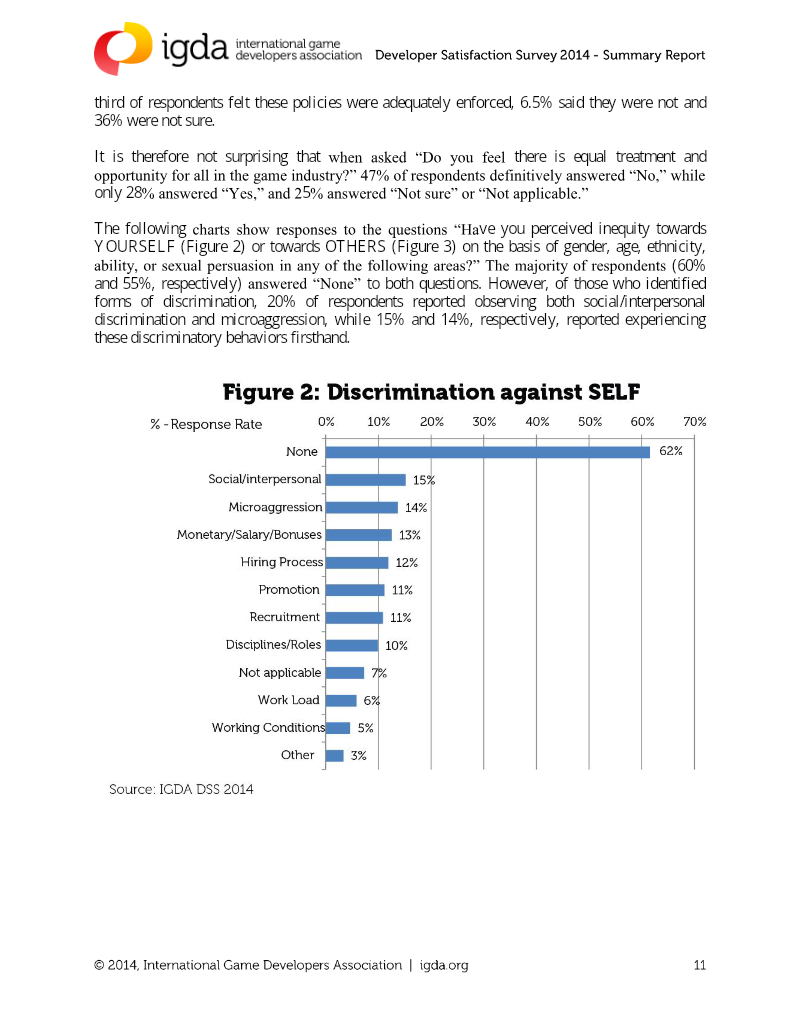
- Nearly 50% of the workforce reports a lack of equal opportunity, citing persistent issues with gender discrimination, ageism, and a lack of formal disciplinary procedures.
- Female participation in the industry has nearly doubled since 2005, though cultural barriers to equity remain a significant challenge.

Developer Satisfaction Survey 2014: Employment Report
The 2014 game industry employment landscape is defined by a paradox of high creative fulfillment and persistent structural instability.
- The game industry workforce is shifting toward a fragmented model, with freelance employment growing to represent 30 percent of the total sector by 2014.
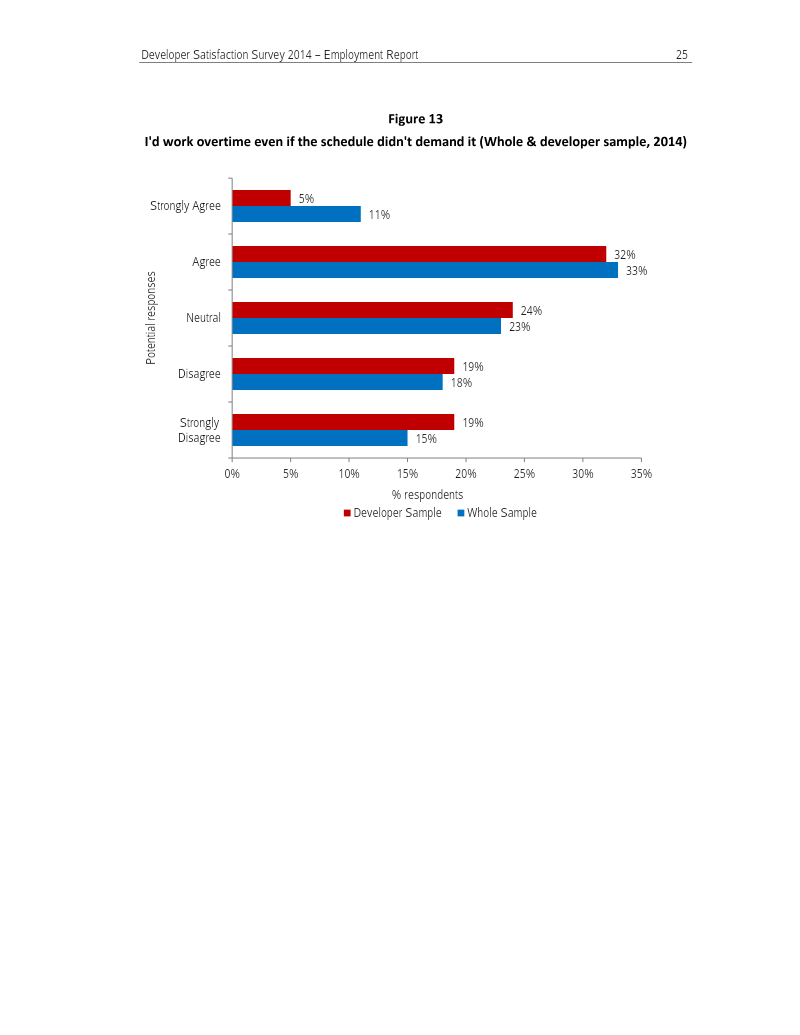
- Although crunch intensity has trended downward since 2009, over 50 percent of developers still consider mandatory overtime a standard requirement due to poor management and feature creep.
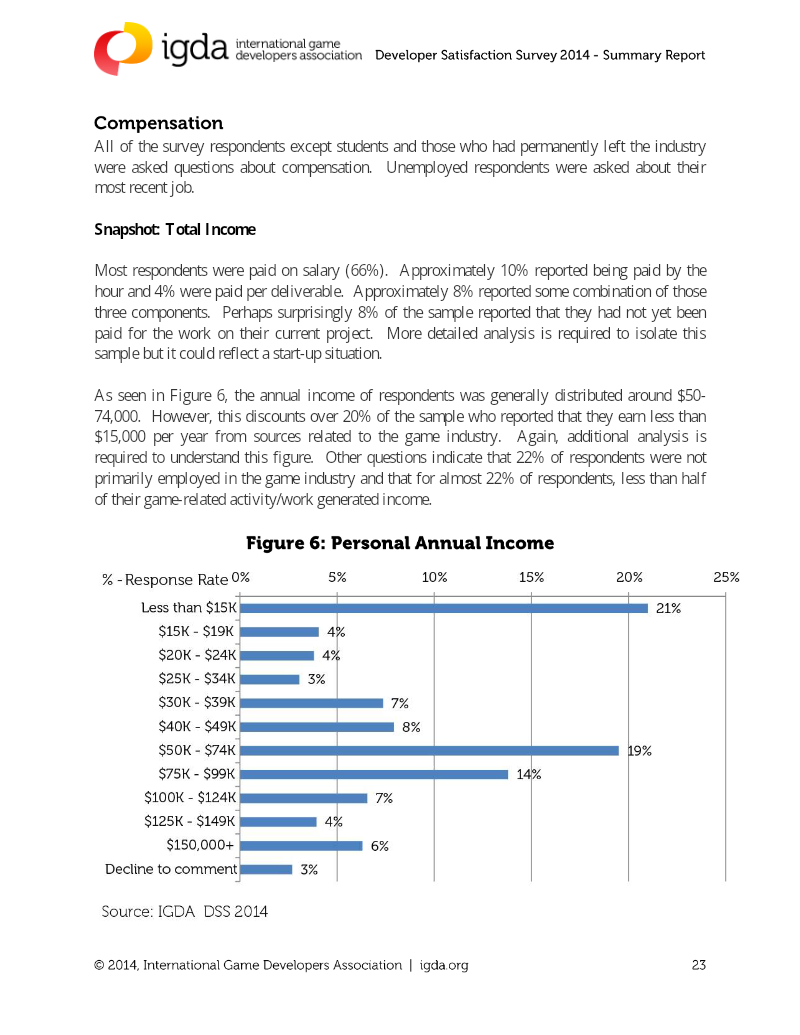
- While most developers earn between $50,000 and $100,000 annually, a significant minority reports low earnings and limited access to long-term financial benefits like retirement plans.

Minority - Race and Relationships in The Walking Dead - Extra Credits
The Walking Dead serves as a benchmark for character development in video games, specifically regarding the portrayal of children and the nuanced integration of race.
- The Walking Dead successfully subverts the 'incompetent burden' trope by positioning the child character, Clementine, as a capable contributor to the player's survival.
- The game utilizes the horror genre's inherent sense of disempowerment to foster a genuine emotional and parental bond between the player and the child character.
- Racial identity is integrated as a holistic element of the setting rather than a reductive trope, particularly through the protagonist's African-American identity in the American South.



MTG Corporate Responsibility Report 2013
In 2013 the media group embedded sustainability within its core strategy, aligning business growth with responsible practices and earning inclusion in the Dow Jones Sustainability Europe Index and FTSE 4Good.
- MTG achieved €14.1 billion in net sales and €1.9 billion in operating profit in 2013, supported by a workforce of 3,361 employees and the launch of the digital platform MTGx.
- The company earned inclusion in the Dow Jones Sustainability Europe Index and FTSE4Good by integrating sustainability into its core business strategy.
- MTG utilized its media assets to provide over €4.3 million in value for Typhoon Haiyan relief, alongside significant charitable contributions for various health, education, and community initiatives.

Politics - How to Make Your Voice Heard - Extra Credits
This analysis addresses the perceived disenfranchisement of the American public regarding the political process, specifically within the context of digital rights and censorship.
- Local and state-level elections are the most effective venues for individual influence, as outcomes in these races are frequently decided by margins of only a few hundred to a few thousand votes.
- Voter apathy is a primary barrier to political efficacy, as historical data indicates that the majority of 20th-century presidential elections could have been altered if the unregistered population had participated.
- Direct communication methods like phone calls and emails are significantly more effective than online petitions because they allow for the verification of residency within a representative's specific district.

Harassment - Why Gaming Struggles to Escape Toxicity - Extra Credits
The gaming industry faces a persistent crisis of toxicity, characterized by widespread harassment, misogyny, and hate speech.
- The gaming industry’s toxicity crisis is driven by a vocal minority seeking power and attention, which is currently enabled by a lack of meaningful consequences for abusive behavior.
- Developers should implement automated muting systems that silence players based on their history of being muted by others, effectively stripping repeat harassers of their platforms.
- Communication restrictions should be applied to users whose messages consistently fail to elicit responses, limiting their reach to established friends lists.
Call of Juarez: The Cartel - How Lazy Design Hurts Everyone - Extra Credits
The video game Call of Juarez: The Cartel serves as a primary case study for the dangers of lazy, irresponsible game design.
- Developers have an ethical responsibility to conduct thorough research when depicting real-world tragedies to avoid producing harmful propaganda and reinforcing racial stereotypes.
- Call of Juarez: The Cartel trivializes the Mexican drug war, a conflict that resulted in 40,000 deaths over a five-year period, by reducing it to a sensationalized entertainment product.
- The game features design choices that promote bias, including a specific achievement that rewards players for killing African-American characters.
Race in Games - Racial Tensions in LA Noire as Character Development - Extra Credits
The analysis of L.A. Noire posits that racial conflict serves as a potent narrative device for character development rather than merely a subject for social commentary.
- Racial conflict in games functions as a narrative tool for character development rather than just a vehicle for social commentary.
- Developers can use a player’s real-world social baggage to efficiently communicate complex character motivations and moral flaws.
- In L.A. Noire, the protagonist's reaction to racially charged scenarios reveals his lack of social courage, transforming him from a one-dimensional archetype into a flawed, compelling character.

True Female Characters - How to Write Deep and Interesting Characters - Extra Credits
The industry currently struggles to move beyond superficial stereotypes when crafting female characters, often relying on narrow cultural tropes rather than the complexity of human experience.
- Compelling female characters are best developed by exploring the internal conflict between a character's innate traits and the specific, malleable societal pressures of their fictional world.
- Developers should treat gender roles as variable constructs rather than static archetypes, allowing characters to authentically accept, navigate, or reject the norms of their environment.
- Character depth is achieved by focusing on how an individual uniquely reacts to their world, rather than relying on superficial tropes or traditional gender expectations.

Sexual Diversity - How a Queer Character Made Persona 4 Great - Extra Credits
The inclusion of diverse sexual and gender identities in video games serves as a vital tool for narrative depth, moving characters beyond the limitations of standard industry tropes.
- Integrating diverse sexual and gender identities functions as a creative asset that elevates narrative depth beyond standard industry tropes.
- Character arcs involving sexual orientation and gender identity provide a framework for exploring universal human struggles, such as the pressure to conform and the process of self-discovery.
- In Persona 4, the character Kanji Tatsumi is transformed from a one-dimensional 'tough guy' archetype into a nuanced figure by exploring his internal conflict regarding masculinity and societal expectations.

Diversity - Why Do Games Lack Diverse Characters? - Extra Credits
The video game industry faces a significant challenge regarding the representation of diverse characters, frequently relying on tired tropes and narrow archetypes rather than creating relatable, multifaceted individuals.
- The industry's reliance on a default white, straight, male protagonist is a form of lazy design that restricts narrative potential and prevents the medium from maturing.
- Lack of intentionality in character creation, rather than just team composition, is the primary driver behind the stagnation of diverse representation.
- Current gender representation often suffers from adolescent pandering and objectification, with many female characters lacking genuine narrative agency or failing to pass the Bechdel test.

"Gamer" - What's in a Name? - Extra Credits
The term gamer serves as a unique, often problematic label that distinguishes video game enthusiasts from the general population in a way not seen with other media like literature or film.
- The 'gamer' label functions as a problematic binary distinction that separates enthusiasts from the general population, unlike labels for film or literature consumers.
- Persistent negative stereotypes—including antisocial behavior, immaturity, and exclusionary gatekeeping—hinder the medium's cultural legitimacy and mainstream acceptance.
- The stigma surrounding the term is reinforced by both external societal neophobia and an internal, insular community culture that often promotes defensive posturing.