1 free read left. Create a free account for unlimited reading + AI research.
Create free account
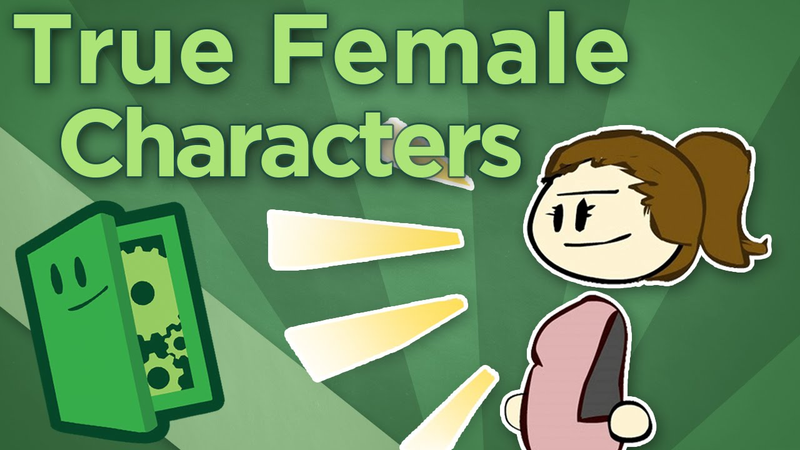
True Female Characters - How to Write Deep and Interesting Characters - Extra Credits
Key insights
6 takeaways- 01While genetic factors like motherhood or physical differences remain underutilized in gaming, they offer significant, untapped potential for driving emotional storytelling.
- 02The Metroid series serves as a primary model for effective characterization, demonstrating that subtle, evolving identities often resonate more deeply with players than overt archetypes.
- 03Compelling female characters are best developed by exploring the internal conflict between a character's innate traits and the specific, malleable societal pressures of their fictional world.
- 04Developers should treat gender roles as variable constructs rather than static archetypes, allowing characters to authentically accept, navigate, or reject the norms of their environment.
- 05Character depth is achieved by focusing on how an individual uniquely reacts to their world, rather than relying on superficial tropes or traditional gender expectations.
- 06The most resonant characters exist in a state of flux, constantly reevaluating their relationship to societal expectations as they face extraordinary circumstances.
Ask AI about this video
Transcript
Well, this one's been a long time coming. No, it's not the voice acting episode. That one's tangled up in the process of getting real voice actors on board, which I think we might actually have pulled off, but no, today we're going to talk about female characters in games. The reason this particular topic has been so long in coming is that we've been waiting for the industry to provide us with a good topical example of a well-done female character. But unfortunately, nothing really helpful has come out in the AAA release lineup has been pretty barren for the last few months anyway, so screw it. Let's just do this thing. All right, so women in games. Now, we could spend this whole episode ranting about top-heavy genetic anomalies or just going off on another M for 6 and 1/2 minutes, but rather than spending all of our time whining about what makes for a bad female character, let's try to be a little more constructive and see if we can pinpoint what makes for a good one. We've talked a little about what makes a good character before, and we'd probably need a full episode or two to completely flesh out the subject, but for today, let's stick with female characters specifically. This distinction's a little tricky because for the majority
of great characters, their gender doesn't really matter. Gender doesn't really inform who they are. It's not what defines the character or makes them interesting. I mean, if Sonic were female instead of male, and I really rather not get into that again, would it really have added anything to or taken anything away from the character? Would making Gordon Freeman female really change anything about him? Not really. But there are still some facets of character that are specific to gender, and those facets are very rarely explored in gaming. So, what's the difference between creating a good character and creating a good female character? To answer that, we have to tackle the somewhat controversial topic, how are men and women different? I suspect a few of you are snickering at this point, so I'll give you a moment. We good? All right. When discussing the differences between men and women for the purposes of character creation, one thing the game development community is always forgetting is that there are two principal categories of differences between genders, genetic and societal. Genetic differences are innate and ubiquitous across cultures. They're the ways in which men and women differ on the most basic biological level. Societal differences are the pressures that societal gender roles exert on individuals of a given gender. Let's start by looking a little closer at the
genetic factors. Genetic differences have proven difficult for games to address in ways that aren't superficial. Women tend to be more dextrous than men and generally have a higher threshold for pain, while men tend to be physically larger and have more muscle mass. So, I mean, hey, at least we got that part covered, sort of. Actually, come to think of it, games very rarely show women as being more dextrous or ah, whatever. You know what? That wasn't really the important part anyway. On a genetic level, one of the principal differences is obviously the ability to bear children. But, despite how obvious that difference is, we've yet to see a video game that really addresses themes of motherhood, fertility, or other child-bearing issues in depth. Yeah, I know we've had plenty of games that have a mother character or a mother figure or a character with mother issues or a character that just says mother all the time, but we've never really had a character explore motherhood as a theme in depth or put the player in a mother type role, at least not one that can be taken seriously. And it's not like you couldn't make a great game out of that theme. Hell, it could be pretty powerful. Off the top of my head, the struggle of a mother trying to protect her children while crossing a war-torn country. Now, that could easily make for an exciting action title. But, honestly, the industry is still having a hard enough time plumbing the emotional depths of conflicts that male designers
can relate to. So, we've probably still got some growing up to do before we have any hope of successfully tackling subject matter like that. Although, I imagine that a well-done game about a mother's sacrifice for her children could be a strong contender for the first game to really make you break down and cry. Just saying. But, all right, enough about genetic factors. Let's move to look at things which are societal. The important thing to remember here is that these are malleable qualities. The reason we so often fall into the trap of delivering female stereotypes in games rather than true, female characters is because we tend to think of everything related to being female as inherent to being female. We often assume things like girls like pink or girls are demure to be inherent female traits when these are really societal constructions. When you take these as fundamental qualities of being female, when you assume that they just are, they become things that cannot be struggled against, things that can't be changed, and change is where character is found. Looking at these things from the the that societal pressures encourage girls to like pink, or encourage girls to be demure, allows you the opportunity to flesh out your characters by showing their reactions to these pressures, and flushing out your
society by understanding the pressures it puts on women. You could as easily have a society where girls like black and girls shoot first because these qualities are variable. And let me tell you, it would make for a totally different place than your girls like pink society. Now, I'm not saying that societal factors are totally independent of genetic ones, but they're a good place to start looking for how we can move from delivering cardboard stereotypes of women to delivering more fleshed out, more human female characters. Now, this is fairly easy to do in larger epic narrative pieces, but you can get the job done with your gameplay, setting, and just a few telling moments. Despite our complaints regarding this thing, I'd argue that the Metroid series is one of the better examples of this. Even though the early Metroid games are pretty bare-bones when it comes to plot and story, there are a variety of subtle hints that can be drawn from the designer's choices. Samus feels like a character because we know she stands apart from society. We don't know much about her, but it's easy to tell that she's made choices that don't fully conform to whatever societal standard she comes from. That's what makes her interesting. That's what draws us in and compels us to try and fill in the blanks ourselves. All of those great action-heavy heroines we love most have this trait. They neither fully accept nor fully reject the societal pressures
exerted on them, and most importantly, they and their relationship to those societal pressures change as their circumstances change. They're forced to reevaluate what they took for granted as they're placed in fantastic abnormal situations. With these sort of characters, we see their personality and their struggles with expected norms come out through gameplay. We see each of these characters evolve in real time as they respond to the circumstances around them. Their actions, as much as their words, demonstrate character growth. Now, it's important to note here that you're going to get just as stereotypical a character by having them reject all of society's gender pressures. There's as much depth to be found in understanding why a character agrees with or follows gender norms from their society as in why they reject them. All of the great characters we've discussed here are a blend of accepting and rejecting what society expects of their gender because, simply put, this is what real human beings do. So, if you want to create a truly great female character, you have to either be willing to brave those few issues which are truly unique to the feminine half of our species, or you have to give us a human being responding to ordinary societal pressures, perhaps under extraordinary circumstances, and coming to their own conclusions about how to integrate them.
A great character doesn't have to be defined by their gender, but gender and the pressures that society exerts on us because of it are a big part of who we are. So, if you want to create a character that really feels real, consider all of the factors that shaped them to be who they are at the point where the player first meets them. I guess that's about it. With some luck, we'll be seeing more truly great female characters in our games more often in the coming years. Cross your fingers and keep an eye out. Later.
Summary
The industry currently struggles to move beyond superficial stereotypes when crafting female characters, often relying on narrow cultural tropes rather than the complexity of human experience. The primary thesis is that compelling female characters are created by exploring the intersection of innate genetic factors and the nuanced, malleable pressures of societal expectations. Rather than treating gender as a static trait, developers should focus on how characters navigate, accept, or reject the specific societal norms of their fictional worlds, as this internal conflict is where genuine character depth resides.
The analysis distinguishes between genetic and societal influences. While genetic factors—such as the unique experiences of motherhood or physical differences—remain largely underutilized in gaming, they offer significant potential for emotional storytelling. Conversely, societal factors are identified as the most accessible area for immediate improvement. By treating gender roles as variable constructs rather than inherent truths, writers can create characters who feel authentic because they respond to their environment in ways that mirror real human development.
The methodology relies on a qualitative assessment of character design, using the Metroid series as a primary example of effective, albeit subtle, characterization. The analysis concludes that the most resonant characters are those who exist in a state of flux, constantly reevaluating their relationship to societal expectations as they face extraordinary circumstances. Ultimately, the goal for developers is to move away from cardboard archetypes and toward characters whose identities are shaped by their specific, individual reactions to the world around them, regardless of whether those reactions align with or defy traditional gender norms.















Comments