AI reports and market data
Documents

Write Video Game Music In 30 Seconds With Ecrett!
The process of composing original music for video games is often time-consuming, frequently requiring days of effort for a single track that may ultimately fail to fit the intended gameplay experience.
- Automated music generation tools like Ecrett allow developers to create royalty-free game soundtracks in seconds, significantly reducing the traditional multi-day composition process.
- These platforms enable rapid prototyping and final audio implementation by allowing users to select specific parameters such as mood, genre, and scene type.
- Developers can create dynamic, evolving soundscapes by adjusting the intensity of individual musical components like melodies, bass lines, and percussion to match gameplay tension.
Behavior is Brittle: Testing Game AI
Testing complex game artificial intelligence requires a fundamental shift in perspective, moving away from rigid verification toward a strategy that embraces the unpredictable nature of emergent gameplay.
- To effectively test game AI, developers must shift their mindset from verifying that code works to actively attempting to break it, as emergent behaviors often lead to unexpected interactions with the game state.
- Embed QA personnel directly into the development team rather than treating them as external testers, allowing for daily collaboration and a shared understanding of expected AI behaviors.
- Implement clear separation of concerns by decoupling sensor systems, data storage (such as blackboards), and decision logic to facilitate modular unit testing and prevent massive, unmanageable integration tests.
Authored vs. Systemic: Finding a Balance for Combat AI in Uncharted 4
The development of combat AI in Uncharted 4 represents a strategic shift toward a hybrid architecture that reconciles the rigidity of authored scripting with the flexibility of systemic design.
- Uncharted 4 transitioned to a hybrid AI architecture that blends rigid authored scripting with systemic design to accommodate larger, non-linear, and vertical environments.
- Purely systemic, automated AI was rejected because programmatic navigation and heat-based search behaviors failed to deliver the consistent, human-like performance required for the franchise.
- The development team implemented a 'Hard Points' system, where designer-placed objects provide dynamic anchor points for NPC navigation and positioning.

Custom-made games with machine learning and big data
The application of machine learning and big data in game development offers significant potential for optimizing player experiences, increasing monetization, and improving retention.
- Machine learning models can predict individual player behavior, including churn probability, expected lifetime value, and specific virtual item preferences, allowing for automated, personalized retention strategies.
- Data-driven interventions can significantly impact revenue: increasing VIP retention by 10% for one month can generate $1.3 million, while converting potential payers can add $4 million in monthly sales.
- Optimizing game levels identified as 'friction points' where players frequently quit can lead to an estimated $8 million annual increase in revenue.
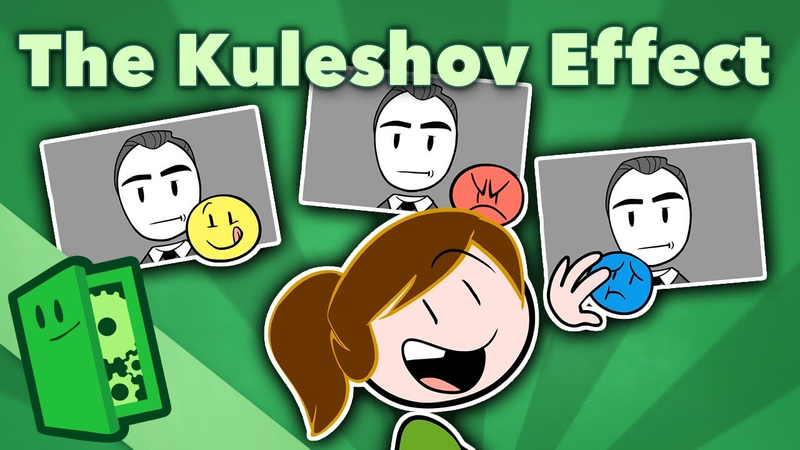
The Kuleshov Effect - Improving Character Interactions in Games - Extra Credits
The Kuleshov effect, a psychological phenomenon originating in early 20th-century cinema, demonstrates that audiences ascribe specific emotions to characters based on the juxtaposition of images rather than the performance itself.
- The Kuleshov effect demonstrates that audiences derive character emotion from the juxtaposition of images and context rather than relying solely on the character's facial performance.
- Developers can improve NPC emotional resonance by using environmental details, camera work, and sound design to frame neutral animations, rather than relying exclusively on expensive motion capture or high-fidelity graphics.
- Strategic editing and camera cuts to specific objects during dialogue can retroactively alter a player's interpretation of an NPC’s neutral expression, framing them as suspicious, fearful, or kind.
AI Arborist: Proper Cultivation and Care for Your Behavior Trees
Effective behavior tree implementation hinges on the use of a centralized, compact blackboard database that utilizes key-value pairs to store game world data.
- Use a centralized, compact blackboard database with key-value pairs to store game world data, which simplifies node access and debugging.
- Adopt a hybrid architecture by pairing behavior trees with finite state machines or planners to avoid the spaghetti code and implicit dependencies caused by using trees for complex decision-making.
- Decompose AI in high-complexity environments like real-time strategy games into specialized manager subsystems—such as income, construction, and tactics—that communicate via message passing.

Playing Your Cards Right: The Hierarchical Portfolio Search AI of Prismata
The Hierarchical Portfolio Search system provides a robust framework for managing complex decision-making in strategy games like Prismata, where massive state spaces and multi-unit control requirements render traditional AI approaches insufficient.
- Hierarchical Portfolio Search (HPS) solves the state-space explosion problem in complex strategy games by decomposing game logic into a 'portfolio' of tactical algorithms, which are then combined and evaluated by a high-level search algorithm like Alpha-Beta.
- The HPS system allows for modular difficulty scaling by adjusting the search depth or the complexity of the tactical algorithms included in the portfolio, enabling developers to create everything from random-move bots to expert-level AI.
- By restricting the AI to a predefined set of tactical moves rather than allowing it to generate arbitrary actions, designers can prevent 'emergent' but undesirable behaviors while maintaining high-level strategic intelligence.
Raising Atreus for Battle in God of War
The design of Atreus as an AI companion in God of War centers on the core philosophy that a partner character must enhance the player’s experience without requiring constant management.
- To ensure Atreus functioned as a reliable teammate rather than a realistic one, the development team utilized 'warping' (teleportation) to position him near enemies instantly, ensuring his combat actions were always timely and responsive to the player.
- The design of Atreus was governed by four core pillars: he must support the player, never hinder the player, ensure all actions are helpful, and require zero babysitting to prevent player frustration.
- To maintain combat flow, the team transitioned Atreus from a traditional archer to a hybrid fighter who uses his bow as a melee weapon, which creates more fluid animations and clearer visual cues for the player.
Tree's Company: Systemic AI Design in Just Cause 3
The systemic design of artificial intelligence in Just Cause 3 relies on a modular architecture that balances emergent, open-world behavior with the precise requirements of scripted mission content.
- Avalanche Studios utilized a hybrid AI architecture for Just Cause 3 that combined behavior trees for high-level logic with utility functions to rank and select optimal positions or targets based on environmental variables.
- Content designers were empowered to customize AI behavior by filling out exposed parameters in the engine, which were then dynamically read and utilized by the behavior trees at runtime.
- The team implemented modular 'micro-behaviors' as external tree objects, allowing designers to inject specific tasks—such as flying a helicopter to a point—into the main AI logic without requiring custom programming for every scenario.

Wappier on using dynamic pricing in mobile games to increase retention
The mobile gaming industry is undergoing a significant shift toward automated revenue optimization, moving away from manual LiveOps management toward machine learning-driven personalization.
- Automated machine learning-driven personalization can increase mobile game revenue by 30% to 50% without requiring expanded analyst teams.
- Dynamic pricing and automated loyalty programs shift the industry focus from heavy user acquisition spending toward the monetization and retention of existing players.
- Machine learning models calculate individual price elasticity and churn propensity to determine the 'next best action' for each player in real-time.
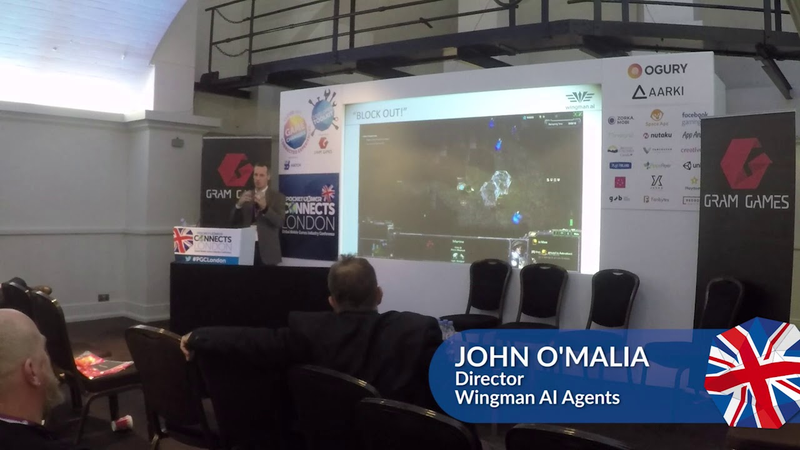
Meet your new and improved teammate! Human-directed AI agents and gaming
The integration of human-directed artificial intelligence agents represents a significant shift in gaming, moving away from traditional, disruptive bots toward collaborative, player-centric teammates.
- Human-directed AI agents are shifting from disruptive, hard-coded bots to collaborative teammates that function as extensions of the player through language-based interfaces.
- Semantic language wrappers allow players to issue real-time, high-level instructions for tasks like healing or tactical maneuvers, reducing the need for constant micromanagement.
- This technology can bridge the gap for the 50% of esports viewers who currently watch games without actively playing them by simplifying complex mechanics for broader accessibility.

101 concepts for games innovation
The games industry faces a constant cycle of creative destruction, necessitating that developers move beyond familiar tropes to embrace emerging technologies and innovative design concepts.
- Developers should prioritize the integration of neural networks and synthetic reality to create personalized gaming experiences that adapt to player emotions and behaviors in real-time.
- Neuro-gaming, which utilizes brain-activity monitoring to influence gameplay, represents a significant frontier for both entertainment and cognitive health applications.
- The convergence of alternate reality and the Internet of Things allows for the blending of digital narratives with physical environments, such as smart-home integration for immersive storytelling.