1 free read left. Create a free account for unlimited reading + AI research.
Create free account
101 concepts for games innovation
Key insights
7 takeaways- 01Innovation in these emerging technologies is a strategic imperative for attracting venture capital, securing top-tier talent, and fostering corporate partnerships.
- 02Developers should shift focus away from saturated trends like virtual reality and blockchain toward the development of a more sophisticated, responsive metaverse.
- 03Developers should prioritize the integration of neural networks and synthetic reality to create personalized gaming experiences that adapt to player emotions and behaviors in real-time.
- 04Neuro-gaming, which utilizes brain-activity monitoring to influence gameplay, represents a significant frontier for both entertainment and cognitive health applications.
- 05The convergence of alternate reality and the Internet of Things allows for the blending of digital narratives with physical environments, such as smart-home integration for immersive storytelling.
- 06Games are increasingly serving as platforms for complex problem-solving, exemplified by citizen science initiatives like protein folding simulations and enterprise-level business training.
- 07There is substantial untapped potential in exploring underrepresented themes of the human condition, including sexuality, mortality, and complex relationships, within mainstream titles.
Ask AI about this video
Transcript
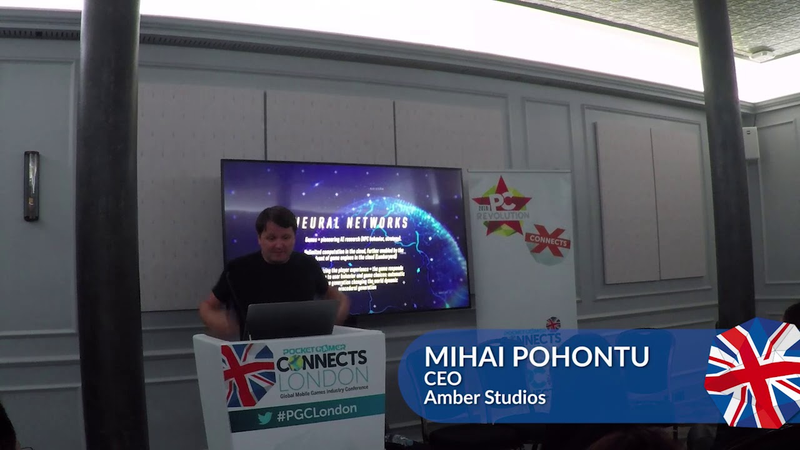
[Music] thanks everyone it's been a long day so I must congratulate you for sticking through my name is Mihai I run a game development agency called amber and the reason I chose this topic is because we within our company we are often asked by partners to you know push to the fringes and you know develop on the latest trends on the latest technologies platforms and business models so we're forced to you know constantly scour the market for new ideas and in the process of doing that I thought I'd share with you some of the things that we're currently looking at
and what I consider to be very exciting and the good news is that we I don't have actually 101 consoles for game innovation a subset of those but hopefully interesting stuff so first of all let's establish why it's important to innovate so my take on this is if you are a startup and you're pursuing an innovative groundbreaking idea you're far more likely to elicit interest from VC's there are constantly scouring the market for companies that are trying to push the boundaries so I think you would benefit your your startup benefit immensely if you are again leading the charge and in creating a new market or imagining a new market second of all if in the fight for talent if you're doing something really cool amazing you're much more likely to be able to attract and make incredible people on your team such people you know
brilliant minds they want a big hairy incredible concept to latch on to and develop so you know I think that makes sense also you're far more likely to attract partners so you know large enterprises are looking at the market as well and trying to find you know ideas that they can then cross pollinate across across existing products or technologies and these partners can be a source of funding they can be a source of support and they can otherwise accelerate your your growth but the last then perhaps the most important thing is that karma is a place an important role here you know it is said that the future belongs to the bold and if you are really pushing you're really out there you know sometimes the universe conspires to help you achieve what you have set out to do a good primer for you know following
what happens in innovation in the technology field is gardeners hype cycle for emerging technology so really what I'm doing here is I'm taking a step backwards and looking at the entire technology space not just games and you know there's a lot of there's a deep white paper that is written by Gardner on these technologies and comes out every year so it's really cool to I follow if you haven't done so already and what you see here is that you'll have technologies that are just entering the field right now so for example artificial tissue or flying autonomous vehicles they're just emerging and they're really exciting and they actually are attracting significant venture capital yeah you know the news is not that long ago that atomic or invested in a flying autonomous vehicle company here in Europe so super exciting stuff there are some things that are at the peak of the inflated expectations so biochips deep neural nets carbon
nanotubes IOT platforms are certainly other peak right now and you know in the trough of this disillusionment you find things like mixed reality augmented reality VR and anyway it's really fascinating to follow this this graph also is 2018 so I think things have already shifted in 2019 and look forward to reading their take on it when it comes out usually comes out in the summer cool so let me tell you what this talk is not about so I consider these technologies to be already merged tech like in virtual reality we've been talking about it a lot including at this conference streamed games wearables really didn't have a massive impact on games but it's worth mentioning eSports super hyped and and definitely growing location-based games and blockchain now what I mean by that is that you know these these technologies haven't necessarily reached full sophistication full expression but
they really emerged meaning that there are you know many companies playing in the field it's not necessarily they're not necessarily considered as groundbreaking ideas anymore so what is really groundbreaking today neural networks play very important role I think in the continued development of the game space games have always been pioneering AI research you know NPCs in games have existed for many for decades and obviously we've had very complex AR in strategy games I think this trend is likely to accelerate with the advent of unlimited computation in the cloud so you know engines like lumberyard and others and this will really allow games to personalize the player experience the game responding in real time to player behavior in endgame choices synthetic reality is a concept that was proposed by robot Walcott in 2017 academic paper
and I personally find this extremely exciting because we're talking about ever evolving realities that are synthesizing or will you know having a game the response to your emotion in real time and to other stimuli procedural generation influenced by our individual personality I think that is the next you know opportunity for incredible advancement in in games so it's worth thinking about it and it's worth exploring and one of the ways you can capture that emotion is through this concept of neural gaming a leading figure in that field is Adam who ghazali at the neuro scape lab at UCSF and he has defined means of reading your brain activity and feeding that into an interactive experience so there's no eraser designed
to improve cognition in older adults and what they call prescription gaming so there's a practical health benefit from some of these interactive experiences there's a Kili digital medicine startup Mirabal a brain-controlled VR demo for these topics if a game called awakening and they're using my contraption that you with electrodes that you place on your brain and the reading your brain activity and it's interesting and within this like emerging echo system there's already a venture capital firm that specializes in making these investments in neuro gaming and that's just venture partners also based in San Francisco another concept that I find interesting again on the fringes alternate reality and for those of you that have read the John Paul's you know he has an amazing novel where you know an individual's experience of the world is dramatically
altered by those around him and transmedia storytelling has a lot of contains a lot of substance that can be mined using the real world as a means to augment a digital interactive experience um there has been experimentation in this space already Majestic if you can if you remember a game from the 90s Majestic was an attempt to do so and as the technology is volved I think we have increased means to to do that it doesn't have to be a dystopian experience it can be something that really enhances your participation and your immersion if you want in a game as your reality changes around you and there's some principles for alternate reality that I've listed here I really think you know what I'm trying to do in this talk is to give you a primer for what we consider to be really interesting ideas and I really hope you can search further because I do think there are groups today and an academia
and even private companies they're trying to push these concepts forward internet of things I mean obviously we've talked about it a ton and it hasn't really had a profound impact on gaming even though it could like if the if we were to extend this concept of alternate reality so the world changing to your design then you can use IOT devices to create this effect you know we can have windows opening and closing you can have AC temperature fluctuations lights flickering tv turns on and starts playing a pre-recorded message you can simulate a haunted house you can simulate the horror experience I don't think any game has done that successfully today and I think it's an amazing opportunity also light action role-playing you know cosplay and LARP and those things are well established but I think augmented reality can play an interesting role here at enhancing the
experience so you know you can design a are a are worlds where I can have a talking inspired hand to Z or can use the world of darkness IP to to create a vampire lore and this could be a way to create an urban scavenger hunt for the digital age flicks inks you might have heard of this concept from ready player one but it's not really an original idea of Ernest Cline the idea of a film simulation of the player's avatar is a movie character has already been bandied about and you know interactive movies are making like a really big entry right now through with Bandersnatch you know how amazing that was but really we've had interactive movies in the past 1967 keynote amat morado chinchero in 1974 there was a game by Nintendo called wild gunman that used in the same principle and 1983 1993 Dragon's Lair a
cartoon by Dawn block our first commercial release of an interactive movie and again their each area that can be further explored and you can tell very interesting stories of multiple endings science crowdsourcing I think were just scratching the surface of what we can do here there's been a ton of you know applications or you know game e5 experiences they've been released in the past and I've had a really impact this is the concept of citizen science of games really making becoming a platform for scientific research University of Washington actually has a center of game science is very exciting they've you know created some apps like folded that looks at protein folding phyllo aligning DNA sequences to solve therefore evolutionary relationships and so on and so forth and the concept of
business simulation is something that really animates us as well they've been some games that speak about the game development process like game dev story in game dev tycoon and you know beyond the chemical elements associated with these games it actually does help you understand you know if you're a profane amateur it does help you understand how game development works and what are some of the pitfalls and some of the issues and you can extend that experience to really every kind of human activity and you can really be a very useful enterprise level training technique to use business simulation games or gamified learning experiences to do teach alright so we hope to see more of those happening and outside in all areas of human activity also games that address the human condition our you know we made an evaluation of the the themes that are
appearing games and even though the past decade has been fabulous in that in that respect we still feel that games haven't fully explored all facets of the human experience in I'm listening I've listed here a few that I think are still underrepresented starting with sexuality which continues to be a taboos subject and there's dysphoria that they came out but there's the relatively few games that address sexuality in a mature and balanced and maybe profound way mortality the mortality that dragon cancer misery or the misery of war in this particular case this war of mine by Mohammed Studios grieving left to my own devices relationships facade you know all of these are indie games they're small games sometimes created by a single person and that alone tells you there's an opportunity to do more in the space and to expand the you know the infinite flavors of of human nature and human condition and last but not least I think
we are unwittingly all contributing to creating the metal verse you know the concept that Neil Stevenson introduced in Snow Crash and you know we create them emmaus and I think if we take all of the technologies that I've mentioned in the past in this presentation right so you know the alternate reality the neural networks the synthetic reality concept of the games that are responding to your emotion we can build a better metaphors and I think probably that's the kind of ultimate expression of games in the human experience and that's it not 101 just gave you like condensed version of that [Music]
you
Summary
The games industry faces a constant cycle of creative destruction, necessitating that developers move beyond familiar tropes to embrace emerging technologies and innovative design concepts. By pushing the boundaries of interactive experiences, studios can better attract venture capital, secure top-tier talent, and foster partnerships with larger enterprises. Innovation serves as a strategic imperative for both independent developers and corporate entities looking to define the next generation of digital entertainment.
Key areas for exploration include the integration of neural networks and synthetic reality, which allow games to personalize experiences by responding to player emotions and behaviors in real-time. Neuro-gaming, which utilizes brain-activity monitoring to influence gameplay, offers potential for both entertainment and cognitive health applications. Furthermore, the convergence of alternate reality and the Internet of Things presents opportunities to blend digital narratives with physical environments, such as smart-home integration for immersive horror or interactive storytelling.
The industry is also increasingly leveraging games for scientific research and professional training. Citizen science initiatives, such as protein folding simulations, demonstrate the capacity for games to act as platforms for complex problem-solving. Similarly, business simulations are proving effective for enterprise-level training. There remains significant untapped potential in exploring the human condition, with themes like sexuality, mortality, and complex relationships currently underrepresented in mainstream titles. Ultimately, these disparate technologies—ranging from neural interfaces to transmedia storytelling—are converging to build a more sophisticated, responsive metaverse. By moving past established trends like virtual reality and blockchain, developers can focus on these emerging frontiers to shape the future of the medium.