AI reports and market data
Documents
Building a creative machine for the digital marketing landscape of today
The digital marketing landscape is increasingly defined by automated, algorithmic campaign management, which has effectively commoditized media buying and reduced the level of control available to advertisers.
- Creative assets have become the primary lever for competitive differentiation and ROI as automated, black-box algorithmic management commoditizes media buying.
- Rising media costs across major platforms necessitate a shift from sporadic creative production to an always-on, performance-driven model to maintain profitability.
- Scaling creative output is the core challenge for modern marketing teams, as internal resource constraints limit the volume of concepts available for testing.

Using AI for Game Design!
The integration of artificial intelligence into game design offers a powerful methodology for balancing mechanics and identifying exploits.
- AI-driven minimax algorithms provide an objective method for balancing game mechanics by simulating superhuman play and mapping potential board states to identify structural flaws.
- Using AI to analyze the board game Hus Bao successfully exposed a significant first-move advantage and identified mechanics that create problematic positive feedback loops.
- Superhuman AI simulations are not representative of human behavior, as rule changes optimized for AI often lead to stalemates or unintended loops when played by humans.

Real Time Rendering for Feature Film: Rogue One
The integration of real-time rendering into the production of Rogue One: A Star Wars Story represents a pivotal shift in visual effects workflows, proving that high-fidelity game engine technology can meet the rigorous aesthetic standards of feature film production.
- The Advanced Development Group successfully integrated Unreal Engine into the production of 'Rogue One' to render the character K-2SO, proving game engine technology can meet high-end feature film aesthetic standards.
- The workflow utilized open standards like Alembic and Material X to import complex ILM assets into a real-time environment without requiring custom rebuilding.
- By employing custom solutions for geometry caching and temporal super-sampling, the team achieved film-quality beauty renders at 9K resolution.
Hacking into the Combat AI of Watch Dogs 2
The combat artificial intelligence in Watch Dogs 2 relies on a multi-layered cover-selection system designed to balance tactical realism with computational efficiency.
- Watch Dogs 2 AI agents evaluate cover selection based on three primary criteria: distance to the target (optimized for weapon range), line of sight (ensuring a valid field of fire), and proximity to other agents (to avoid clumping and vulnerability to area-of-effect damage).
- To mitigate the player's ability to 'cheese' combat using unreachable vantage points like scissor lifts, developers implemented a special 'unreachable' AI mode where agents prioritize survivability and lateral movement toward cover rather than pathing directly toward the player.
- The AI uses three distinct cover-seeking behaviors: 'first cover' for immediate protection, 'neighboring cover' for repositioning during combat, and 'second cover' for tactical flanking or optimizing weapon range.
Taking Back What's Ours: The AI of Dishonored 2
The artificial intelligence architecture of Dishonored 2 centers on a data-driven framework designed to facilitate complex, emergent gameplay while maintaining high performance on console hardware.
- Arkane Studios implemented a 'shuffle bag' system for NPC barks to prevent repetitive dialogue, where action lists are shuffled during initialization and again upon completion to ensure variety.
- The AI team utilized a 'Dynamic Space Management' (DSM) system for spatial reasoning, using influence map layers to store and propagate data like danger ratings across a grid to guide NPC movement and search behaviors.
- To coordinate group combat, the team employed a 'crew' system where individual NPCs post requests to join a group based on shared objectives, allowing for emergent behavior while maintaining individual decision-making.
Bringing Hell to Life: AI and Full Body Animation in DOOM
Modernizing artificial intelligence animation in DOOM requires a fundamental shift from traditional stick-input systems toward a direct-control architecture that prioritizes high-fidelity, full-body performance.
- The animation system shifts from traditional stick-input models to a direct-control architecture, allowing animators to prioritize high-fidelity, full-body performance over rigid technical constraints.
- Delta correction and inverse kinematics are used to dynamically adjust stylized animations for spatial alignment and precise focus tracking, enabling a smaller library of assets to function across diverse environments.
- The engine maintains visual fluidity through foot-phase synchronization for locomotion cycles and AI-driven hip rotation to prevent interpenetration and visual artifacts.

Teaching an AI to Beat You At Your Own Game!
This project explores the practical application of machine learning in game development by training an artificial intelligence to compete in a physics-based platformer.
- Evolutionary algorithms can successfully train AI agents to master specific meta-game strategies, such as height maintenance and energy management, within a physics-based platformer.
- The AI failed to achieve superhuman performance, showing significant vulnerability to unconventional or simple, non-standard strategies that deviated from its training simulations.
- Training required approximately 50 hours of iterative trial and error, where the agent competed against previous versions of itself to refine its neural network connection weights.
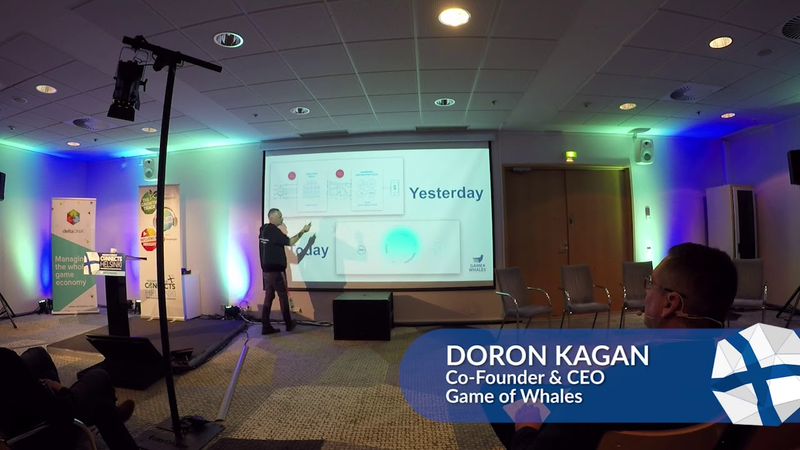
How AI automation increases games IAP LTV by 25%
The mobile gaming industry faces significant challenges regarding user monetization and retention, characterized by a standard 2% conversion rate for in-app purchases (IAP) and a daily churn rate of approximately 50%.
- Automated AI and machine learning platforms increase in-app purchase (IAP) revenue by 20% to 25% compared to traditional manual management strategies.
- Real-time behavioral clustering allows developers to move beyond generic demographics, enabling personalized monetization strategies that distinguish between potential spenders and non-payers.
- AI-driven optimization improves day-7 retention and overall conversion rates by identifying interaction 'sweet points' that human analysts typically overlook.

AI-driven Dynamic Dialog through Fuzzy Pattern Matching
Dynamic dialogue systems in modern gaming rely on fuzzy pattern matching to create reactive, context-aware character interactions without the burden of extensive custom programming.
- Dynamic dialogue systems utilize fuzzy pattern matching to enable reactive, context-aware character interactions without requiring extensive custom programming.
- The architecture represents the game world as a flat database of key-value pairs, allowing writers to create complex narratives that respond to procedural gameplay through a rule-based framework.
- System relevance is maintained by selecting the most specific match—defined by the highest number of matching criteria—when multiple potential responses exist.

Game Dev Daily #001 - New Schedule & AI Voice.
This daily development series documents the journey of an independent game developer transitioning to a new content schedule.
- The developer transitioned to a new content schedule featuring a Friday release for long-form content and daily Monday-through-Thursday live streams to balance production with community engagement.
- Development of the game's AI antagonist involved testing seven distinct archetypes, including toxic gamer, bored entity, insecure system, and existential crisis personas.
- The developer identified that moving away from the stereotypical GLaDOS-inspired AI trope toward evolving, emotionally complex character arcs offers higher potential for unique gameplay.
Will Machines Ever Make Better Games Than Us?
Artificial intelligence and machine learning are poised to fundamentally disrupt the video game industry by automating complex tasks and enabling unprecedented levels of personalization.
- AI is transitioning from simple data-driven optimization of monetization and matchmaking to complex creative tasks like procedural content generation and dynamic difficulty adjustment.
- The current surge in AI utility is driven by the convergence of increased computational power, refined algorithms, and the availability of massive datasets, despite neural networks having existed since the 1950s.
- Future development trajectories point toward fully personalized gaming experiences, including real-time adaptive storylines and NPCs capable of natural language interaction.
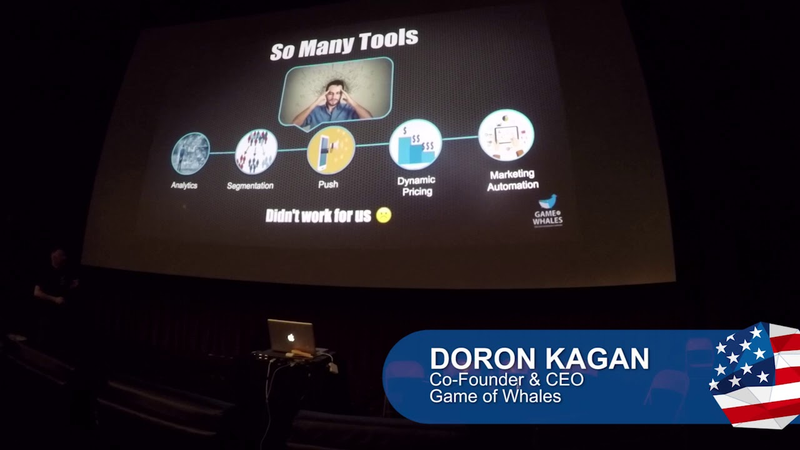
AI that boosts in-app purchases and monetisation
The primary challenge in mobile game monetization lies in the inefficiency of manual data analysis and static segmentation.
- Automated, AI-driven monetization systems can increase game revenue by 15% to 25% by optimizing individual player offers.
- Manual segmentation and static pricing are inefficient, often leading to player alienation or the devaluation of game economies through excessive currency distribution.
- Predictive machine learning models outperform reactive analytics by analyzing real-time player behavior, resource levels, and progression to determine the optimal next purchase.