Advertising reports and market data
Documents
Ad Intelligence: An Overview 2022
Analysis of mobile advertising intelligence from 2022 reveals a rapidly expanding market, with the number of advertisers doubling since 2019 to exceed 120,000.
- The mobile advertising market has doubled since 2019, with over 120,000 active advertisers identified across 35 countries in 2022.
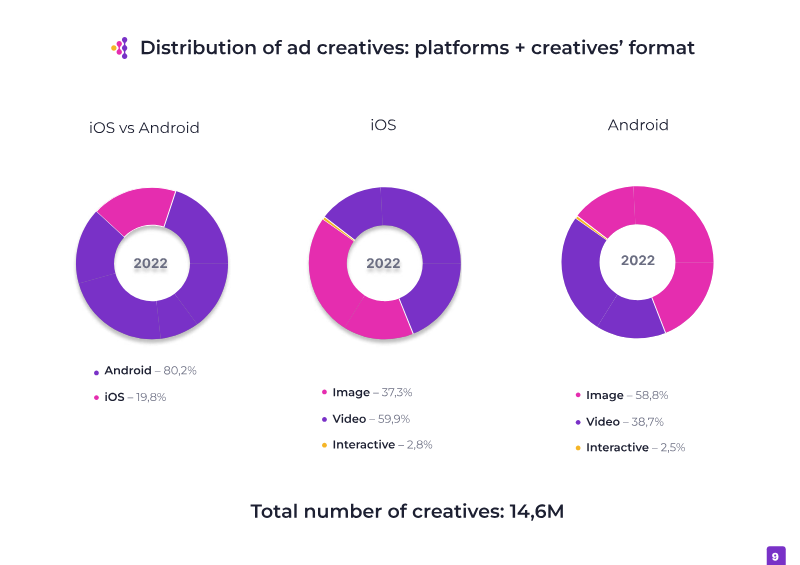
- Android dominates the advertising landscape, accounting for 71% of advertisers and over 80% of the 14.6 million creatives tracked.
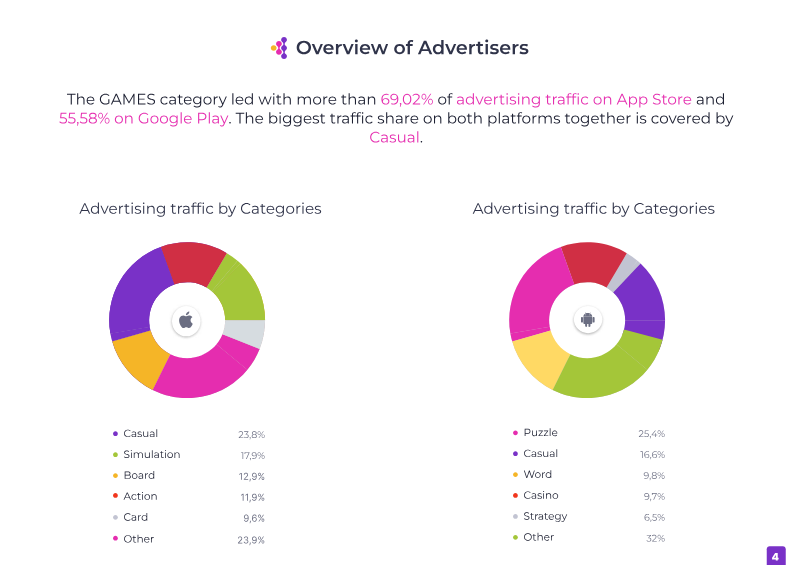
- Gaming remains the primary advertising sector, capturing 69.02% of traffic on the App Store and 55.58% on Google Play, with Casual and Puzzle genres leading their respective platforms.
Ad Monetization Insights for Mobile Game Developers 2022
The 2022 ad monetization briefing delivers a data-driven overview of revenue-generation strategies for mobile game developers, emphasizing measurement, optimization, and regional performance trends.
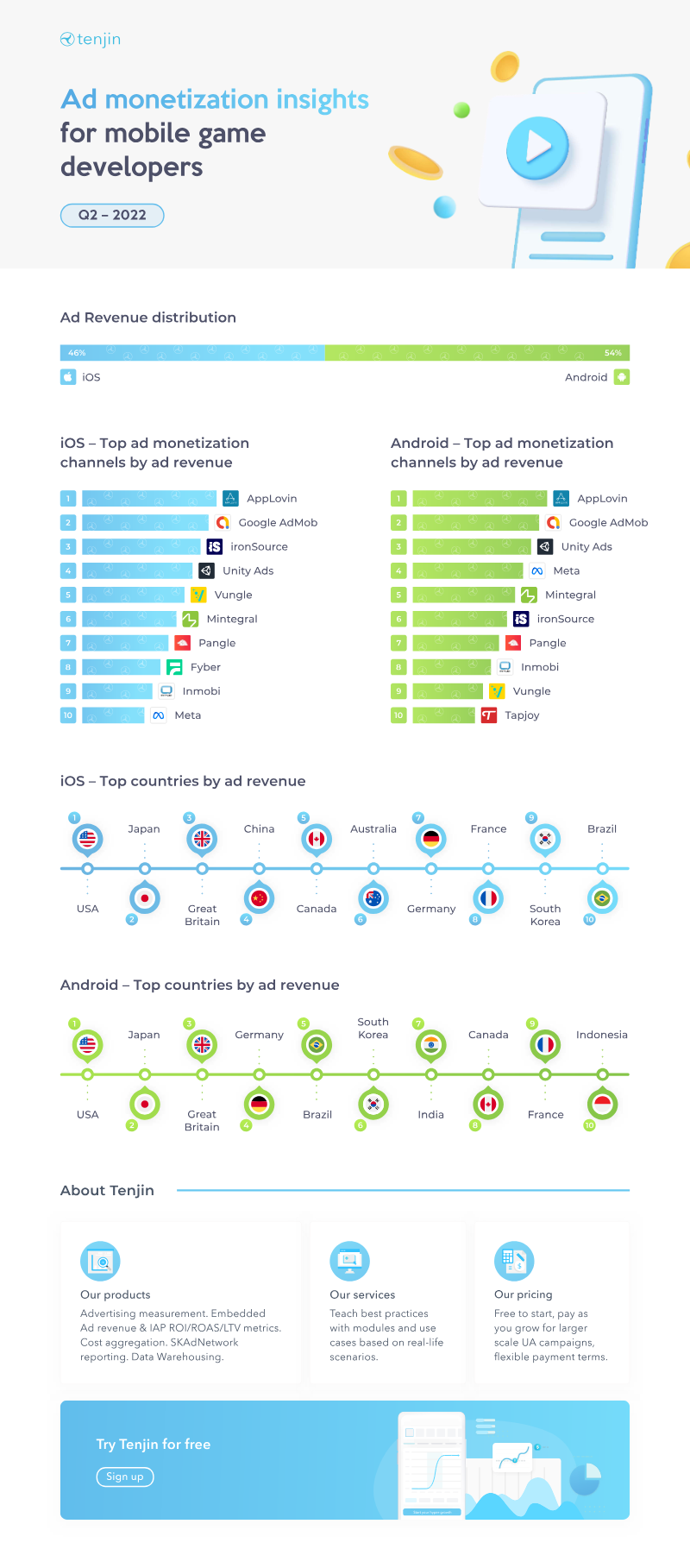
- Advertising accounts for 54% of total revenue across the mobile game markets surveyed in 2022.
- Effective monetization requires integrating ad revenue, in-app purchase data, and cost metrics to accurately calculate ROI, ROAS, and LTV.
- Key regional markets for mobile game monetization include Germany, Japan, South Korea, Canada, and Indonesia.
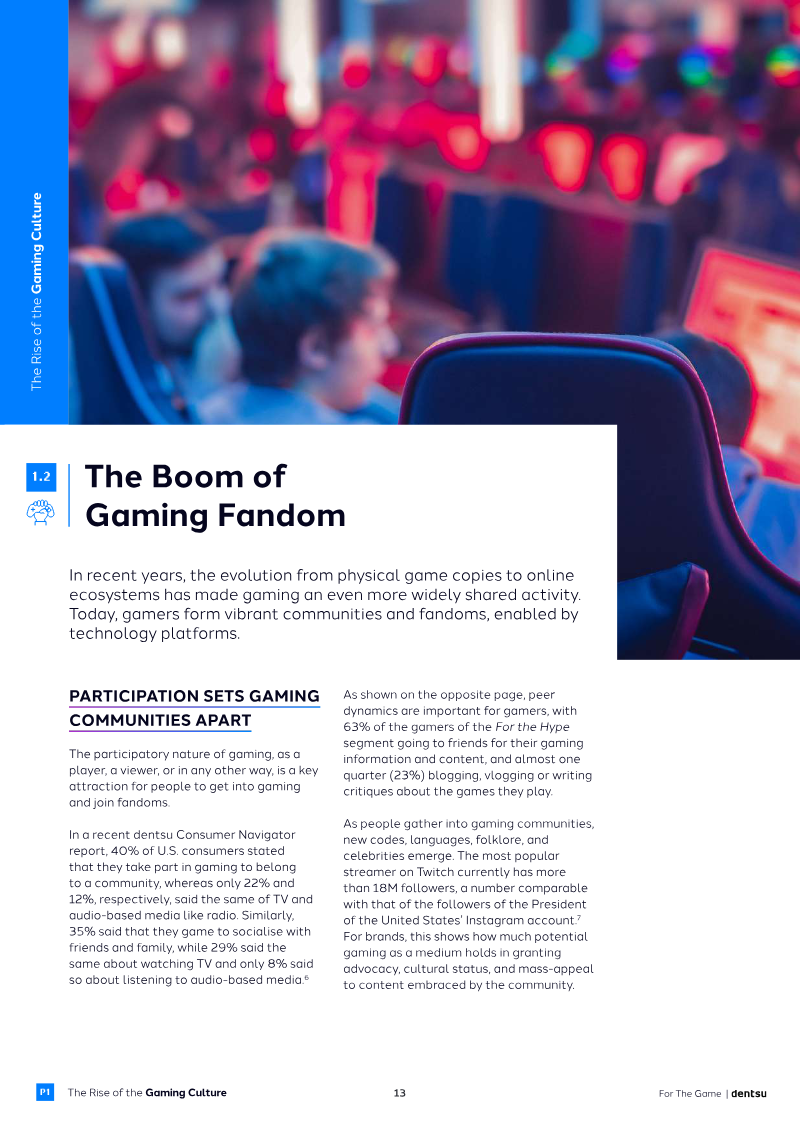

For the Game
The global gaming industry is undergoing a transformative shift into a primary mass medium, projected to reach 3.5 billion players and $225 billion in revenue by 2025.
- The global gaming industry is projected to reach 3.5 billion players and $225 billion in revenue by 2025.
- Gamers are high-value 'super-consumers' who engage with television and internet platforms for nearly 60 hours per week.
- Over one-third of the global player base uses gaming primarily as a social platform, necessitating a shift toward community-focused engagement strategies.
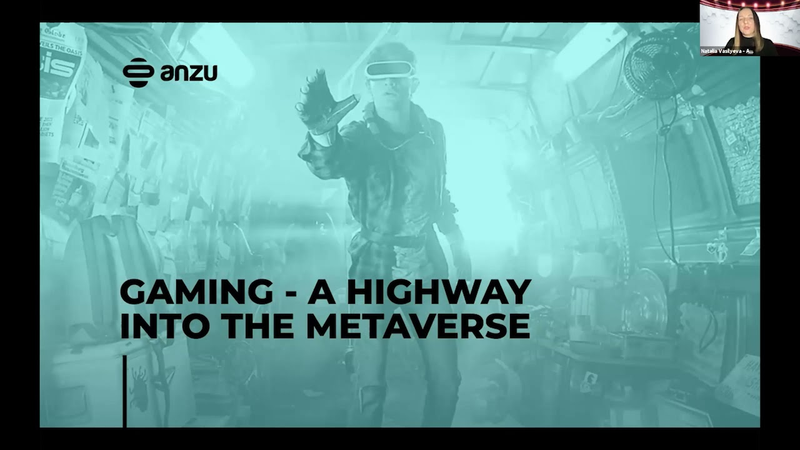
Betting Big on the Metaverse: Are You Ready?
The metaverse represents a significant evolution in digital interaction, shifting from flat, two-dimensional web experiences to immersive, three-dimensional, and persistent virtual worlds.
- The metaverse is evolving from 2D web experiences into persistent, 3D virtual worlds that integrate social interaction, commerce, and entertainment.
- Free-to-play models are the industry standard, accounting for 78% of total digital gaming revenue in 2020, a 9% year-over-year increase.
- Cross-platform functionality is critical for metaverse development, with over 100 top-grossing titles already supporting it to allow seamless movement of users and assets.
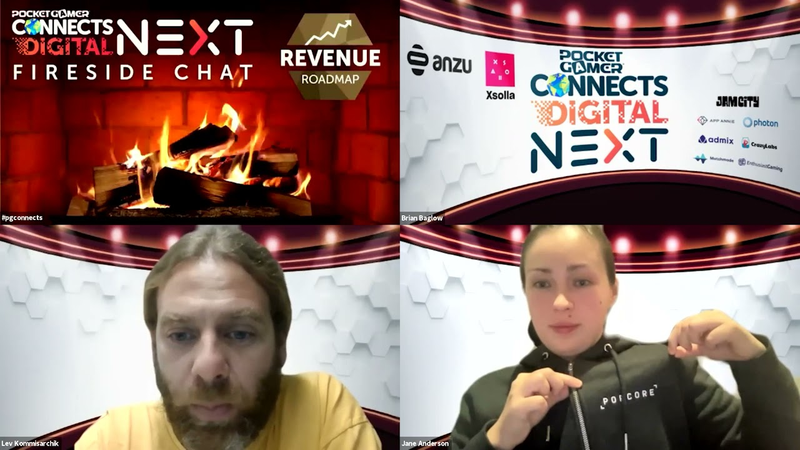
Fireside Chat: What the Mobile Space Looks Like as we Head into 2022
The mobile gaming industry is currently undergoing a period of rapid consolidation and structural evolution, driven by significant market growth, shifting privacy regulations, and advancements in adtech.
- The mobile gaming market is projected to reach $116 billion by 2024, fueled by an average daily consumption of 155 minutes per user.
- The industry is undergoing rapid consolidation and structural evolution as major players pursue mergers and acquisitions to scale operations and integrate monetization services.
- Monetization management has shifted from manual waterfall processes to automated, data-driven bidding, moving the focus of professionals toward product-level integration, A/B testing, and user segmentation.
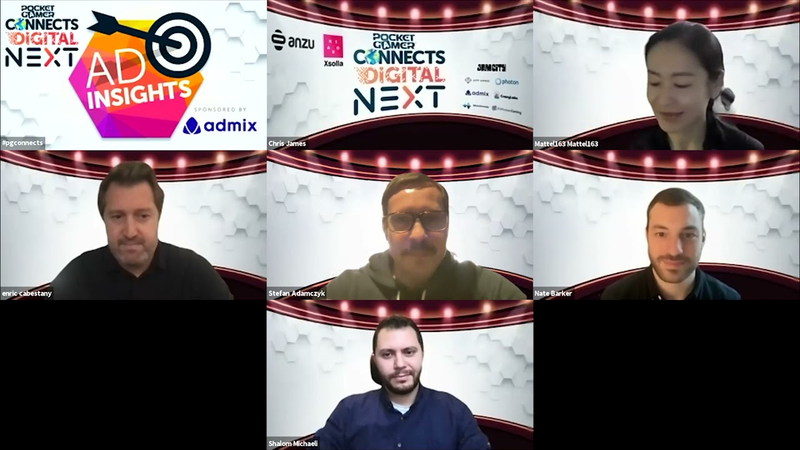
Panel: The Truth About Ads: Is Disruption, a Requirement or an Opportunity for Game Makers?
The mobile gaming industry is undergoing a fundamental transformation as privacy regulations, most notably iOS 14, dismantle traditional identity-based targeting.
- The mobile gaming industry is shifting from deterministic, identity-based targeting to probabilistic, contextual modeling due to privacy regulations like iOS 14.
- To maintain revenue, developers are prioritizing non-intrusive, brand-focused advertising and verifiable auction processes over traditional tracking methods.
- User acquisition strategies are diversifying beyond standard mobile ads to include influencer marketing, cross-platform campaigns, and traditional media channels.
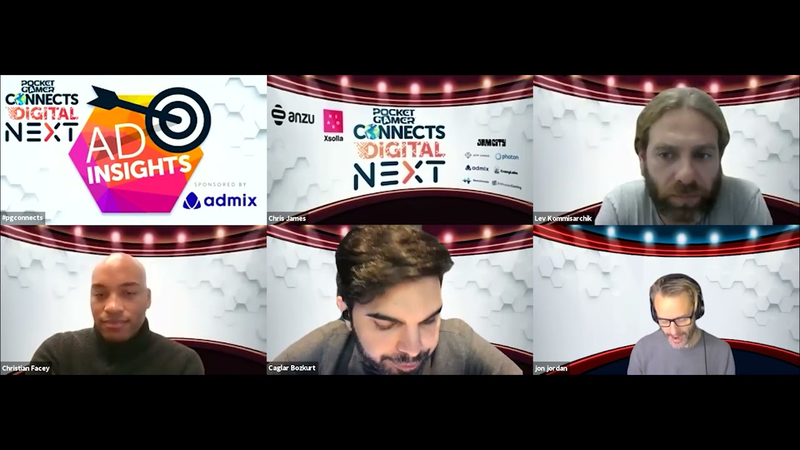
Panel: How Have New Ad Formats Changed Mobile Gaming?
The mobile gaming industry is undergoing a fundamental transition toward non-intrusive advertising formats designed to monetize user bases without compromising the integrity of the gameplay experience.
- The mobile gaming industry is shifting toward non-intrusive ad formats like blended billboards, spatial 3D ads, and rewarded audio to replace disruptive full-screen interstitials.
- Rewarded audio ads have achieved a 90 percent user acceptance rate, demonstrating that seamless integration significantly improves player retention compared to traditional formats.
- Developers are increasingly adopting hybrid monetization models that combine native ad inventory with in-app purchases to balance profitability with long-term player engagement.

FY2021 Presentation Material
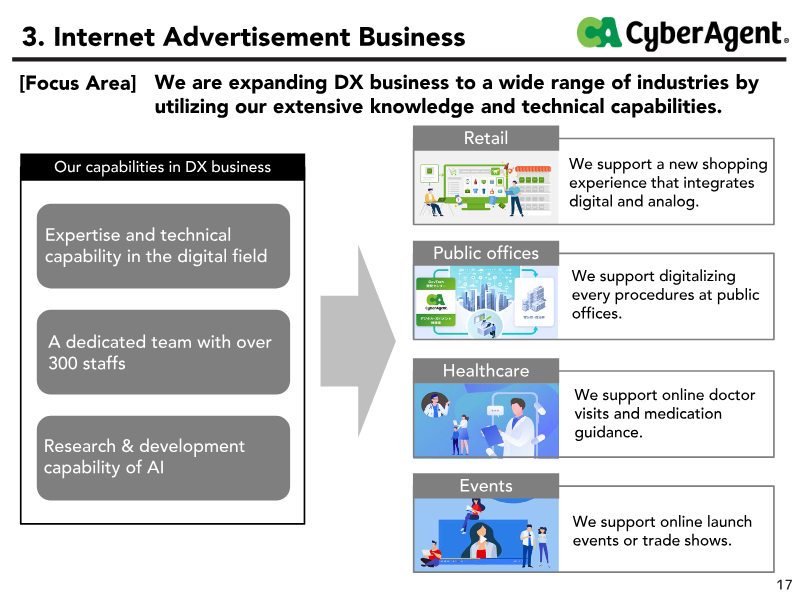
CyberAgent achieved record-breaking financial performance in fiscal year 2021, characterized by consolidated sales of 666.4 billion yen and a more than threefold increase in operating profit to 104.3 billion yen.
- CyberAgent achieved record-breaking FY2021 performance with 666.4 billion yen in consolidated sales and a 104.3 billion yen operating profit, representing a more than threefold increase.
- The Game business was the primary profit driver, recording 68.6% year-over-year growth fueled by the commercial success of Uma Musume Pretty Derby.
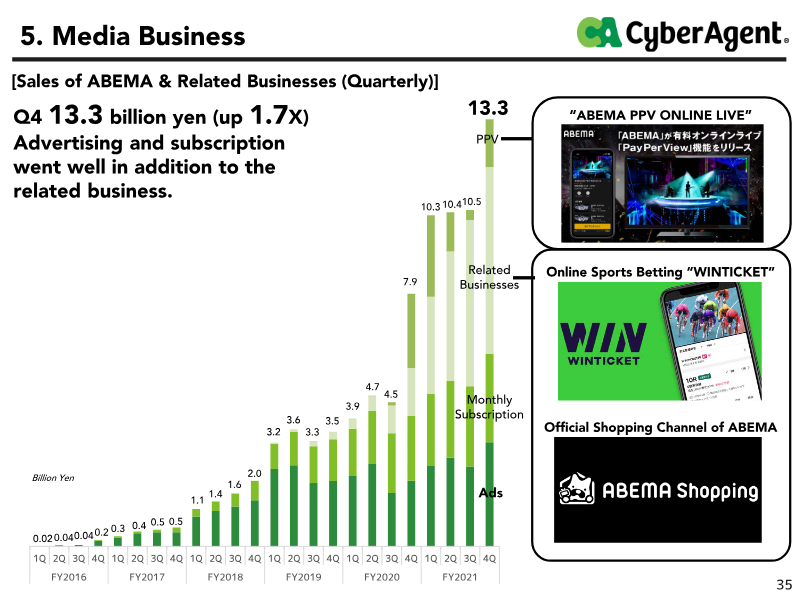
- WINTICKET captured 25% of the Keirin online betting market and tripled its transaction volume, significantly contributing to reduced operating losses in the Media segment.
Superstar Session: Widget as a Performance Tool
Twitch has emerged as a premier platform for performance-oriented influencer marketing, particularly for gaming brands seeking deep audience engagement.
- Widget-integrated Twitch campaigns achieve install rates of approximately 15 percent, significantly outperforming standard industry benchmarks.
- Dynamic, customizable widgets integrated via OBS transform passive viewers into active participants by displaying real-time data like game progress or download counts triggered by user actions.
- Twitch facilitates higher trust and conversion rates than static platforms like YouTube by allowing brands to integrate into native, unscripted streamer-community conversations.

Panel: Should influencers be at Arm’s Length or Considered Part of Your Team?
Influencer marketing has evolved from a superficial promotional tactic into a sophisticated, strategic pillar of modern brand growth.
- Influencer marketing is shifting from transactional, one-off promotions to long-term ambassador programs designed to build sustained audience loyalty.
- Effective campaigns prioritize creator autonomy, allowing influencers to leverage their specific community expertise to craft organic messaging rather than forcing them into rigid, brand-dictated niches.
- Brands should adopt a pragmatic, experimental framework by starting with small-scale tests to validate return on investment before committing to long-term partnerships or in-house management.

A Single Source of Truth for Measurement
The mobile marketing landscape underwent a fundamental shift following the introduction of iOS 14 and Apple’s App Tracking Transparency (ATT) framework.
- The shift to Apple’s App Tracking Transparency (ATT) framework and the loss of IDFA has created a fragmented measurement environment that requires reconciling anonymous SKAdNetwork data with traditional MMP reporting.
- Implementing a conversion studio allows advertisers to automate the encoding and decoding of conversion values, enabling the measurement of revenue, engagement, and funnel events without frequent code updates.
- Advertisers can extend post-install measurement windows up to 72 hours to capture more granular user behavior data within the constraints of privacy-centric design.
The Key Role of Ad Creatives in Advertising Game & Tips on Creative Optimisation
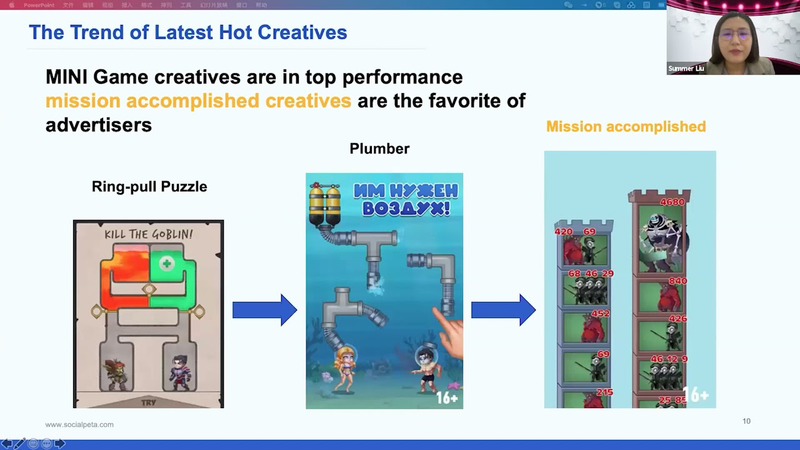
The mobile gaming industry has entered a phase of extreme saturation, necessitating a shift toward high-volume, data-driven advertising strategies.
- The mobile gaming industry has reached extreme saturation, with the average number of ad creatives per game increasing by 110% year-over-year to 543 as of the first half of 2021.
- Top-tier mobile titles now require over 1,000 unique ad assets throughout their lifecycles to maintain effective user acquisition and revenue growth.
- Developers should validate market demand by testing game concepts with low-budget trailers and creative assets before committing to full-scale production.