Advertising reports and market data
Documents

Speed Panel: How to Get Brands to Advertise in Your Apps
This panel discussion explores strategies for mobile game developers and publishers to attract brand advertising, emphasizing the shift in brand perception toward mobile gaming as a primary engagement channel.
- Brands now view mobile gaming as a primary engagement channel, a shift accelerated by the COVID-19 pandemic that has moved interest beyond blockbuster titles to include mid-core and smaller games.
- To attract brand budgets, developers must provide standardized data flows, robust attribution, and viewability reporting to satisfy demands for measurable outcomes.
- Developers should prioritize direct integrations with major omni-channel demand-side platforms (DSPs) such as The Trade Desk and Google’s DV360 to increase accessibility for brand advertisers.
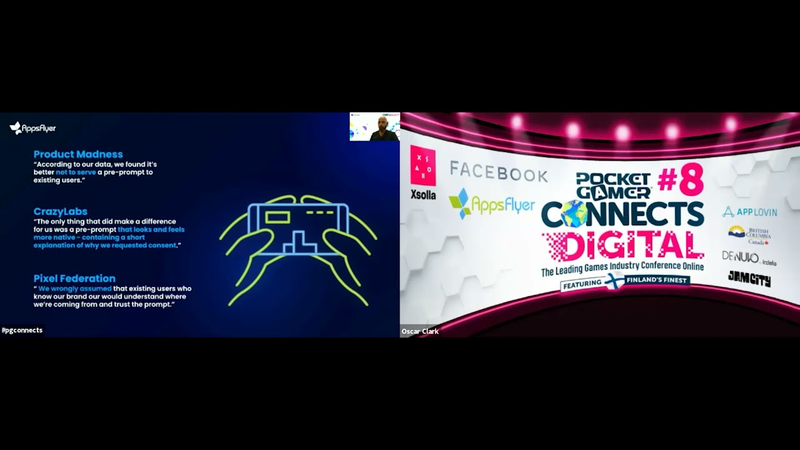
Speed Panel: A Whole New Ballgame: How a Top Gaming App Publisher Tackled iOS 14+ & SKAdNetwork
The mobile gaming industry has undergone a fundamental shift in user acquisition and data strategy following the implementation of Apple’s iOS 14+ privacy requirements and the adoption of SKAdNetwork.
- Publishers must shift from granular, long-term tracking to predictive modeling based on user activity within the first 24 hours to compensate for the loss of long-term monetization metrics under SKAdNetwork.
- Successful App Tracking Transparency (ATT) opt-in rates are achieved through concise, localized pre-prompts that are kept separate from other regulatory disclosures like GDPR.
- Strategic timing for ATT prompts is critical, with optimal results often achieved by triggering the request immediately before a user interacts with an advertisement.
CTV's Recent Surge & How Gaming Fits in
Connected TV (CTV) is experiencing significant growth as a primary advertising channel, with global ad spend projected to rise from $8.11 billion in 2020 to $18.29 billion by 2024.
- Global advertising spend on Connected TV (CTV) is projected to more than double, rising from $8.11 billion in 2020 to $18.29 billion by 2024.
- Gaming has emerged as the fastest-growing content category within the CTV ecosystem, alongside traditional video-on-demand services.
- Between 85% and 90% of CTV viewers utilize mobile devices while watching, creating a dual-screening behavior that allows marketers to drive direct user acquisition through QR codes, vouchers, and push notifications.

IDFA Loss: Real Data & Real Talk
The deprecation of the Identifier for Advertisers (IDFA) on iOS has fundamentally restructured the mobile gaming industry, resulting in a 15% to 20% decline in revenue across diverse portfolios.
- The deprecation of IDFA has caused a 15% to 20% decline in revenue across mobile gaming portfolios due to the collapse of granular tracking and lookalike audiences.
- Market efficiency has decreased as the loss of deterministic tracking leads to higher costs per mille and lower install quality.
- Niche, whale-dependent genres like social casino and strategy games have experienced the most significant disruptions, whereas broad-market titles remain more resilient.


3Q FY2021 Presentation Material: April to June 2021
CyberAgent experienced exceptional financial growth during the third quarter of fiscal year 2021, covering the period from April to June.
- CyberAgent’s consolidated sales grew 70.3% year-over-year to 192.2 billion yen in 3Q FY2021, with operating profit increasing more than fivefold to 44.5 billion yen.
- The 'Uma Musume Pretty Derby' game drove a 151.7% increase in gaming segment sales and a 480% surge in operating profit, reaching nine million downloads within five months of launch.
- Driven by the success of 'Uma Musume', CyberAgent revised its full-year forecasts upward to 650 billion yen in sales and 100 billion yen in operating profit.
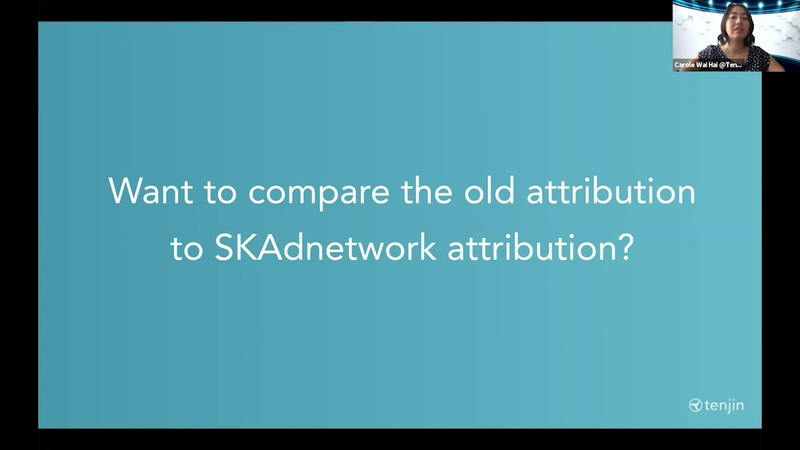
Superstar Session: Key to Success in Post-iOS 14 Advertisements: SKAdNetwork Data Reconciliation
The implementation of Apple’s App Tracking Transparency policy has fundamentally restructured the mobile user acquisition landscape by restricting access to the Identifier for Advertisers.
- The mobile user acquisition landscape has shifted from deterministic tracking to the privacy-centric SKAdNetwork framework following Apple’s App Tracking Transparency policy, which saw opt-in rates reach only 24 percent by mid-2021.
- Developers must pivot to aggregate analysis and channel-level monitoring because SKAdNetwork introduces reporting latencies of 24 to 48 hours and masks granular data through privacy thresholds.
- Long-term user value prediction now relies on the strategic use of conversion values as a proxy within the restricted tracking windows provided by SKAdNetwork.
Panel: The Truth About Ads: Is it a Disruption, a Requirement or an Opportunity for Game Makers?
Advertising in the modern gaming landscape functions as a strategic exchange mechanism rather than a mere disruption.
- Modern game advertising functions as a strategic exchange where rewarded videos and context-aware placements provide a sustainable revenue model that supports free-to-play access.
- Integrating ad experiences directly into the core game loop can improve player retention rather than acting as a disruptive force.
- Studios can mitigate financial risk by using early-stage video ads and playtests to validate core mechanics and monetization strategies before full production.
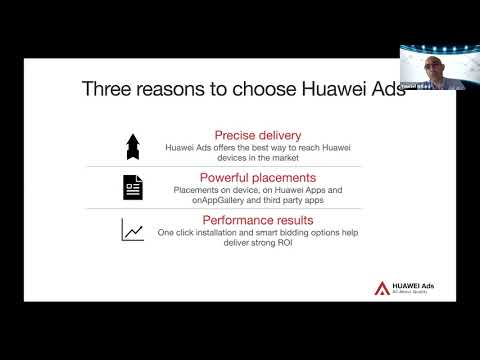
Huawei Ads - All About Quality
Huawei Ads functions as a strategic advertising ecosystem designed to bridge the gap between developers and a vast global audience of over 700 million smartphone users and 540 million monthly active users on the AppGallery.
- Huawei Ads provides access to a global audience of over 700 million smartphone users and 540 million monthly active users on the AppGallery.
- The platform utilizes a competitive 80/20 revenue-sharing model designed to incentivize developer participation and publisher monetization.
- The ecosystem is built to address industry challenges such as tightening privacy regulations, market saturation, and the transition to 5G technology.

Superstar Session: Unlocking Gaming's Potential as a Media Channel
Gaming has evolved into a dominant global media channel, currently reaching an audience of over three billion players.
- Gaming has reached a global scale of over three billion players, positioning it as a primary media channel for long-term brand building.
- The industry is shifting from fragmented, custom brand activations toward a scalable, automated infrastructure that integrates ads natively into gameplay.
- To ensure sustainability, the model prioritizes non-intrusive, native ad formats over disruptive, performance-based advertising to protect user retention.
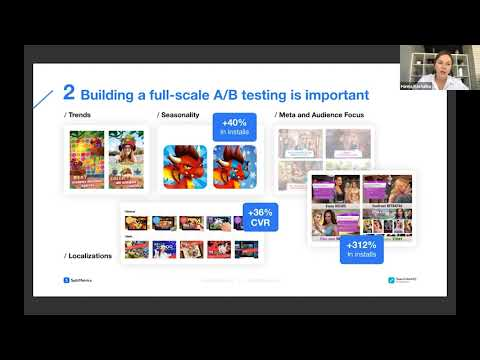
The Big Lie of User Acquisition: Strategies That do not Work in 2021
The mobile marketing landscape has undergone a fundamental shift following the deprecation of the Identifier for Advertisers and the implementation of Apple’s App Tracking Transparency framework.
- The deprecation of the Identifier for Advertisers (IDFA) and the implementation of Apple’s App Tracking Transparency (ATT) framework have rendered traditional, granular tracking-based user acquisition strategies ineffective.
- Developers must prioritize a holistic marketing approach that integrates App Store Optimization (ASO) with paid acquisition to stimulate organic search intent and improve conversion rates.
- Rigorous A/B testing of visual assets, such as icons and screenshots, is a prerequisite for scaling paid campaigns and ensuring a positive return on advertising spend.
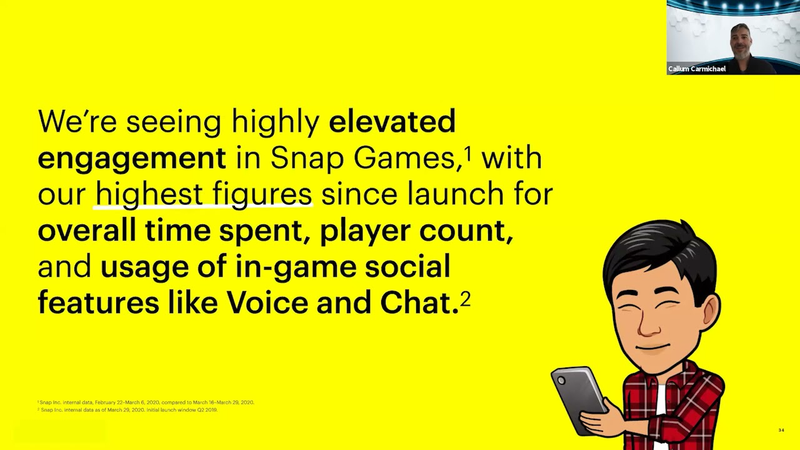
Levelling Up Your Mobile Gaming Strategy on Snapchat
Snapchat has established itself as a robust ecosystem for mobile gaming, leveraging a massive base of 500 million monthly active users that increasingly spans beyond younger demographics to include a significant 35-plus audience.
- Snapchat provides access to a monthly active user base of 500 million, which now includes a significant demographic of users aged 35 and older.
- Developers can use the Snap Kit toolkit to integrate social features like Bitmoji avatars, leaderboards, and authentication to improve organic user retention.
- The platform supports a full-funnel user acquisition strategy through immersive, full-screen ad formats including Snap, Collection, and Story ads.
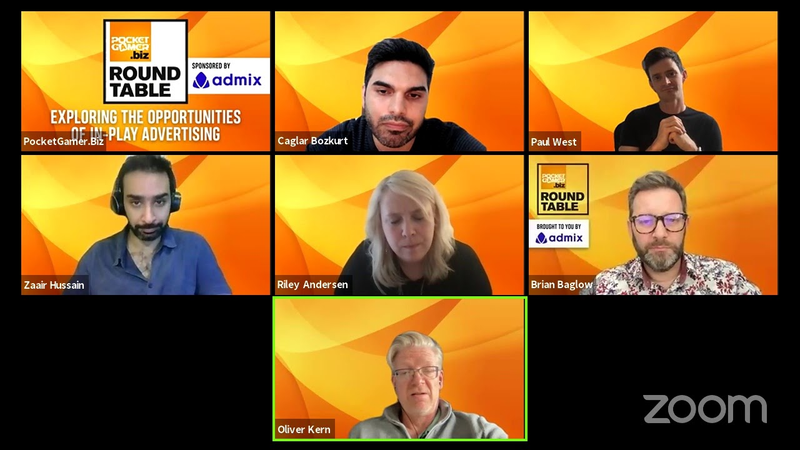
Exploring The Opportunities of In-Play Advertising - PG.Biz Roundtable
In-play advertising represents a strategic evolution in mobile game monetization, shifting away from disruptive interstitial and rewarded video formats toward immersive, context-aware brand integrations.
- In-play advertising provides a non-disruptive revenue stream by embedding brand content directly into game environments, such as billboards or signage, rather than relying on interstitial or rewarded video formats.
- The primary barrier to scaling in-play advertising is the current lack of standardized measurement frameworks, which prevents risk-averse media agencies from shifting budgets into gaming.
- While rewarded video currently generates higher eCPMs, in-play advertising serves as a vital complementary revenue stream that protects player retention by avoiding gameplay interruptions.