VideoTwo & a Half Gamers
📊 Creative Optimization Masterclass: The Secret DNA of winning ads
25 Sept 20258 min video
7 days. Let's try last 30 days and see if the the videos with with Ben Bro actually are there. Oh yeah, all the video videos with Ben brought this also with with Ben are here. Nice. Okay, this is pretty cool. Let's check out also the scenes and elements afterwards as well. So what do we have here? Scenes. Let's try live scenes. Okay, all the videos or like all the scenes with the people it's in the in the actual situation. Awesome. This is used in one creative. This one is used in four creatives out of 100. This is 4 a.m. [Music] with the two and a half gamers. The midnight crew talking UA advers and game design too. Mat feeling shaking the insight. We're rocking those vibes till the early daylight. But hey, you a master eyes on the prize. Tracking data through the cyerspace skies. Felix stacks colors like a wizard in disguise. Jack lift us to the high. Two and a half
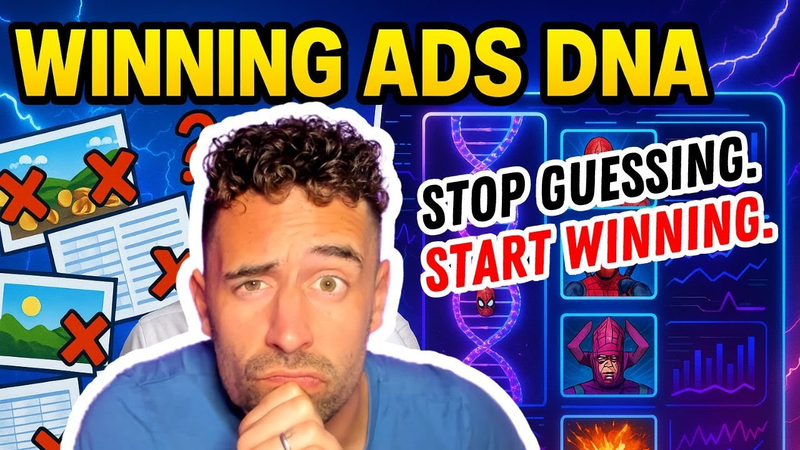
gamers talking smack. Slow hockey stick got your back. Ads are beautiful. They like the way. Click it fast. Don't delay. Uh-huh. Uh-huh. Ah. Aha. Uh-huh. Hello, hello, hello. My name is Mat Lanich and this is another solo episode of Two and a Half Gamers. Today we're going to talk about something very very interesting and important which is a follow-up from the the last episode. We are going to talk about AI and the secret DNA of winning ads. Every UA manager asks the same question. Why did this create work? Was it because of the humor? Is it the game play? Is it the voice over? Or maybe it's just, you know, Deadpool breaking the fourth wall again? Well, today I will show you how
Apps Slider Today I will show you how Apps Slider creative optimization tool uses AI tagging to break down your creatives into their DNA. You will see exactly what elements drive the performance, which creatives, which scenes. So, all of it. Let's dig in. Here's the thing. Most of us track installs, CTRs, IPMs, and obviously ROAS as well. But we rarely know why a creative worked. We need to be honest with ourselves. For example, you run two ads. One is cinematic CGI trailer, one is very, you know, goofy UGC reaction or the street interviews. The UGC or the street interview ad wins. But why do you know why? Was it because of the humor? Because of the shorter runtime? The fact that it showed gameplay in the first few seconds without tagging, we don't know. We're guessing and guessing is not the great strategy, is it? So, this is where the AI powered tagging saves the day. And uh you know, here's the Marvel Snap campaign in the dashboard. The system
automatically tags the creatives. No more manual spreadsheets. Let me actually share the screen. So here's the the Marvel Snap campaign or the the creatives that I have in all of the campaigns in the dashboard system automatically automatically tax each creative. No more spreadsheets and manual checkings. Check out all these examples. So we have some pre preloaded tags with all the different things in here. The AI is literally dissecting your ads frame by frame. So you can compare performance by creative elements, scenes and texts, not by file names as we discussed. So let's let's look at the elements. For example, here we can try all of the different things. Okay, let's try the the actual power of the the search and and grouping in uh in this case. So now here's the magic. You can search and group the creatives by whatever you want, right? By the creative text. So let's say I want to
know ads with Galactus. Did they perform better than that pool? Let's see. So we have all the Galactos creatives with one clicks. Just filter by Galactus. And then suddenly I've got a clean view and list of every ad in this category with obviously with all costs, IPM, CTRs, the the ROS, day seven or whatever K other KPI want because it's fully customizable. Now, let's try actually videos with real people. Okay, it's all of the real people right here. Different things, which is nice. Let's actually go one step further. Videos with Ben Ro cuz uh historically this worked really well. Ben brought only. Oh, hello. Nice. All the videos in the last seven days. Let's try last 30 days and see if the the videos went with with Ben Bro actually
are there. Oh yeah, all the video videos with Ben brought this also with with Ben are here. Nice. Okay, this is pretty cool. Let's check out also the scenes and elements afterwards as well. So what do we have here? Scenes. Let's try live scenes. Okay, all the videos or like all the scenes with people in the in the actual situation. Awesome. This is used in one creative. This one is used in four creatives out of 100. This is in two. So all you can see all the all the different KPIs obviously. Then we can go to elements and let's try to find videos only with Spider-Man. Oh, here you go. All the elements in here. Spider-Man cards. This is a video with Spider-Man as well in inside. And we can go to text as well and try to try to find different different texts, right? It's it's right here. Uncle Ben strategies grieve whatever you can think think of carnage here we are nice okay but then what are
you going to do with this knowledge well easy you stop relying on gut feeling and start actually building creatives based on these patterns so if your top three ads are let's say gameplay or fastpace you tell your creative team that you know guys like let's make more of these or you have the uncle Ben which is which is working well or the the galactus with like how people react to the galactus to cards and you know you go and check check this with your creative team tell them let's let's make more of these galactus reactions or you can flip it if your bottom performers are let's say static text heavy statics or we have two cards just text here you know let's not make this anymore unless you're you want to waste your budget I mean it's it's up to you right it's almost like finding out explosions really do equal conversions who knew I mean jokes aside we can recap the the power of AI tagging because it's automatically also break down your creatives into the DNA level tags. You can filter and compare ads by
tone, style, format or concept or different scenes and elements. So you finally learn why your best ads work and why some f as well. So what do you know what works for you? It could be humor, it could be UGC or even just the right voice over style or captions or different texts. So if you want to see your own ad DNA, check out the the creative optimization tool in your App Slider dashboard and don't forget to subscribe, like the video. Next up, we will look at how to tie creatives directly to your inapp events and draw us, which is very, very important. Remember in UA sites are your X-ray vision with AI tagging basically professor X of ad strategy. Thank you very much for listening and tuning in. See you next time. Thank you. Bye-bye. [Music]
[Applause] [Music]
Auto-generated captions from YouTube — names and numbers may be misheard.
Distilling the key insights…
The primary challenge for user acquisition (UA) managers in the mobile gaming industry is the inability to determine why specific advertisements succeed or fail. While metrics like click-through rates, installs per mille, and return on ad spend are easily tracked, the underlying creative drivers—such as humor, specific character appearances, or pacing—often remain obscured by manual, spreadsheet-based analysis. This lack of granular insight leads to inefficient creative iteration and wasted advertising budgets.
To address this, AI-powered creative optimization tools now enable the automated, frame-by-frame dissection of advertisements. By tagging creative assets based on tone, format, scene, and specific elements, these systems allow UA managers to move beyond file-name-based tracking. This methodology facilitates the comparison of performance across specific variables, such as comparing the effectiveness of different characters or visual styles within a campaign. By analyzing these patterns, teams can identify which elements consistently drive conversions and which formats, such as static or text-heavy ads, consistently underperform.
The core thesis is that shifting from gut-feeling decision-making to data-driven creative DNA analysis allows for faster, more effective iteration. By isolating the specific components that resonate with audiences, developers can refine their creative strategy to focus on high-performing patterns while eliminating ineffective ones. This approach effectively transforms creative optimization into a precise, X-ray-like diagnostic process, ultimately reducing wasted spend and improving the overall return on investment for user acquisition efforts.

Two & a Half Gamers · 2026

Two & a Half Gamers · 2026

Two & a Half Gamers · 2026

Two & a Half Gamers · 2026

Two & a Half Gamers · 2026

Two & a Half Gamers · 2026

Two & a Half Gamers · 2026

Two & a Half Gamers · 2026

Two & a Half Gamers · 2026

Two & a Half Gamers · 2026

Two & a Half Gamers · 2026

Two & a Half Gamers · 2026

Naavik · 2026
Two & a Half Gamers · 2026
Two & a Half Gamers · 2026
Two & a Half Gamers · 2026
Two & a Half Gamers · 2025
Two & a Half Gamers · 2025

Deconstructor of Fun · 2025
Two & a Half Gamers · 2024

Two & a Half Gamers · 2026

Two & a Half Gamers · 2026
Two & a Half Gamers · 2026

Two & a Half Gamers · 2026
Comments