
Transcript
like what would your growth organization or UA organization look like and what would you prioritize? What would be you do you prioritize and overall what are the key differences of operating your growth team today versus what it was just a couple of years ago.
So I think firstly I mean we have to acknowledge um the efficiency um economy that we're in right now and I think you know there have been so many layoffs uh also on the UA side. So I think we're doing less uh more with less. So I think you know we have fewer people doing these ro doing these roles um and ask and being asked to do more. So my first advice my first kind of thought is like we should you should really simplify as much as you can and focus on doing uh fewer things and doing them well. Um, however, that doesn't necessarily uh translate to kind of the creative side of things. And I think the the creative side of things is really a focus on
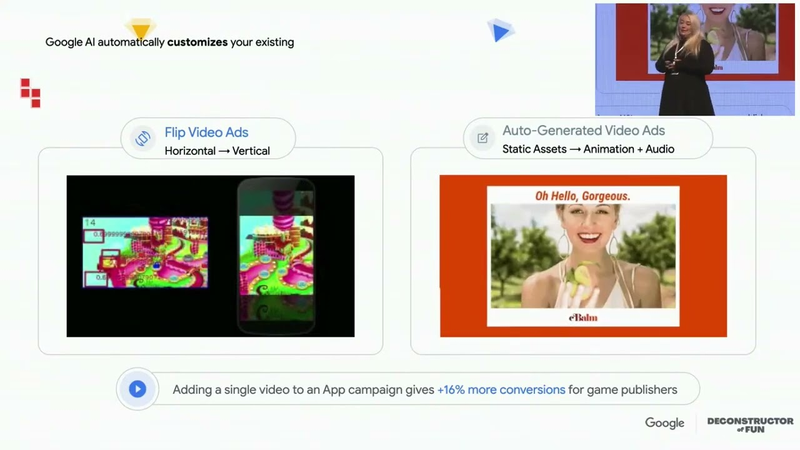
doing as much as possible and getting as much diversity as as you possibly can in in kind of your creative mix. Um, because you really need to fuel these ML machines with as as much creative as possible to really allow them to pick the winners. And so if you think about how you set up an organization, I think um yeah, I mean you need to simplify um as much as you can um have creative work very closely with your UA team. It really should be part of the team not kind of a se separate organization. Obviously depend on the size of the organization but really creative and UA should be side by side. um and really be build an organization that
really builds a a creative generating machine because it creative is really the only lever that that teams have now.
Um so that really is the last frontier of the last frontier of UA is is on a day-to-day basis is really creative. And
so how do you build a creative machine that builds concepts and ships uh creative at scale is is kind of the question there.
Yeah, I can I can jump in here maybe. So I think one of the biggest false consumptions in UA is like I just got to find that channel. It's just like maybe there's that that I'm going to keep testing channels. I'm going to get totally different result. You're not like UA is going to fundamentally work or it's going to fundamentally not. And it's a combination of creative which Paul really focused on and and product is the two the two biggest levers. Um to the question Mishkov like how to kind of optimize and lean teams out or you know how how we're thinking about that. We literally cut our UA team in half, which might sound crazy for a UA business where our actual book of business is growing, but we retoolled the team. And this kind of ties back to what we uh were talking about earlier of how these algorithms are getting stronger and stronger. The person pulling the levers is an increasingly small part of the puzzle. Like it says it's 10%. So we actually we didn't we didn't you reduce
the overall team size. We reorder the team and we put about half the team on what we call like the growth strategy team which is basically like crossf functional operators working with product uh working with admon working with creative and just doing little stuff that falls through the cracks like data governance. There was I have to watch my words carefully here. There was a large acquisition that happened uh in somewhat recent history where when the dust settles the games were wildly undervalued because of a data governance issue. The the UA was missing call it 90% of the the revenue because of a simple data governance issue. So it's just weird stuff like that that's like it's not specifically the UA person's job. It's not specifically the you know the CEO's job. It just falls through the cracks. It's not the person building the dashboard's job. And so us just putting part of the team onto sort of like this cross functional kind of like seal team to find like why isn't growth working? What can be improved? That's how we've reorged. And the thing that we've almost completely eliminated and I think the worst job in performance marketing right
now is BI or analyst like because this with the technology we have now leveraging AI or we just built like plug-and-play reporting. Every company needs the same reports. Every company wants the same forecasting. So, we have that like fully automated like we we sell it. Show my bag for one second. Like we we have like like basically 1,500 bucks a month like replace all of your BI and in analytics like it's it's a commodity now. So, I think that is probably one of the worst roles to have and one of the easiest things to optimize because there's even if you don't want to leverage third-party tool, you can just use AI to like look at your data and provide insights, provide views. Um, so what we're not reducing and increasing focus on is creative. Exactly as Paul said, like that is the product that marketers are putting in the world. Like that can almost always use more love, more TLC. So increase resourcing for creative, increase cross functional growth work, decrease lever pulling, decrease BI analyst functions.
And I think the the important point to note on the lever pulling is there's just not there's just no levers to pull anymore. think that um in UA the thing that I've seen teams most reliably do to cause success is to break down all of the key tasks into individual pieces and focus on creating ultra fast feedback loops. Ultimately, every um every team is incredibly scaled in their UA. We're all running experiments super fast and we're all like CPI is going up for two reasons. One, because of inflation and margins and stuff like that, but also because game LTVs are going up. There's constant there's a constant arms race of just how good things are getting. Um, and so the faster you can help your team iterate that's on creative on LTV predictions and on products
um the better. And so on one hand that means those teams collaborating, but on the other hand that means unencumbering those feedback loops and breaking down layers of approvals to just to maximize how fast those loops can turn around because really you're trying to figure out how to make the most gains you can um and create a gap between you and your competitors.
Yeah, this is going to be a weird one. It's just top of mind because we just did it. I would say actually do because do an exercise in time tracking for your growth team
and find the lowv value work. I think it's going to be a little different for each team but probably for a lot of teams what you're going to find is it's something like building spreadsheets or building reports something like that. There is a lot of lowv value work that exists in organizations just because that's the precedent that's been set. That's step one. Step two is like give your team some nonzero engineering resources either internally or through
thirdparty to solve for that. So that's the number one thing we usually see when we come into an organization. There is usually just some sort of archaic bloat of process that's not adding any value but taking up a lot of people's time and just identifying that we have so much we've never had more tools available to automate and remove that lowv value work but it takes someone to identify and push to change that process. And that's true for growth, but you can kind of apply it to other aspects of business as well. But start with time tracking.
Really simple and effective. That's a good call, Paul.
Yeah, I think Warren and Josh kind of gave similar answers in terms of efficiency and feedback loops. I I think that's the common theme here. Um, I I would just kind of add just a real focus on creative and and ensuring that you've got an optimal machine to generate creative concepts and uh basically double down on the ones that that are working. So, you know, efficiency is key, but you know, if you wanted to overinvest anywhere, it would
be on the creative side because it's probably the biggest lever you have. But yeah,
beautiful. Well, thank you so much for for very actionable um advice on how to how operators can can upgrade themselves and upgrade their organizations in 2025.
Auto-generated captions from YouTube — names and numbers may be misheard.





















Comments