Uso de Videojuegos Didácticos en el Aula: Pautas para el Éxito del Aprendizaje
The central aim is to furnish educators with an evidence‑based framework for selecting, deploying and assessing video‑games that serve pedagogical goals, arguing that, when moderated and integrated with clear learning objectives, digital games can substantially enrich cognition, spatial‑motor development, ICT competence and student motivation. The thesis contends that well‑designed, age‑appropriate games are not merely supplementary tools but can function alongside—or in some cases replace—traditional textbooks, provided that implementation follows structured guidelines and post‑play debriefing.
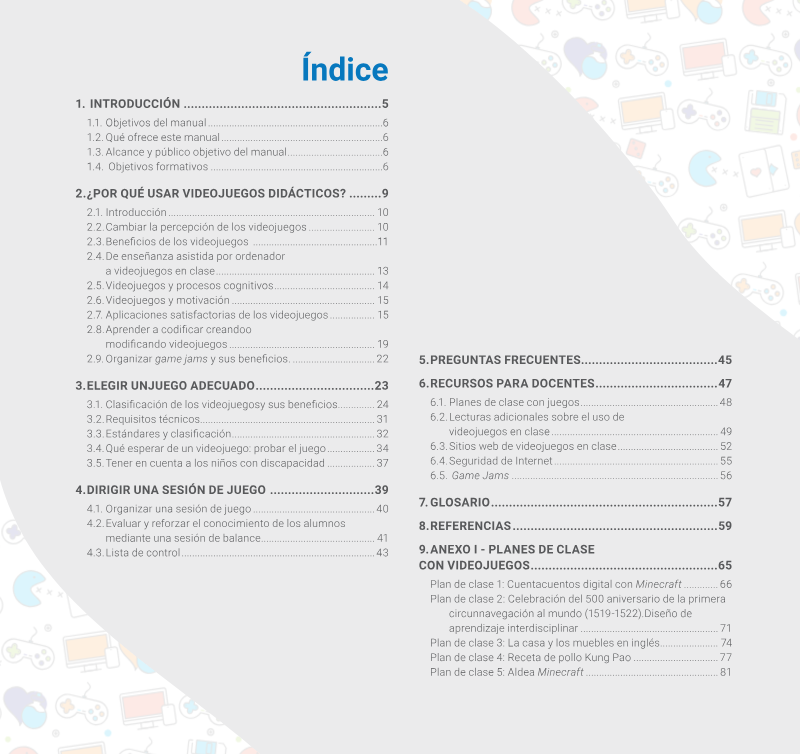
Empirical studies cited across the material demonstrate that personalization of difficulty and immediate feedback sustain engagement and translate into measurable gains in mathematics, geography, health, ethics and language outcomes. Serious‑game applications range from mobile‑AR health simulators to environmental awareness titles, while game‑jam events are shown to boost technical confidence, collaborative skills and coding proficiency. A detailed taxonomy links specific genres—action, puzzle, RPG, simulation—to targeted competencies, and a practical checklist emphasizes low‑spec technical requirements, PEGI age ratings, intuitive interfaces and progress monitoring. Accessibility adaptations for visual, auditory, cognitive and physical impairments are outlined, though further development is needed for visually‑impaired learners.
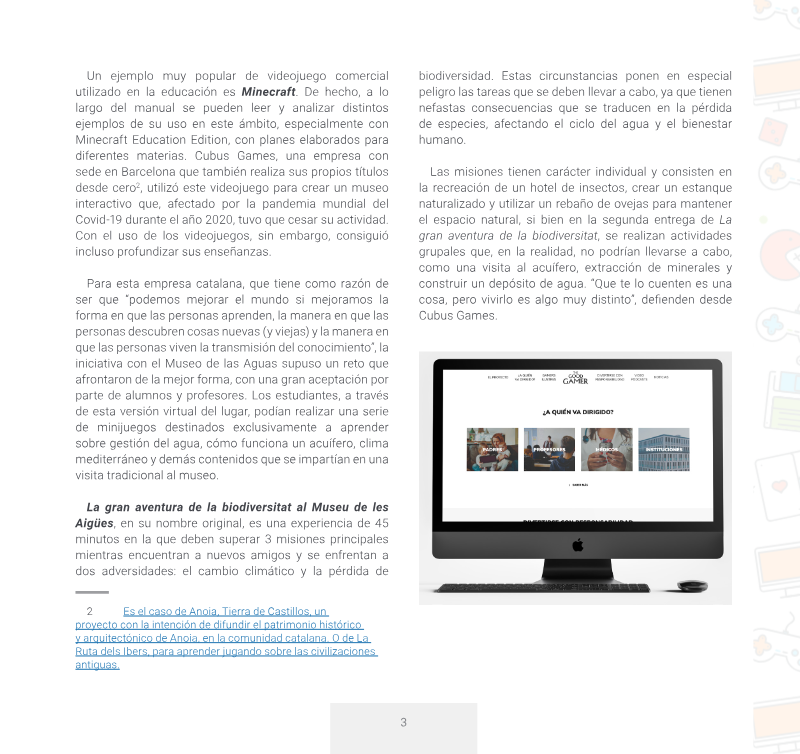
The scope encompasses Spanish‑language initiatives and broader international examples, covering primary to secondary education and spanning the period up to the early 2020s. It addresses multiple industry segments, including educational software, serious‑game developers, AR/VR health applications, learning‑management systems and community‑driven game‑jam platforms. Data from national campaigns such as “The Good Gamer” indicate adoption in over a thousand schools, with documented improvements in engagement metrics, competency tracking and interdisciplinary learning.
Conclusions stress that balanced, safe play—limited by time, monitored for health concerns, and anchored by teacher‑led debriefs—maximizes the cognitive, affective and behavioral benefits of game‑based learning. The provision of curated lesson plans, MOOCs, and extensive resource lists equips teachers to integrate games effectively, fostering creativity, empathy and social interaction while supporting academic achievement and well‑being.
EUN Partnership AISBLJan 2022